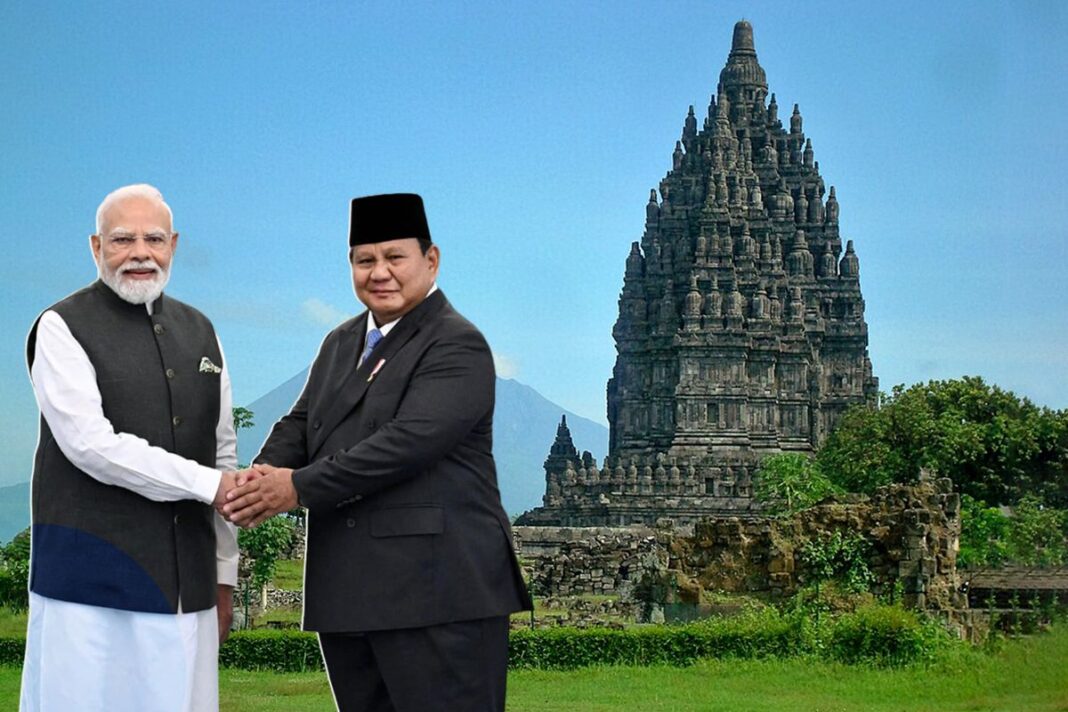

When Prime Minister Narendra Modi arrived in Indonesia, the visit carried a meaning far beyond diplomacy. It was not merely another meeting between two friendly nations. It marked the renewal of a relationship that began more than a thousand years ago. There were no new treaties or major political announcements at the heart of this story. Instead, the focus was on an ancient temple where the Ramayana is carved into stone. The Prambanan Temple is not simply an architectural monument. It represents an era when the sea connected India and Indonesia instead of separating them.
When History Speaks for Itself
Picture a temple that is nearly 1,170 years old, with its walls covered in detailed carvings depicting every major episode of the Ramayana. The temple stands as a tribute to Lord Shiva and celebrates the power of Goddess Durga. However, this remarkable monument is neither in Varanasi nor in Ujjain. It is located on the island of Java in Indonesia, a country that today has the world’s largest Muslim population.
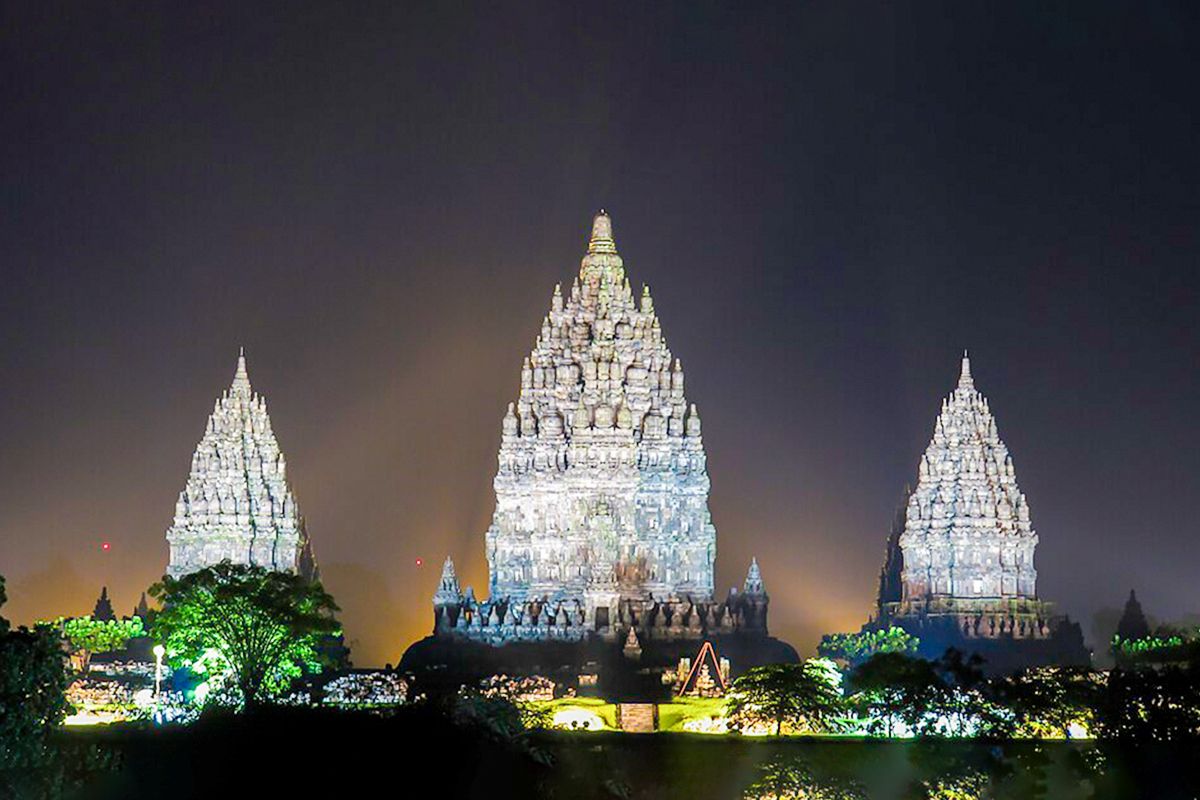
Despite the religious changes over the centuries, Indonesia has never rejected its Hindu and Buddhist heritage. Instead, it has preserved this priceless legacy with great respect. India is now preparing to strengthen that shared cultural bond once again.
More Than Restoration, It Is the Revival of a Shared Heritage
When experts from the Archaeological Survey of India (ASI) begin restoring the scattered stones of the Prambanan Temple, they will be doing much more than repairing an ancient structure.
Their work represents the revival of a civilisation whose roots stretched from the ports of present-day Tamil Nadu across the Indian Ocean to the royal courts of Java. It pays tribute to the merchants who sailed with ships carrying spices, textiles, and precious goods, while also bringing stories of Shiva and Vishnu, Sanskrit traditions, and ideas of kingship inspired by Indian culture.
History Shows That India and Indonesia Were Never Strangers
Few people realise that while Indian kingdoms were flourishing, the Sanjaya Dynasty of Java was also building one of Southeast Asia’s greatest Hindu monuments.
Construction of the Prambanan Temple began under King Rakai Pikatan. Later, his successor King Lokapala inaugurated the main Shiva Temple in 856 CE.
The complex is not dedicated to a single deity. It is a Trimurti Temple, honouring Brahma, Vishnu, and Shiva. The magnificent 47-metre-high Shiva Temple stands at the centre, with temples dedicated to Vishnu and Brahma on either side. Surrounding them are nearly 240 large and small temples, creating one of the largest Hindu temple complexes in Southeast Asia.
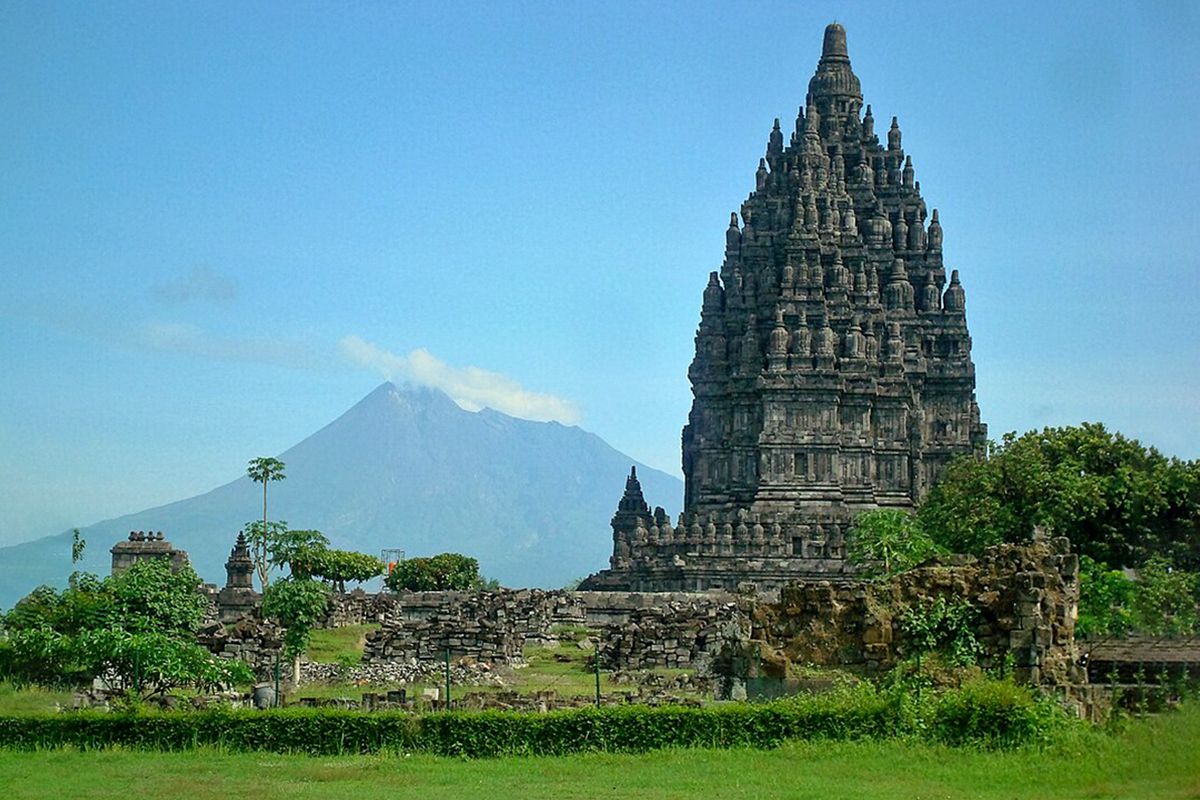
Perhaps its most remarkable feature is the complete Ramayana narrative carved across its walls, presented through intricate stone reliefs.
How Did Hinduism Reach Indonesia?
This is one of the most frequently asked questions. Did Indian rulers spread Hinduism through military conquest?
The answer is no.
Nearly 2,000 years ago, merchants from southern India, particularly from present-day Tamil Nadu, sailed to Indonesia. They carried spices, fine textiles, gold, silver, and, most importantly, their culture and religious traditions.
Local rulers found Indian political ideas especially appealing, particularly the concept that a king could be regarded as a divine representative. This strengthened royal authority. As a result, they invited Brahmin scholars from India, who introduced the Vedas, Puranas, the Ramayana, the Mahabharata, Sanskrit learning, and temple architecture.
Hinduism spread across Indonesia not through conquest but through trade, cultural exchange, education, and mutual acceptance.
When Natural Disasters Changed Everything
History, however, took an unexpected turn.
Less than a century after the temple’s construction, the nearby Mount Merapi erupted violently. Powerful earthquakes followed, causing widespread destruction across the region. Many people migrated eastward in search of safety.
While Hindu traditions continued to flourish on the island of Bali, the magnificent temples of Java gradually fell into ruin and were abandoned for centuries.
During the 13th century, Islam spread across Indonesia through Persian and Arab traders. Over time, the abandoned Hindu temples became increasingly forgotten beneath layers of vegetation and volcanic debris.
The Rediscovery of a Forgotten Masterpiece
During archaeological excavations in the 19th and early 20th centuries, scholars uncovered inscriptions written in Sanskrit and Old Javanese.
One important inscription contained the word “Shivagriha” along with the date 856 CE. This discovery confirmed that the monument had originally been built as a grand temple dedicated to Lord Shiva.
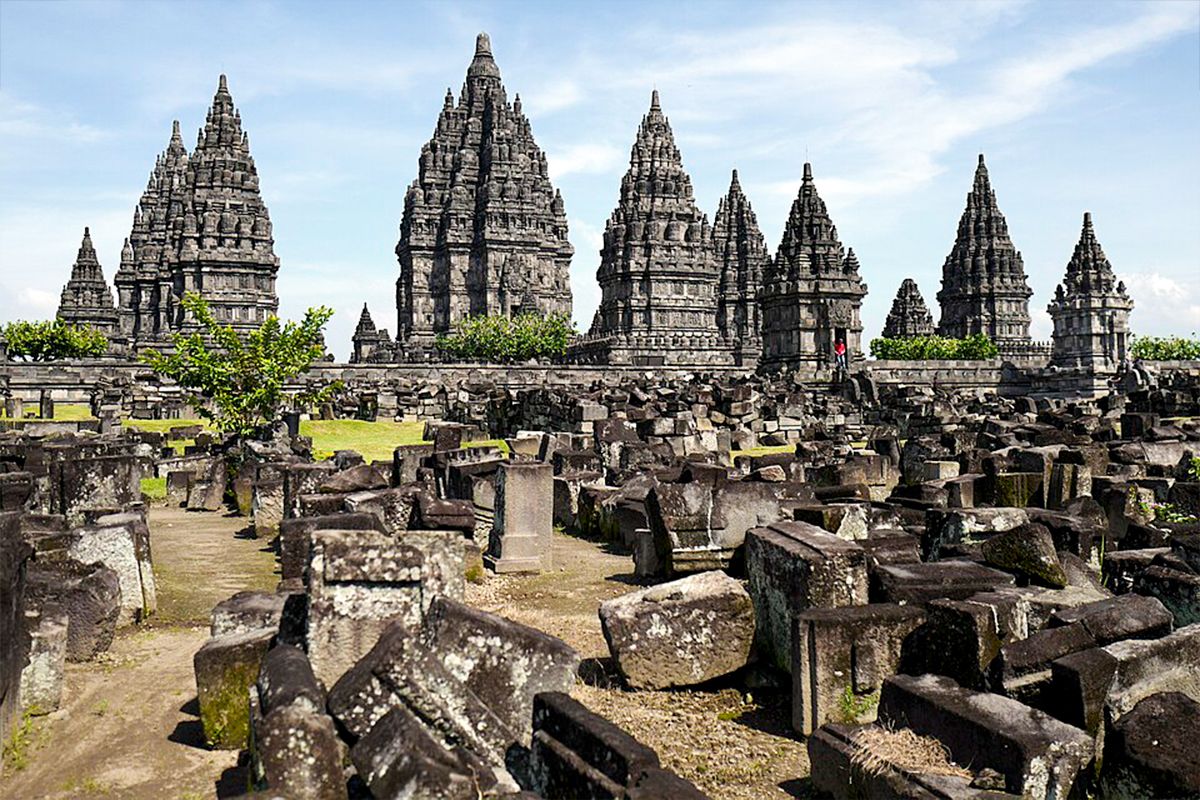
The Dutch colonial administration began restoration using the Anastylosis method. This scientific conservation technique involves reconstructing monuments by repositioning original stones whenever possible.
After Indonesia gained independence, restoration work continued. By 1953, the main Shiva Temple had been completely restored.
In 1991, UNESCO declared Prambanan a World Heritage Site, recognising its outstanding cultural and historical importance. Although the temple suffered damage during the 2006 earthquake, extensive conservation work has since restored much of the complex.
Why Is India Helping Restore the Temple?
India’s involvement in restoring Prambanan Temple goes far beyond archaeology.
The project forms part of India’s Act East Policy and its broader cultural diplomacy efforts to strengthen historical and civilisational ties with Southeast Asia.
Teams from the Archaeological Survey of India (ASI) have already conducted preliminary surveys of the site. Restoration will once again follow the internationally accepted Anastylosis technique, ensuring that original stones are reused wherever possible. New materials will only be introduced when necessary to preserve structural stability.
The restoration is expected to begin with one or two smaller temples as pilot projects. This approach will allow conservation experts to fully understand the original construction methods before undertaking larger restoration work across the Prambanan complex.
A Living Symbol of Shared Civilizations
Prambanan Temple is far more than an ancient monument. It is a living reminder of the deep civilisational links between India and Indonesia that have endured for centuries.
Prime Minister Narendra Modi’s visit highlighted these enduring cultural connections. As India joins Indonesia in preserving one of Southeast Asia’s greatest Hindu monuments, the restoration becomes more than an archaeological exercise. It serves as a celebration of a shared history shaped by trade, faith, literature, art, and mutual respect.
The stones of Prambanan continue to tell a story that began over a thousand years ago, reminding both nations that their relationship is built not only on diplomacy but also on culture, knowledge, and enduring human connections.
Also Read: Tribal Village in Manipur Turned Trees Into Classrooms Where Children Learn Their Native Language
You can connect with DNN24 on Facebook, Twitter, and Instagram and subscribe to our YouTube channel.