

Reflections on Satluj / Panjab ‘95, the abduction of a truth-teller, and an unfinished reckoning
I. A Biopic, and a Memory That Will Not Let Go
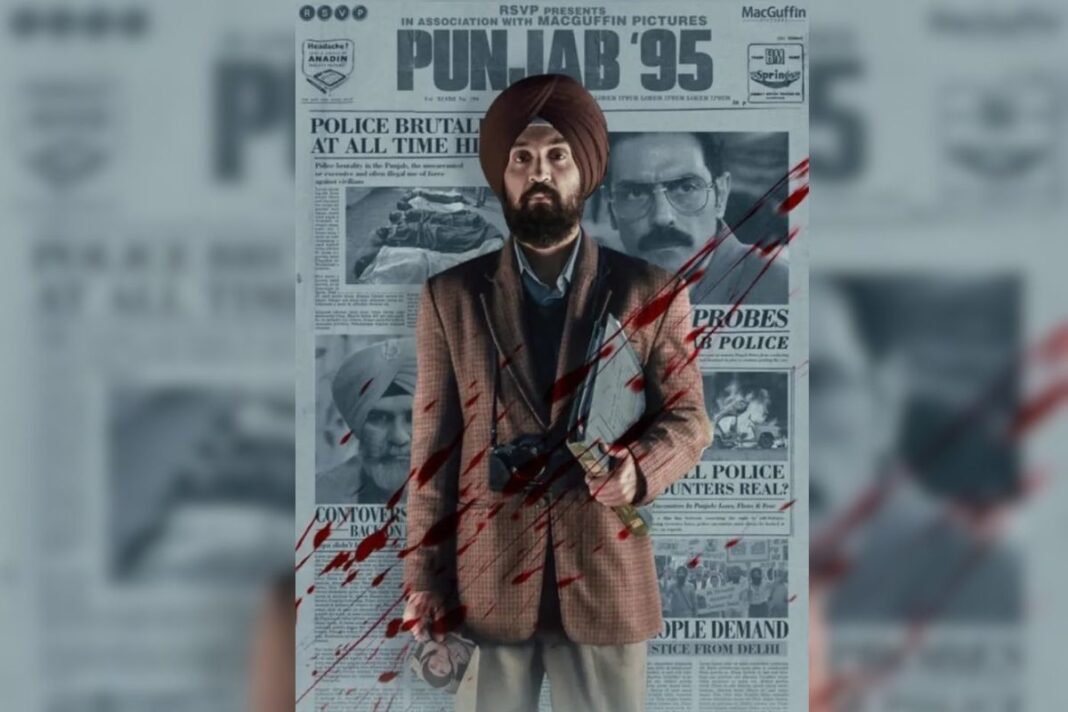
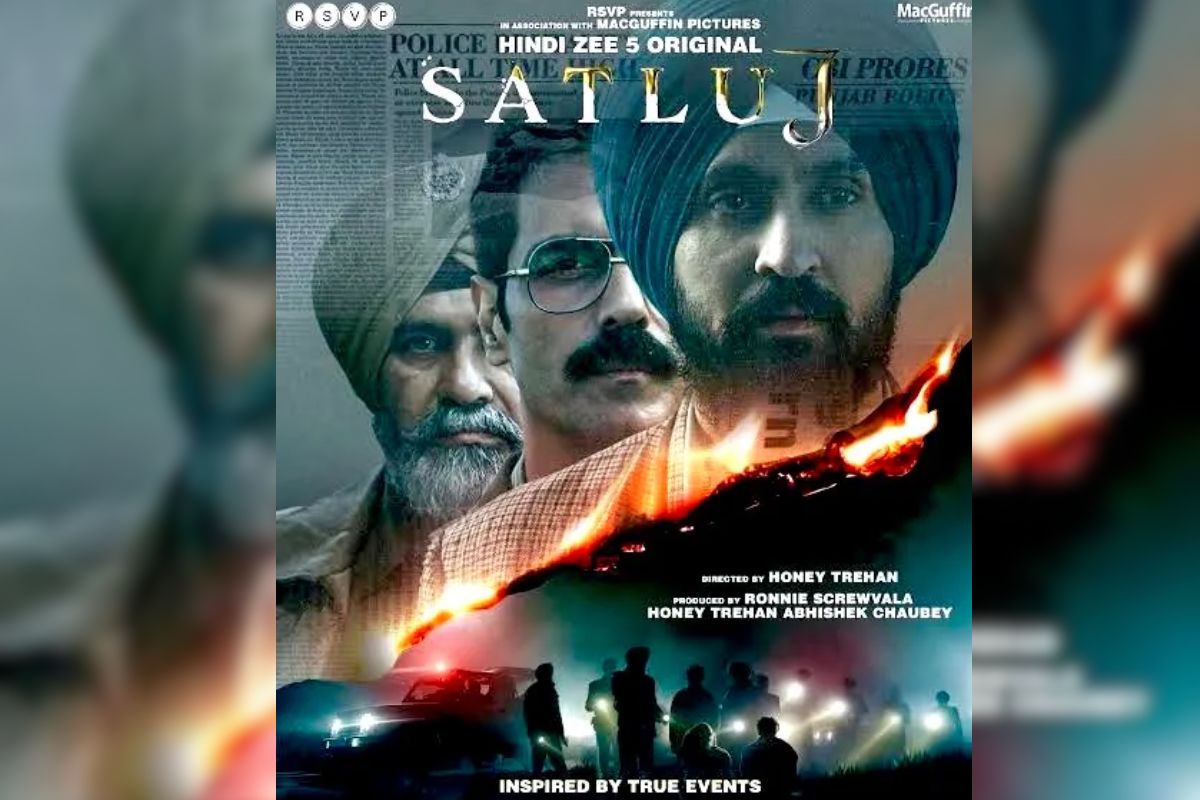
Diljit Dosanjh’s biopic on Bhai Jaswant Singh Ji Khalra, released after long censorial travail under the title Satluj (’95), is not merely a piece of cinema for those of us who lived through those years. It is a mirror held up to Punjab, and to me personally, because I happened to be Deputy Commissioner, Amritsar, when the events it depicts unfolded outside my own office window, quite literally. What follows is my attempt to place the film’s painful narrative within the documented record, while being candid about which parts of this account rest on independently verifiable sources and which rest on my own memory and conscience as a witnessing officer of the state (official trailer).
II. The Punjab of 1995: The Administrative Backdrop
I was posted as Deputy Commissioner, Amritsar, from 1992 to 1996. Tarn Taran was then still part of the Amritsar revenue district, and the policing structure across Amritsar, Majitha, Tarn Taran and the Border Range was intricate, with several senior officers exercising overlapping jurisdiction. Punjab was past the peak of militancy but the atmosphere remained taut. I say this not to explain away what happened, but only to set the scene — the administrative complexity of that period did not, and does not, diminish the individual legal responsibility of any officer or institution for what was done in its name.
III. The Man Who Would Not Look Away
By 1995, Bhai Khalra had become one of the most consequential human-rights voices to emerge from Punjab. Working from cremation-ground registers in and around Amritsar, he documented well over two thousand unidentified bodies cremated by the police as ‘unclaimed’ in that district alone, and issued a public statement in January 1995 alleging thousands of such secret cremations across the state between 1984 and 1994. He carried this evidence abroad, including to Canada, where well-wishers who feared for his life urged him not to return. He came back nonetheless, because Punjab was to him both janm-bhoomi and karam-bhoomi, and because a Sikh’s conscience, once it has seen the truth, cannot easily un-see it.
IV. The Morning He Was Taken
On the morning of 6 September 1995, days after the assassination of Chief Minister Beant Singh, Bhai Khalra was taken from outside his residence in Kabir Park, opposite Guru Nanak Dev University. He was, by most accounts, washing his car when men in plain clothes arrived in a private vehicle, identified themselves as police, and drove him away. He was never seen alive by his family again.
V. What I Saw and Did, as Deputy Commissioner
This section rests substantially on my own recollection as the officer concerned, and I offer it as my personally vouched account rather than as a claim I can footnote to an external source. Soon after the abduction, a group of respectable citizens came to me at the Deputy Commissioner’s office, anxious and insistent: Bhai Khalra had been picked up, and no one knew by which force, on what allegation, or whether his life was in danger. I telephoned the then SSP Amritsar, who told me Amritsar police had not lifted him, and that the trail appeared to lead towards Tarn Taran police, possibly Jhabal police station. I then tried to reach SSP Tarn Taran, Ajit Singh Sandhu, but could not get through to him immediately. With citizens standing before me and a human life plainly at stake, I asked for a written complaint and, without further loss of time, ordered a magisterial inquiry, entrusting it to the Additional District Magistrate, Tarn Taran, who proceeded to the spot and recorded sworn statements of those who had witnessed the abduction. Those statements, and mine, were later recorded afresh by the CBI once it took over the investigation — a matter of public record in the subsequent trial, even where my own contemporaneous actions are, necessarily, known to me first-hand rather than to any published chronicler.
VI. From a Dismissed Petition to a Supreme Court-Ordered CBI Probe
Bhai Khalra’s own petition on the mass cremations, filed in January 1995, had initially been dismissed by the Punjab and Haryana High Court. After his disappearance, his wife, Bibi Paramjit Kaur Khalra, moved the Supreme Court, and the matter was treated as a habeas corpus petition touching the fundamental right to life and liberty. The Supreme Court held that an inquiry conducted by Punjab Police into allegations against its own personnel would not inspire public confidence, and directed the Central Bureau of Investigation to probe both the abduction and the underlying allegation of mass secret cremations, with progress reports to be filed before the Court. The CBI’s investigation into the cremations was in due course carried further by the National Human Rights Commission, which the Supreme Court asked, in December 1996, to adjudicate the scale of the violations.
VII. The Testimony That Held: SPO Kuldeep Singh
Central to the CBI’s case was the testimony of Special Police Officer Kuldeep Singh, who stated that he had seen Bhai Khalra alive at Jhabal police station, had been tasked with giving him food and water, and had witnessed him being taken to the residence of the SSP, Tarn Taran. According to Kuldeep Singh’s own statement, the then Director General of Police, K.P.S. Gill, was present there and spoke with Bhai Khalra for some time. I record this as testimony given in court, not as an adjudicated finding of KPS Gill’s personal culpability — he was never made an accused in this case, and he died in 2017 without having faced trial on it. What can fairly be said is that Kuldeep Singh, despite considerable pressure, including reported pressure on his family, did not retract his account, and the courts placed reliance on it.
VIII. Conviction, Enhancement, and the Supreme Court’s Final Word
The trial took a decade. Bhai Khalra’s body was never recovered. In November 2005, the Special CBI Court convicted several Punjab Police personnel of offences including abduction with intent to murder and criminal conspiracy. In October 2007, the Punjab and Haryana High Court enhanced the sentences of four of the convicted officers to life imprisonment, while acquitting one and noting that another had died during the pendency of the trial. The Supreme Court, hearing the further appeals, dismissed them in 2011, thereby confirming the life sentences. Those convicted remain, to my knowledge, under sentence of life imprisonment, subject of course to whatever remission or parole may apply in law from time to time.
IX. Sardar Tarlochan Singh, Justice Anand, and a Measure of Compensation
There is one further strand of this story that I believe deserves to be placed on record, even though I offer it substantially on the strength of my own understanding of how that period unfolded, rather than a specific citable document. Sardar Tarlochan Singh, as Chairman of the National Commission for Minorities from 2003 to 2006, was during that period also an ex-officio member of the National Human Rights Commission. It is my understanding that he used that position to press the case, within the Commission, for at least a measure of compensation to be paid to the next of kin of the victims of the Punjab mass cremations, and that he was able to persuade the then Chairperson of the NHRC, Justice A.S. Anand, of the moral and legal case for such relief. Whatever the precise internal deliberations, it remains true that the NHRC did, in its order concerning the Amritsar district cremations, direct compensation to be paid to a number of affected families — a small, partial, and long-delayed acknowledgement, but an acknowledgement nonetheless, and one in which I believe Sardar Tarlochan Singh’s quiet advocacy as a Sikh voice within that Commission played its part.
X. What the Biopic Restores to Us
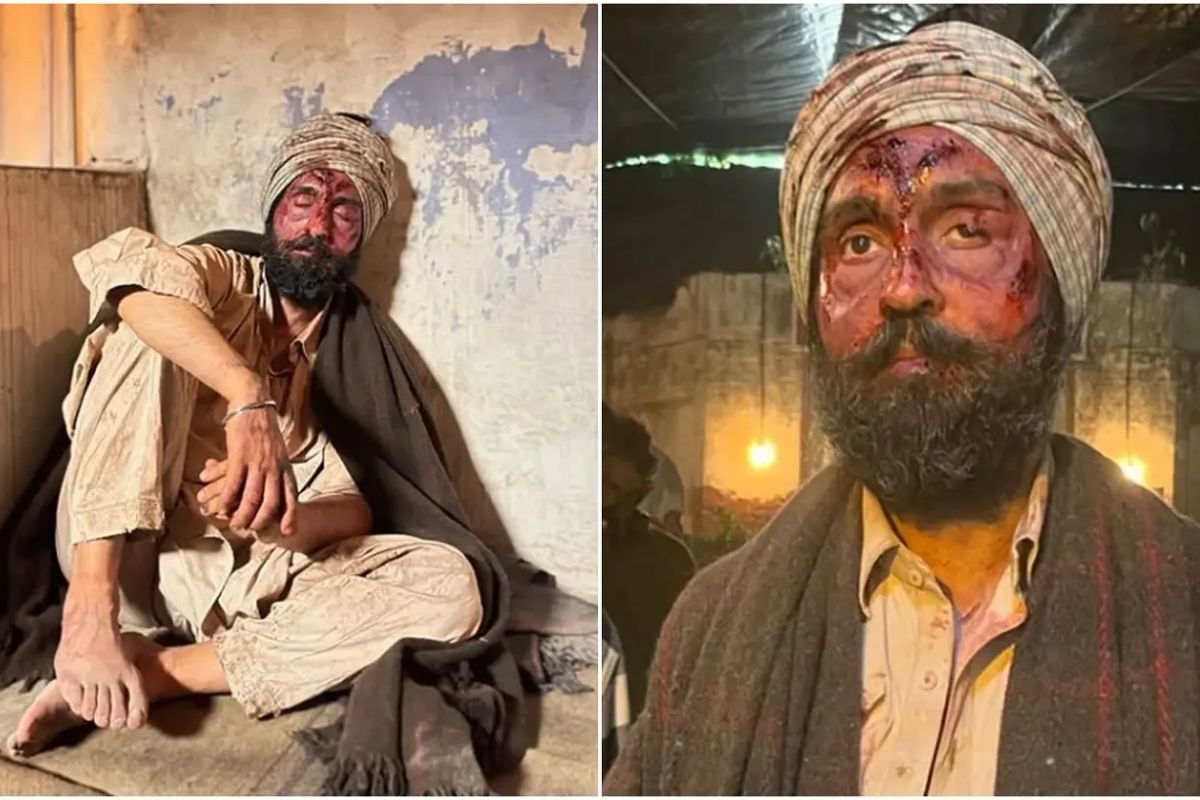
Whatever the film is called — Panjab ‘95 in its original conception, Satluj as finally released — its value lies simply in this: it forces a society that would rather forget to remember. The Khalra family has spoken of the numbers involved, including the figure of some twenty-five thousand unclaimed bodies, as part of their own long public reckoning with this history; I set that down as their emphasis and Bhai Khalra’s own documented claim, not as a figure formally adjudicated by any court, even as the scale of what he uncovered in Amritsar alone was substantial enough to be accepted by the Supreme Court itself as warranting an independent probe. Many survivors and the Khalra family describe what befell the Sikhs of that era as nothing less than a genocide; that is their lived truth and their right to say, even where the Indian state has not adopted that word in its own official reckoning.
XI. The Unfinished Reckoning
The law did, eventually, secure convictions in Bhai Khalra’s own case — a rare enough outcome in Punjab of that era, and one for which the higher judiciary deserves credit. But the wider ledger remains open: the thousands of other unidentified cremations, the anguish of families still without answers, the events of 1984 and Operation Blue Star, and the later firings at Behbal Kalan and Kotkapura, all point to the same unhealed wound — a State that has not yet found the will to examine that period layer by layer, institution by institution, individual by individual. Until it does, we will remain a Panth and a Punjab caught between partial memories rather than a shared, honest history.
XII. A Prayer, and a Duty
Bhai Jaswant Singh Ji Khalra gave his life so that the truth about the disappeared of Punjab would not be buried with them. His shahadat belongs, in the end, not only to his family or to the Sikh Panth, but to every Punjabi and every Indian who believes that no citizen — Sikh or otherwise, man, woman, or child — should ever again be made to vanish at the hands of the very State sworn to protect them. As we mark his memory through this painful but necessary film, our duty is not merely to grieve, but to ensure, with whatever influence and conscience each of us commands, that such egregious circumstances are never allowed to visit Punjab, or any part of this country, again (my video).
Note on sources: The factual sequence of Bhai Khalra’s investigations, abduction, the CBI probe, the trial, and the appellate outcomes draws on published human-rights documentation (Ensaaf, Human Rights Watch), contemporary and recent press reporting, and court records as summarised in secondary sources. My own actions as Deputy Commissioner, Amritsar — the citizens’ visit, the calls to SSP Amritsar and SSP Tarn Taran, and the ordering of the magisterial inquiry — are set out as my personal, first-hand recollection, since I am not aware of any published account that independently narrates them in this detail. The account of Sardar Tarlochan Singh’s role in persuading Justice A.S. Anand towards compensation is likewise offered as my own understanding of events within the NHRC of that period, alongside the documented fact of his concurrent membership of the Commission and the Commission’s eventual compensation order for Amritsar district.
Also Read:Suman Kalyanpur (1937–2026) RIP
You can connect with DNN24 on Facebook, Twitter, and Instagram and subscribe to our YouTube channel.