
In the villages of Bihar, the birth of a child was traditionally welcomed with something handmade and deeply personal. Mothers, sisters, and other women of the family would stitch together layers of old saris and dhotis to create a soft quilt for the newborn. Known as Sujani, this was more than a piece of cloth. It carried warmth, blessings, and the affection of generations.
The name is often associated with the Sanskrit words “su”, meaning good, and “jani”, referring to birth. This connection reflects Sujani’s beginnings as a craft closely linked with motherhood and childbirth. Over time, however, it evolved far beyond its original purpose and became a distinctive form of Bihar’s textile heritage.
From Village Tradition to Recognized Craft
Sujani embroidery developed as a rural tradition in Bihar and gradually became associated with communities across different parts of the state. Traditionally, women reused old pieces of cloth, layered several pieces together, and joined them with simple running stitches.
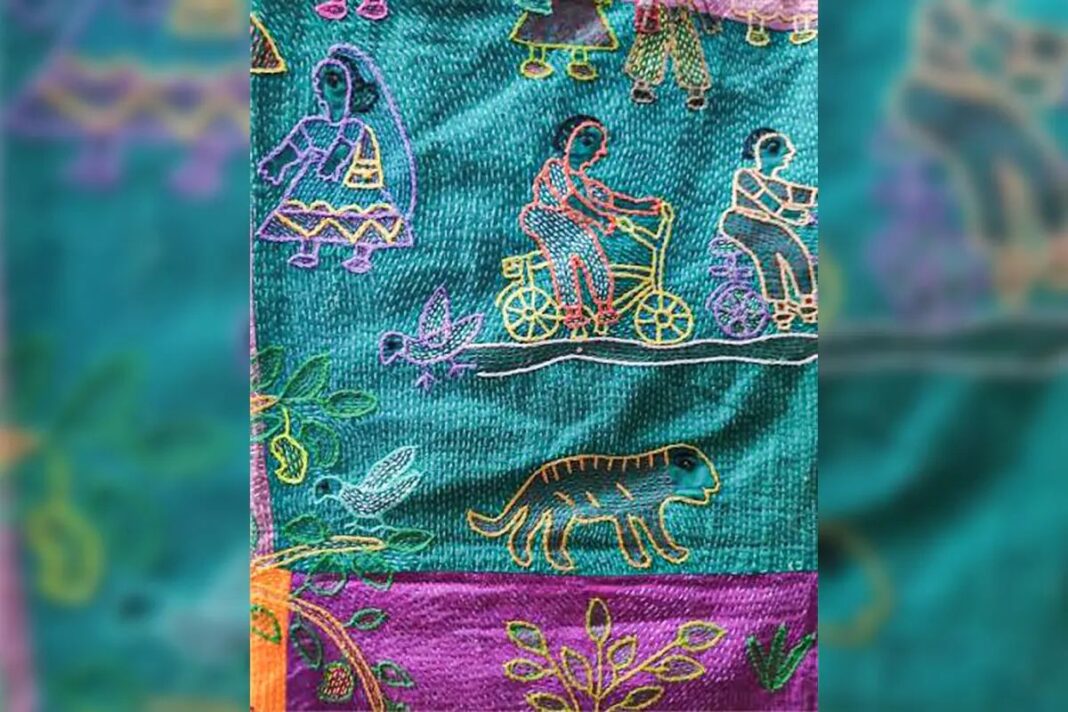
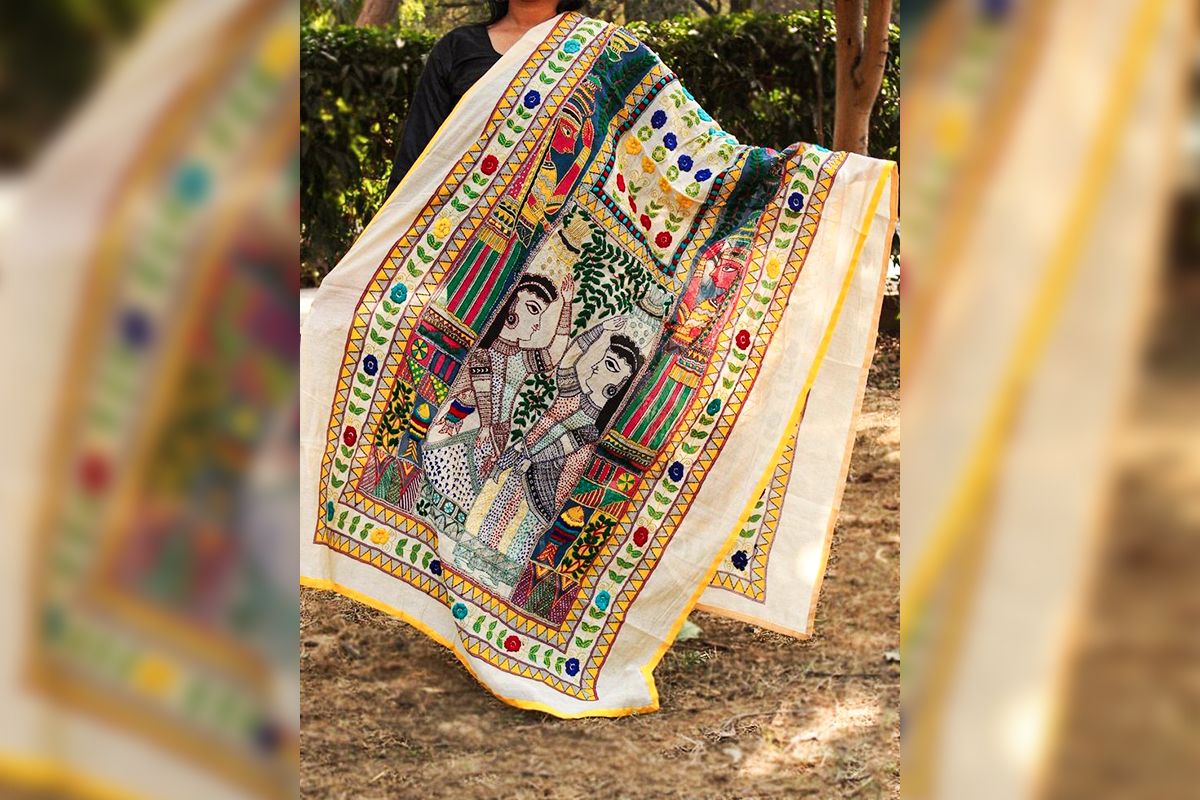
What transformed these everyday textiles into works of art were the embroidered images added to their surfaces. Sun, clouds, trees, flowers, birds, animals and geometric patterns appeared alongside scenes inspired by village life.
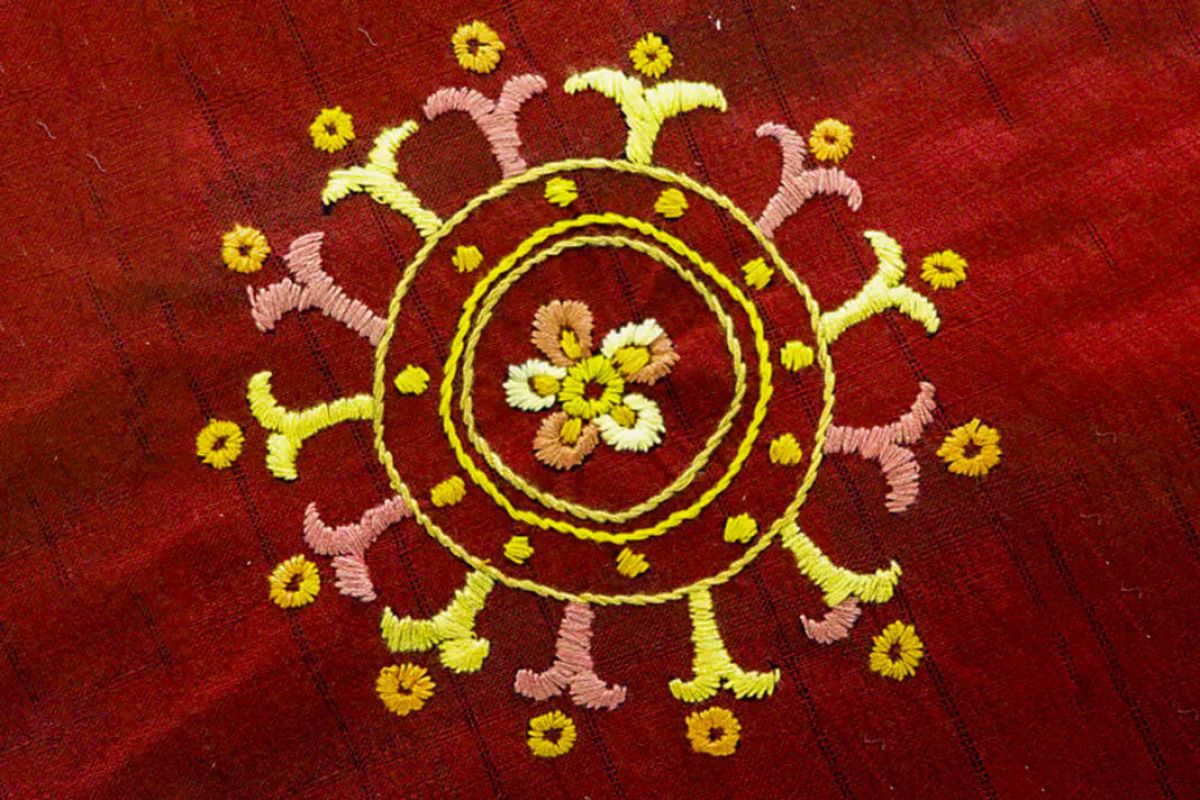
Colors also carried meaning. Red and yellow threads were traditionally prominent, with red symbolizing vitality and yellow associated with the sun’s brightness. Religious and symbolic figures were sometimes embroidered as protective motifs. Recognition of Sujani as a distinctive regional craft eventually helped bring greater attention to the women preserving the tradition.
How Sujani Is Made
Creating a Sujani piece requires patience and careful handwork. The artisan first chooses a theme. It might be agriculture, a festival, family life, nature, or an important social issue. The artisan then draws the composition directly on the fabric or transfers it using a stencil.
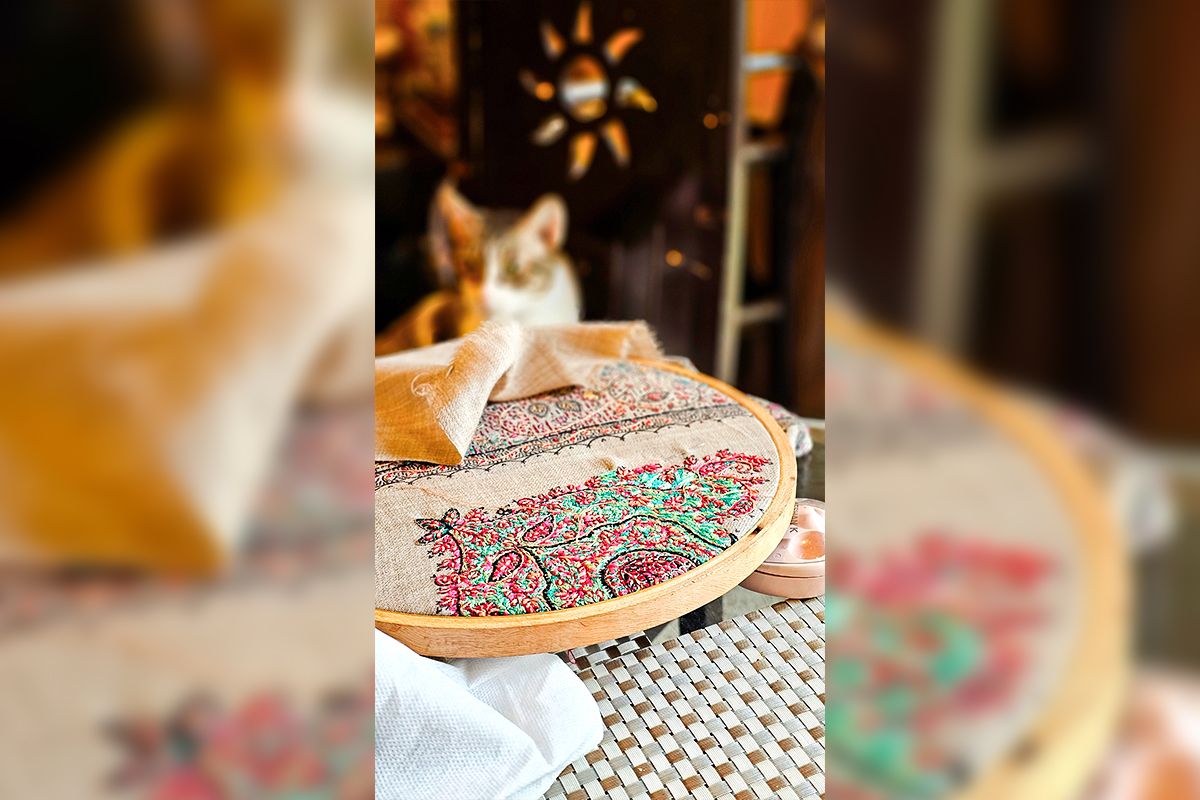
Several layers of cloth are placed together and secured using running stitches. Decorative elements are subsequently developed with techniques such as chain stitch and back stitch. Flowers, leaves, human figures, and borders gradually emerge across the fabric.
Skilled artisans can manipulate the density and direction of stitches to create texture, giving the finished embroidery a distinctive visual character. Loose threads are trimmed, and the edges are carefully finished. A process that once took place informally between household responsibilities is now also carried forward through artisan collectives and organized groups.
When Embroidery Becomes Storytelling
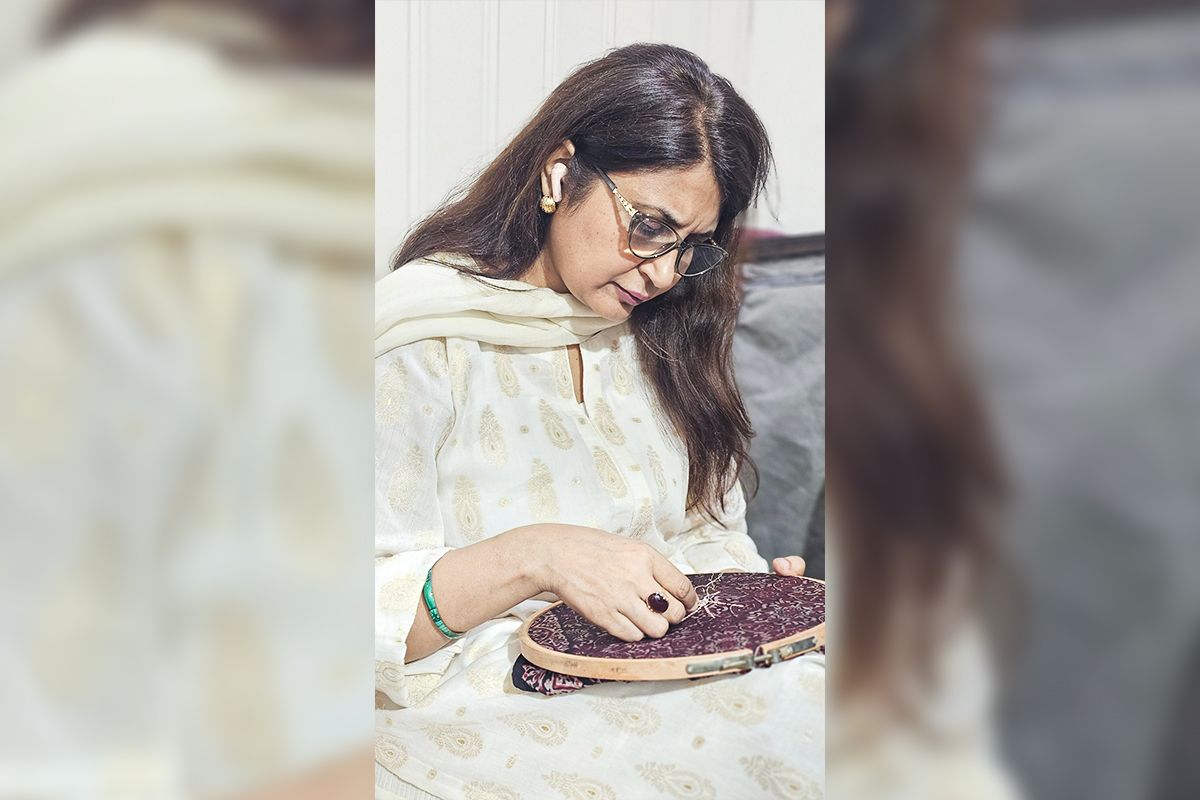
Perhaps the most fascinating quality of Sujani is its ability to tell stories. For generations, rural women with limited opportunities to express themselves publicly found a language in needle and thread. Their embroidery began documenting experiences ranging from love, marriage, and motherhood to floods, droughts, migration, and agricultural life.
As the tradition evolved, Sujani also became a medium for commenting on contemporary society. Artisans have depicted subjects such as girls’ education, elections, public health, and women’s rights. In this sense, a Sujani textile can function almost like a visual diary. One piece might record a daughter’s wedding, while another may depict the devastation caused by a flood. Everyday village scenes can exist alongside larger questions about inequality and women’s place in society.
This storytelling tradition has given Sujani significance beyond its decorative beauty. The craft preserves memories and experiences that might otherwise remain undocumented.
Tradition Meets a Changing Market
Despite growing recognition, Sujani faces significant challenges. Younger generations increasingly move from villages to cities in search of other employment. Handmade artisans must also compete with inexpensive machine-produced textiles and imitations. At the same time, rising prices of cotton, thread and other raw materials make traditional production more expensive.
Copying of designs is another concern, particularly when traditional motifs are reproduced commercially without adequately recognizing or benefiting the artisans who created them. Yet Sujani has also found new opportunities.
Digital marketplaces, exhibitions, government initiatives and craft organizations have helped connect artisans with consumers far beyond Bihar. Embroidery once largely confined to quilts has entered contemporary design. Today, Sujani-inspired work can be found on bags, cushion covers, garments, wall hangings, accessories and other lifestyle products. This adaptation has helped the craft remain relevant while creating new livelihood opportunities for women.
More Than a Piece of Fabric
Sujani’s enduring power lies in its blend of sustainability, storytelling, and women’s creativity. Its earliest makers transformed worn-out household fabrics into something useful and beautiful. Instead of discarding old saris and dhotis, they gave the cloth another life through layers of stitching and imagination.
But Sujani preserves something even more valuable than fabric. Every embroidered scene can carry a memory, emotion, or observation about the world its maker lives in. Behind the stitches are generations of mothers, daughters and sisters who turned an ordinary needle into an instrument of creativity and expression.
For many women today, the same tradition is also becoming a source of income and independence. Sujani therefore remains much more than embroidery. It is a living archive of Bihar’s villages, women’s experiences and collective memory—one in which stories, struggles, dreams and identities continue to be stitched into fabric, one thread at a time.
Also Read: From Guns to Glamour: Surrendered Naxal Women Walk Fashion Ramp
You can connect with DNN24 on Facebook, Twitter, and Instagram and subscribe to our YouTube channel.