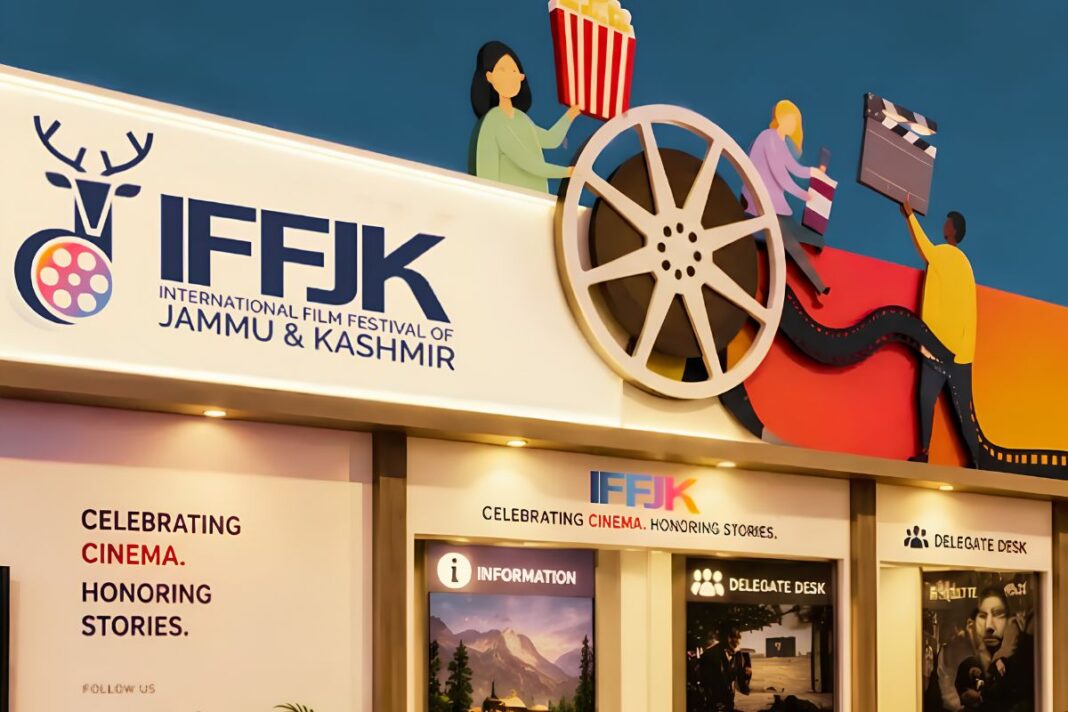

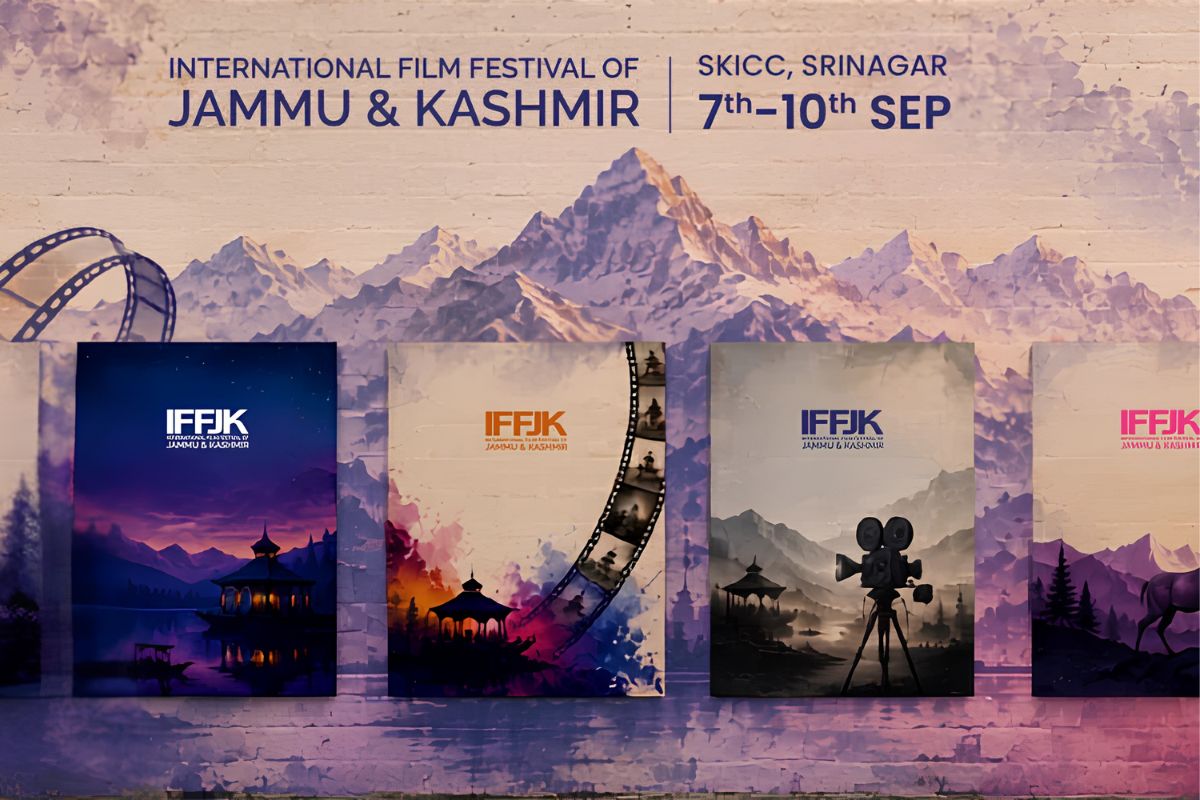
Kashmir’s cinemas are drawing audiences again after decades. On offer is a tantalising array of world cinema. The first International Film Festival of Jammu and Kashmir, known as IFFJK, opened in Srinagar on September 7 and runs through September 10, 2026. Over four days, the festival is screening 135 shortlisted films from 41 countries.
Why This Festival Matters So Much
IFFJK is not simply another entry on the festival calendar. It represents a deliberate effort to reconnect Jammu and Kashmir with the global film industry after years of militancy and uncertainty that kept cinemas shuttered. Chief Secretary Atal Dulloo, who inaugurated the event at INOX in Srinagar, described it as a step to revive the region’s connection with the global film industry and to encourage filmmakers to set their stories in J&K once again.
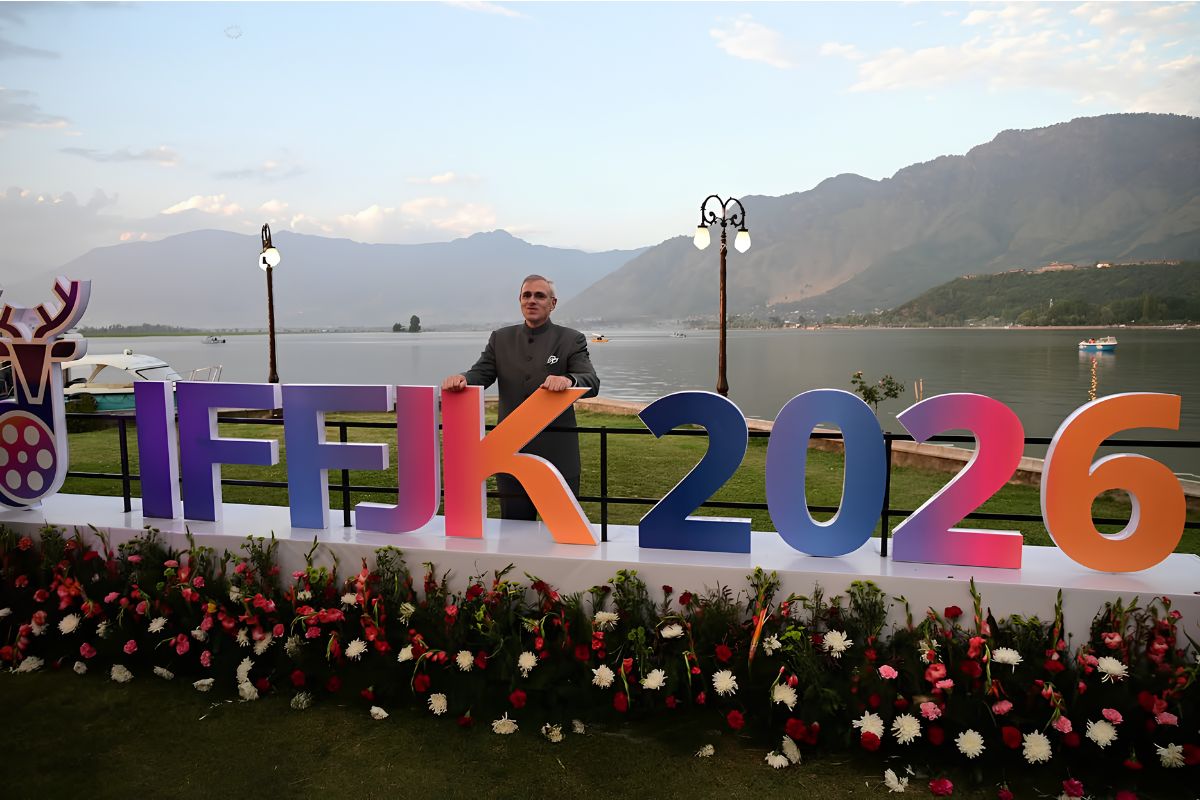
The government’s larger goal is straightforward. Officials want cinema to showcase the region’s heritage, cuisine, handicrafts and landscapes while opening new paths of work for local youth in direction, cinematography, sound, acting and music. Actor Shabbir Ahmed put it simply. The Valley already has talent and technical skill. What it needs now is steady collaboration whenever outside crews arrive to film.
Venues and Scale of the Event
The festival’s main inaugural, closing and award ceremonies are anchored at the Sher-e-Kashmir International Conference Centre, known as SKICC, on the banks of Dal Lake in Srinagar. Screenings themselves are spread across seven screens in Srinagar, Jammu and Gulmarg, including SKICC, INOX Shivpora in Srinagar and Waves Cinema in Jammu.
Organisers had also planned experiential touches beyond the standard screenings. These include a floating cinema at Lal Ghat and a curated excursion to Gulmarg for select filmmakers, with visits planned to the Gondola, the golf course and the Gulmarg Club. The idea behind spreading the festival across so many venues is to let visitors experience both the city’s cultural life and the Valley’s famous landscapes in the same trip.
From 1,100 Submissions Down to 135 Films
The scale of interest tells its own story. The festival received more than 1,100 entries from close to 80 countries. After a preview and selection process, the organisers settled on 135 films for screening. More than 60 of these came from filmmakers outside India. India itself leads the shortlist with 64 films, showing strong domestic interest alongside the response from abroad.
The films are organised into several categories. These include International Competition, Cinema of the World, Bharat Panorama, J&K Select, Best Debut Film, Documentary and Hybrid, and Short Films. The J&K Select and Bharat Panorama sections in particular are meant to give local creators and Indian storytelling traditions a proper place within a global lineup.
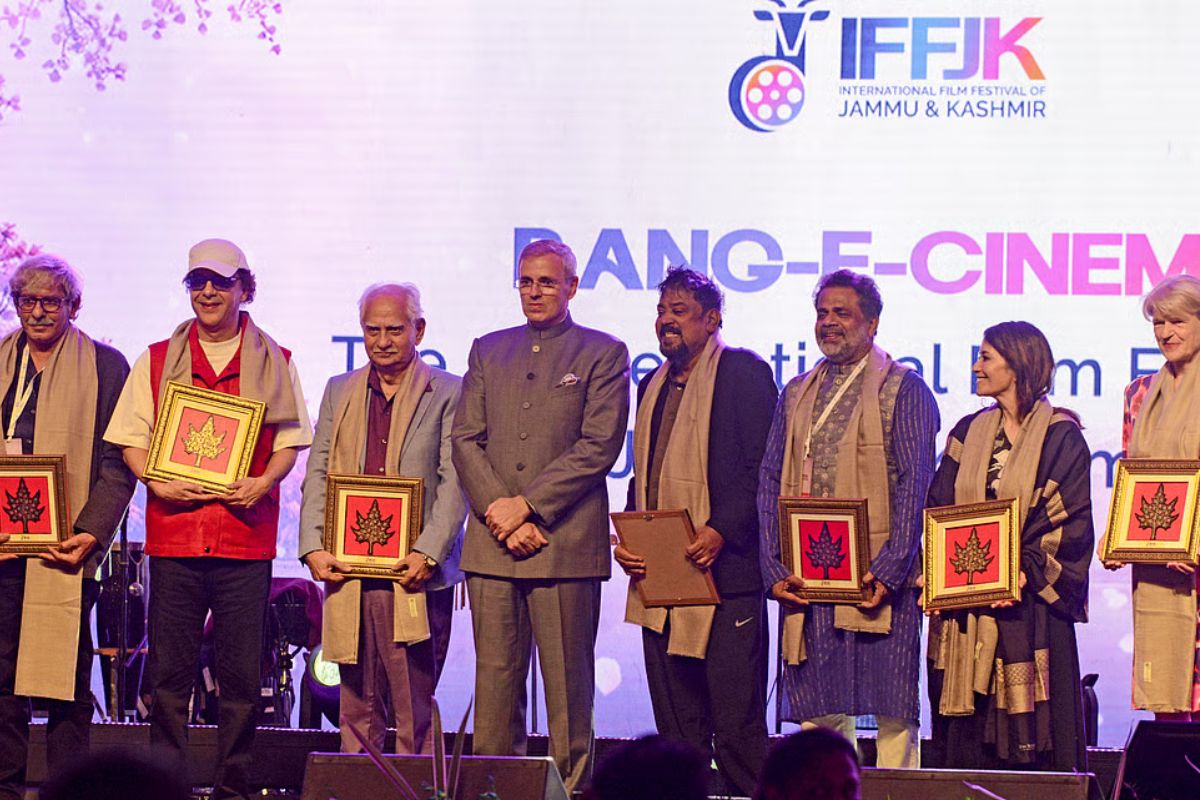
Rang-e-Cinema: A Theme Built on Colour
Guided by the theme Rang-e-Cinema, this year’s festival is as much about the colour and diversity of stories as it is about the region’s own cultural palette. Alongside the screenings, the programme includes masterclasses, panel discussions, conversation sessions, round tables and workshops involving filmmakers, actors, critics and scholars.
Cultural elements run through the entire design. Local cuisine, traditional handicrafts, heritage displays and performances are being presented to visiting delegates and audiences throughout the four days. For local artistes such as Bindiya Tikku, this mix carries real weight. She points to the presence of regional and Kashmiri language films sitting alongside international work, including Lebanese cinema, as proof that the festival is closing a long gap between Kashmir and the wider film world.
Omar Abdullah’s Push for a Flagship Event
Chief Minister Omar Abdullah, known for his interest in art, literature and cinema, has personally reviewed the final preparations and stressed that IFFJK should grow into a flagship international event for J&K. In high-level meetings, he called for careful planning, close coordination among stakeholders and strong promotion across print, television, digital and outdoor media.
Abdullah has repeated two goals throughout the run-up to the festival. First, show the world the cultural richness and creative potential of Jammu and Kashmir. Second, create real opportunities for local filmmakers and rising talent. His invitation to the wider industry is plain. Come, explore, shoot and work alongside local professionals.
What Industry Voices Are Saying
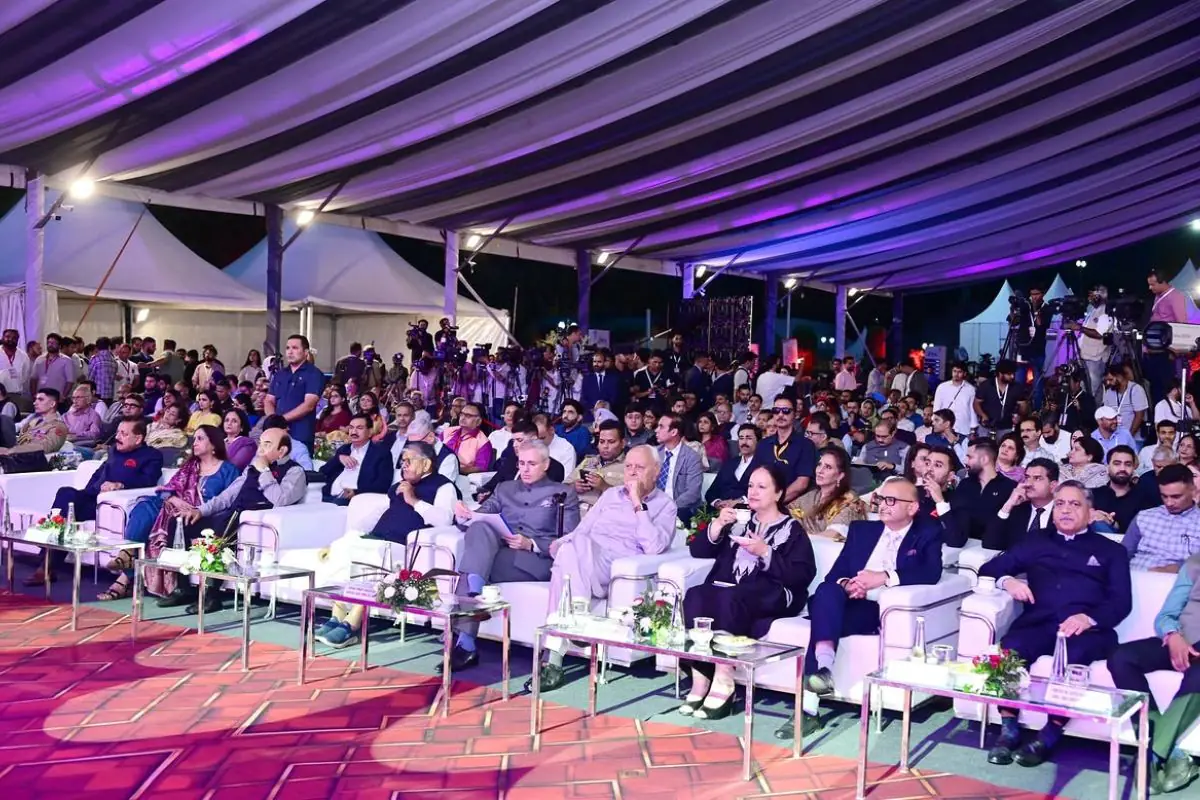
Veteran filmmaker Vidhu Vinod Chopra said he hopes IFFJK will open J&K to international cinema and help the region reclaim its place on the global filmmaking map. Bollywood actor Akbar Khan described film festivals as platforms for cultural exchange that build connections between people and countries, as he recalled Kashmir’s long association with Hindi cinema.
At the same time, voices from the local industry are clear about what needs protecting. Khan and others have called for respect toward the region’s culture, traditions and public sentiment even as J&K is promoted as a place to film. Shabbir Ahmed has urged that local artistes receive real participation and opportunities whenever outside production teams arrive, so the benefits of this renewed attention actually reach the ground.
What This Means for Kashmir’s Film Ecosystem
For decades, Kashmir’s relationship with Bollywood was defined largely by song sequences shot against snow-capped peaks and calm lakes, a relationship then interrupted for years by conflict. IFFJK 2026 is an attempt to restart that relationship on steadier, more lasting terms. The Valley is being positioned not just as a pretty backdrop but as a site for production, post-production work, talent development and cultural exchange.
The festival’s focus on masterclasses, networking and industry contact is aimed squarely at young filmmakers who previously had limited access to international practices and markets. By combining competition sections with dedicated space for regional cinema, IFFJK is signalling that local stories deserve a genuine global platform rather than token inclusion.
A Festival Carrying a Larger Story
Beyond the public appearances of actors such as Taha Shah Badussha and Fatima Sana Shaikh, IFFJK 2026 carries a bigger narrative about normal life, confidence and cultural reengagement. Security is visible but not heavy-handed, with festival billboards across Srinagar and a steady flow of delegates, filmmakers and students moving through venues like SKICC and INOX.
In a region where cinema halls once became symbols of closure and fear, the sight of full screenings, active panel discussions and young filmmakers pitching their ideas is a statement in itself. As Chief Secretary Dulloo put it, the response from close to 80 countries shows growing confidence in Jammu and Kashmir as an emerging hub for film production and creative work.
What Comes After These Four Days
IFFJK 2026 is only the first edition, yet its design suggests ambitions well beyond a single event. If organisers can turn this into an annual fixture, deepen ties with the wider industry and make sure local talent consistently benefits from projects coming into the region, it could take a permanent place on India’s festival circuit alongside Goa, Kolkata and Mumbai.
The real test now is converting four days of energy into lasting policy. That means incentives for shooting in J&K, training programmes for local crews, support for Kashmiri language and regional storytelling, and cultural programming that keeps audiences engaged the whole year rather than just one week in September.
For filmmakers, the invitation stands open. Bring stories to Kashmir, but also make room for Kashmir’s own stories to travel outward. For audiences, the message is just as direct. Cinema has returned to the Valley, not only as entertainment but as a bridge between Kashmir and the rest of the world.
In that sense, IFFJK 2026 is more than a festival. It is a new reel in Kashmir’s ongoing story, one where the region stops being only a location and becomes a lead character in its own cinematic future.
Read: Ladakh Just Turned 230 Kilometres of Mountain Road Into an Art Gallery
You can connect with DNN24 on Facebook, Twitter, and Instagram and subscribe to our YouTube channel.