

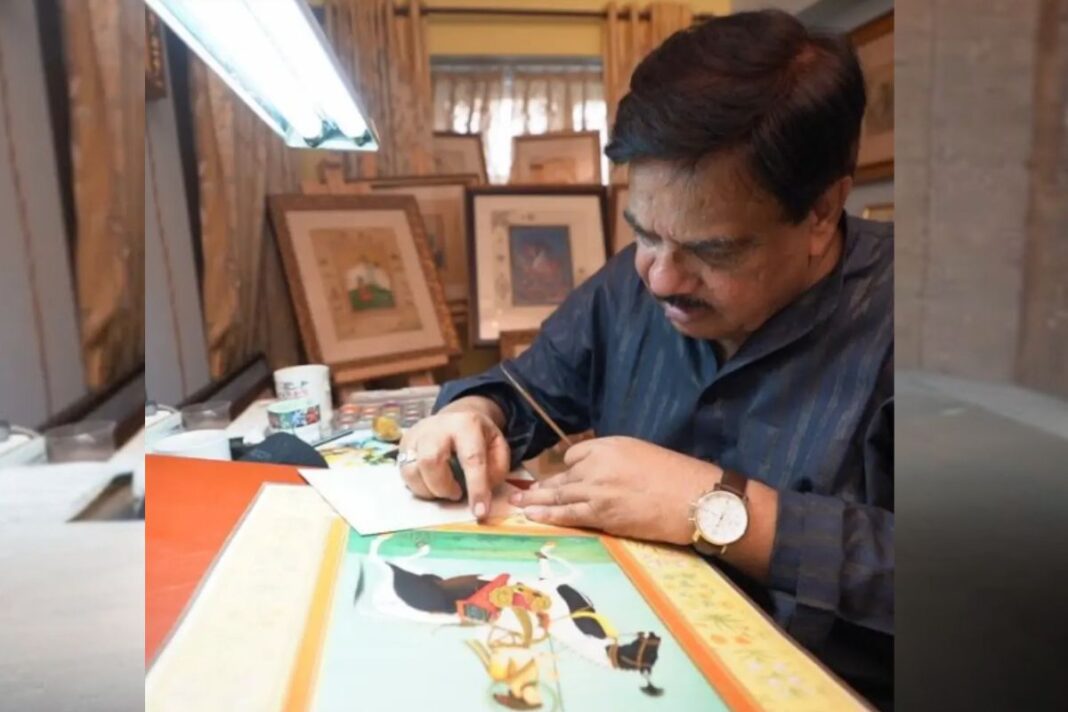

A boy who sketched with charcoal on the walls of his village home grew up to stand before the President of India and receive one of the nation’s highest civilian honours. That boy was Syed Shakir Ali, and the road between those two moments is the story of a craft so delicate that most people need a magnifying glass to see it properly. As a child, while waiting at the local barber shop, he would pass the time by drawing quick portraits of the men around him using nothing more than a ballpoint pen. Nobody watching him then could have guessed that those same hands would one day produce works fine enough to hang in a Prime Minister’s residence.
Born in 1956 in the village of Jalesar in Uttar Pradesh, Shakir Ali came from a family where art was simply part of daily life. His grandfather, Syed Hamid Ali, had been a respected painter and teacher of the Awadh school, and his father dealt in rare paintings and historical artefacts. Growing up surrounded by old canvases and family stories about brushwork and pigment, Shakir absorbed something that would later define his entire life.
As a child, he entered art competitions and made rangoli patterns at school. His parents wanted something more conventional. They hoped he would become a doctor, and he did earn strong marks in biology, but there was a problem. His biology diagrams were so carefully drawn that they kept winning prizes meant for artistic merit rather than scientific accuracy. It became clear which subject truly held his attention. In 1978, he graduated in fine arts from Rajasthan University and turned his full energy toward the intricate world of miniature painting.
Learning From Two Masters
Shakir Ali’s serious training began at the studio of Padma Shri Ramgopal Vijayvargiya, a family friend and respected artist. He was not especially drawn to Vijayvargiya’s Bengal-style work, but while spending time in that studio, he came across books on the Kishangarh school of miniature painting. Something about those images pulled at him, and he began copying them in pencil, working out their construction stroke by stroke.
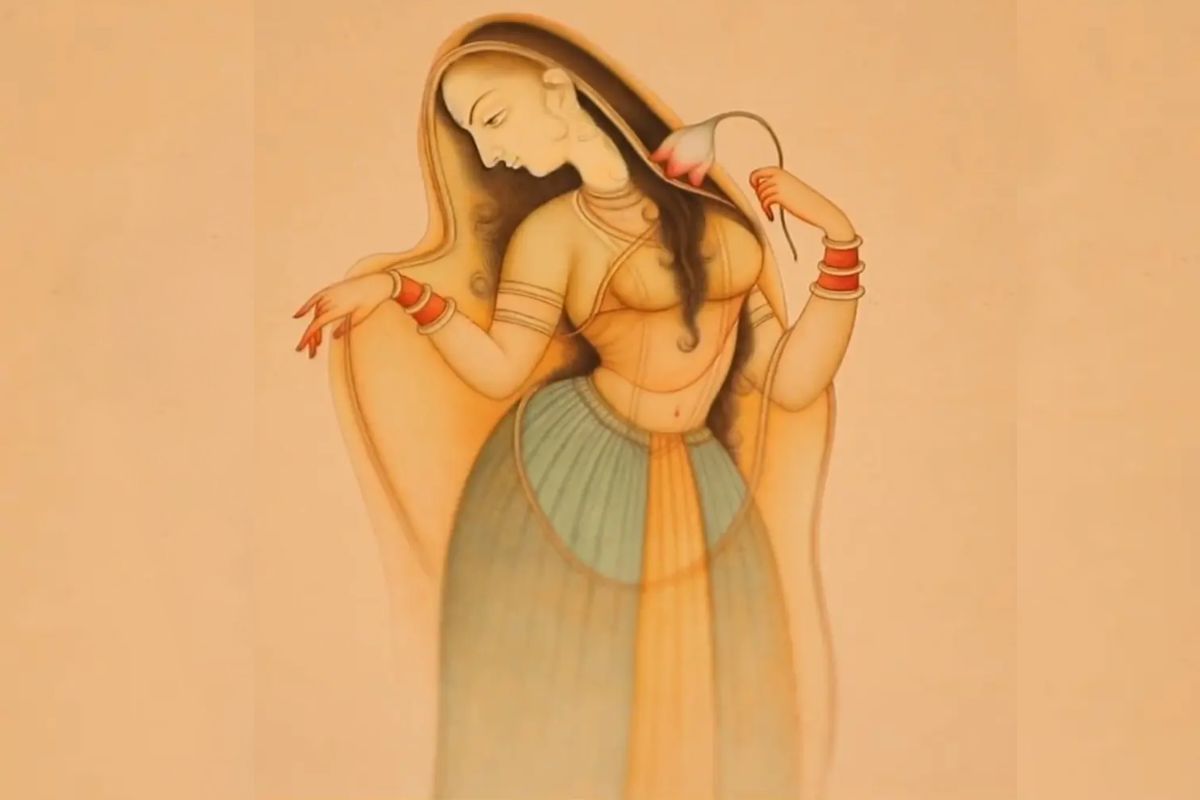
Ramgopal noticed the young man’s natural ability and sent him to study under Ved Pal Sharma, known widely as Bannu Ji, a master of the Jaipur royal court tradition. Under Bannu Ji’s demanding guidance, Shakir spent close to three years immersed in the exacting discipline of miniature painting. He had started learning the craft at the age of fifteen, and over time he built a style that was recognisably his own while still rooted in the traditions passed down to him.
A Craft Measured in Millimetres
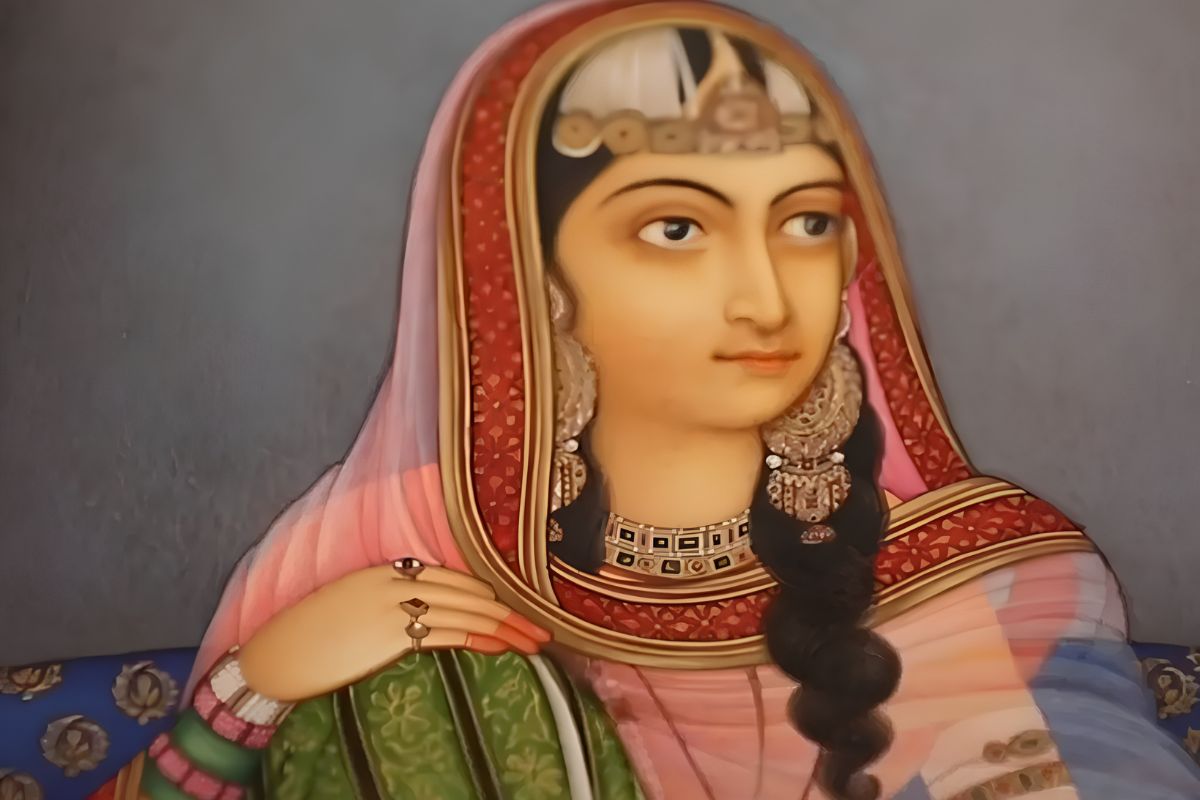
For Shakir Ali, the word miniature refers to far more than small size. It describes a level of patience that few art forms demand. On a sheet no larger than twelve to sixteen inches, he renders facial expressions, eyelashes, skin texture, birds, trees, flowers, and entire landscapes with such fine detail that viewers often need a magnifying glass to appreciate the full depth of the work. Individual brush strokes, some made with a brush of a single hair, carry detail that would be easy to miss at a glance. A single square inch of one of his paintings might contain the folds of a robe, the sheen on a bird’s feathers and the faint shadow beneath a leaf, all rendered with pigments mixed by hand in the old manner rather than bought ready-made from a shop.
“Art cannot be taught. It has to be observed,” he has said. “Some people take years to learn it. Others pick it up in days.” In his view, mastery in this field comes only through patience, dedication and years of relentless practice. He has become especially skilled in the Mughal style and has built deep expertise in Persian Mughal painting and Islamic art traditions.
Recognition That Crossed Borders
In 1992, Shakir Ali represented India at the tenth SAARC Folk Festival held in Islamabad, where he won first prize in the art competition. The following year, in 1993, the Government of India honoured him with the Lalit Kala Akademi National Award. These early recognitions opened doors that would eventually stretch across the globe.
Since then, he has represented India in roughly fifteen countries, including Iran, Turkey, Algeria, the United States and the United Kingdom, and he has travelled to Dubai on seven separate occasions, often returning with top honours. His paintings have decorated the walls of the Prime Minister’s residence, and his work has been presented as gifts to visiting dignitaries and displayed at official events.
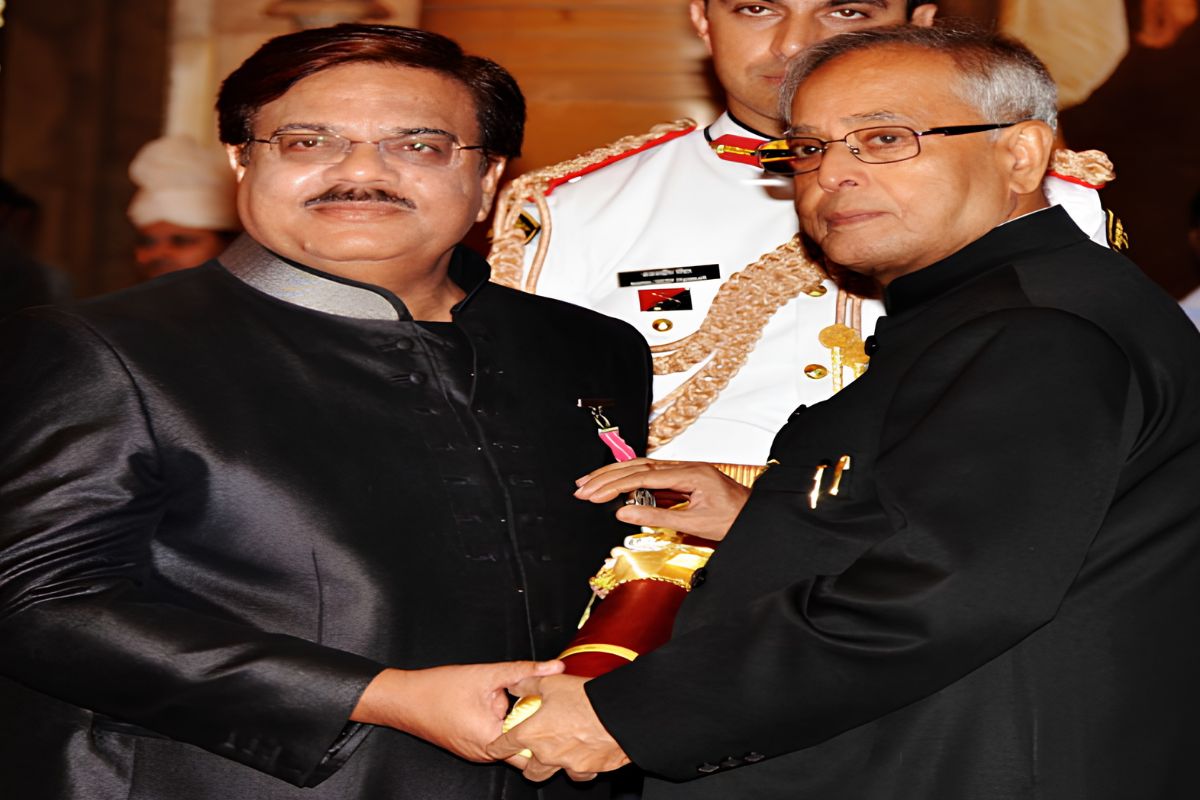
On 26 January 2013, President Pranab Mukherjee awarded him the Padma Shri, India’s fourth-highest civilian honour. In 2021, he also received the Credent Ratna Award.
Preserving a Tradition While Reshaping It
Shakir Ali has done more than preserve traditional miniature painting. He has also found ways to reshape it for today. He continues to experiment with modern miniature and contemporary approaches, keeping the core technique intact while introducing fresh creative directions. He has restored old paintings at the City Palace in Jaipur and the Prince of Wales Museum in Mumbai, and both institutions hold examples of his work in their collections.
Now seventy-one years old, Shakir Ali shows no sign of slowing down. He is currently working on a coffee table book that will offer insight into his artwork, brushwork, colour palette, and techniques, including video tutorials. He hopes young people, especially children, will use it to learn the craft and help keep this ancient art form alive for another generation.
Teaching a New Generation
Over the course of his career, Shakir Ali has trained more than two thousand students, and he regularly organises demonstrations to build awareness of this art form. He has given live painting demonstrations around the world, sometimes working in two-hour sessions a day for an entire week while people watch and ask questions. Even in Dubai, where the market for this kind of art is rare, his work has captivated Arab audiences and earned genuine admiration.
Through Rajasthan Studio in Jaipur, he also offers visitors the chance to experience miniature painting firsthand, allowing people to immerse themselves in the detailed, colourful process and create their own miniature motifs using traditional brushes and pigments.
The Legacy of a Quiet Revolutionary
Syed Shakir Ali’s story is not simply that of a gifted painter. It is the story of someone who looked ahead. He has preserved the delicate tradition of Rajasthani miniature painting while reimagining it for a global audience, doing so with simplicity, humility and unwavering commitment.
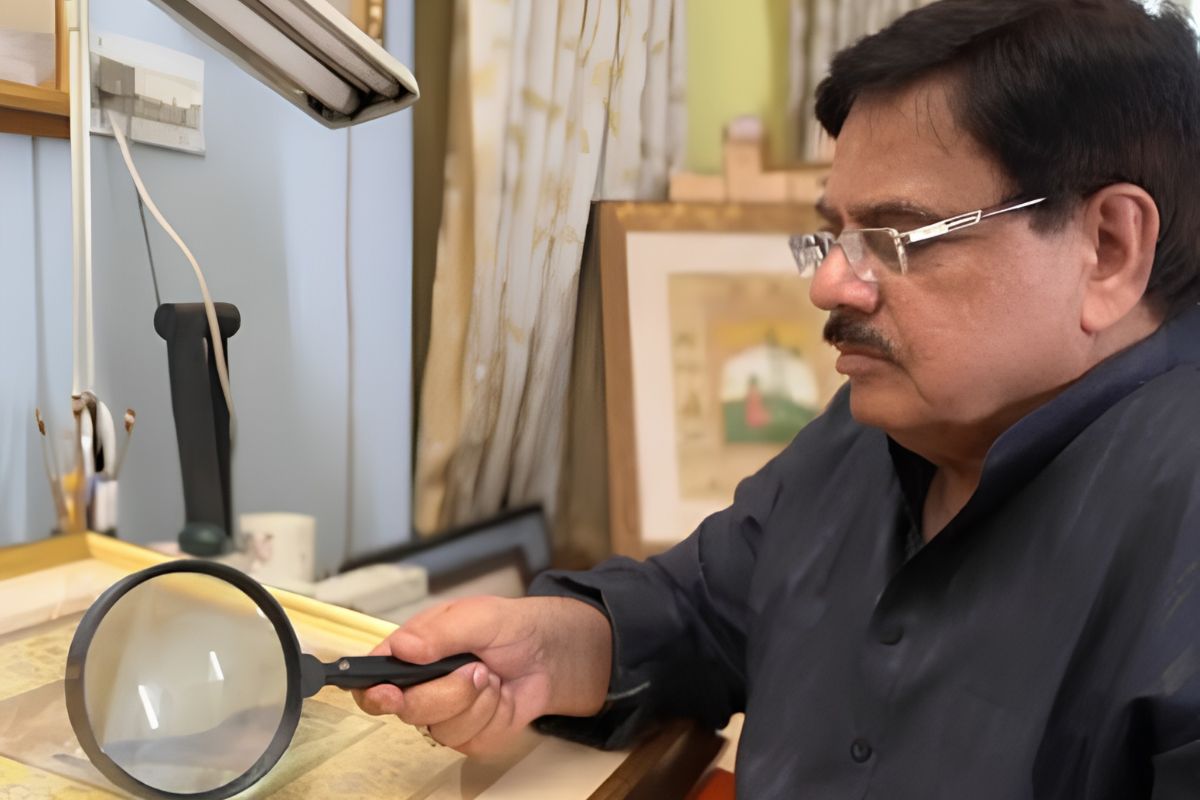
His 2013 Padma Shri and his 2021 Credent Ratna Award stand as proof that determination and passion can travel far beyond the borders where they began. Syed Shakir Ali is not only a master of miniature painting. He is more like a magician, a man who quietly set off a revolution in the world of traditional Indian art.
Today, working on new pieces from his home in Jawahar Nagar, Jaipur, he keeps his legacy alive. It lives on in his paintings, in the thousands of students he has trained, and in the countless people who have drawn inspiration from his work. Shakir Ali’s life offers a simple lesson. When passion, patience and dedication come together, even the most improbable dream can come true, whether that dream begins with a child sketching on a wall with charcoal or ends with a President placing an honour around his neck.
Also Read: From Guns to Glamour: Surrendered Naxal Women Walk Fashion Ramp
You can connect with DNN24 on Facebook, Twitter, and Instagram and subscribe to our YouTube channel.