
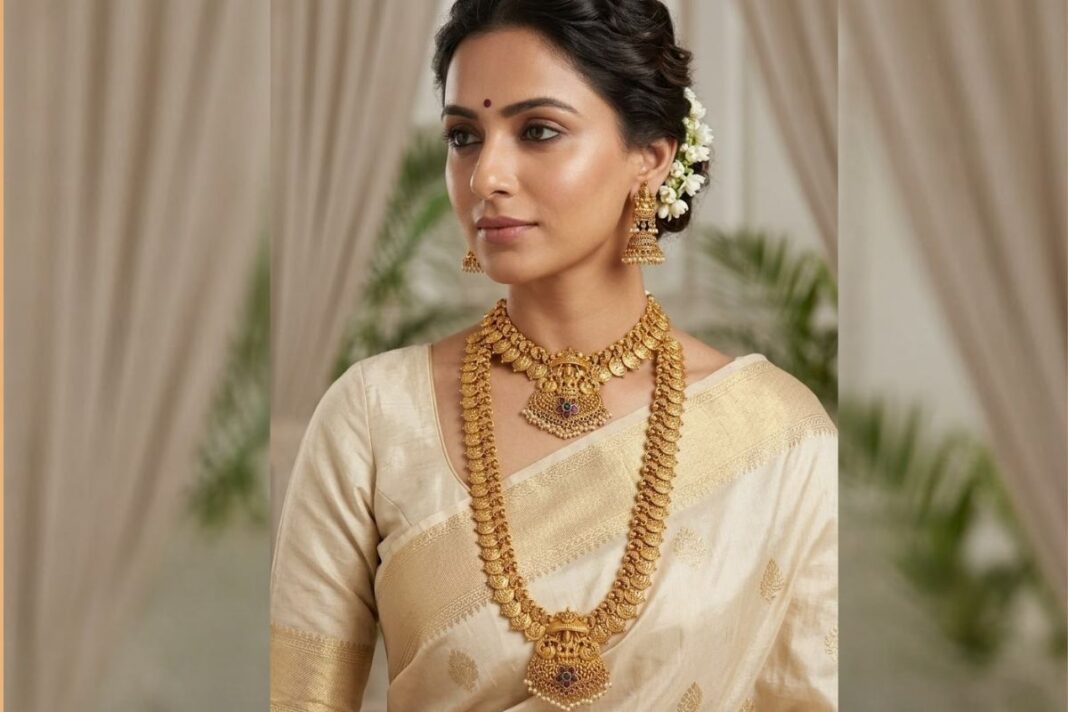

A golden coin necklace that South Indian brides still crave has been draped around wedding-day necks for well over a thousand years. The temple bells ring, the ritual chants rise, and as the bride steps into the wedding hall, one ornament pulls every eye toward it. This is the kasu mala, a chain made entirely of small gold coins, each stamped with the likeness of a goddess or a temple motif. It is not simply jewellery. It is a portable record of family wealth, divine favour, and generations of women who wore the same coins before her.
What The Name Actually Means
The word kasu means coin, and mala means garland or necklace, so the name translates plainly as a garland of coins. Tamil Nadu calls it kasu malai. Kerala sometimes calls it kasu haaram or Lakshmi sara, a nod to the goddess whose image graces most of the coins. Telugu speakers in Andhra Pradesh and Telangana call it kasulaperu, sometimes lengthened to kasula haaralu. Karnataka says kasu mala or kasu haaram.
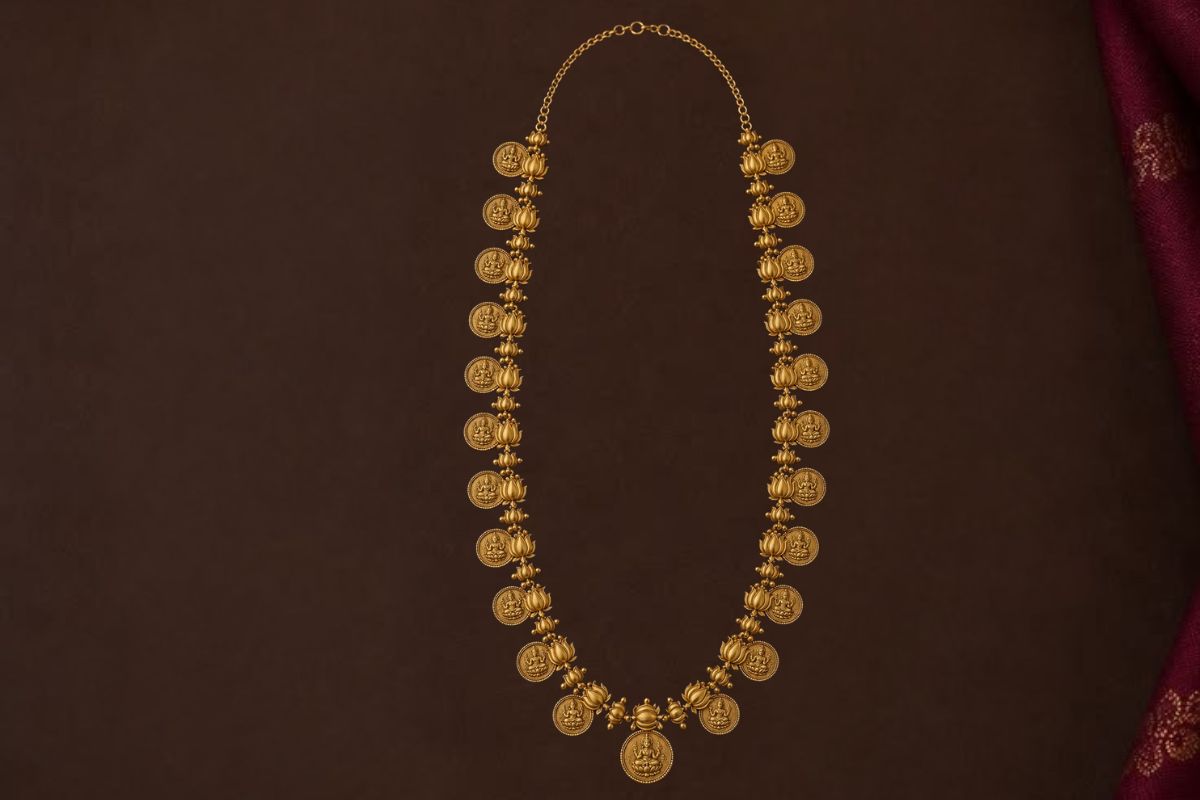
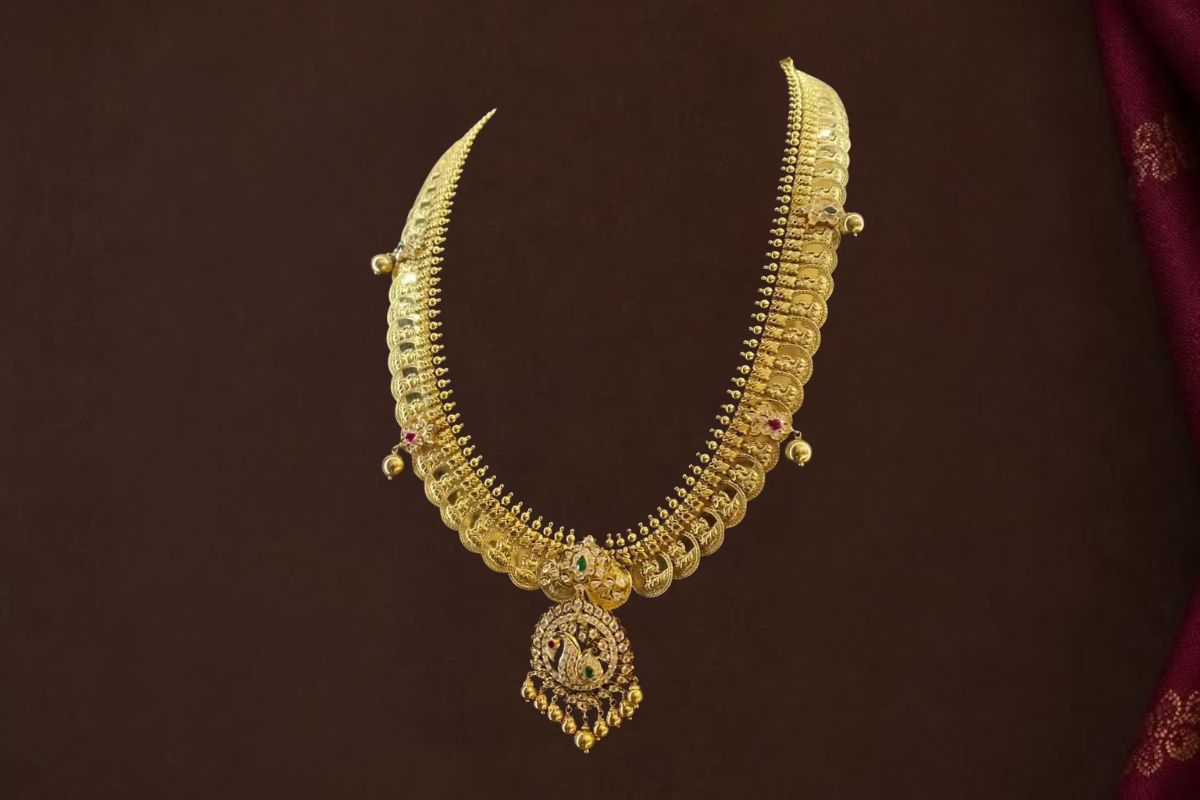
The names shift from state to state, but the construction stays the same everywhere. Small round gold coins are strung so close together that they overlap slightly, forming a dense golden band that sits flat against the throat. Most of the coins carry an engraving of Goddess Lakshmi, sometimes the Rama family, sometimes a temple emblem, which turns the necklace into something closer to a wearable blessing than a fashion accessory.
A History That Runs Deeper Than Most People Guess
The idea of wearing coins as jewellery didn’t begin with a recent trend. Vedic texts mention an ornament called nishka greeva, and nishka was itself a form of currency, showing that stringing coins into a necklace is an old tradition in Indian craftsmanship. Ancient sculptures from Amaravati depict figures wearing coin necklaces of a similar style, proof that this look has survived through many centuries of Indian art and daily life.
The ornament gained real prestige during the medieval period, particularly under the Chola, Pandya, Chera, and later the Vijayanagara Empire, which ruled from the fourteenth to the seventeenth century. People threaded real gold coins, often stamped with the image of Lakshmi, onto cord and wore them openly. This was decoration, but it also functioned as walking wealth and a visible marker of social standing. Gold coins offered to temples during that era fed into the same tradition, which is how the kasu mala came to carry both sacred meaning and royal weight.
One old Tamil folk story tells of a toddy tapper who found hidden gold, and the king sentenced him to death. His final wish was that his name be stamped forever on a pure gold coin known as sanar kasu, and a necklace made from that very coin is said to have passed down through generations. Whether the tale is literal or symbolic hardly matters; it shows that the kasu mala was never just something bought at a jeweller. It carried memory and identity along with the metal.
How The Craftsmanship Actually Works
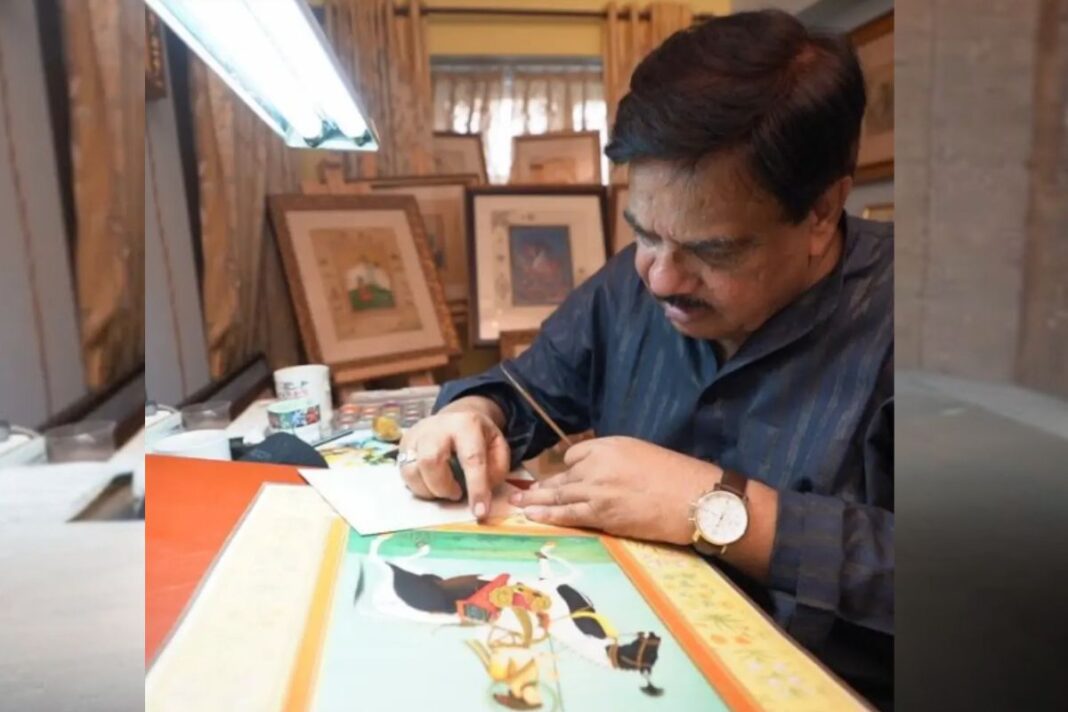
Traditional kasu mala is almost always made in twenty-two karat gold, since South India treats high-purity gold as both auspicious and long-lasting. Each coin is hammered and punched by hand, showing Lakshmi seated on a lotus, lamps burning, or the Rama family in a joyful pose. These coins are then linked together to form a chain that stays flexible despite its weight. Length usually falls between eighteen and twenty-four inches. Some brides choose a shorter version that rests near the collarbone, while others go for the long haaram style that falls toward the chest.
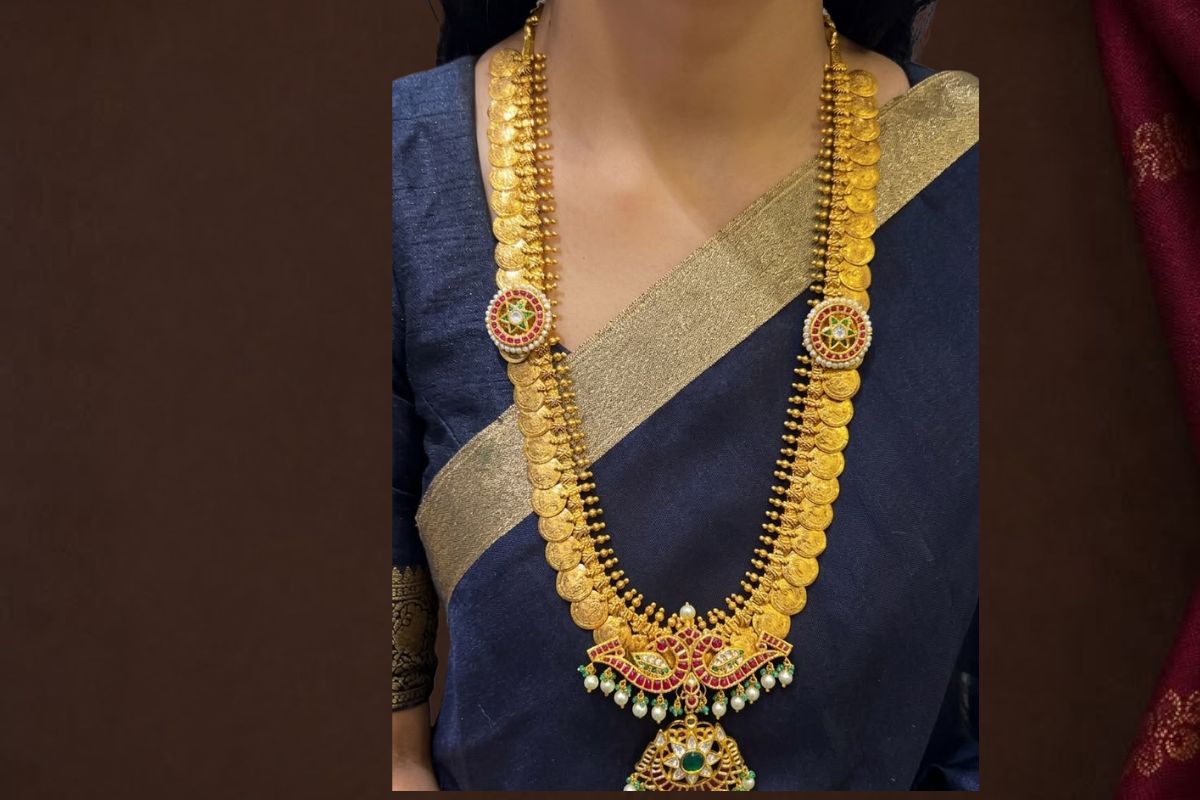
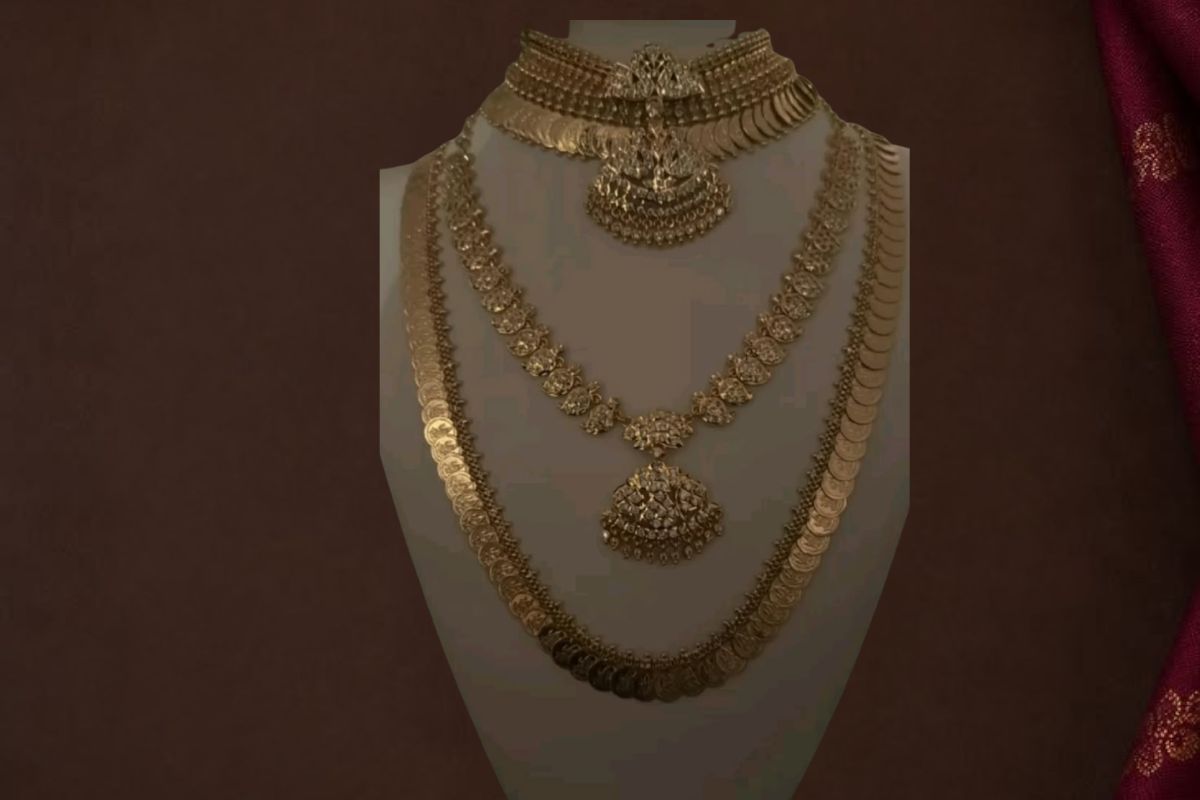
Modern jewellers have kept the traditional structure while experimenting at the edges. Double-layer kasu mala, a heavy pendant hanging at the centre, or a gem-studded border along the sides are common updates now. Even with these changes, the piece’s identity never wavers. Coins packed tightly in a row, forming one continuous golden surface across the neck, remain the whole point.
Why It Matters So Much At Weddings
A South Indian wedding joins two families and their inheritances, not just two people, and the kasu mala carries that idea straight onto the bride’s neck. In Tamil and Telugu weddings, it’s a core part of the bridal set, often gifted by the bride’s family as a kind of sealed blessing.
Because the coins so often depict Lakshmi, the necklace is treated as a symbol of wealth, food security, and general prosperity, which is why it also appears at pujas, upanayanam ceremonies, and other auspicious events beyond the wedding itself. In many families, it becomes a true heirloom, passed from grandmother to granddaughter, looking almost untouched by time each time it changes hands.
In Kerala, some families begin collecting gold coins the moment a daughter is born, gathering forty, ninety-six, or the sacred number of one hundred and eight coins over years before the wedding finally arrives. That slow accumulation turns the kasu mala into something like a long-term savings account worn as jewellery, one that signals both financial security and social standing.
From Temple Sculpture To Stage To Bride
The kasu mala sits at the centre of South India’s temple jewellery tradition. This style began by decorating temple idols during the Chola period and later moved into the costumes of Bharatanatyam dancers. Over time, it stepped outside temple walls entirely and became a standard part of bridal styling, a journey that runs from goddess to dancer to bride. The Pandya and later Vijayanagara dynasties further strengthened this custom, which is why temple jewellery, with the kasu mala as its most recognisable piece, still counts as essential at Tamil weddings today.
Kerala weddings add another layer of ritual. During the muhurtham, the exact moment the mangalsutra is tied, the bride wears her kasu mala over a kasavu mundu. This cream-and-gold saree has become a wedding-day signature. That image is usually the most photographed frame of the entire ceremony. Even after the wedding, brides bring the necklace out again for the seventh-month ceremony, the first Onam, and the first Vishu, treating it as a lasting companion for every auspicious milestone in married life rather than a single-day costume.
A Tradition Finding New Life
Younger buyers in large cities are shifting toward lightweight versions with smaller coins, pieces they can wear with a saree at ordinary festivals rather than saving for one big day. Luxury jewellers and local artisans alike now offer custom designs, letting customers stamp family motifs, birth symbols, or short Sanskrit verses onto the coins themselves.
In Kerala, the pairing of kasu mala with a kasavu saree has become a fixture on wedding blogs and social media, and younger women describe it less as grandmother’s jewellery and more as an heirloom fashion statement. The design has stayed relevant for a simple reason. Its roots run deep enough that each new generation finds a fresh reason to keep wearing it without losing its original meaning.
Spotting The Real Thing
Authentic kasu mala shows itself through fine craftsmanship. Look for clear, evenly stamped motifs across each coin, sturdy joints between links, and a chain that lies flat rather than twisting on the neck. A hallmark confirming twenty-two karat purity, along with proper billing details, should always accompany a genuine piece. Basic care is simple. Keep perfume and sprays away from direct contact with the gold, wipe it with a soft cloth after each wear, store it in its own box, and have the clasp and links checked periodically.
One Necklace, Many Stories
The beauty of the kasu mala lies less in the gold itself and more in the history pressed into every coin, stretching from Vedic verses to Vijayanagara courts, from temple bells to a modern bride’s phone camera. When a bride puts it on, she wears more than an ornament. She carries her mother’s hopes, her region’s craft, and her culture’s pride around her own neck.
The world keeps moving faster every year, yet the kasu mala reminds us that some things don’t just survive time. They live inside it. That’s why a royal ornament from the Vijayanagara Empire still sits, centuries later, as the crown of every South Indian bride.
Also Read: From Guns to Glamour: Surrendered Naxal Women Walk Fashion Ramp
You can connect with DNN24 on Facebook, Twitter, and Instagram and subscribe to our YouTube channel.