


Three of the oldest houses of worship in India- one Muslim, one Christian and one Jewish- stand within a short distance of each other on the Malabar Coast. Each one is still in use.
For centuries, the ports of the Kerala coastline linked the subcontinent with Arabia, Persia, East Africa, Southeast Asia and the Mediterranean world. Ships brought in people and took back spices. The newcomers included merchants, sailors, refugees and pilgrims, and local rulers and communities received them with warmth. No army carried these faiths ashore. They arrived on the same tides that carried pepper and cloth.
The Mosque That Carries a King’s Name
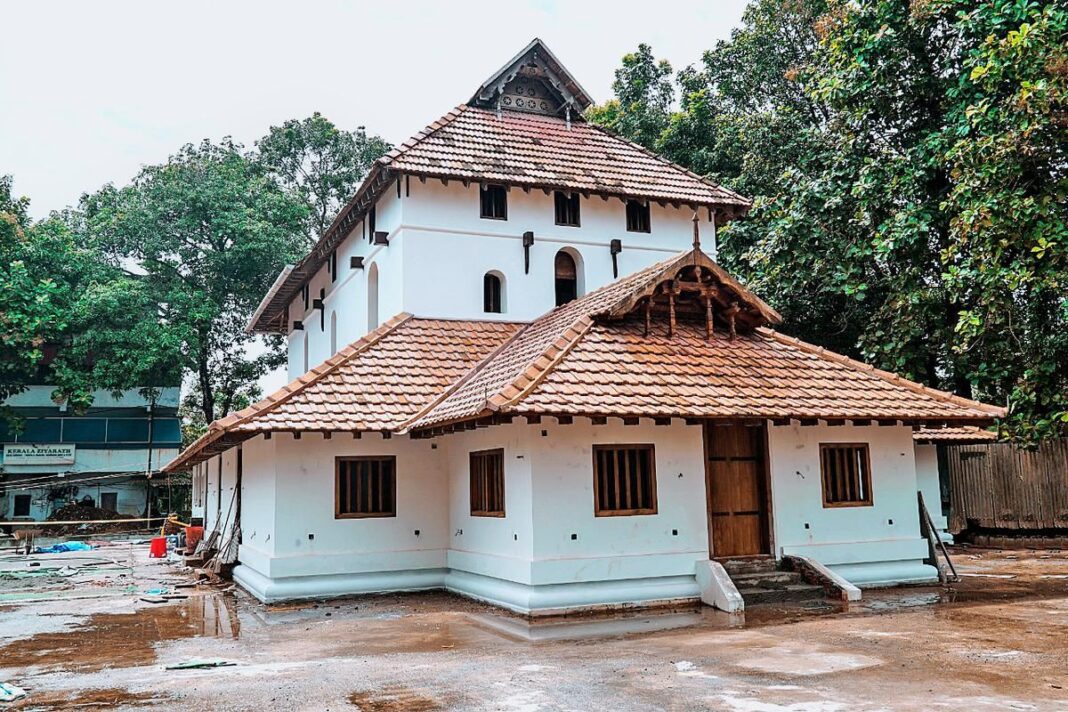
At Kodungallur in Thrissur district stands the Cheraman Juma Mosque, widely regarded as India’s first mosque. Tradition holds that Malik bin Dinar and a company of Arab followers founded it in 629 CE. If that date is accepted, it ranks among the oldest mosques in continuous use anywhere on the Indian subcontinent.
The popular account runs as follows. Cheraman Perumal, a Chera king, went to Arabia and became a Muslim. Malik bin Dinar later came to Kerala, and the mosque was raised at Methala in Kodungallur. It still carries the king’s name and remains a place of worship.
Historians handle parts of this story with care. Some scholars argue that the present building dates to a later period, perhaps the 14th or 15th century, and that the 629 CE date rests on tradition and lacks firm evidence from the time. Even so, few doubt the mosque’s standing. It is commonly called India’s first mosque and the oldest still in use across the subcontinent. Its survival points to a long friendship between Kerala and Arab traders, and to Islam’s early arrival by sea long before any political power came with it.
A Coast With Its Doors Open
Kodungallur was known in older times as Muziris, and also as Cranganore. It was a major port. Roman traders, Jewish merchants, Arab sailors and Christian missionaries all passed through, so it is no surprise that ideas about God travelled with them.
The Cheraman Mosque, the ancient Christian tradition of Palayur and the Jewish presence at Kodungallur all belong to this wider world of ships and markets. Kerala did more than receive these faiths as visitors. It took them into local social life, its building styles and its daily habits. Different communities prayed, traded and lived along one shoreline, and the plural religious culture that grew from it still shapes the state.
Palayur and the Apostle
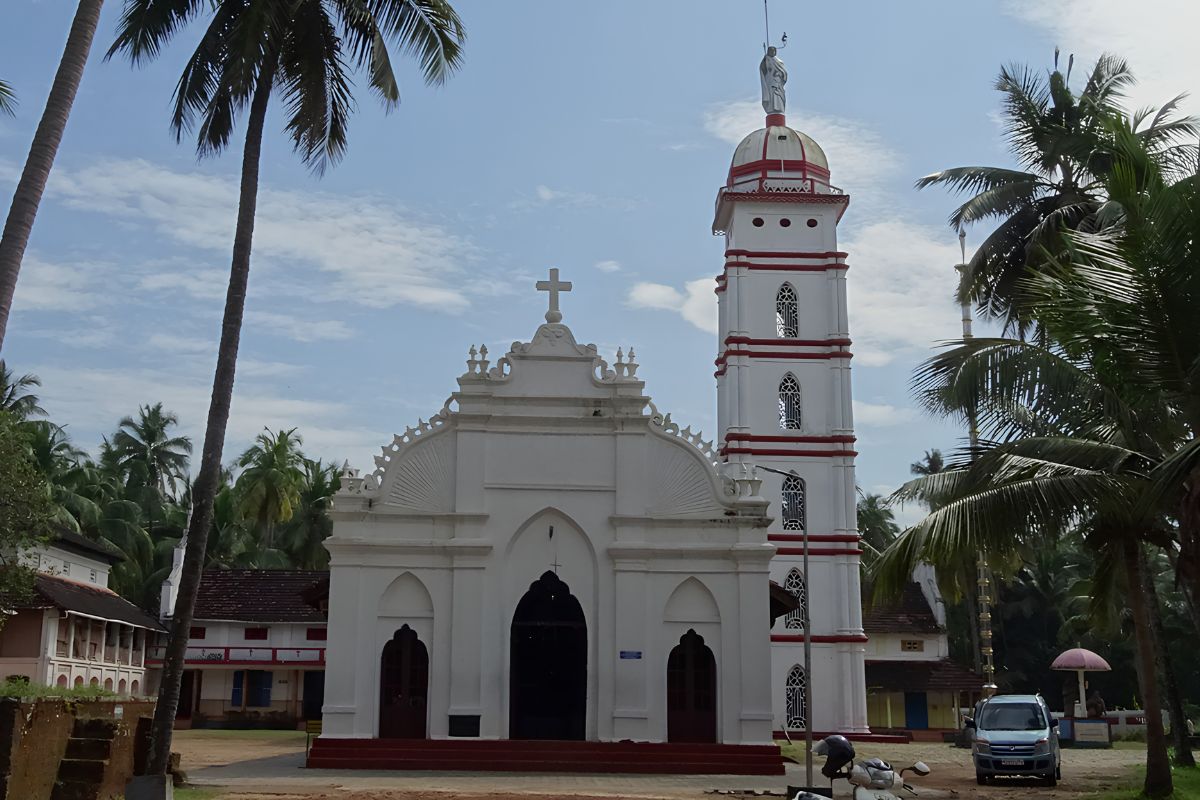
Near Guruvayur in Thrissur district lies Palayur, home to the St. Thomas Church of the Syro Malabar community. According to Saint Thomas Christian tradition, the Apostle Thomas landed on the Malabar Coast in 52 CE and founded seven churches- Palayur being one among them.
In tradition, then, this is the oldest Christian church in India. The community that grew around it became part of the Saint Thomas Christians, who rank among the world’s oldest Christian communities.
As with the mosque, historians separate belief from documents. The belief that Saint Thomas himself founded the church in 52 CE is a deeply held religious conviction. The earliest physical and written evidence for Christianity in Kerala comes from later centuries.
The tradition carries historical weight. It shows how Kerala’s Christians have understood their own beginnings. They do not see their faith as a late import of colonial times. They see it as ancient, tied to the links between the Malabar Coast, the eastern Mediterranean, and West Asia.
The church standing today has been rebuilt and enlarged more than once. It remains a living centre of worship and pilgrimage, kept going by a community that has practised its faith in Kerala for many centuries.
The Synagogue in Jew Town
In Mattancherry, Kochi, stands the Paradesi Synagogue, India’s oldest working synagogue. The prosperous Paradesi Jewish community built it in 1568, many of them Sephardic Jews who had fled persecution in Spain and Portugal.
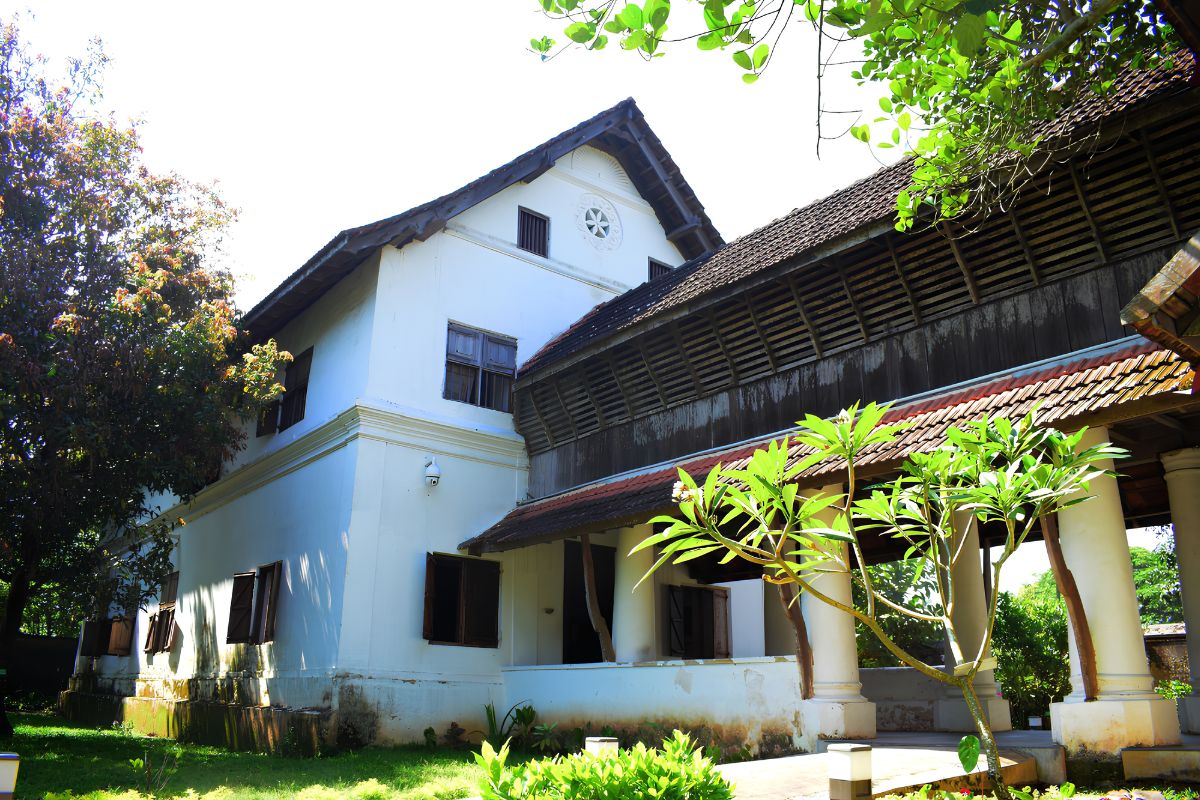
The building rose on land linked to the Kochi royal family, reflecting the protection and standing the Jewish community enjoyed under local rulers. Its setting in “Jew Town” remains one of the most distinctive heritage quarters in Kochi.
A fire destroyed the synagogue in 1662, during a time of Portuguese pressure and conflict. It was rebuilt soon after and has stood ever since as a remarkable monument to Jewish life in Kerala.
Among its treasures are rare copper plates, traditionally connected with privileges granted to the Jewish community by the ruler of Cochin. They are among the synagogue’s most valued possessions and hint at a long history of Jewish settlement along this coast.
Older Than 1568
The Paradesi Synagogue is the oldest synagogue still functioning in India, but Jewish history in Kerala reaches back much further. Jewish communities are believed to have lived on the Malabar Coast for many centuries, with trade routes tying them to West Asia and the wider Indian Ocean.
Earlier Jewish settlements were centred on Kodungallur, the same old port region linked with the Cheraman Mosque and the Saint Thomas tradition. Over time, many Jews moved to Kochi, where the Paradesi community became especially prominent.
The synagogue, therefore, continues a much older Jewish presence in Kerala, and it was never a sudden or isolated arrival. Its survival in Mattancherry gives India a rare living link to its Jewish past.
Three Faiths on One Shore
Kerala’s ancient mosques, churches and synagogues are remarkable in themselves. What sets the state apart is that all three existed side by side, in a region shaped by trade, migration and a fair degree of openness.
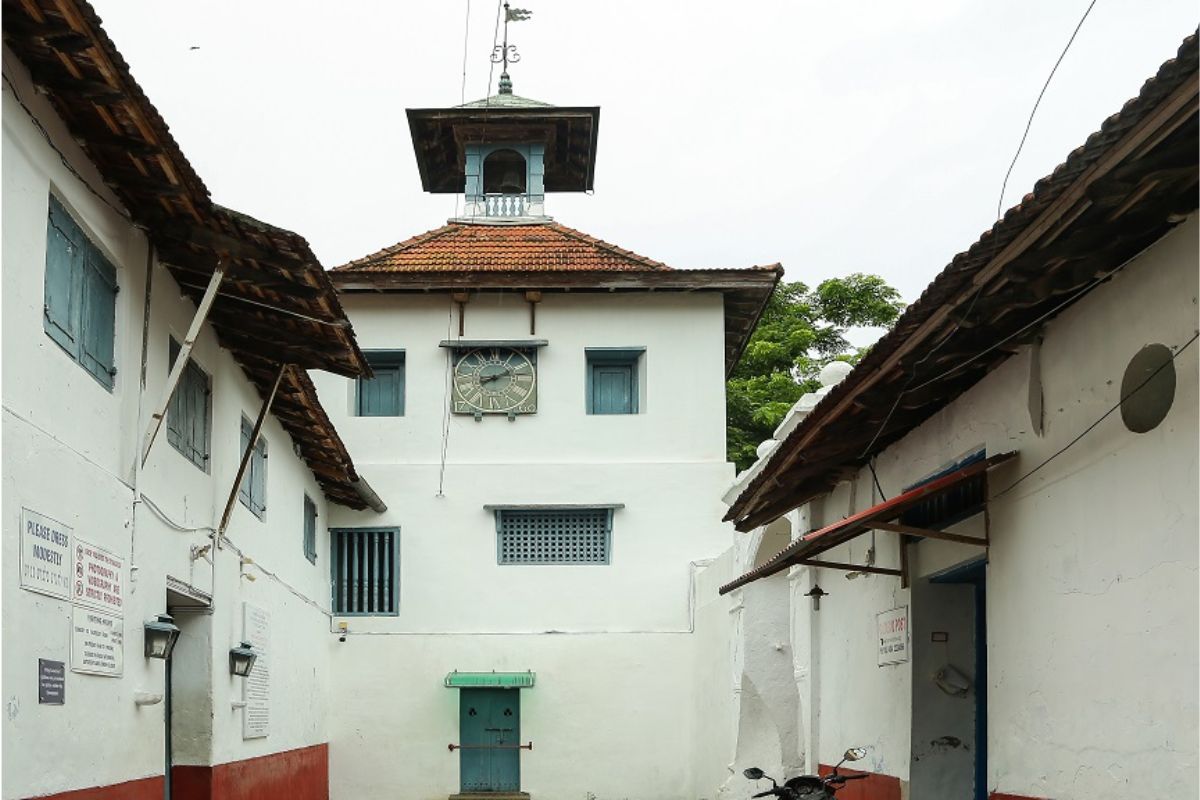
The Cheraman Juma Mosque marks Islam’s early arrival by sea. Palayur holds the ancient roots of Christianity in India. The Paradesi Synagogue keeps alive the memory of a Jewish community that found refuge and livelihood on the Malabar Coast.
Taken together, they challenge the belief that India’s religious variety is a modern creation. Kerala shows that pluralism has deep roots, built over centuries of contact with the wider world.
Still in Daily Use
None of these places is a museum piece. The Cheraman Mosque is still a house of prayer. Palayur is still a Christian pilgrimage centre. The Paradesi Synagogue remains a working synagogue and one of Kochi’s great heritage landmarks.
That continued use gives them a rare strength. They remind visitors of the past, and they also serve as living spaces where faith, memory and community life carry on.
Also Read: India Built Underground Palaces of Water Long Before Modern Water Management
You can connect with DNN24 on Facebook, Twitter, and Instagram and subscribe to our YouTube channel.