

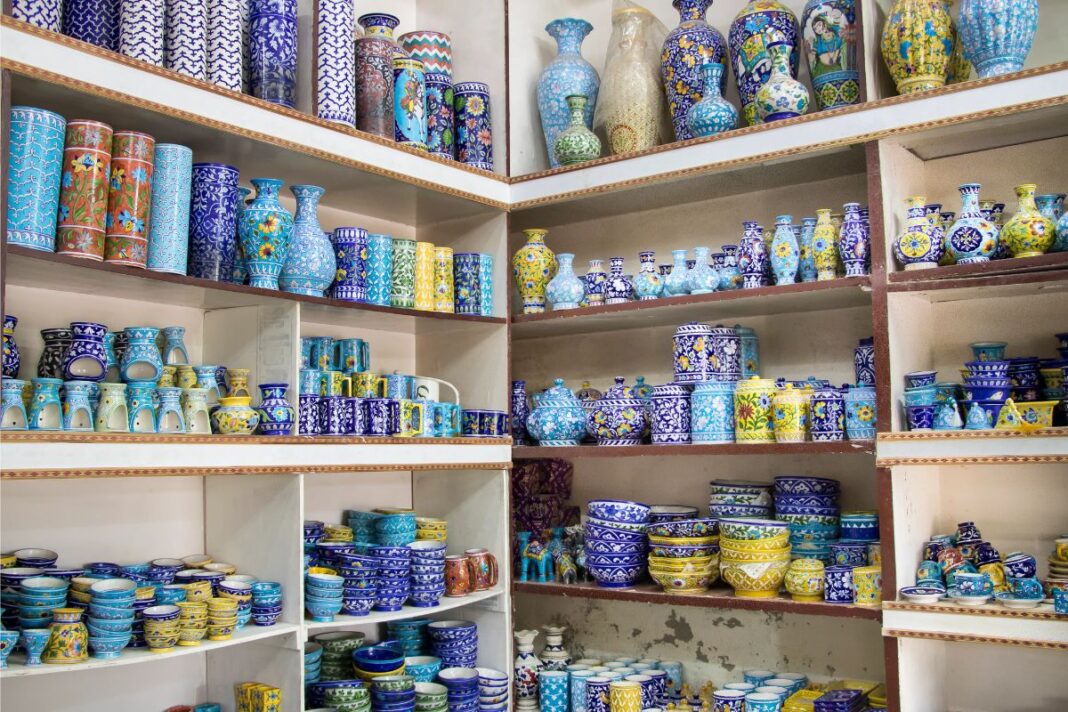

Pick up a blue pottery bowl in a Jaipur shop, and you are holding an object with no clay in it. That surprises most visitors, and it is only the first oddity. The cobalt blues, the turquoise glazes and the curling flowers on its surface carry the marks of China, Persia, Central Asia and the Mughal court. Jaipur gave them a home, and the craft grew into something people everywhere recognise as Indian.
What Goes Into the Body
The body of a blue pottery piece is made from quartz stone powder, powdered glass, borax, gum, Multani mitti (fuller’s earth) and water. Quartz gives it structure. Glass helps produce the glossy finish. Multani mitti, borax and gum bind the mixture and keep it steady. In material terms, it sits closer to fritware than to ordinary earthen pottery, and the fired result has a delicate, translucent quality.
That delicacy comes with a price. The unfired material is fragile, and every stage asks for precision and careful handling.
A Blue That Travelled
The technique has a long ancestry. Historical accounts credit Mongol artisans with merging Chinese glazing knowledge with Persian decorative traditions. With Turkic movements eastwards, the result reached India in the 14th century.
In Central Asia, glazed tiles of this kind decorated mosques, tombs and palaces. Persian designs brought flowing floral motifs, calligraphic patterns and a deep attachment to blue while Chinese ceramic work supplied the advances in glazing.
No single person invented this beauty. It took shape slowly as ideas passed along trade routes, through royal courts and between artisan families.
Into India, Then to Jaipur
Blue glaze work came into India through early Turkic incursions and was first used on buildings. Under Mughal patronage, artisans adapted it for objects beyond tiles and gave it far wider use. From Kashmir and Delhi, the tradition moved toward Rajasthan, and by the 17th century it had reached Jaipur.
The city changed what it received. Local artisans added their own motifs, adjusted shapes for daily household use and built a visual language of flowers, birds, foliage and geometric patterns that people now associate with Jaipur.
A Maharaja’s Support and a Revival
In the 19th century, the craft thrived under Maharaja Sawai Ram Singh II, who encouraged artisans and backed the growth of the art. His interest helped turn blue pottery into a Jaipur speciality. Traditional crafts usually survive when training, demand and recognition come together, and in Jaipur all three were present. Skilled makers, courtly encouragement and a growing sense of civic identity supported one another.
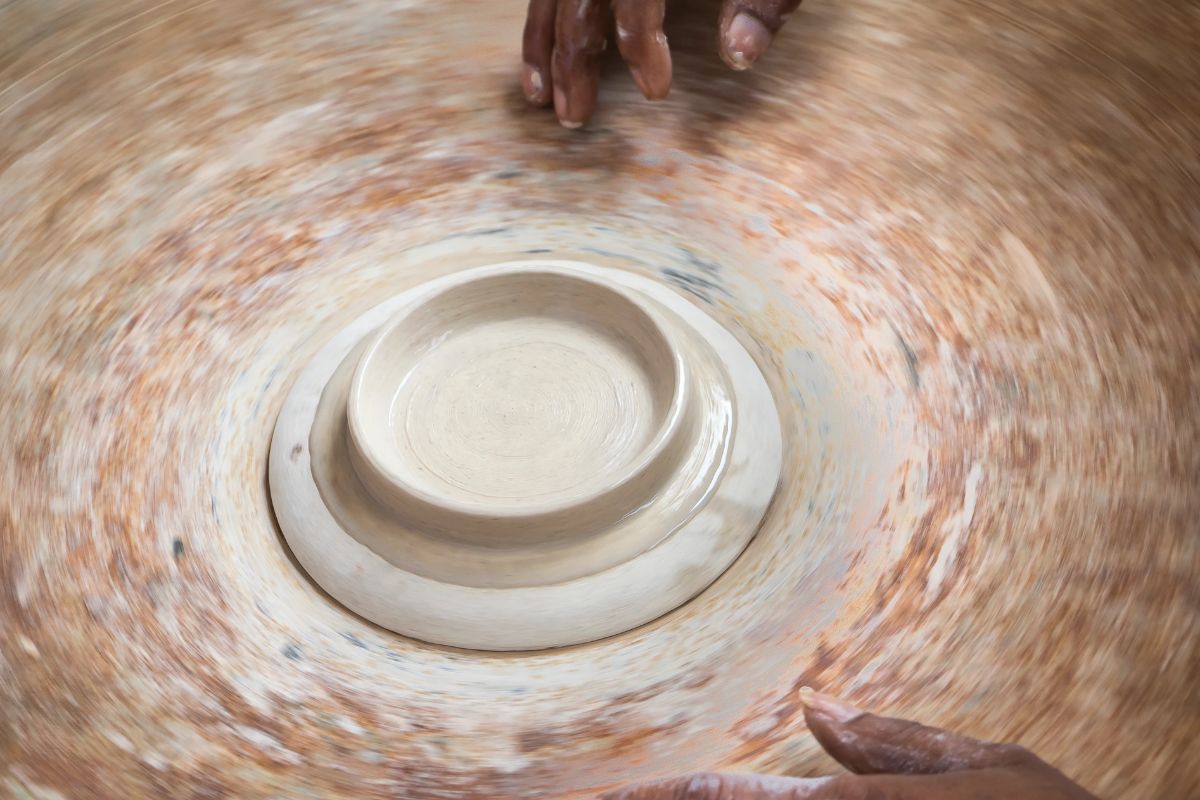
Later, the craft declined. In the 20th century, it was revived through the work of Kripal Singh Shekhawat, a leading artist and craftsman linked with its modern resurgence.
Official Recognition
In 2008, the Blue Pottery of Jaipur received Geographical Indication protection. NABARD supported the registration, which formally tied the craft to the city and its artisans. It also gave a layer of protection to the identity of the craft and to the livelihoods that depend on it. The materials and styles have roots across Asia, yet the present form and the working practices belong to Jaipur’s artisan community.
How a Piece Is Made
Artisans start by kneading the quartz, glass, Multani mitti, borax and gum with water into a smooth dough. The quantities are measured with care.
The dough is rolled into thin sheets, usually 4 to 5 millimetres thick, and pressed into moulds. Some workers use a mixture of pebbles and ash to support the shape. Once the piece can hold its form, the mould comes off, and the object dries for one to two days. A small unevenness in thickness or drying can lead to cracks later, so experienced hands count for as much as the recipe.
The dried piece is then cleaned and shaped again by hand. Sandpaper removes rough edges and leaves an even surface. This step decides the final finish, because a smooth base lets the brush move cleanly and the glaze spread evenly.
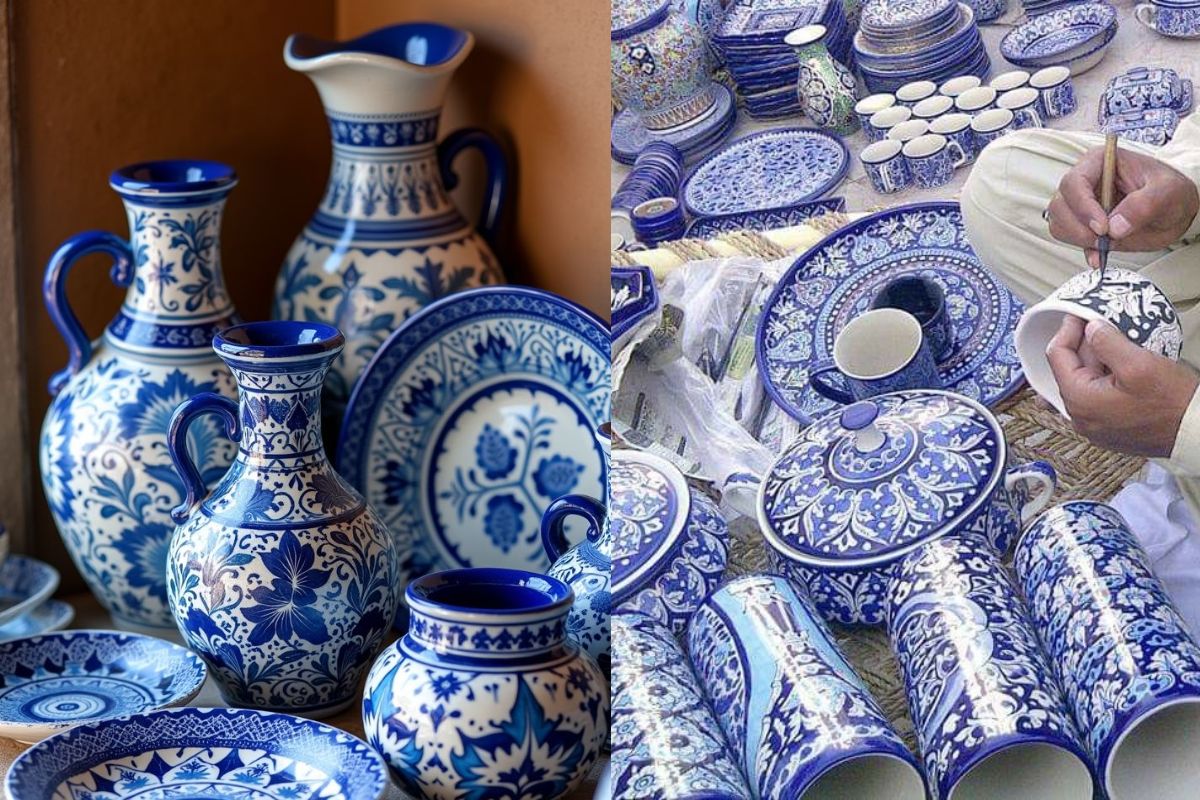
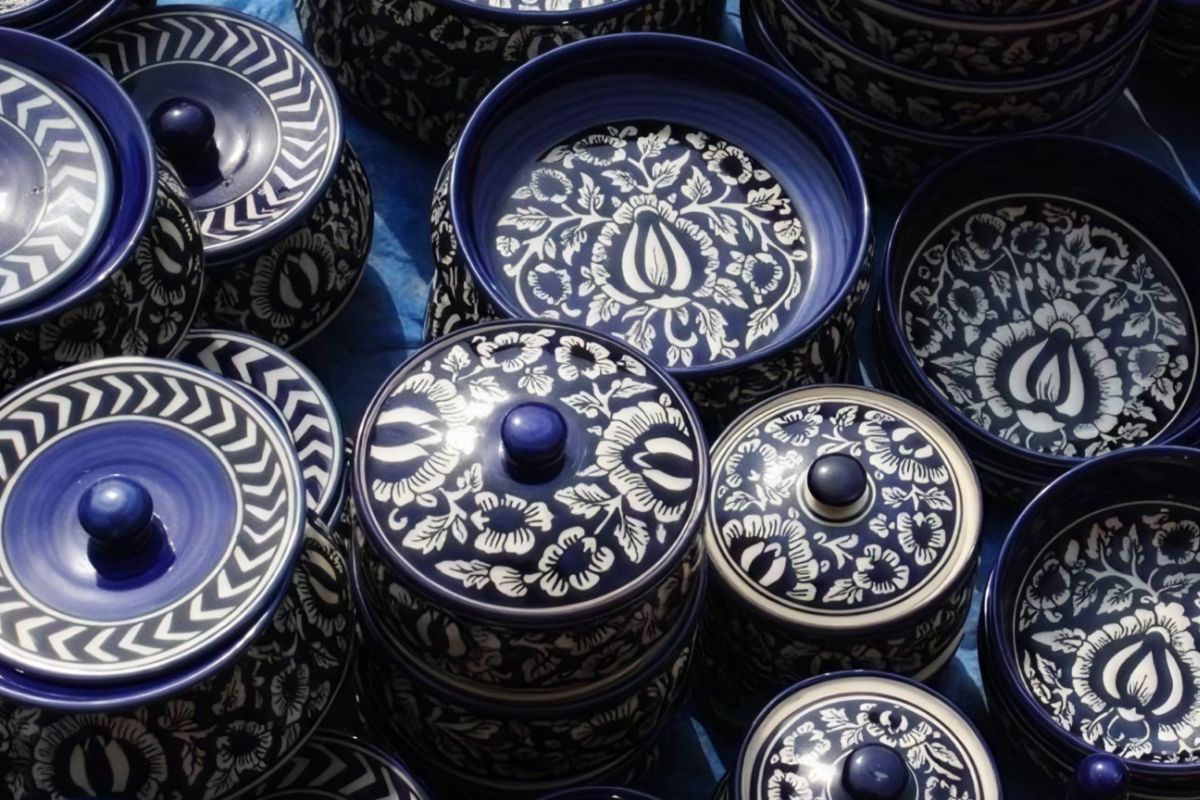
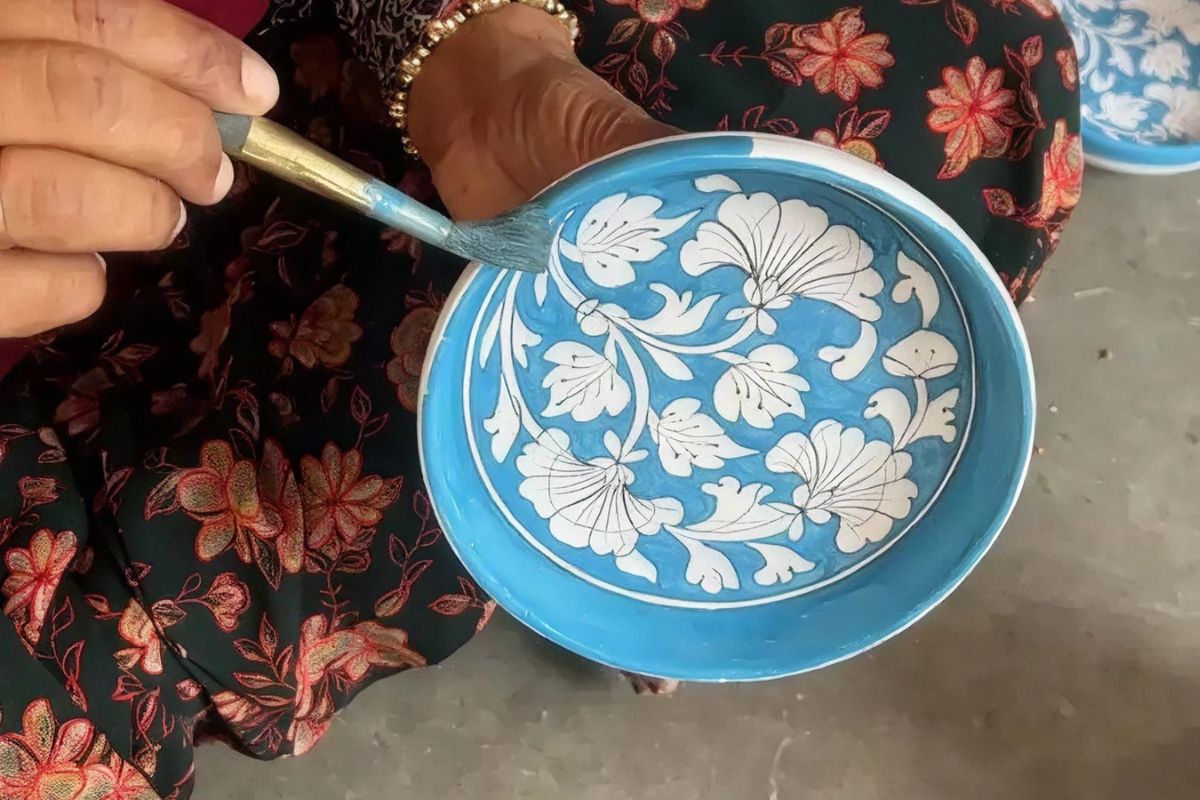
Next comes the painting. Cobalt oxide mixed with edible gum gives the deep blue that names the craft, and other mineral colours produce green, yellow and turquoise accents. Artisans paint floral vines, leaves, birds, geometric borders and traditional Rajasthani patterns straight onto the pale surface. Each stroke is made by hand, so no two pieces match exactly.
After the paint dries, a final coat of glaze goes on, and the piece enters the kiln. The firing temperature is low compared with many ceramic traditions, usually around 800 to 850 degrees Celsius, and it lasts roughly four to five hours. The heat melts the glaze into a glassy skin and hardens the quartz body. Uneven heating or cooling can crack the piece, so the kiln is allowed to cool fully before anyone opens it.
From mixing to unloading, a single object can take days. Some workshops now use modern kilns and tools, though the work remains slow and largely handmade.
What the Blue Carries
Every plate, vase, tile and bowl holds this layered past. The colour recalls Persian tilework and Chinese glazing. The shapes reflect Mughal and Rajasthani tastes. The making happens in Jaipur’s workshops, passed down through families of artisans.
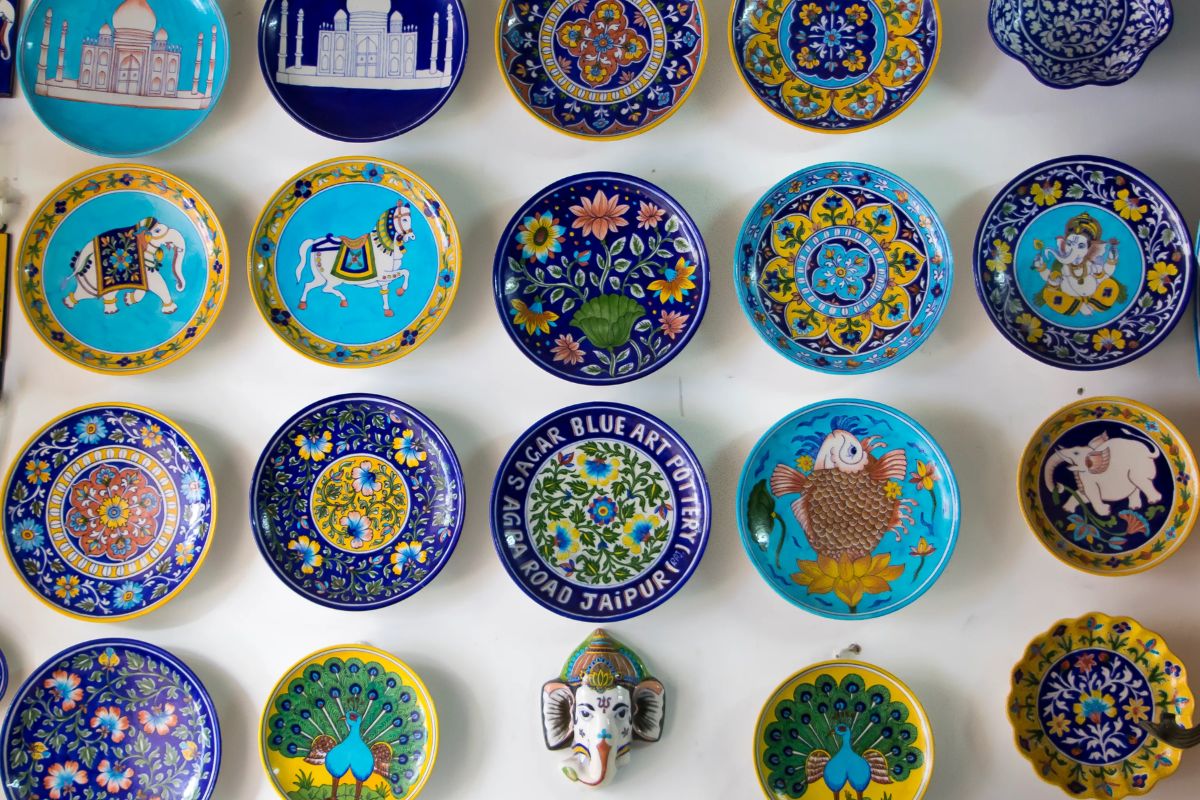
Blue pottery shows how cultures grow through contact. Ideas travel, people adapt them, and something new appears. A ceramic tradition that crossed many borders became a Jaipur art form, protected by a Geographical Indication and admired across the world. Heritage, seen through this blue, keeps changing as people exchange skills, tastes and ideas across time and distance.
Also Read: India Built Underground Palaces of Water Long Before Modern Water Management
You can connect with DNN24 on Facebook, Twitter, and Instagram and subscribe to our YouTube channel.