
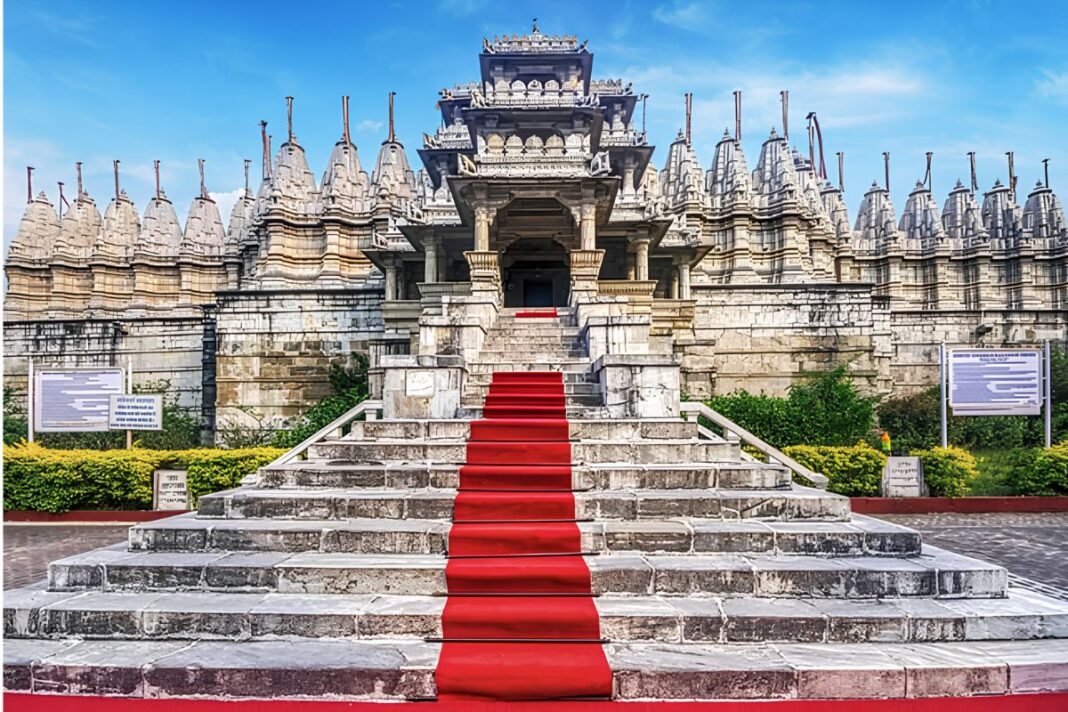

What would make a wealthy merchant spend years turning a forest hillside into marble, all because of something he saw in his sleep? The answer stands in the Aravalli hills of Pali district in Rajasthan. The Ranakpur Jain Temple has stood there since the 15th century, and it still leaves first-time visitors searching for the right words.
A Merchant, a King, and a Vision
The story begins with Dharna Shah, also recorded as Dhanna Shah, a prosperous Jain merchant and minister from Ghanerao. Temple tradition says he dreamed of a celestial vehicle called the Nalini Gulma Vimana and decided to build it in marble. A copper plate inscription and the Sanskrit text Soma Saubhagya Kavya support this account.
He found a patron in Rana Kumbha, the celebrated ruler of Mewar. The king backed the work and named the settlement after himself, so Ranakpur means the village of Rana. Credit for what followed belongs to the merchant, the ruler, and the generations of artisans who carried the work forward.
Construction began in the late 14th or early 15th century. Firm records point to the 15th century. A copper plate record from 1436 CE and inscriptions inside the complex confirm its early history, and tradition says the building took roughly fifty years.
A Forest Made of Pillars
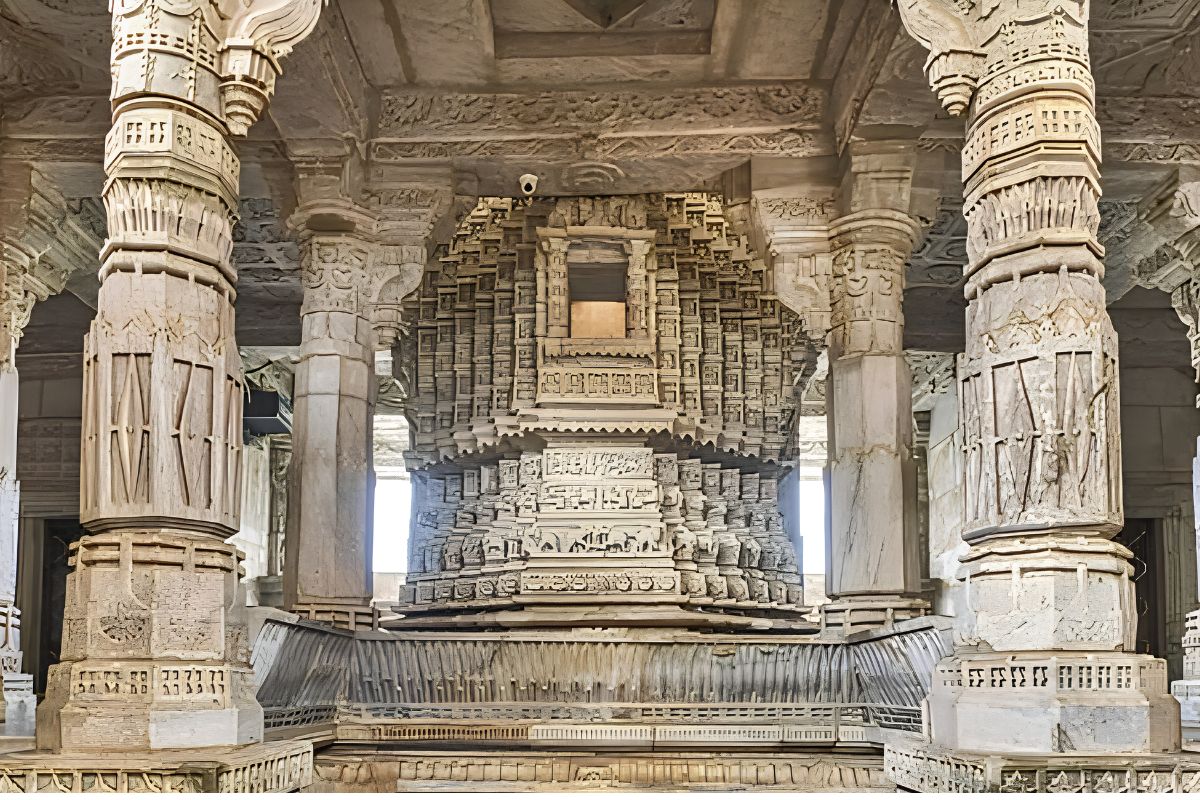
The main shrine is the Chaumukha Temple, a white marble structure covering more than 48,000 square feet. Chaumukha means four-faced. The name refers to the idol of Adinath in the sanctum, which looks toward all four directions. In Jain symbolism, this shows the Tirthankara’s spiritual victory over the whole cosmos.
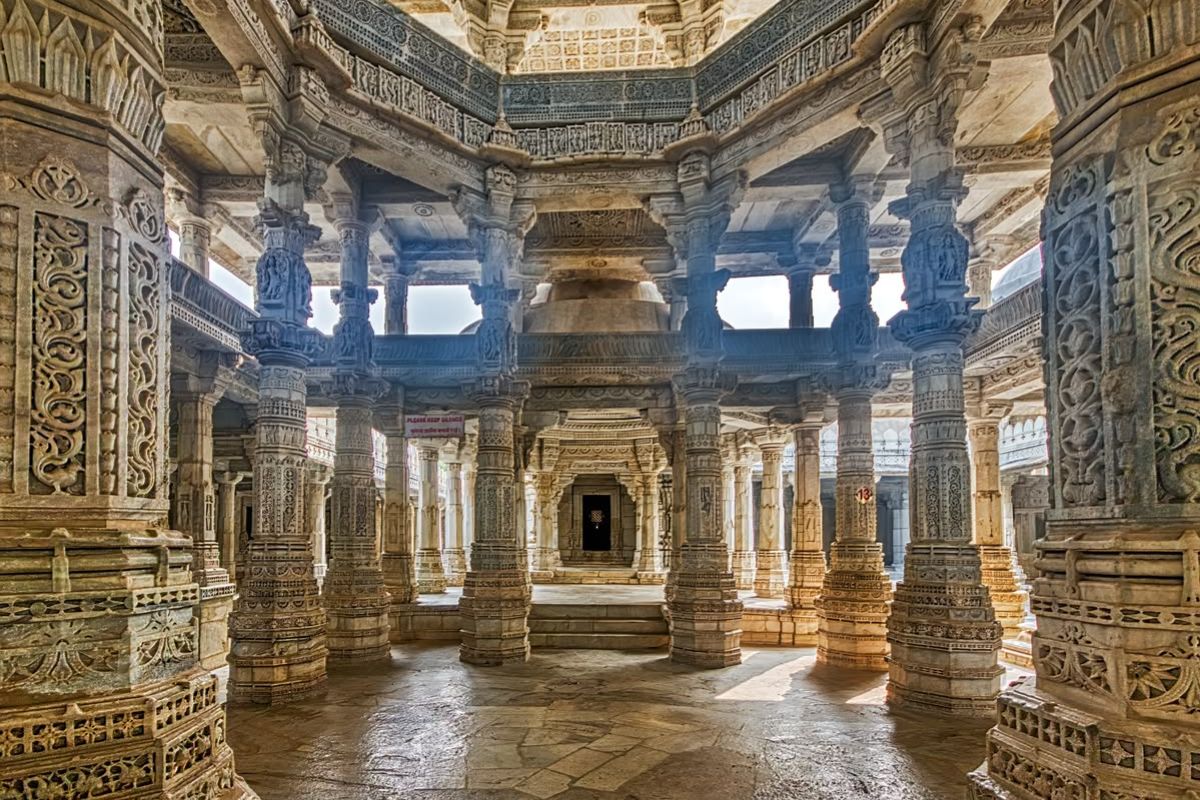
Tradition counts 1,444 carved pillars, 29 halls, and around 80 domes. The most repeated claim says that no two pillars are alike. Nobody has measured this in a formal survey, so it remains a traditional description. Even so, a visitor who walks through the halls will see columns that differ in height, thickness, and decoration. Lotuses, vines, geometric bands, deities, dancers, animals, and celestial figures cover them from base to bracket.
How a Marble Roof Stays Up
The pillars do real work. Ranakpur is a hypostyle hall, which means many columns carry the roof in place of heavy walls. The builders used the post-and-lintel method, where upright pillars hold horizontal beams, and the beams carry the ceilings and domes.
This makes the interior’s lightness a little deceptive. The marble bears enormous weight, yet the slender shapes, layered brackets, and carved capitals keep the halls open and airy. Strength and grace share the same stone.
Built for Darshan
The builders also designed it for worship. Entrances and halls align with the central sanctum, and the pillars stand so the view of Adinath remains clear from many points inside. With hundreds of vertical supports in the way, this is a hard thing to achieve.
Darshan is the sacred act of seeing and being seen by the divine. At Ranakpur, the engineers and the priests seem to have worked toward the same end, and the result lets a pilgrim feel that moment even in a crowded forest of columns.
Ceilings and Carvings Worth Slowing Down For
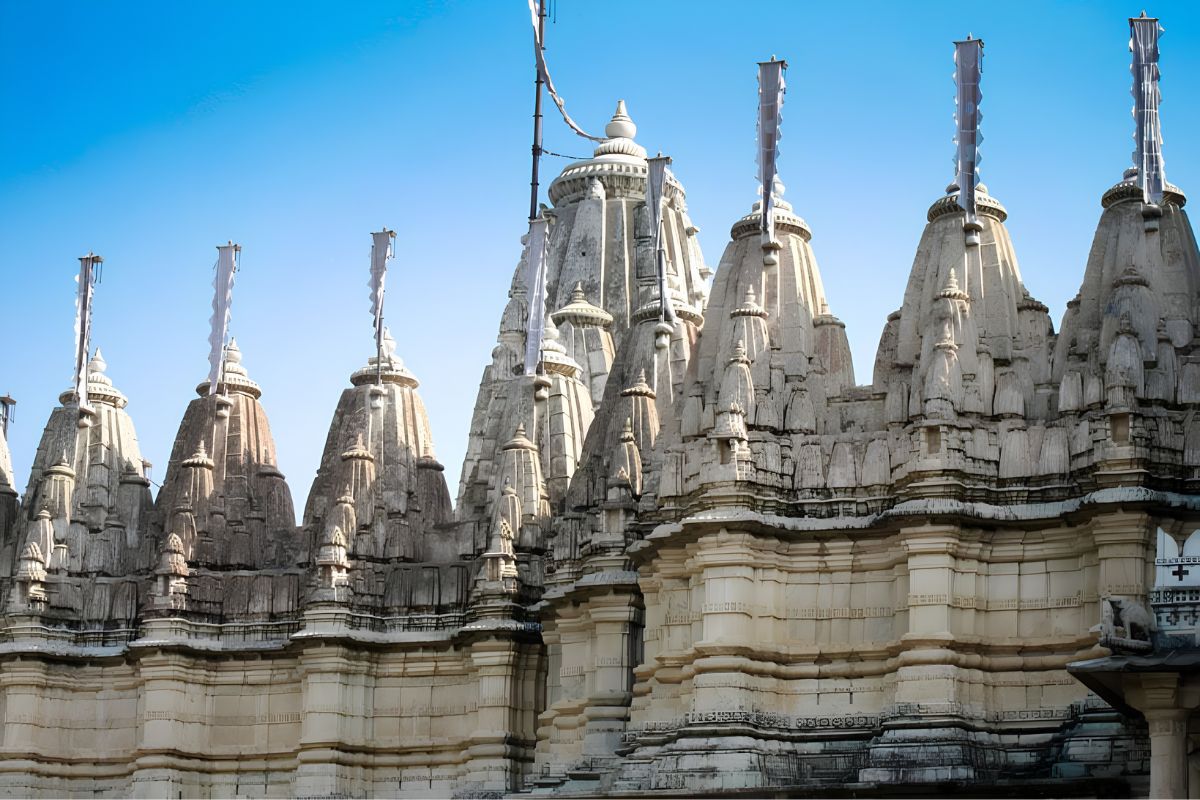
Ranakpur belongs to the Maru Gurjara architectural tradition of western India. This style is known for fine carving, layered ceilings, ornate brackets, and a balance between grandeur and delicacy. Five shikharas, or spires, rise over the shrines, and the central one is the tallest. It marks the main Chaumukha shrine.
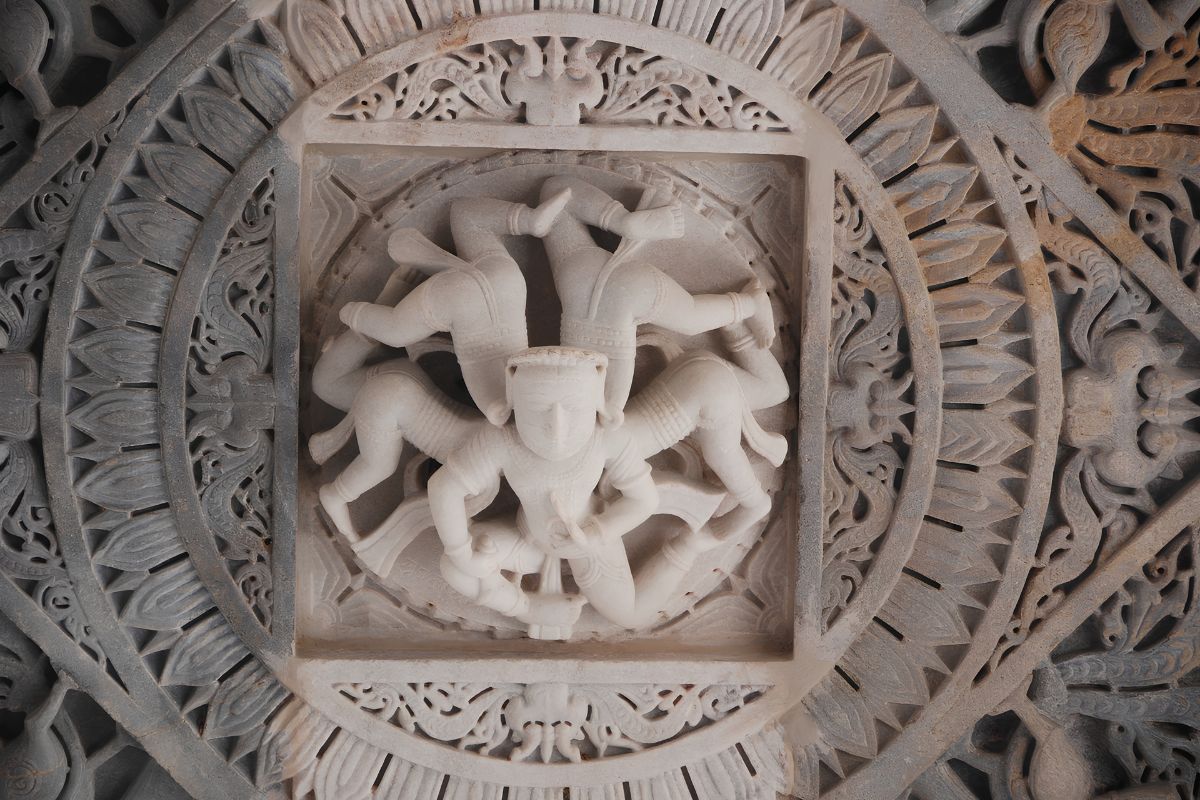
The ceilings may be the building’s finest work. They are carved in concentric bands that look like stone mandalas, precise and rhythmic. One famous carving shows Parshvanatha, the 23rd Jain Tirthankara, sheltered by a canopy of 1,008 serpent heads. Another depicts the Kalpavriksha, the legendary wish-fulfilling tree. Both carry Jain ideas of protection, spiritual aspiration, and liberation.
The pale marble also changes through the day. Morning light gives the pillars a golden warmth, while later daylight turns them silver-white or cool grey. As visitors move through the halls, the carved domes rise and recede overhead, and it feels like walking under a sky made of stone.
The Heart of the Temple
At the center sits Adinath, also known as Rishabhanatha, revered in Jainism as the first of the 24 Tirthankaras. The main idol is about six feet tall and seated in a meditative posture. It embodies the calm at the center of Jain spiritual practice.
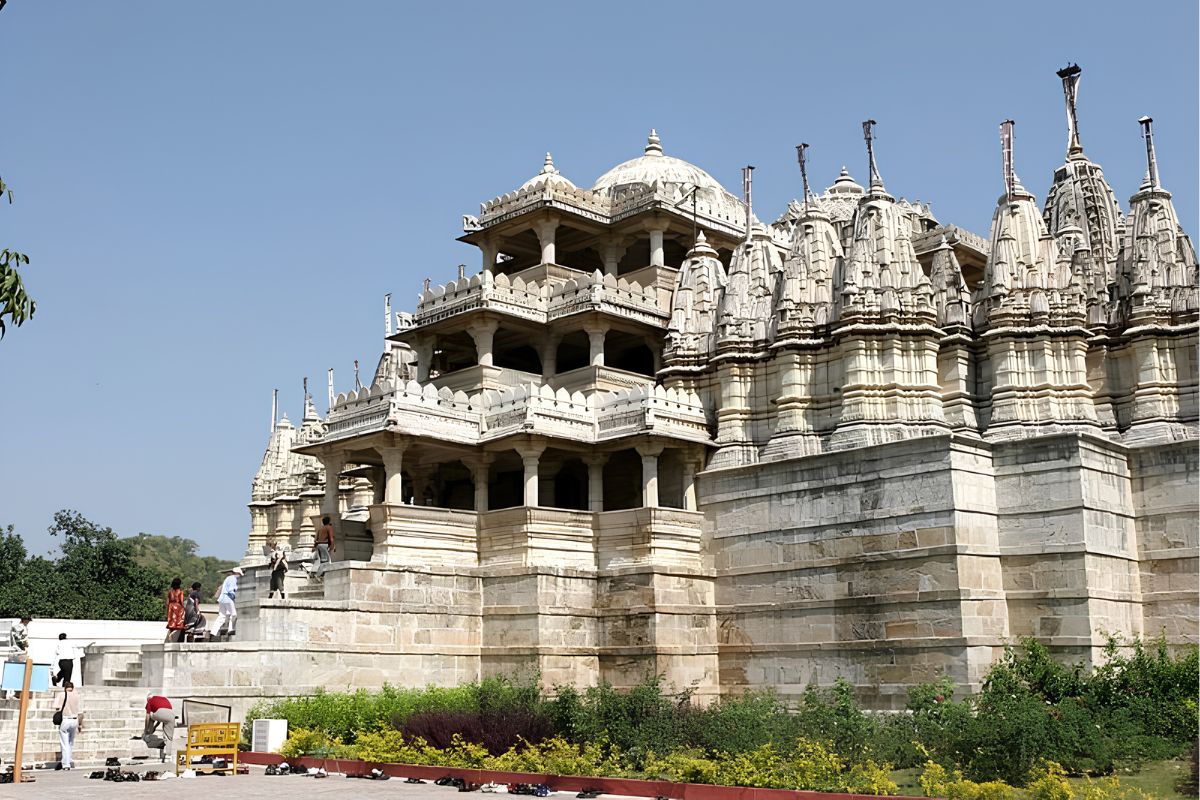
The wider complex includes the Parshvanath Temple, the Surya Temple, and the Amba Mata Temple, making Ranakpur a complete sacred landscape. The Chaumukha Temple remains its spiritual and architectural core. Ranakpur ranks among India’s major Jain pilgrimage sites and is linked to the Gorwad Panch Tirth, a group of five especially revered Jain shrines. Its importance comes as much from centuries of living devotion as from its beauty.
Hidden, Forgotten, and Found Again
The temple has also lived through hard times. During periods of conflict in the region, particularly around the 17th century, priests are said to have hidden sacred idols in underground chambers to protect them from desecration. As wars and instability swept through the area, the temple suffered neglect.
For a time, this marble sanctuary lay forgotten among the forests. Its revival came in the early 20th century, when renewed efforts restored it and brought back regular worship. That recovery shows what a community can do when it decides a place is worth saving.
What the Pillars Count
The number 1,444 has become tied to Ranakpur’s identity. It stands for the Jain ideal of careful effort and devotion expressed through precision. Every column reminds a visitor that sacred architecture is built with patience, skill, and faith, along with stone.
Ranakpur also offers a lesson that feels current. Great things take time, and no single person makes them alone. They grow when vision meets discipline, when patronage meets craftsmanship, and when faith finds expression in patient, shared labor. Every pillar suggests that no contribution is too small when it serves a larger purpose, and every carved ceiling suggests that beauty can be an act of devotion. The quiet corridors under the Aravalli trees add one more thought: that a sacred place and the nature around it can share the same ground.
For India, Ranakpur is a treasure of medieval architecture. For Jainism, it is a place of deep pilgrimage. For any visitor, it is a reason to stop, look closely, and see what human hands can do when they work with reverence, imagination, and a purpose that outlasts them.
Also Read: How Persian Art Found a Home in Kashmir and Became Part of Its Cultural Identity
You can connect with DNN24 on Facebook, Twitter, and Instagram and subscribe to our YouTube channel.