
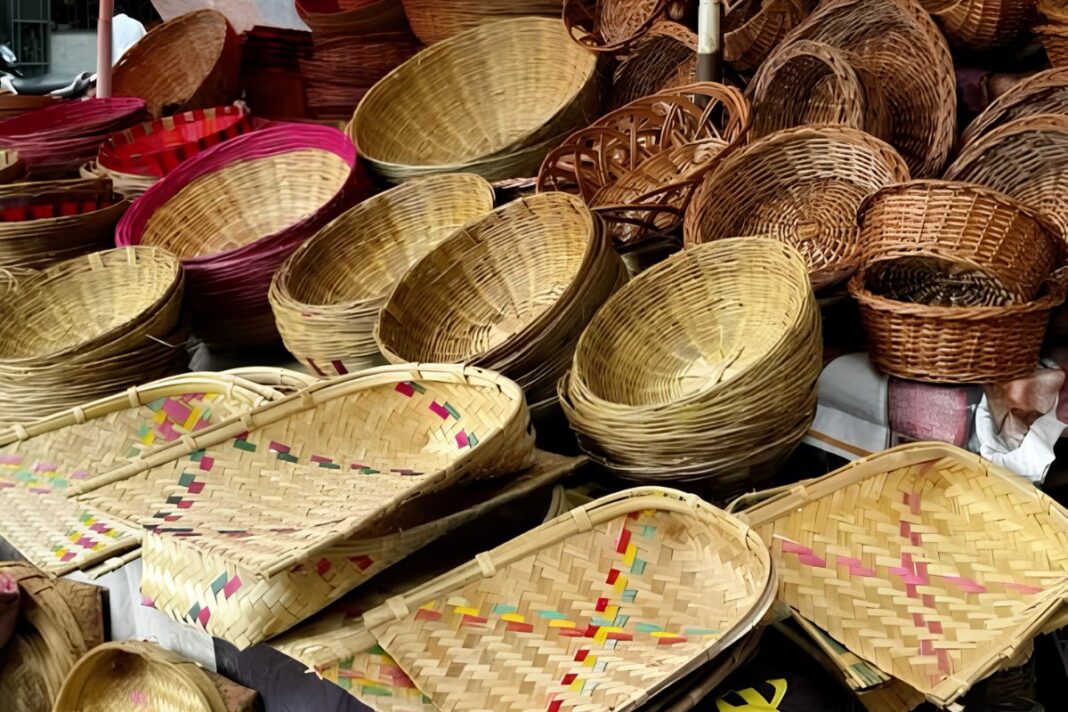

Ask a devotee at a Chhath ghat what matters most, and the answer may surprise you. Before the prayers are said, before the fast is broken, before the sun is greeted, a devotee needs two bamboo baskets. Without the flat soop and the deeper daura, the offerings have nowhere to rest.
These baskets look plain. Yet they carry the festival’s gifts to the water, tie the rite to the natural world, and keep bamboo artisans at work across Bihar, eastern Uttar Pradesh, Jharkhand, and the Terai region of Nepal.
Chhath Puja honours Surya, the Sun God, and Chhathi Maiya. It lasts four days: Nahay Khay, Kharna, Sandhya Arghya, and Usha Arghya. Devotees bathe, fast and make offerings to the setting sun and then to the rising sun. Fruits, thekua, sugarcane, coconut, turmeric, flowers, lamps and sacred water are arranged in the soop and daura before the arghya is made.
What a Soop Looks Like
A soop, sometimes spelt sup, is a flat and shallow tray woven from thin strips of bamboo. In rural households, it has long been used for winnowing, which means separating grain from husk. At Chhath, it becomes a tray for the offerings that a devotee holds while standing in water.
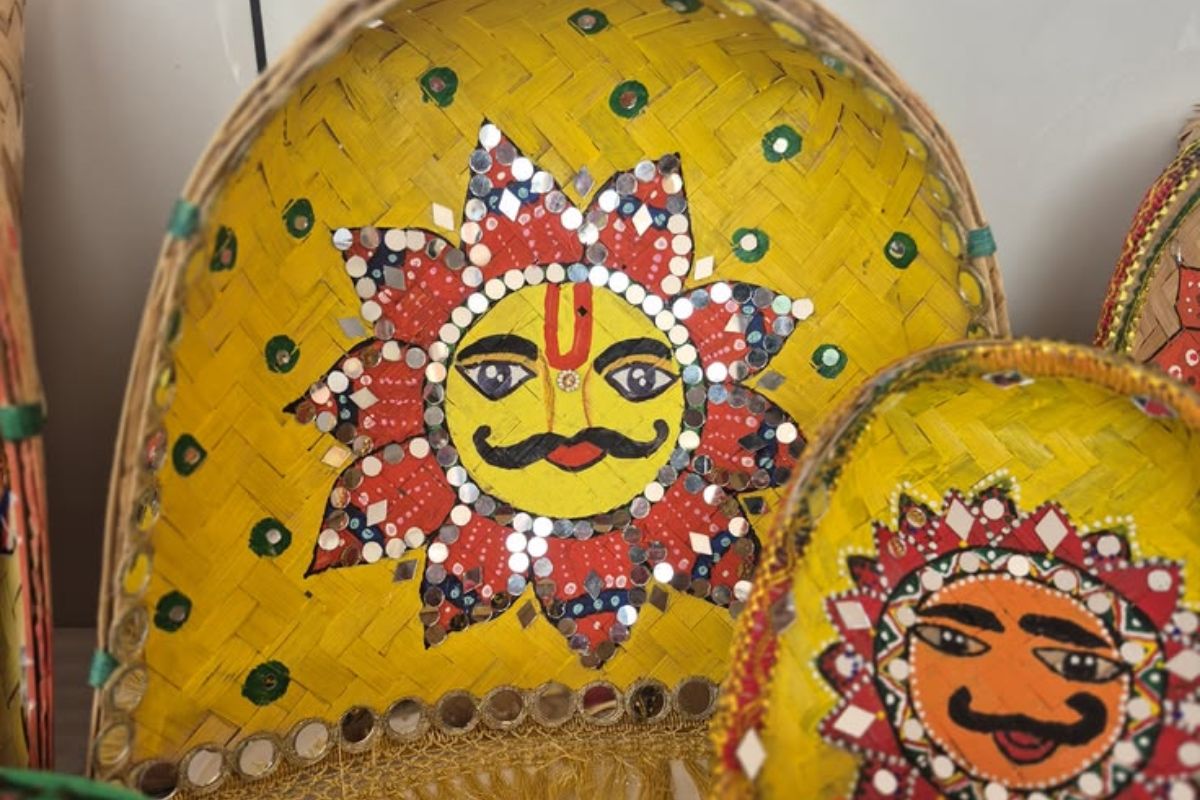
Its flat shape suits the task. A devotee can raise it steadily toward the sun with thekua, seasonal fruit, sugarcane pieces, coconut, turmeric roots and lit diyas resting on it. So a farm tool becomes an instrument of worship. It reminds everyone present that Chhath grew out of farming life, out of the sun that ripens crops, the water that feeds fields and the bamboo that grows freely across the region.
What a Daura Looks Like
The daura, also called dauri, is usually larger and deeper than the soop. It carries a family’s prasad and puja materials on the walk to the ghat. The soop is most visible at the moment of offering, but the daura brings everything safely to the water’s edge.
Many households fill the daura with fruit, sweets, coconuts, sugarcane, flowers and ritual items, then carry it on the head to the river or pond. This is hard work for people who are fasting strictly. It is also a gesture of humility, since the devotee walks barefoot and handles the offerings with great care.
Taken together, the two baskets form a complete ritual. One brings devotion from home to the ghat. The other presents it to Surya. The first speaks of preparation and responsibility; the second, of gratitude and surrender.
How the Baskets Are Made
Artisans choose bamboo, cut it into sections, split it, clean it and shave it into thin, bendable strips called baint. They weave these by hand into the flat surface of a soop or the rounded body of a daura.
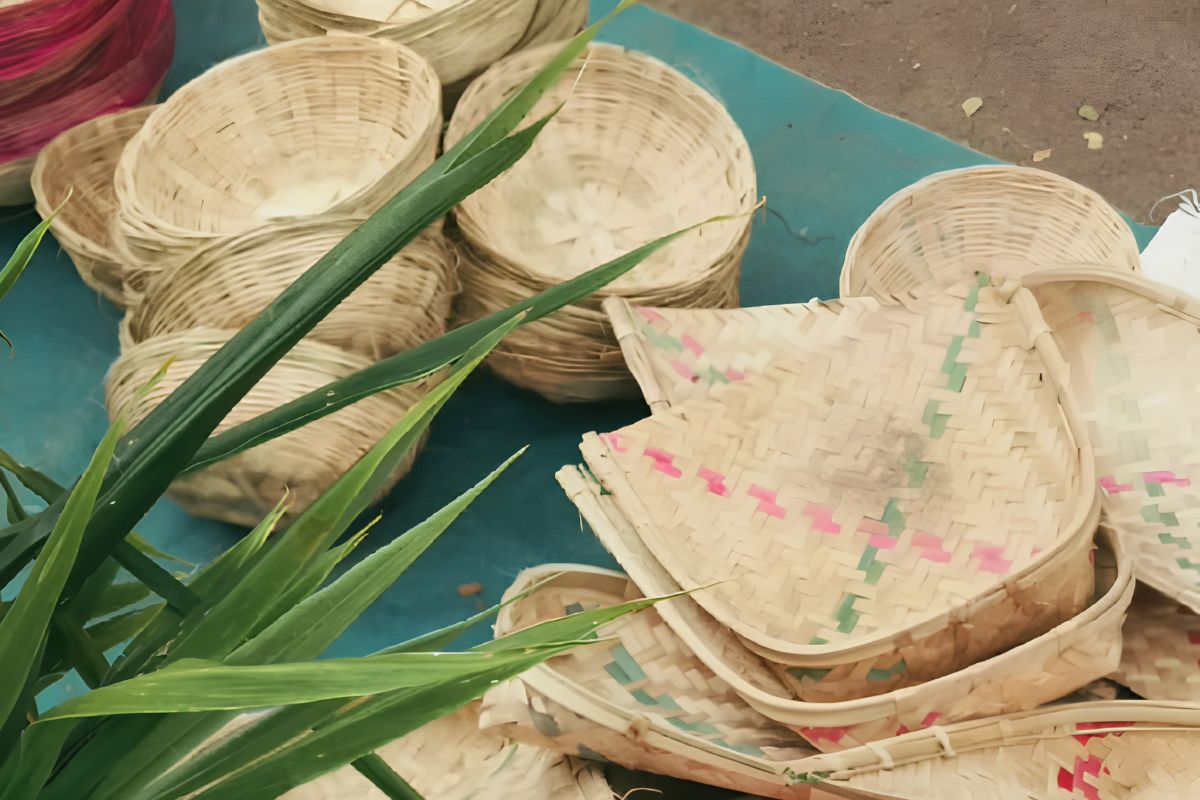
The work is slow and demanding. A report from Purnia in Bihar described a family making soops and dauras for Chhath, and noted that one bamboo can give roughly eight to ten soops. Peeling, shaping and weaving a batch can take several days. An artisan in Gopalganj said one soop or daura takes about three to four hours, and he pays close attention to strength and flexibility, because the basket must carry heavy offerings without giving way.
Most often the craft belongs to the whole family. Elders and experienced hands may cut, size and dry the bamboo, while women and younger members shave, finish and weave. Every soop, therefore, holds inherited skill and patience, along with the quiet labour of people whose work becomes visible only when thousands of devotees reach the ghats.
Why Bamboo
Bamboo suits Chhath for practical reasons. It grows locally, weighs little, stays strong, bends without breaking and decays naturally. A plastic container lingers for years, while a bamboo soop or daura returns to the earth after use, fitting the festival’s simple, natural ethos.
Chhath is a festival centred on nature. Bamboo vessels carry a cultural lesson. Worship does not need luxury. The most sacred offerings travel in baskets woven by hand from one of the region’s most ordinary materials. That simplicity is no sign of poverty. It reminds people that devotion, cleanliness, gratitude, and community matter more than anything else.
The Moment at the Water
On the third day, for the Sandhya Arghya, families go in the evening to a river, pond or other suitable water body. Many devotees fast all day. They stand in the water with soops full of offerings and make arghya to the setting sun.
Offerings usually include thekua, a deep-fried sweet made from wheat flour, jaggery and ghee, along with bhuswa, khaja, seasonal fruit, sugarcane and turmeric roots.
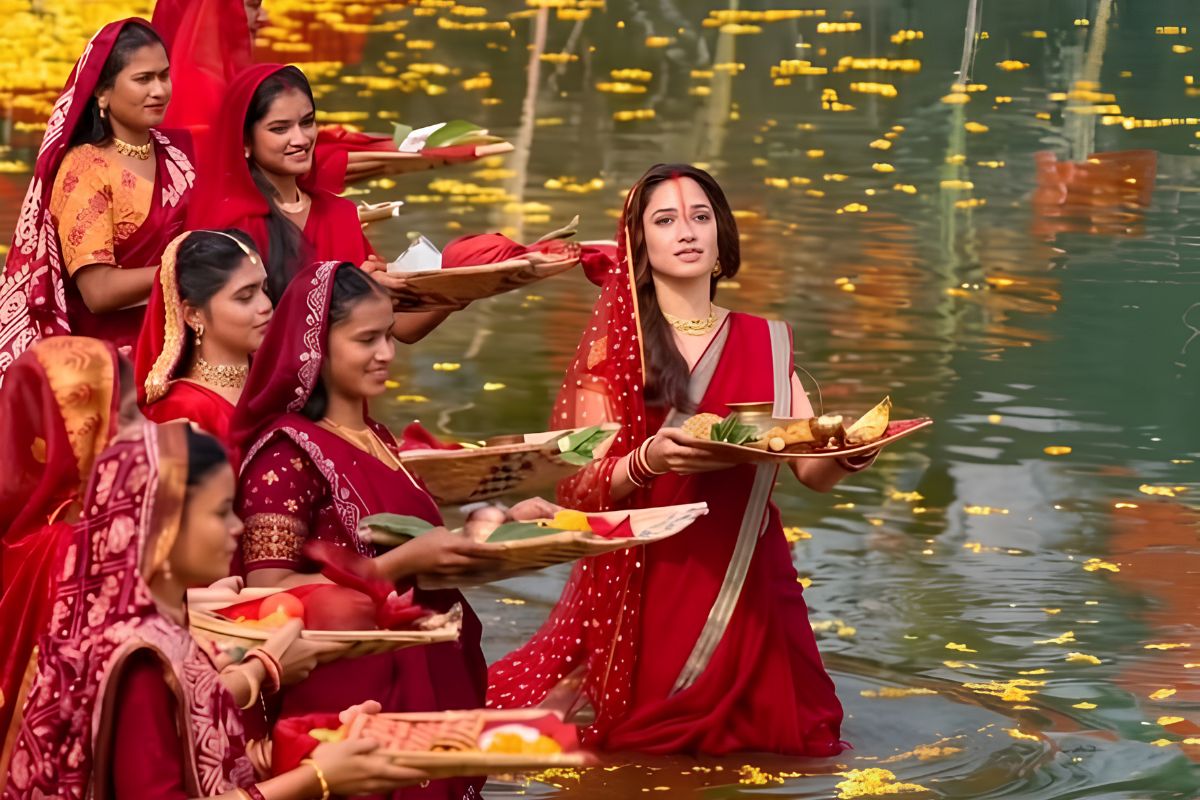
On the fourth day, before sunrise, devotees return to the water for Usha Arghya. They pray to the rising sun, break the fast and share prasad with family and neighbours.
In moments like these, the soop links the devotee to the sun. Its woven surface holds the earth’s produce, and its open weave lets water, light and air pass through. It makes a fitting picture for a festival built on openness, discipline and gratitude.
Livelihoods Woven Into the Season
For bamboo workers, Chhath is among the most important seasons of the year. Demand climbs sharply as families prepare, and markets across Bihar fill with soops and dauras in many sizes and weaves.
The season matters deeply to household incomes. Artisans travel from rural districts into towns and cities and set up temporary workspaces beside roads and riverbanks. There are many families whose living depends almost entirely on making these baskets for Chhath, with every member taking part.
Buying them keeps heritage alive in a practical way. When devotees choose handwoven bamboo over mass-produced plastic, they help sustain rural skills, local jobs and a gentler way of celebrating.
A Living Heritage
The soop and daura last because they are useful, handsome and meaningful. People make them by hand, use them in rituals and pass the skill on to the younger generations. Each year devotees wade into rivers with bamboo trays raised toward the sun, and a living heritage joins family, craft, farming and faith.
A soop is only bamboo and skill, yet in a devotee’s hands it becomes a vessel of gratitude. A daura is only a woven basket, yet on the road to the ghat it holds a family’s hopes, discipline and love. The most lasting traditions often rest in the simplest hands. That is the quiet strength of Chhath Puja, and of the artisans whose craft lets everyone see it.
Also Read: How Persian Art Found a Home in Kashmir and Became Part of Its Cultural Identity
You can connect with DNN24 on Facebook, Twitter, and Instagram and subscribe to our YouTube channel.