
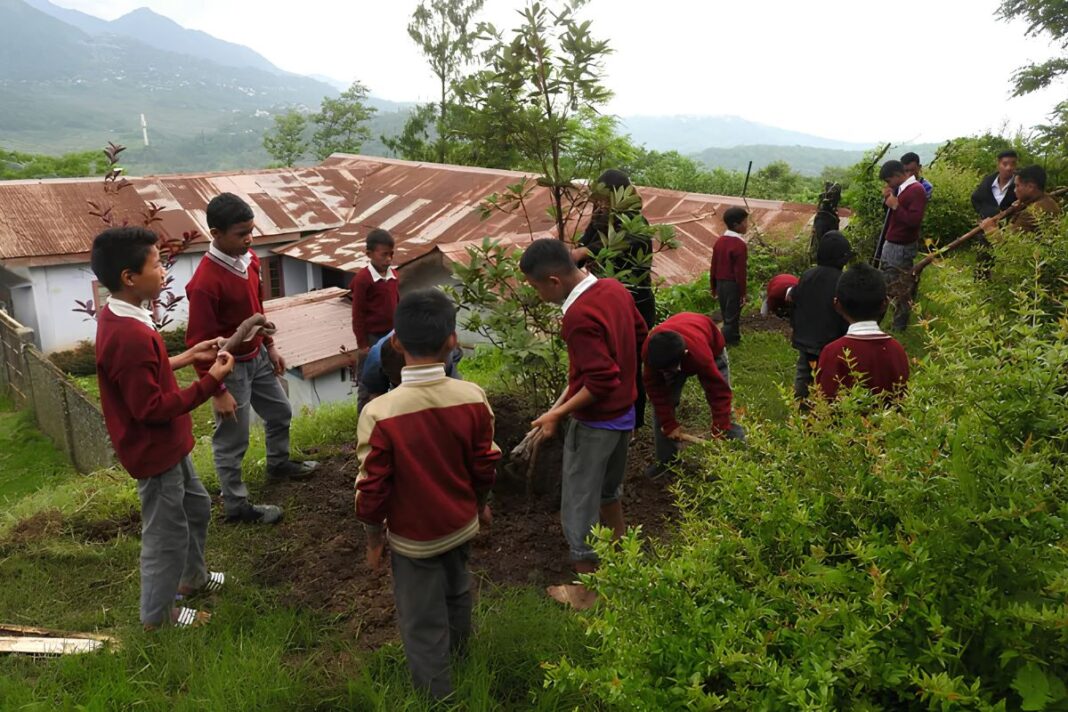

A Naga school grows its own lunch and its own pride, and the story begins not in a kitchen but in a garden behind the classrooms. In the village of Viswema, close to Kohima in Nagaland, the students of K Khel Government Middle School spend part of their week with soil under their fingernails rather than chalk dust. What started as a modest gardening exercise has grown into something far more ambitious. It has become the source of a good part of the vegetables that land on the students’ plates at lunchtime.
How A Garden Turned Into A Classroom
The kitchen garden at K Khel began in 2011. At the time, teachers introduced it simply to give children something hands on to do after lessons, a break from books. It did not take long for the school to notice that the empty stretch of land around the buildings could serve a bigger purpose than teaching a hobby. It could help feed the children who studied there.
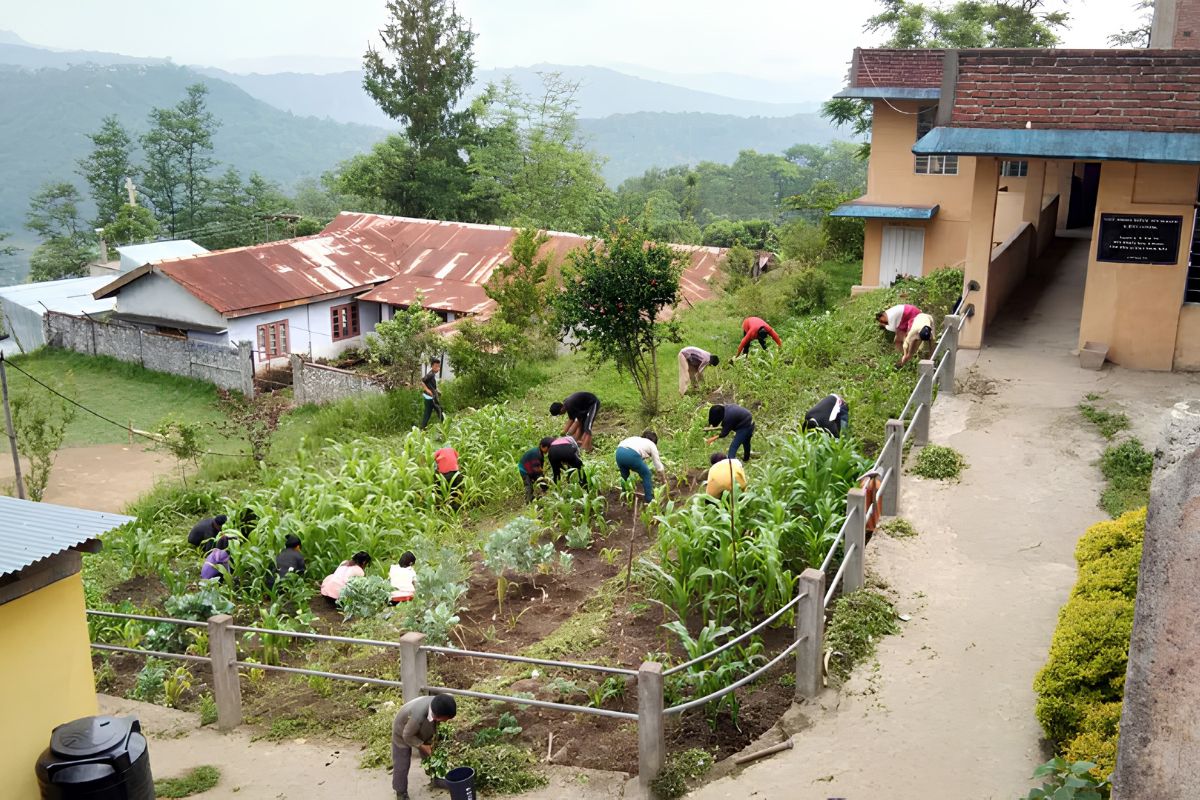
Today, pupils from Class 1 through Class 8 take part in nearly every stage of growing food. They clear weeds from the beds, turn the soil, plant seeds, carry water in the dry months and pull out anything that threatens the crop. They compost green waste to make their own manure, a practice most of them learned from watching before they ever tried it themselves. Some of the older children have even built bamboo fences around the plots, a skill borrowed from the village itself, meant to keep stray cattle from wandering in and undoing weeks of work.
Head teacher Keneisenu Vitsu oversees the garden, and under her the plot functions as something close to a second classroom. Lessons that might otherwise stay confined to a textbook, on soil, on how plants draw nutrients, on why a balanced diet matters, become things the children can see and handle rather than simply read about.
What The Garden Produces Each Year
The planting is not random. Teachers plan it with nutrition and the changing seasons in mind, so that something is usually ready to harvest. The list includes beans, cabbage, pumpkin, squash, potato, onion and garlic. Alongside these grow maize and Naga dal, a pulse eaten widely across the state, as well as pomegranate, lemon and mustard for flavour.
By one account, the garden yields close to 200 kilograms of pumpkin and 100 kilograms of squash each year, with smaller amounts of maize, dal, beans, cabbage, pomegranate, lemon and mustard rounding out the total. That is not enough to cover every meal for all 63 students on its own, but it takes a real bite out of what the school would otherwise need to buy from the market. Whatever is left over is occasionally sold by teachers, and the money raised goes toward buying snacks for the children, a small loop of effort feeding back into itself.
From The Beds To The Lunch Plate
India’s school meal programme, now called PM POSHAN, sets out fairly precise rules for what a plate should contain. For children in Classes 1 to 5, a meal must supply at least 450 calories and 12 grams of protein, built from 100 grams of grain, 20 grams of pulses, 50 grams of vegetables and 5 grams of oil or fat. Older children in Classes 6 to 8 need more, 700 calories and 20 grams of protein, with 150 grams of grain, 30 grams of pulses, 75 grams of vegetables and 7.5 grams of oil or fat.
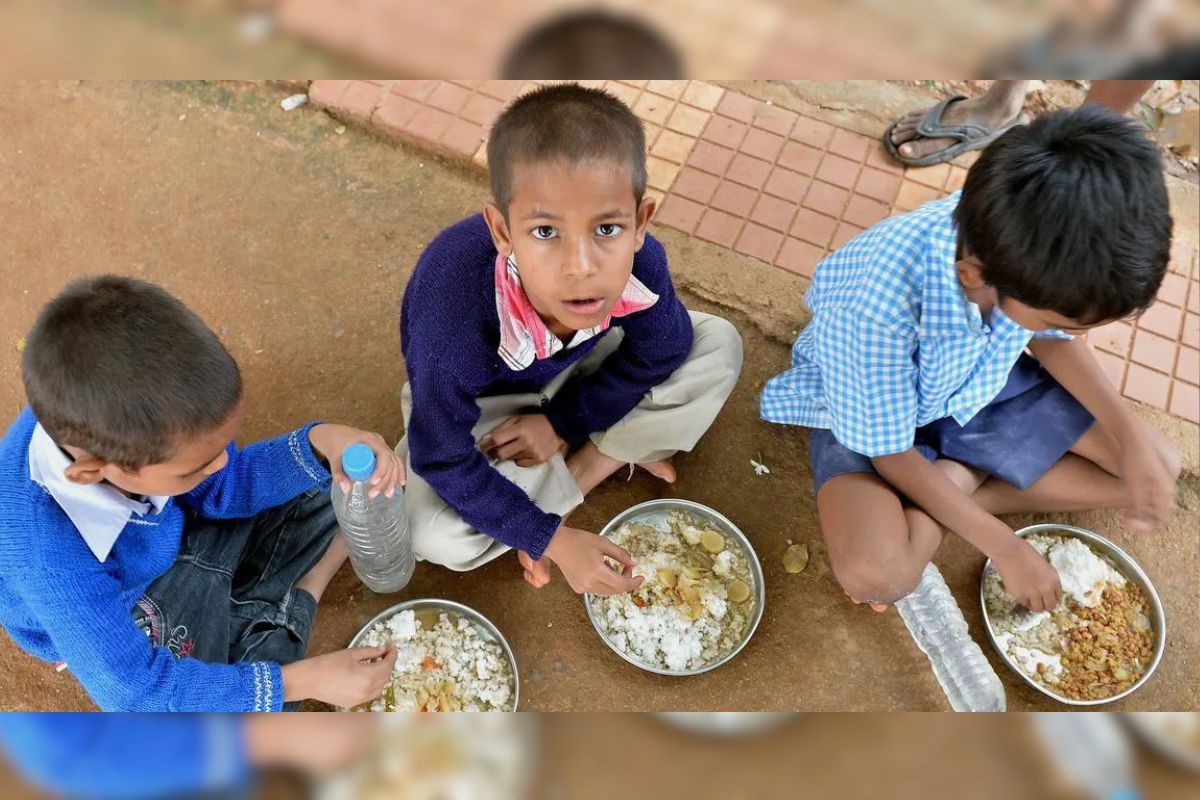
At K Khel, lunch usually means rice supplied by the government, lentils, vegetables from the garden and occasionally fruit, all cooked by the school’s own cook. Maize tends to be boiled plain or with only a little seasoning, in keeping with local taste. Because the garden cannot meet every need on its own, the school still buys additional vegetables using government funds set aside for the purpose. Even so, the presence of fresh, chemical free food from just outside the classroom door changes both the flavour of the meal and the children’s sense of connection to what they are eating.
Why This Small Model Carries Weight
School meal programmes across India occasionally draw criticism, whether over quality, delayed supplies or outright mismanagement. Set against that backdrop, what K Khel has built looks almost understated, yet it makes a quiet argument of its own. A good school lunch is not purely a matter of budgets and paperwork. It also depends on what a community can grow, on the habits children build and on whether food education has any real place in the school day.
States including Chhattisgarh, Assam and Arunachal Pradesh already encourage kitchen gardens for their mid day meal schemes, and Meghalaya has taken the idea further, adding dark green leafy vegetables, pulses and fruit rich in vitamin A, along with wild edible plants brought into cultivation. K Khel fits within that wider movement, but its particular strength lies in how long it has lasted, how much ownership the students feel and how naturally it sits inside the daily routine of the school.
There is also a simple pattern that researchers keep confirming. Children who grow their own food are more likely to eat it, and more likely to value it once it is on their plate. At K Khel, the garden does more than stock the kitchen. It shapes habits and builds a kind of quiet confidence in the students who tend it.
Lessons That Travel Beyond The Fence
The benefits of this programme reach further than nutrition alone. Working in the garden teaches children to think about the environment through composting and mulching and through avoiding chemical fertiliser altogether. It gives them practical skills that carry real weight in a farming region, from sowing through to harvest and basic upkeep of a plot. It teaches them where food actually comes from and how it can be grown without depending entirely on outside supply. It also puts older students in charge of guiding younger ones, building a sense of responsibility that has little to do with textbooks.
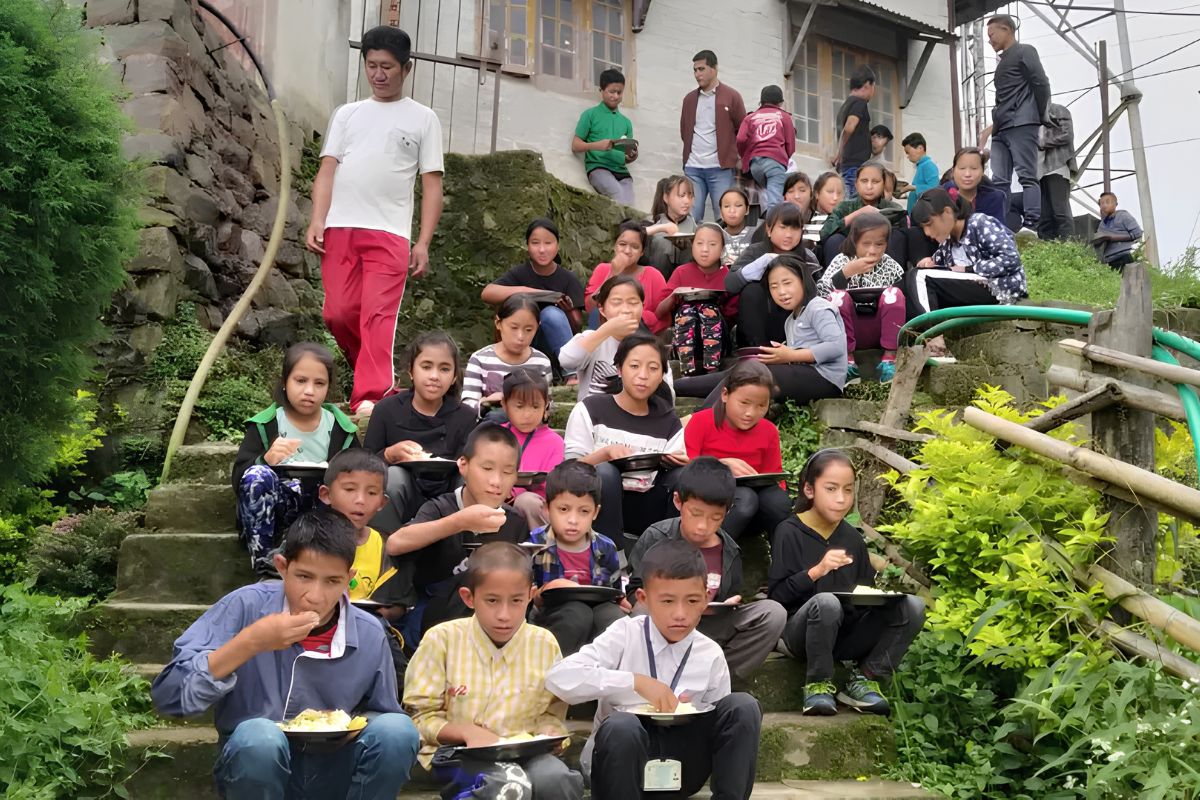
In a part of the country where farming remains central to most households, none of this is abstract. These are skills the children are likely to use again, long after they leave the classroom.
A Question Every School Should Ask
The story of K Khel points toward a larger question worth asking of every school in the country. What should a nutritious school lunch actually look like, and how do schools make sure every child gets one. The answer may not rest solely with centralised supply chains or tighter oversight. Part of it may lie in giving schools room to grow at least a portion of what they serve, with children doing much of that growing themselves.
The model does not demand very much to work. A patch of land, a few basic tools, a committed teacher and support from the surrounding community are enough to get started. No large budget or complicated technology is required. As India keeps refining its approach to school meals, a story like this one offers both a source of encouragement and something close to a working blueprint.
A Small Idea With A Lasting Reach
For well over a decade now, the children of K Khel Government Middle School have kept up their garden, treating it less as a project with an end date and more as an ongoing habit. Along the way they have learned that food does not simply arrive on a plate. It can be something they grow, share and take genuine pride in.
At a time when childhood malnutrition and a growing distance from nature remain serious concerns across the country, this small school in Nagaland offers a reminder that change can begin with something as small as a seed, and grow one meal at a time.
Also Read: From Guns to Glamour: Surrendered Naxal Women Walk Fashion Ramp
You can connect with DNN24 on Facebook, Twitter, and Instagram and subscribe to our YouTube channel.