
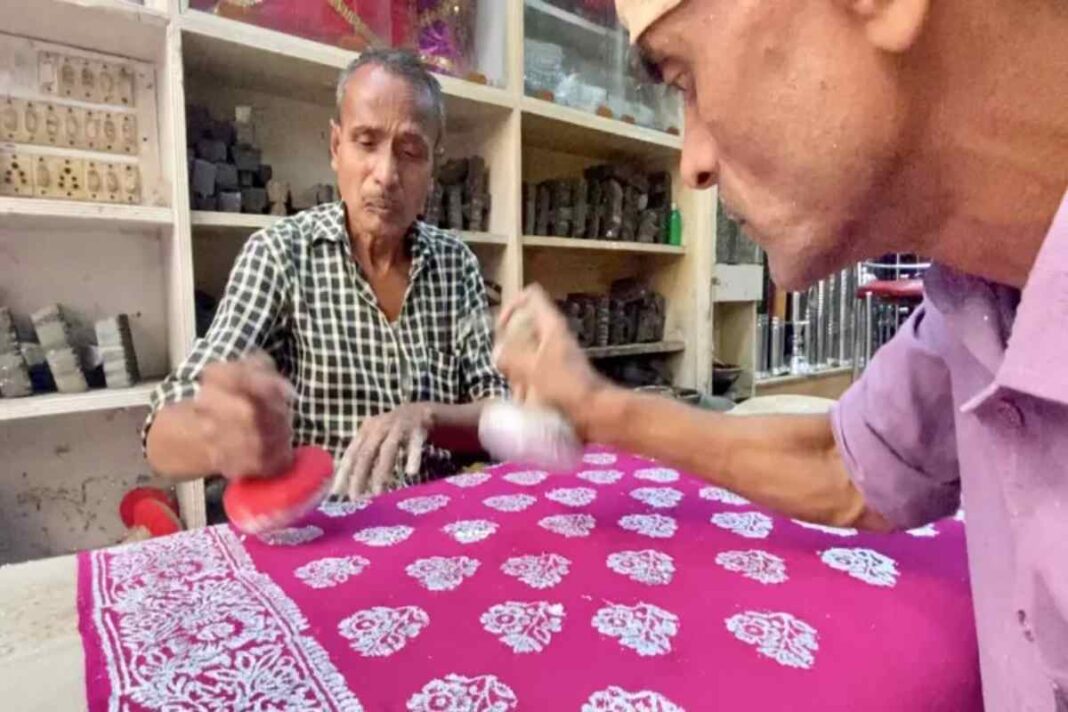

In the heart of Bihar, the Chappa print, a traditional fabric, holds immense cultural value, particularly in Muslim weddings. This specially crafted print, known as Chhapa, is a silver foil design embossed onto cloth using unique wooden blocks. This centuries-old tradition is meticulously upheld by artisans from the socially and economically backward Rangrez community. Despite the challenges of fading after washing, artisans like Mohammad Naushad emphasize the resilience of Chappa prints. Working with chemicals and intricate designs, these craftsmen bring forth an art form that withstands time and maintains its distinctive shine.
Rising Demand: A Contemporary Resurgence
Recently, there has been a noticeable surge in the demand for Chappa prints. As Ghazala Parveen from New Karimganj notes, the low cost and unique charm of Chappa cloth make it a preferred choice for women of all ages.
Economic Impact: The Business of Chappa
Muhammad Mustafa, a key figure in the Chappa business, sheds light on the economic significance of this traditional craft. For people in business and artisans like Muhammad Wasim, the notion that a wedding is incomplete without Chappa-printed clothes has fueled a thriving industry.
Changing Aesthetics: Evolution in Chappa Designs
In tandem with the ever-shifting landscape of fashion, Chappa designs continue to evolve. Wasim points out that these printed clothes witness substantial sales during the wedding season, indicating a dynamic industry that adapts to contemporary tastes.
Crafting Authenticity: The Artisan’s Touch
The intricate process of crafting Chappa involves a delicate balance of art and chemistry. Wooden frames adorned with designs of flower petals serve as the canvas for this traditional art form. Adding gum, adhesive, and carefully selected chemicals contributes to the unique quality of Chappa prints.
Bihar’s Commitment: Navigating the Path Forward
Bihar Chief Minister Nitish Kumar’s initiative, the Rangrez Artisan Development Committee, reflects the state’s commitment to preserving and nurturing the Chappa tradition. Despite bureaucratic challenges, recognizing Chappa’s cultural and economic importance remains a driving force for sustained efforts.
Global Affinity: Chappa Beyond Borders
Chappa’s reach extends far beyond Bihar’s borders. Beyond the Indian subcontinent, Bihari Muslim families settled in countries like Pakistan, Bangladesh, America, Canada, and Australia continue to embrace Chappa prints, keeping the tradition alive across continents.
In essence, Chappa prints transcend the confines of a mere wedding custom; they embody a rich heritage, a blend of craftsmanship, tradition, and adaptability. As Bihar strives to safeguard and promote this cultural gem, Chappa stands as a symbol of resilience, connecting generations through the threads of tradition.
For a detailed story, please visit: Awaz the voice
Also Read: India’s Global Leadership: G-20 and Development
You can connect with DNN24 on Facebook, Twitter, and Instagram and subscribe to our YouTube channel.