
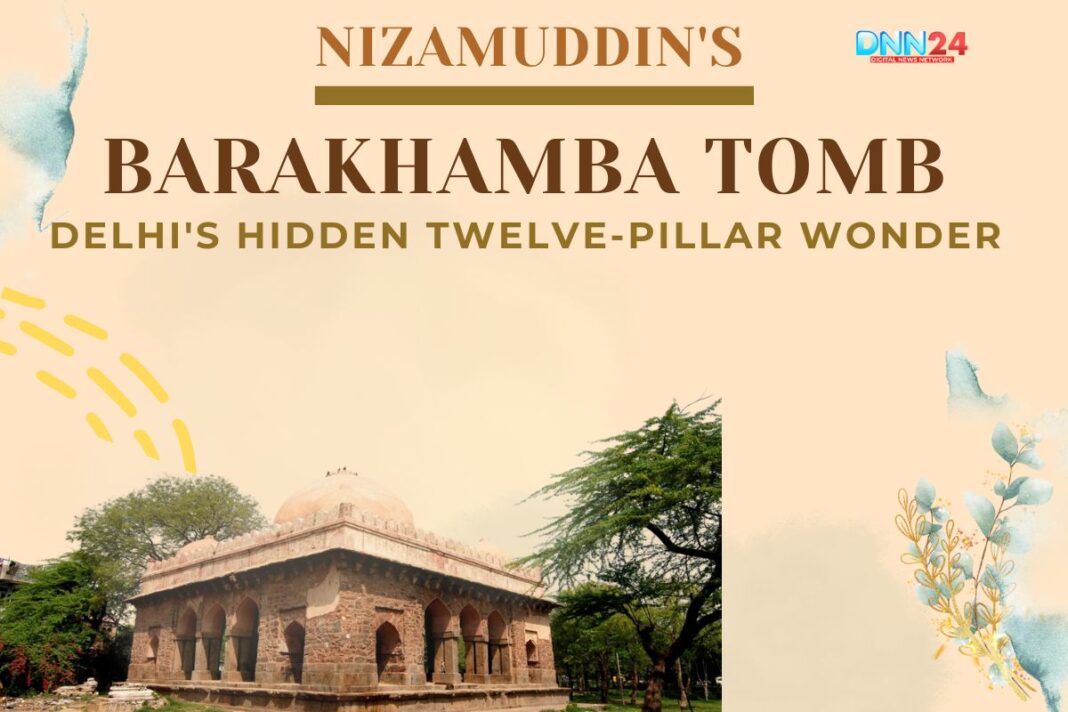

Right in the middle of Delhi’s busy Nizamuddin area, there stands a beautiful monument that many people walk past without noticing. The Barakhamba Tomb sits quietly near Lodi Road, just a short walk from the famous Nizamuddin Dargah. This fantastic structure gets its name from a simple fact – ‘bara’ means twelve and ‘khamba’ means pillar in Hindi. So Barakhamba literally means “twelve pillars.”
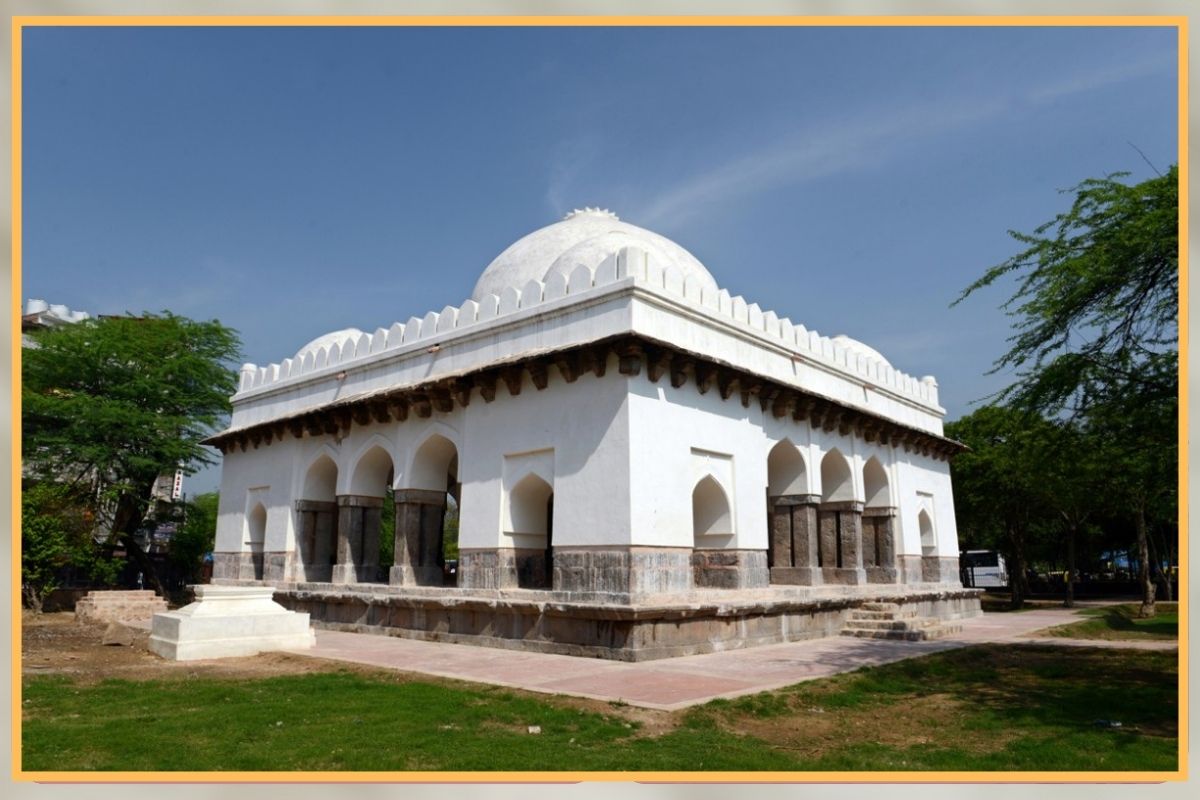
The tomb looks different from other monuments in Delhi. This one feels open and airy instead of being closed and dark inside. Twelve strong pillars hold up the structure, creating spaces that let sunlight and fresh air flow. The design makes you feel like you’re standing in an outdoor pavilion rather than inside a tomb. Local people have always known about this place; many remember children playing hide and seek between these pillars. Today, after careful restoration, the monument proudly welcomes visitors who want to discover Delhi’s lesser-known treasures.
The area around Barakhamba Tomb buzzes with life. Auto-rickshaws honk their way through narrow lanes, tea sellers call out to customers, and devotees walk towards the nearby dargah for prayers. Yet somehow, this ancient tomb stays peaceful during all this activity. The green park surrounding it offers a cool spot where families can sit and enjoy the evening breeze while looking at this piece of history.
The Story Behind Those Twelve Pillars
Nobody knows who is buried in this Barakhamba Tomb, but historians believe it was built in the late 14th or early 15th century. Some say it dates back to the Tughlaq period, while others think it belongs to the Lodi dynasty. Everyone agrees that someone important must have been buried here, probably a noble or courtier who served the Delhi Sultanate.
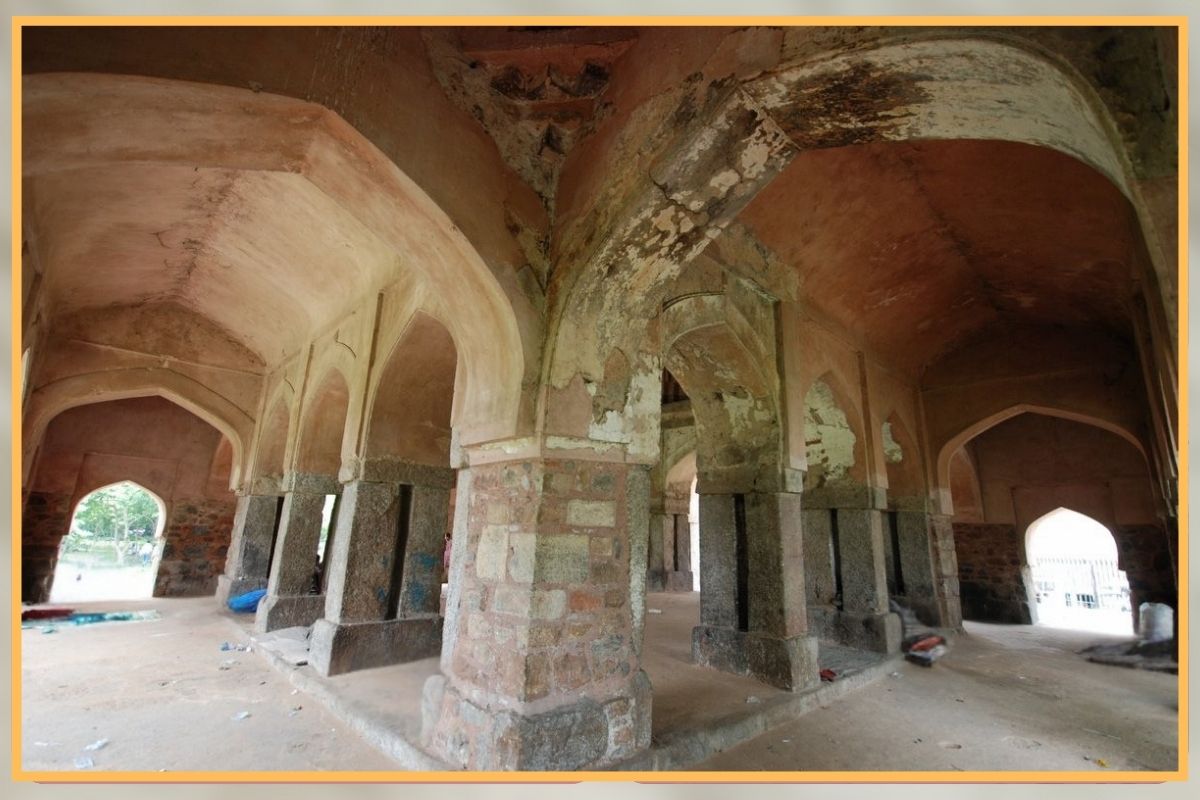
The mystery of the unnamed person buried here adds to the tomb’s charm. Local stories have been passed down through generations, with each family adding their own version of who might rest beneath the central dome. Some elderly residents remember their grandparents discussing a brave warrior, while others mention a wise counsellor to the sultan. Whether true or not, these stories have become part of the tomb’s identity.
The architecture tells us a lot about the builders’ skills and beliefs. The twelve pillars are not just structural elements but also carry spiritual meaning. In Islamic tradition, twelve holds special significance – twelve months a year, twelve hours of the day and night, and twelve Imams in Shia Islam. The builders likely chose this number deliberately, making the tomb both a resting place and a symbol of cosmic order. The square platform on which the tomb sits has three arched openings on each side, creating twelve openings that match the twelve pillars.
From Ruins to Restoration – A Community Effort
For many years, Barakhamba suffered neglect and damage. Squatters had moved into the monument, the walls were covered with graffiti, and the beautiful stonework was stained with paan and dirt. The once-proud structure looked more like a ruin than a historical monument. Many heritage lovers felt sad seeing this condition, but did not give up hope.
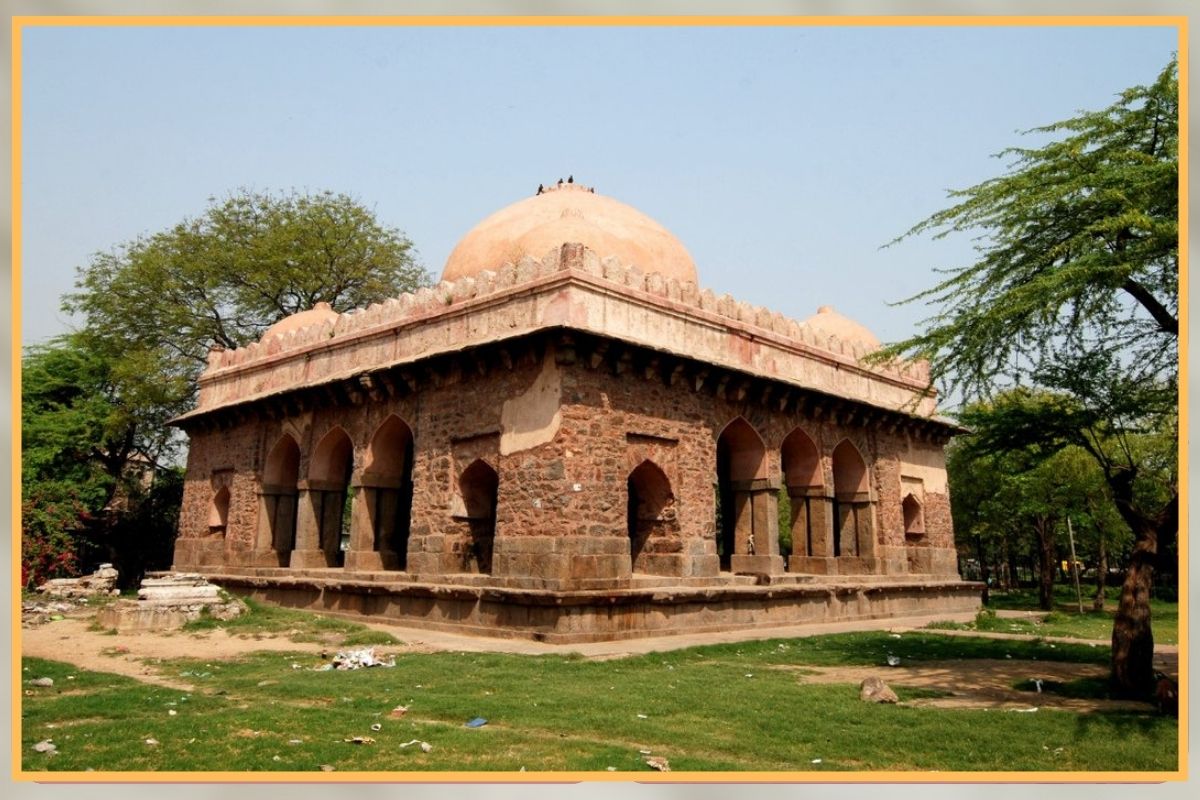
The real change came when the Aga Khan Trust for Culture joined hands with the Delhi Urban Heritage Foundation and local organisations. They started a careful restoration project that brought together master artisans, architects, historians, and community members. The work was not just about cleaning stones and repairing walls. It was about bringing back the dignity and beauty that the monument deserved.
The restoration team used traditional methods and materials wherever possible. They employed lime plaster instead of modern cement, carved new stones using old techniques, and landscaped the surrounding area with plants that would have grown there centuries ago. Local artisans worked alongside international experts, learning skills their grandfathers might have known. The project became a training ground for traditional building methods, ensuring that these skills would not be lost to future generations. Community members also played their part by sharing old photographs, stories, and memories that helped the restoration team understand how the monument initially looked.
Barakhamba Today – Where History Meets Modern Life
Today, Barakhamba Tomb is a perfect example of how historical monuments can remain relevant in modern times. The restored tomb attracts visitors from all over Delhi and beyond. Photography enthusiasts love how sunlight filters through the pillars at different times of the day, creating beautiful patterns on the floor. The monument has become popular on social media, with many young people sharing pictures and stories about their visits.
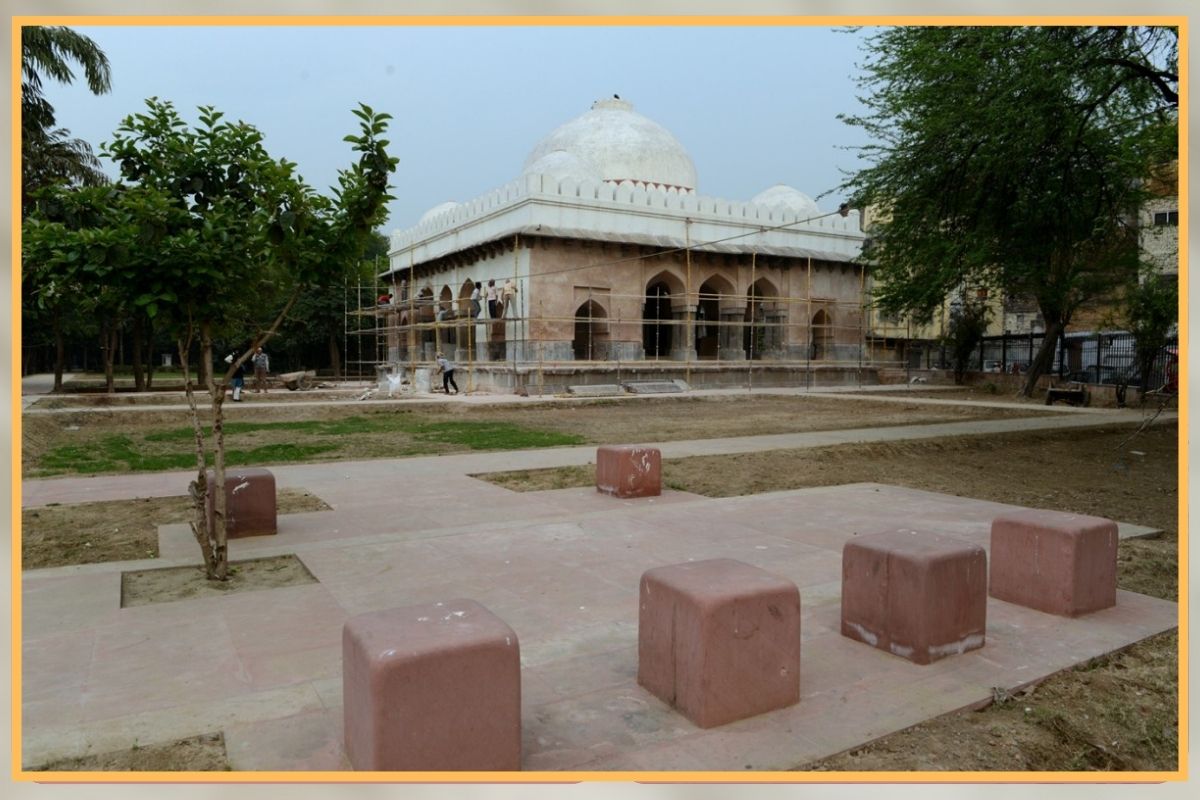
The surrounding park has been developed into a community space where local families come for evening walks, children play on the grass, and older adults sit in groups discussing everything from politics to cricket. The restoration has also created job opportunities for local guides who share stories about the monument with interested visitors. These guides, many of whom grew up in the Nizamuddin area, combine historical facts with personal memories and local legends.
The proximity to the Nizamuddin Dargah means many devotees also stop by Barakhamba during their spiritual visits. Some sit quietly in the peaceful atmosphere for meditation or prayer. The tomb’s open design makes it feel welcoming rather than sombre, and people of all faiths feel comfortable spending time there. During festivals like Urs, when thousands visit the dargah, Barakhamba provides a quieter space for reflection while still being part of the area’s spiritual energy.
Also Read: Sarai Shahji Mahal: The Hidden Mahal That Sheltered Strangers
You can connect with DNN24 on Facebook, Twitter, and Instagram and subscribe to our YouTube channel.