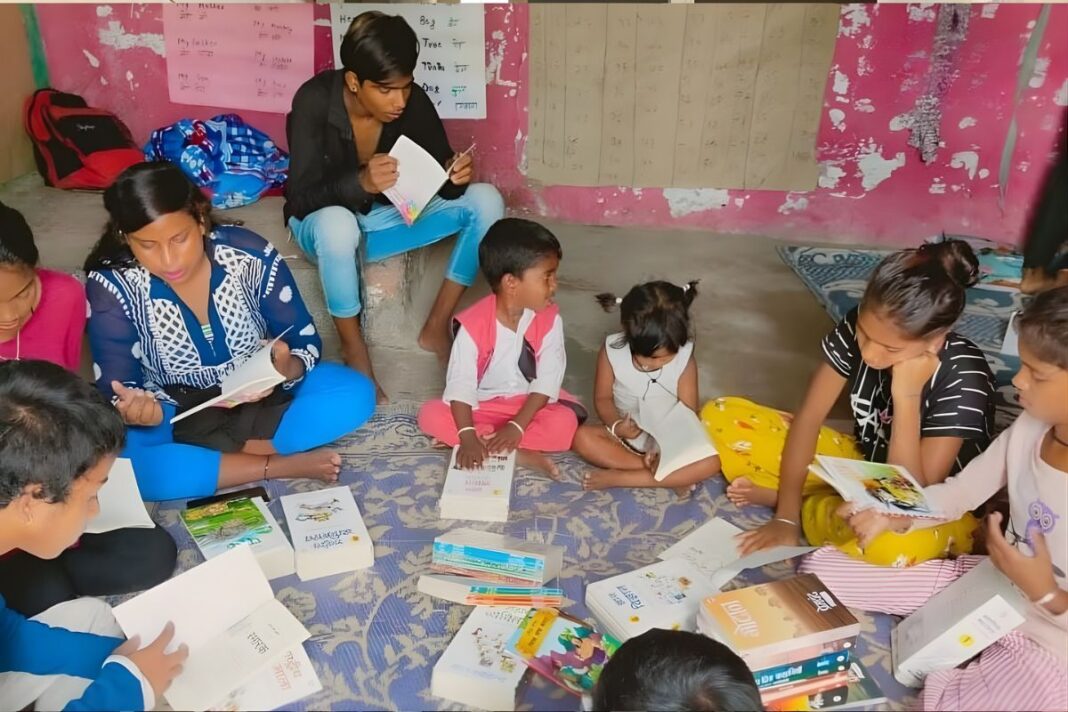

Children step into a small room lined with shelves. Some are barefoot. Some are nervous. Many are opening a book on their own for the first time. There is no enforced silence, no form to fill out, no one asking questions. They sit on the floor, pull books toward themselves, and begin. Reading starts quietly. Learning follows. This is what a community library looks like when it belongs to children.
Across India, the Free Libraries Network has helped create spaces where reading feels natural rather than intimidating. These libraries are not large buildings with polished floors. They are rooms, corners, homes, tents, and shared halls. What unites them is simple. They remove fear from learning. For first-generation learners, that matters more than any curriculum.
Free Libraries Network : When a Neighbourhood Gets Its First Library
Ravi remembers the first time books arrived in his village in Uttar Pradesh. He was eight years old, hiding behind his mother because the older boys threw stones at him. His crime was wanting to read. The village had a library, but it charged fees his family could not afford. More than that, it had rules about who belonged inside those walls.
Then the Free Libraries Network arrived in 2018. They set up a small collection in a community hall. No fees. No guards asking questions about your father’s occupation or your family name. Just shelves of books and a simple message: these belong to everyone.
The local kids came slowly at first. They peeked through doors, unsure if the invitation was real. When no one shooed them away, they stepped inside. Children who had never owned a book suddenly had hundreds to choose from. They sat on the floor reading together, Muslim and Hindu kids sharing the same space, Dalit children and upper-caste children turning the same pages.
The parents noticed changes quickly. Kids who used to roam the streets after school now rushed to the library. They talked about characters and adventures at dinner. Some learned better in school because reading had become a practice instead of a punishment. The library became a second home, safer than many first homes.
This pattern repeated across India. By 2025, FLN connected over 200 such community libraries. Each one started small, grew through local effort, and became central to neighbourhood life. The secret was simple: when you remove barriers, children flood in.
Free Libraries Network: First Generation Readers Find Their Voice
For children whose parents never went to school, books can feel like foreign objects. At home, there may be no one to guide them through a page. In school, lessons often move too fast. Community libraries fill this gap gently.
Here, a child can ask what a word means without embarrassment. Older children help younger ones. Learning becomes collective. When one child understands something new, the room benefits.
Reading habits form through repetition. A child who comes daily starts recognising letters. Then words, which means. The shift is visible. Shoulders straighten. Questions become sharper. Curiosity expands beyond textbooks into history, science, stories, and ideas. These libraries create readers, but they also develop learners who are not afraid to try.
Free Libraries Network: Learning Beyond the Classroom
Community libraries do not replace schools. They support them in ways classrooms often cannot. After school hours, children return to these spaces to revise lessons, complete homework, or read for pleasure. Without the pressure of grades, learning becomes flexible. A child who is weak in mathematics may find confidence through stories. That confidence often carries back into academic subjects.
Many librarians organise reading circles, storytelling hours, and simple discussions. Children learn to listen, speak, and disagree respectfully. These skills do not appear on report cards, but they shape how children think.
Libraries also introduce children to subjects rarely covered in their schools. Environmental stories spark questions about nature. Biographies open conversations about courage and choice. Folk tales connect children to language and culture.Learning becomes layered, personal, and sustained.
Free Libraries Network: A Safe Space to Focus
For many children, home is not always quiet or supportive. Some live in crowded houses. Some face pressure to work after school. Others carry emotional stress that affects concentration. A community library offers stability. It is predictable. It is open. It is safe.
Children know they can sit, read, and focus without interruption. Librarians notice changes in behaviour. A restless child learns to sit for more extended periods. A withdrawn child slowly joins group reading. Learning becomes possible because the environment allows it. Parents notice these shifts. Children who once avoided homework now ask for help. Reading becomes part of daily life rather than a school requirement.
Free Libraries Network: Learning Together Breaks Invisible Barriers
When children read together, differences fade naturally. In a library, they are not defined by background or belief. They are readers sharing space.Children exchange books, recommend stories, and argue about endings. Learning becomes social. Respect grows through familiarity. Empathy develops through shared narratives.
This matters deeply in communities where divisions exist outside the library walls. Inside, children learn to collaborate. They solve problems together. They listen to perspectives different from their own. These lessons last longer than any chapter.
Free Libraries Network: Accessibility Makes Learning Inclusive
Community libraries adapt to the children they serve. Large print books help those with low vision. Audiobooks support children who struggle with text. Multilingual collections help first-time learners navigate language barriers. Learning is adjusted, not denied.
Children with disabilities often experience isolation. In these libraries, they participate fully. Listening circles, tactile books, and shared reading ensure no child is left out. Confidence grows when learning feels achievable. Some children later become peer mentors, helping others access books. Learning turns into leadership.
The Librarian as a Guide, Not a Gatekeeper
The role of the librarian is central. They are not an authority figure enforcing rules. They are facilitators of curiosity. Librarians know the children personally. They track progress quietly. They suggest books thoughtfully. They celebrate small milestones, a finished story, a new word, a brave question.
Because librarians live within the community, trust forms easily. Parents allow children to stay longer. Learning extends beyond formal hours.This personal connection keeps children returning. Consistency builds habits. Habits build learners.
Free Libraries Network: Skills That Shape the Future
Reading regularly changes how children think. Comprehension improves. Expression becomes clearer. Writing follows naturally. Children who read often begin asking better questions in school. They understand instructions more clearly. They engage with lessons rather than avoiding them.
Over time, reading also shapes ambition. Children imagine futures beyond immediate surroundings. They learn about careers, ideas, and possibilities they had never considered. Learning stops feeling limited.
Free Libraries Network: A Simple Model With Deep Impact
The strength of the Free Libraries Network lies in its simplicity. It does not depend on large budgets or complex systems. It depends on consistency, care, and community involvement. Anyone can start a library. A small space. Donated books. Regular hours. An open door.
Training helps librarians support learning effectively. Resource sharing ensures libraries grow steadily. Networks connect isolated efforts into collective strength.Children benefit immediately. Learning does not wait.
Why These Rooms Matter
A child walking into a room full of books is stepping into possibility. That moment matters. It signals trust. It signals belonging. It signals that learning is allowed.
These libraries succeed because they respect children as learners. They do not rush them. They do not label them. They meet them where they are. For first-generation learners, that respect is transformative.The Free Libraries Network proves what happens when barriers fall. Children read. Communities heal. Knowledge becomes common ground rather than a battleground. And small libraries change everything.
Across India, thousands of children now associate reading with warmth rather than fear. Learning with support rather than struggle, books with belonging rather than distance.The rooms are small. The impact is not. When children read freely, they learn steadily. When they learn steadily, futures open quietly. This is how community libraries change everything.
Also Read:Koodugal Nest: Built 15,000 Tiny Homes to Bring Back the Sparrows We Lost
You can connect with DNN24 on Facebook, Twitter, and Instagram and subscribe to our YouTube channel.