
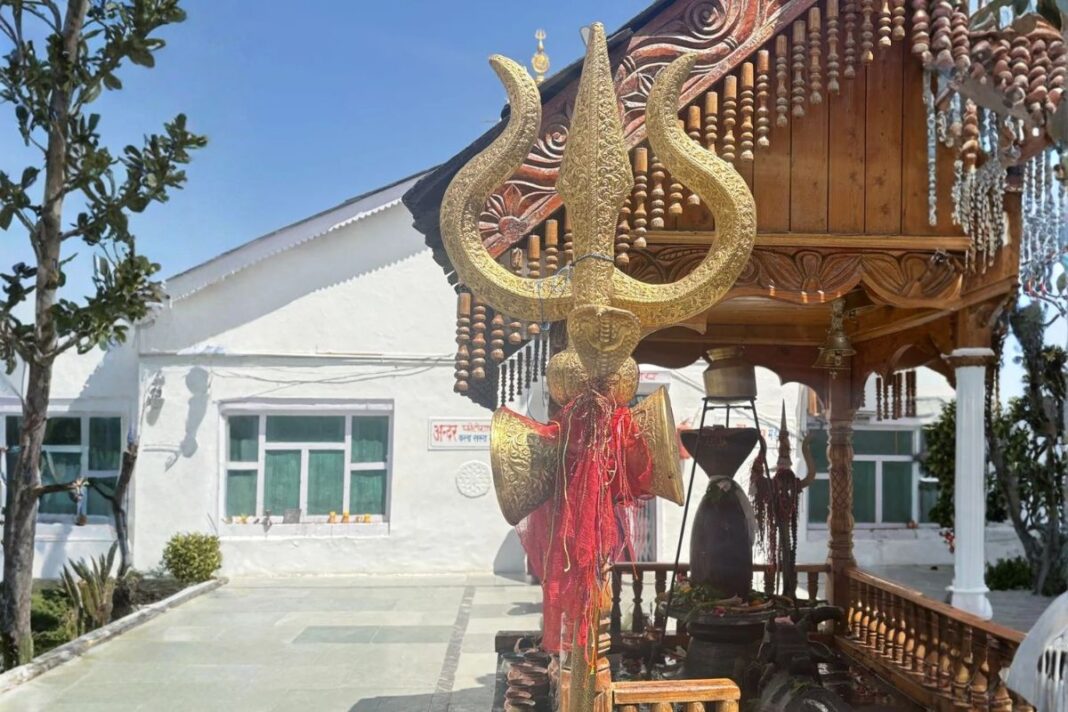

Stand on a cliff edge in the Chandra Bhaga valley. Wind carries whispers from snow-capped peaks. Hindus chant to Shiva. Buddhists bow to Avalokiteśvara. Both worship the same marble deity. This is Trilokinath Temple, a living testament to religious harmony at 2,760 meters in Lahaul-Spiti, Himachal Pradesh. The shrine defies the boundaries of belief, proving that divinity transcends the labels we place upon it.
Foundations in Stone and Faith
The late 9th century marked the birth of this extraordinary structure. Dvanjra Rana, ancestor of the local Thakurs, joined forces with King Shail Varman of Chamba to carve this shrine from the rugged Himalayan stone. The architecture follows the shikhara style found in Chamba’s Laxmi Narayan temples. A stone inscription from 2002 confirms construction around the 10th century, showcasing Nagara architecture adapted for mountain terrain.
The temple rises without a grand mandapa, its curvilinear tower reaching skyward and crowned by an amalaka shaped like a gourd. Local tradition credits Mahayogi Siddha Charpati, a devotee of Avalokiteshvara, with composing 25 shlokas here, known as “Avalokiteshwar Stotra Chedem,” weaving Buddhist devotion into Hindu stone. Elders claim it began as a vihara and was transformed over the centuries. The original structure disappeared, but its spirit remained. After a 1979 avalanche destroyed parts of the temple, rebuilding efforts preserved its essence. Today, in 2026, it stands as a bridge connecting Padmasambhava’s 8th-century influence to modern pilgrims.
Stories Carved in Memory
The Hinsa Nalla stream flows milky white beside the temple, unchanged even during monsoons. According to legend, seven milky figures emerged from a lake called Ome-cho, drinking cow milk until a cowherd named Tundu captured one. He carried it home, where it transformed into the marble deity now enshrined in the temple.
Thieves once attempted to steal the original six-headed Avalokiteshvara idol. The caretakers recount how gruesome deaths befell them. A Kullu Raja’s men attacked the deity with swords, hacking its leg. The scar remains visible today. Another tale speaks of a massive danav who built the entire temple overnight, leaving the eternal white stream as evidence of his labour.
Hindus see Lord Shiva as the master of the three worlds. Buddhists recognise Avalokiteshvara, the bodhisattva of compassion, topped by Amitabha Buddha. The white marble deity, with six arms, dates to the 12th century and is related to the head found at Guru Ghantal monastery. Prayer wheels spin these stories continuously, connecting them to other regional myths, such as crows bringing news from Rama’s Ayodhya during the Treta Yuga to Lahaul’s Fagli festival. These narratives live and breathe through the generations, making Trilokinath more than mere stone.
A Structure Born From Mountains
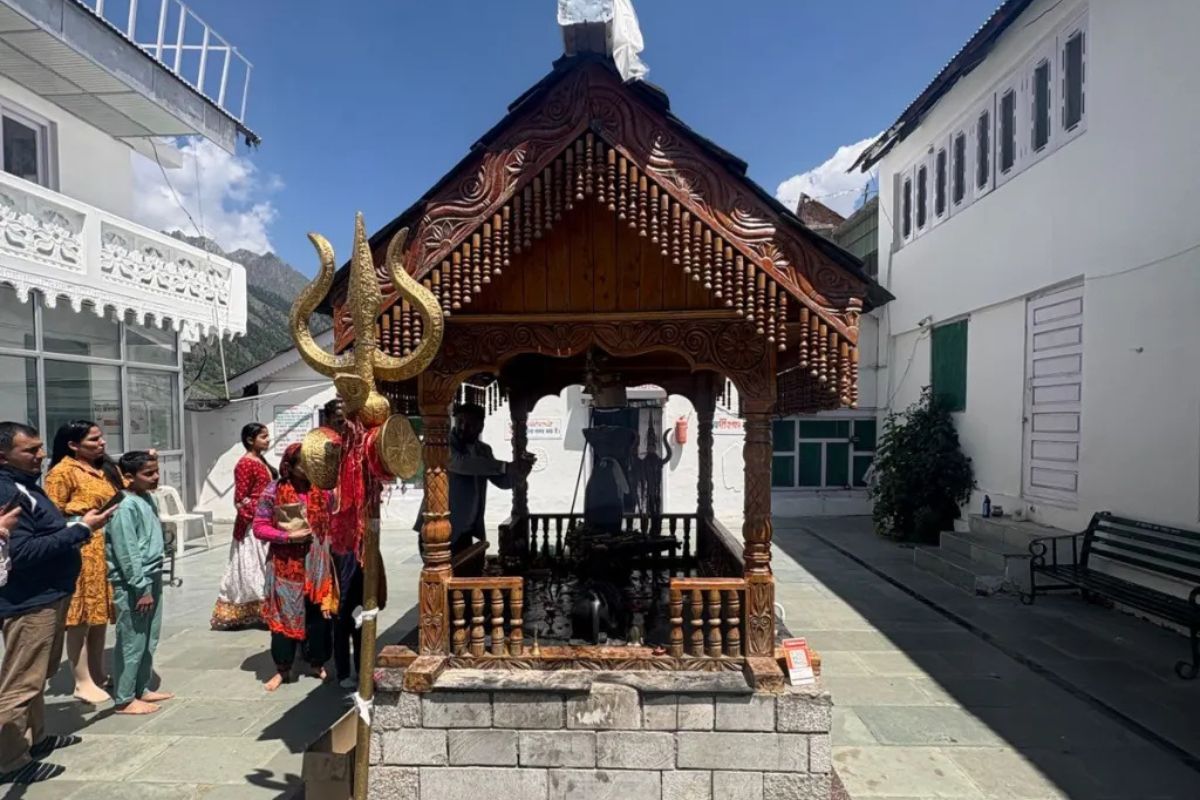
The temple gleams with a white facade, its pagoda wooden roof draped in Tibetan prayer flags. The courtyard holds a granite lingam beside a Nandi bull. Massive prayer wheels churn out mantras continuously. The shikhara curves toward the sky in the 7th-8th-century style, adapted for cliff-side construction, with pure vertical grace rather than a flat mandapa.
The deity faces east for Hindu worshippers and west for Buddhists through a clever window arrangement. A silver Kali idol as Mahishasurmardini was installed in the temple in 1959 by Thakur Himpala. The Hinsa Nalla flows nearby. Saptdhara hot springs offer ritual bathing. An ancient baori (stepwell) and mysterious additional idols add layers of intrigue.
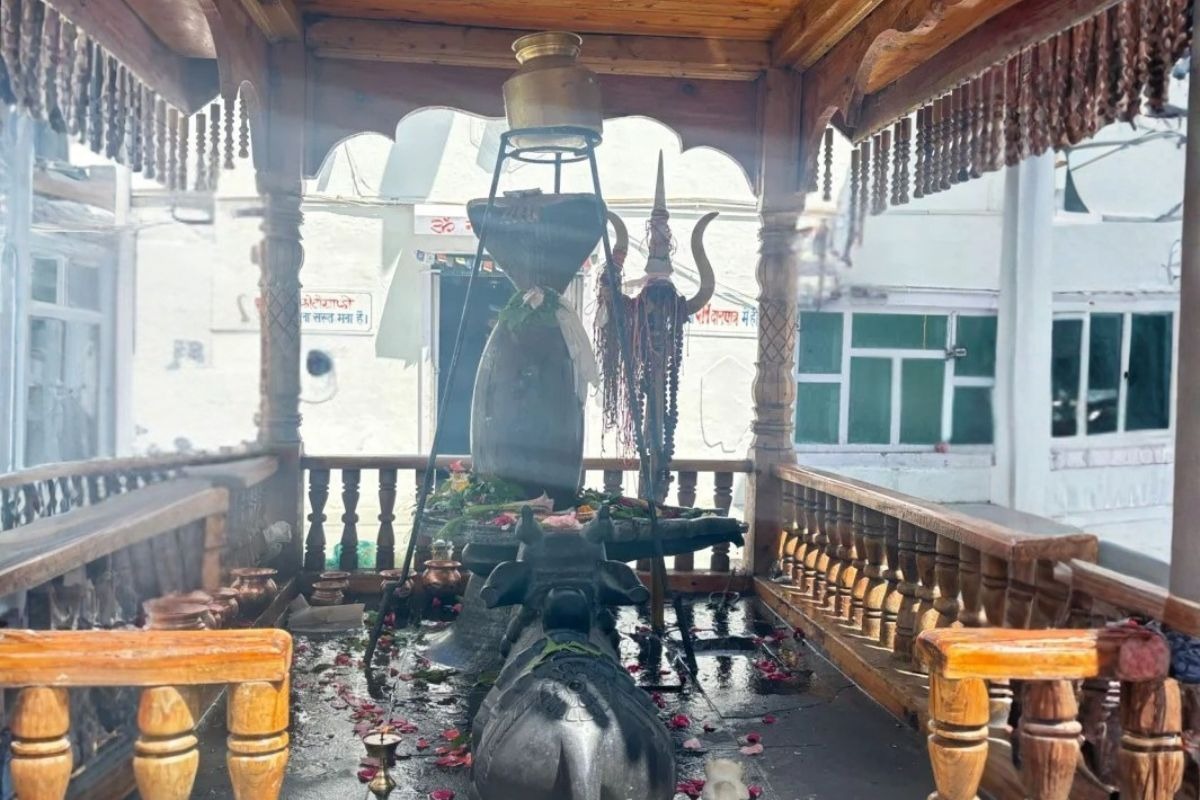
The 1979 reconstruction enclosed the oldest remaining portions. Nagara architecture remains rare in Lahaul, linking this temple to the artistic traditions of Chamba and Kulu. In 2026, it stands amid pine forests and towering peaks, a fusion of elements where Shiva’s bull acknowledges Buddha’s compassion. Every carved niche and fluted pillar seems born from the valley itself rather than merely constructed by human hands.
Celebrations That Unite the Valley
The Pauri Mela erupts each August for three days. Thakurs ride the deity’s horse to Saptdhara for holy baths, then trek to Manimahesh Lake via Kugti Pass. Hindus and Buddhists celebrate together, dancing as one community.
Phagli follows Mahashivratri, resembling Diwali with performances of Rama’s stories. Halda arrives in February. Fagli occurs on the 19th of February. Baishakhi on the 14th of April features milk abhishekam performed by Thakurs. Maker Sankranti includes the Uden ritual. The Bhyarzee pilgrimage happens twice yearly in July. The Mahakumbh occurs every 12 years, drawing hundreds of thousands from Spiti, Kinnaur, Zanskar, and Ladakh. The Dalai Lama has graced past celebrations.
Worship follows Buddhist rites throughout the year. Free langar feeds all visitors during the summer months. The 2026 Phagli and Pauri festivals promise vibrant celebrations with the Rohtang Pass open. These gatherings pulse with the valley’s heartbeat, drums echoing off cliffs, different faiths merging in dance and fire, creating moments of pure unity.
Visiting the Temple in 2026
Trilokinath is 146 kilometres from Manali and 45 kilometres from Keylong, and is accessible by HRTC buses or taxis. The roads remain clear from June through September. Winter visitors might require helicopter access. The temple offers 125 beds for overnight stays, with a PWD rest house under development.
In a nation sometimes divided along religious lines, Trilokinath shines as a beacon. It remains the only shrine in the world where two major religions actively worship the same deity. The harmony here offers hope and inspiration, particularly relevant after recent tensions in 2024. Its spiritual significance connects it to other sacred sites, such as Kailash-Mansarovar.
Tourism continues to grow while balancing environmental responsibility. The 2026 Pauri festival awaits visitors. Ecological treks and spiritual experiences abound beneath the colourful prayer flags. Come to bathe in the milky Hinsa Nalla. Feel the unity of three worlds converge in your chest. This represents faith’s most excellent adventure, where mountains teach peace more powerfully than any sermon delivered in a hall.
Trilokinath calls across centuries and beliefs. It waits to transform those who visit, offering a glimpse of what humanity achieves when different paths lead to the same truth. The deity watches over all who come, whether they call it Shiva or Avalokiteshvara, reminding us that the divine remains constant while our names for it change like seasons in the Himalayas.
Also Read: Patal Bhuvaneshwar Cave Temple: The Living Cave That Holds 33 koti Gods
You can connect with DNN24 on Facebook, Twitter, and Instagram and subscribe to our YouTube channel.