

At eighteen, Shaheen Mistri walked into a Mumbai slum with no plan and no training, only a stubborn conviction that something was deeply wrong with the way India educated its poorest children. That single visit changed the direction of her entire life, and decades later it has changed the direction of thousands of classrooms across the country.
A Childhood Spent Everywhere but Home
Mistri was born in Mumbai but spent little time there as a child. Her father worked as a senior banker, and the family moved from country to country, so young Shaheen grew up attending schools far from her birthplace. By the time she turned eighteen, she had lived on several continents and studied under very different school systems. When she finally returned to Mumbai to attend college, she expected to settle into ordinary university life. Instead, a visit to a neighborhood near her grandparents’ home showed her something she had never fully understood before. Children her age, and younger, were growing up without access to even a basic education. The gap between what she had experienced abroad and what she now witnessed at home struck her hard.
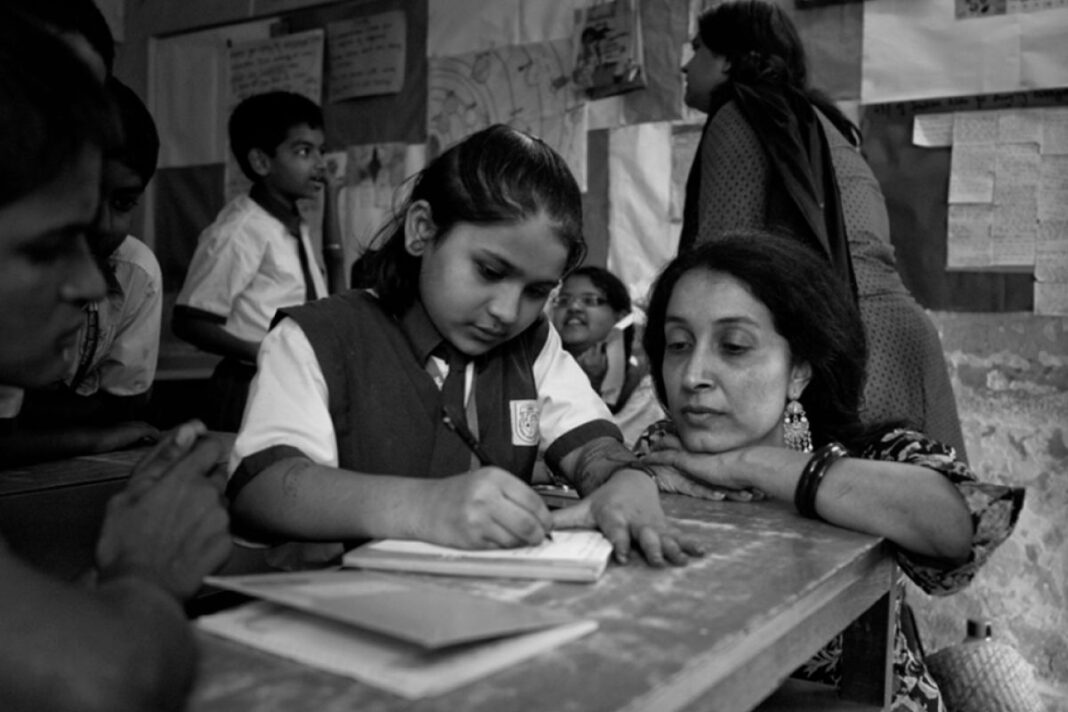
Rather than treat this as a passing observation, she acted on it. She began spending her free hours teaching children in the area, first informally, then with more structure. What started as a handful of afternoons soon consumed her attention so completely that she made a decision most eighteen-year-olds would consider unthinkable. She left her studies at the University of Mumbai to work full time on what would eventually become a lasting institution.
Building Akanksha From the Ground Up
In 1989, Mistri opened her first learning center, which later became the Akanksha Foundation. It began small, with about fifteen children and a group of college friends who agreed to volunteer as teachers. There was no elaborate curriculum and no outside funding to speak of. The early classes ran on borrowed space, secondhand books, and a good deal of persistence.
Over time, the center grew into a network of after-school programs across Mumbai and later Pune, offering children from low-income families support in English, mathematics, and life skills that their regular schools often could not provide. As word spread and results became visible among the children who passed through the program, Akanksha shifted from running only after-school sessions to operating full schools in partnership with the government. Today the foundation reaches thousands of students each year, and its model has been studied by educators well beyond India’s borders.
The change was not simply a matter of scale. Mistri and her early colleagues had to learn what actually worked for children who arrived years behind their classmates in reading and arithmetic. They experimented with smaller class sizes, closer attention to each child’s progress, and a curriculum that treated confidence and curiosity as seriously as test scores. These ideas seem ordinary now, but at the time they marked a real departure from the rote learning found in most government classrooms.
From One Center to a National Movement
Running Akanksha convinced Mistri that, however effective, after-school support could not, on its own, close the gap in Indian education. The problem was larger than any single organization could solve through direct service alone. It needed more people willing to spend real time inside classrooms, understanding the daily struggles of underfunded schools from within, rather than observing them from a distance.
This realization led her to found Teach For India in 2008 alongside a small group of colleagues. The organization borrowed its basic structure from Teach For America, recruiting talented university graduates and young professionals and placing them in low-income schools for a two-year commitment. Fellows are trained to teach, but the deeper goal extends beyond any single classroom. Teach For India was built on the idea that people who spend two years living alongside the realities of educational inequality will carry that understanding into whatever they do next, whether in policy, business, or education itself.

The results have grown steadily since that first cohort. Thousands of Fellows have now passed through the program, teaching in cities across the country and reaching hundreds of thousands of students in government and low-income private schools. Many former Fellows remain connected to education long after their two years end, working in schools, nonprofits, and government offices where they continue applying what they learned in the classroom.
A Movement, Not Just an Organization
What distinguishes Mistri’s approach is her insistence that Teach For India be understood as a movement rather than a service provider. She has often spoken about wanting children to see themselves not as problems to be fixed, but as young people capable of driving change for others. This distinction shapes how Fellows are trained and how the organization measures its own success. Test scores matter, but so does whether a child grows up believing they have the power to improve their own community.
Critics have pointed out that a two-year commitment is short, and that many Fellows arrive from elite backgrounds with limited teaching experience before stepping into demanding classrooms. Attrition after the fellowship period is real, and not every Fellow remains in education for the long term. Supporters counter that the program was never meant to replace trained career teachers. Instead, it was designed to build a pipeline of leaders across many sectors who carry firsthand knowledge of classroom inequality into whatever work they pursue afterward, expanding the circle of people invested in fixing the system rather than leaving the task to teachers alone.
A Legacy Still Being Written
Mistri has received recognition throughout her career, including selection as an Ashoka Fellow and as a Global Leader for Tomorrow at the World Economic Forum. She has written about her work in a book describing the early years of Teach For India, and she continues to serve on the boards of several organizations focused on education and child welfare in India.
However, Mistri herself tends to describe her work less in terms of personal achievement and more in terms of what remains unfinished. Millions of children across India still lack access to a quality education, and the systemic barriers she first encountered as a teenager have not disappeared. What has changed is the number of people now working alongside her. Fellows, alums, teachers, and entire communities have joined a mission that began with one young woman walking into a slum with nothing more than an idea and the willingness to act on it.
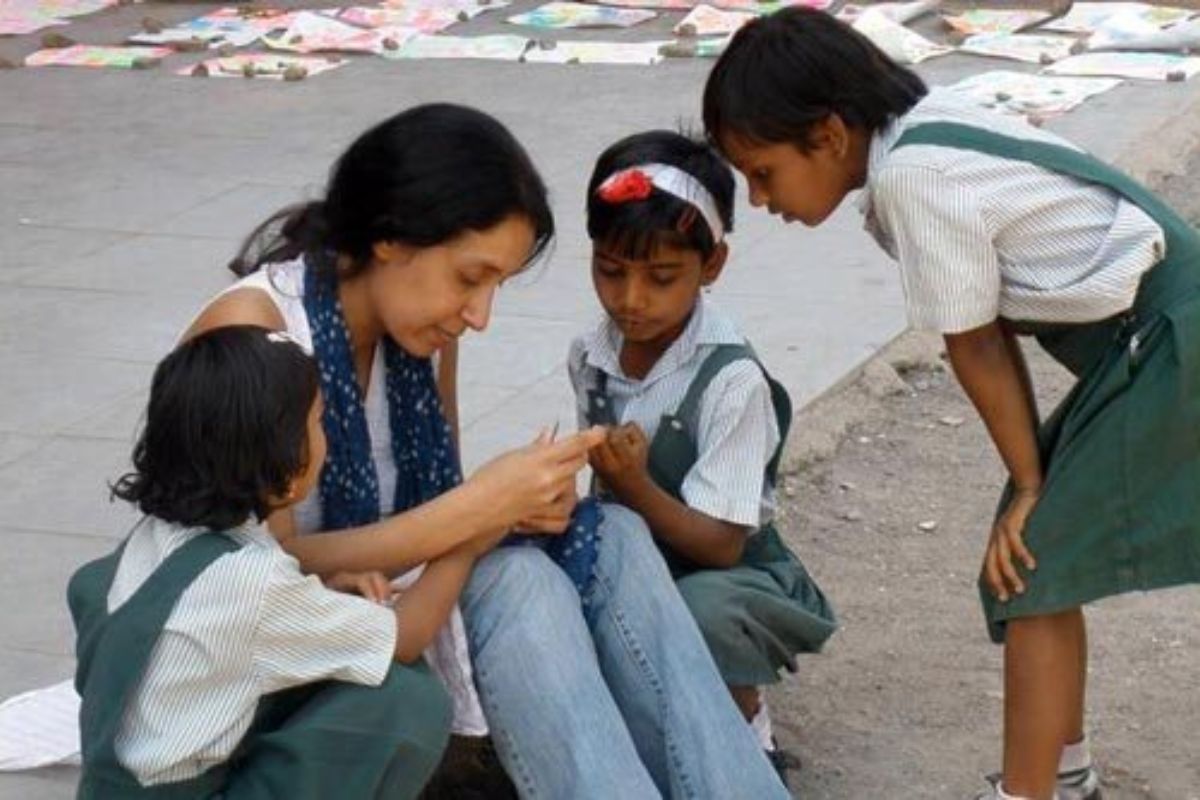
Her story offers a simple but demanding lesson. Meaningful change rarely begins with a grand plan. It often begins with someone noticing a problem up close and refusing to look away, then spending the rest of their life building something large enough to answer it.
There is also a quieter lesson in how she went about it. Mistri did not wait for funding or a fully formed strategy before teaching those first fifteen children. She started with what she had and let the work itself reveal what came next.
For the students who pass through Akanksha centers or sit in classrooms taught by Teach For India Fellows, none of this history matters as much as the daily reality of a teacher who shows up, pays attention, and expects something better from them than the system around them often does. That may be the clearest measure of what Shaheen Mistri set out to build nearly four decades ago, in a Mumbai neighborhood she had only just begun to understand.
Also Read: Tribal Village in Manipur Turned Trees Into Classrooms Where Children Learn Their Native Language
You can connect with DNN24 on Facebook, Twitter, and Instagram and subscribe to our YouTube channel.