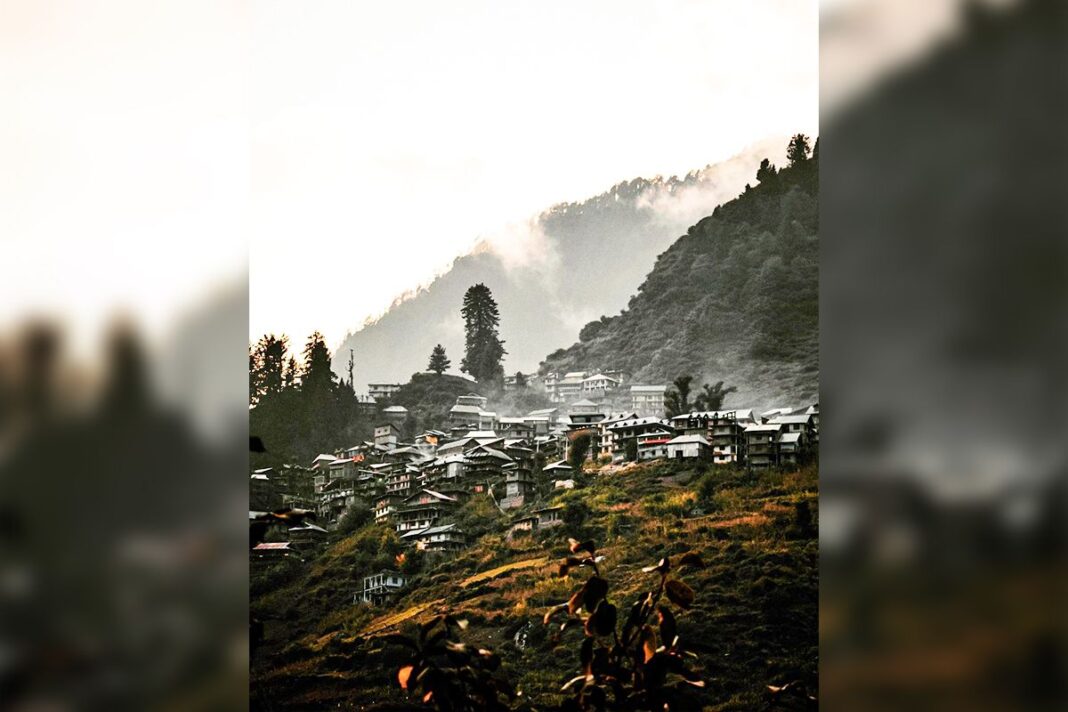


In the hills of Gumla district, mining pits are swallowing the forest that gives Jharkhand’s Asur tribe both its livelihood and its most treasured handmade object, a leaf umbrella called the ghunghu. What looks like a simple craft is really a whole way of reading the land, and that reading is fading fast.
A People Shaped by Iron and Forest
The Asur are a small tribal community who speak an Austroasiatic language and live chiefly in the Gumla, Lohardaga, Latehar and Palamu districts of Jharkhand. The government lists them as a Particularly Vulnerable Tribal Group, a category flagging communities at special risk. For generations they worked as iron smelters, hunters and shifting cultivators.
Most Asur families now farm on a small scale. Census figures gathered by Jharkhand’s Tribal Welfare Research Institute show that more than 90% of the community were recorded as cultivators in 2011. Even so, the forest never stopped mattering, still supplying firewood, wild food, medicine and material for crafts, chief among them the ghunghu.
Forest as Home, Market and Temple
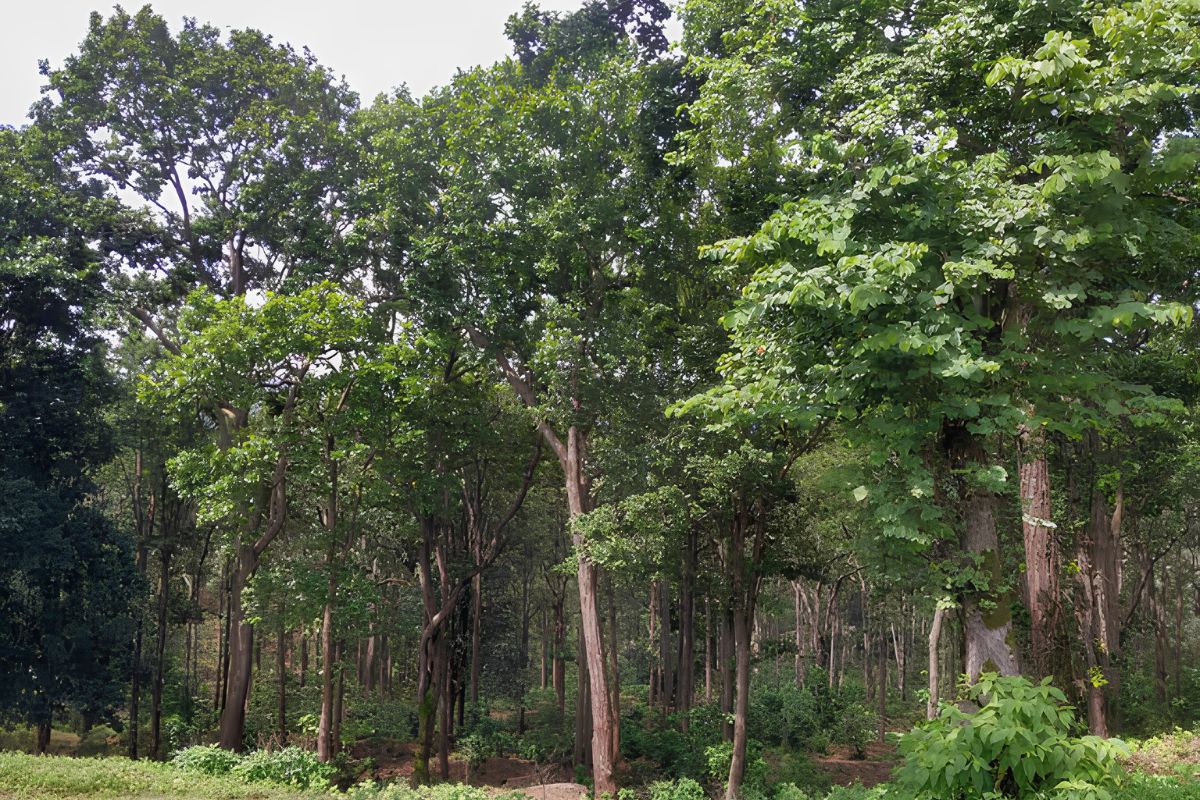
In Kujam village, the Bishunpur Forest Range starts a few hundred metres from people’s front doors. Shukhani Asur, a craftswoman there, has depended on that stretch of trees for as long as she can remember. Firewood, fruit, grazing ground and wild produce such as mahua flowers and mushrooms add up, in her own words, to rozi roti, meaning bread and livelihood together.
The forest carries spiritual weight too. Sacred groves, ancestral spirits and rituals tied to deities such as Singbonga and Dharati Mata are woven into its clearings. When the tree cover thins, the loss cuts into seasonal rhythms and sacred geography, not just the economy.
The Ghunghu, an Umbrella of Leaves
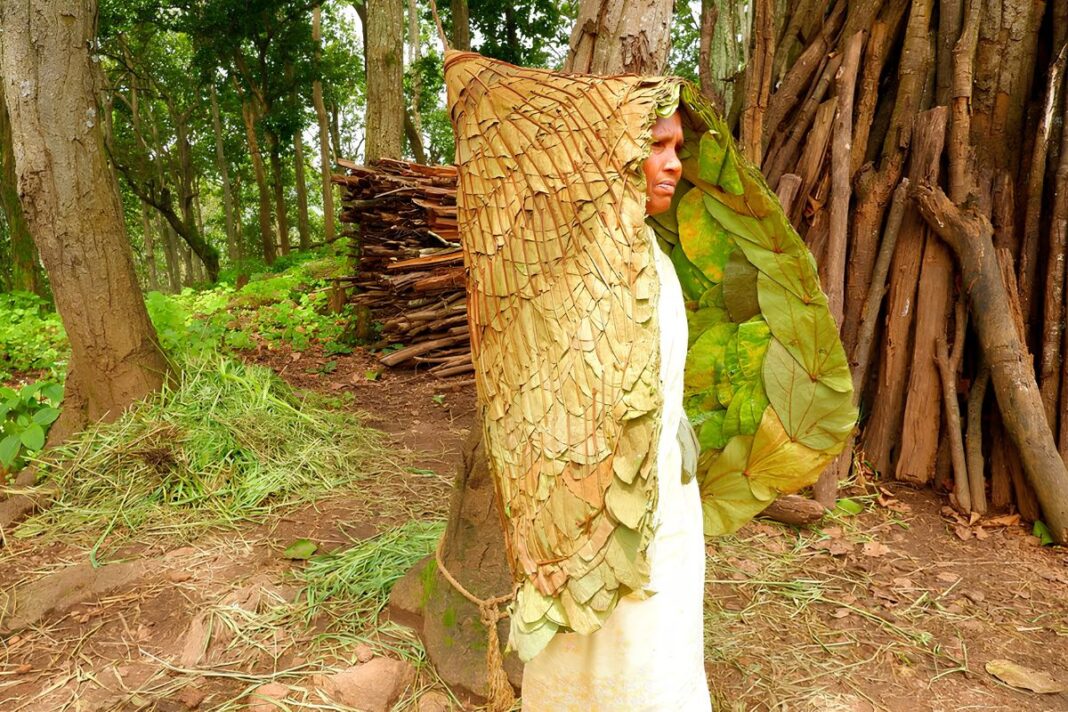
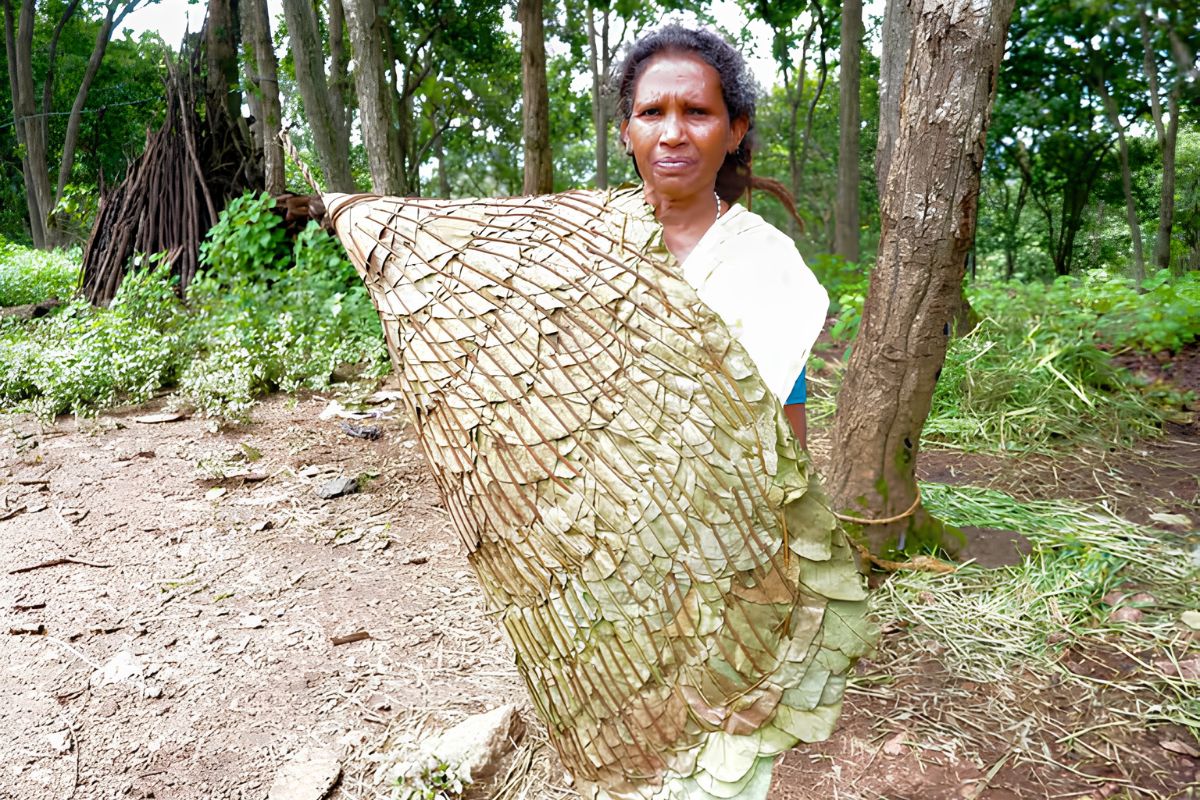
Few objects capture this bond better than the ghunghu, a dome-shaped leaf umbrella woven from the maloo creeper, a sturdy evergreen vine that can climb thirty metres up the tallest trees. Shukhani learned to weave one from her mother, and every forest trip as a child doubled as a lesson in plant lore.
A properly made ghunghu earns its keep all year. It shields the wearer from the fierce loo winds of summer, blocks the cold in winter and turns aside monsoon rain, leaving both hands free for work. Local belief adds a further layer of comfort, the idea that lightning will spare anyone wearing a ghunghu in the forest, folk wisdom mixing practical sense with faith.
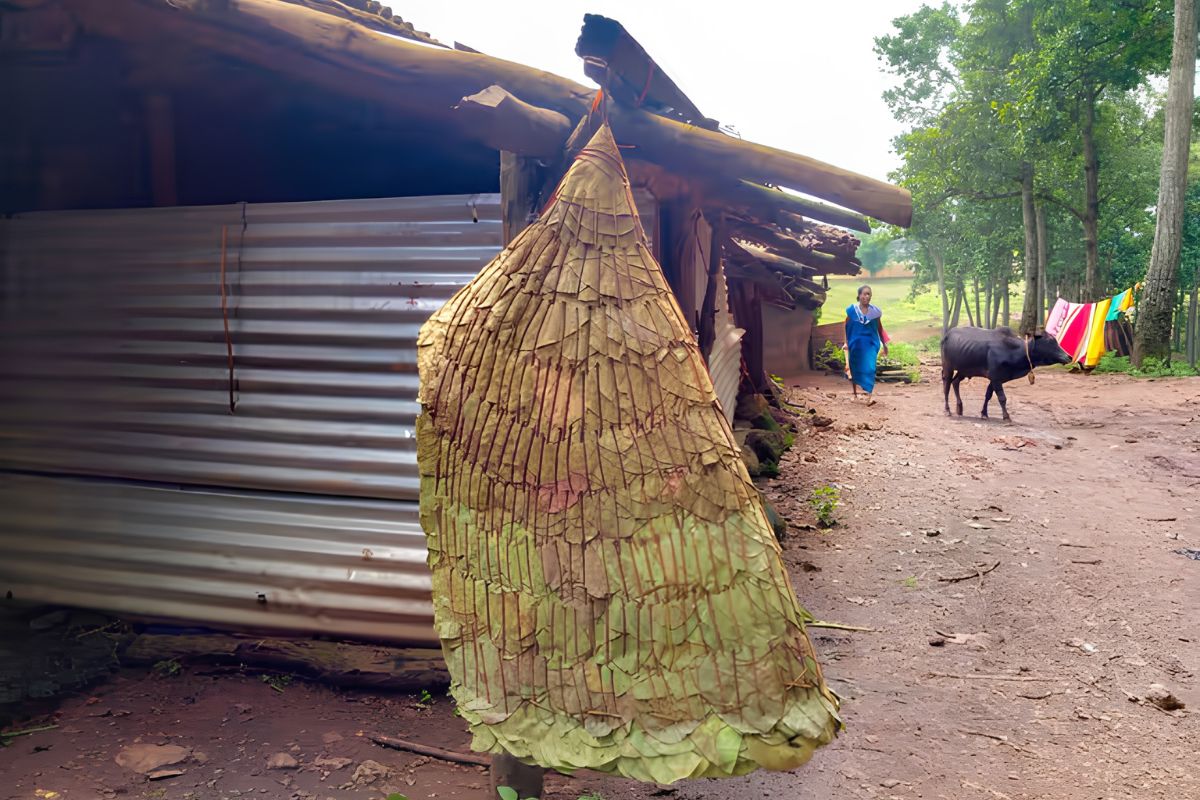
Making one is slow, communal labour. Shukhani reckons it takes between one and two thousand maloo leaves and two or three days to finish a piece sturdy enough for an adult. Women usually gather the lower leaves that hang on long stems, but when the best foliage grows high up, they climb the trees themselves. Each broad leaf splits into two rounded lobes and is layered over the next, much as tiles overlap on a roof, in Shukhani’s own words. The stems act like natural clips, holding the leaves together as the dome takes shape. As the leaves dry, the umbrella grows lighter without losing its protective power.
Shrinking Forests, Longer Walks
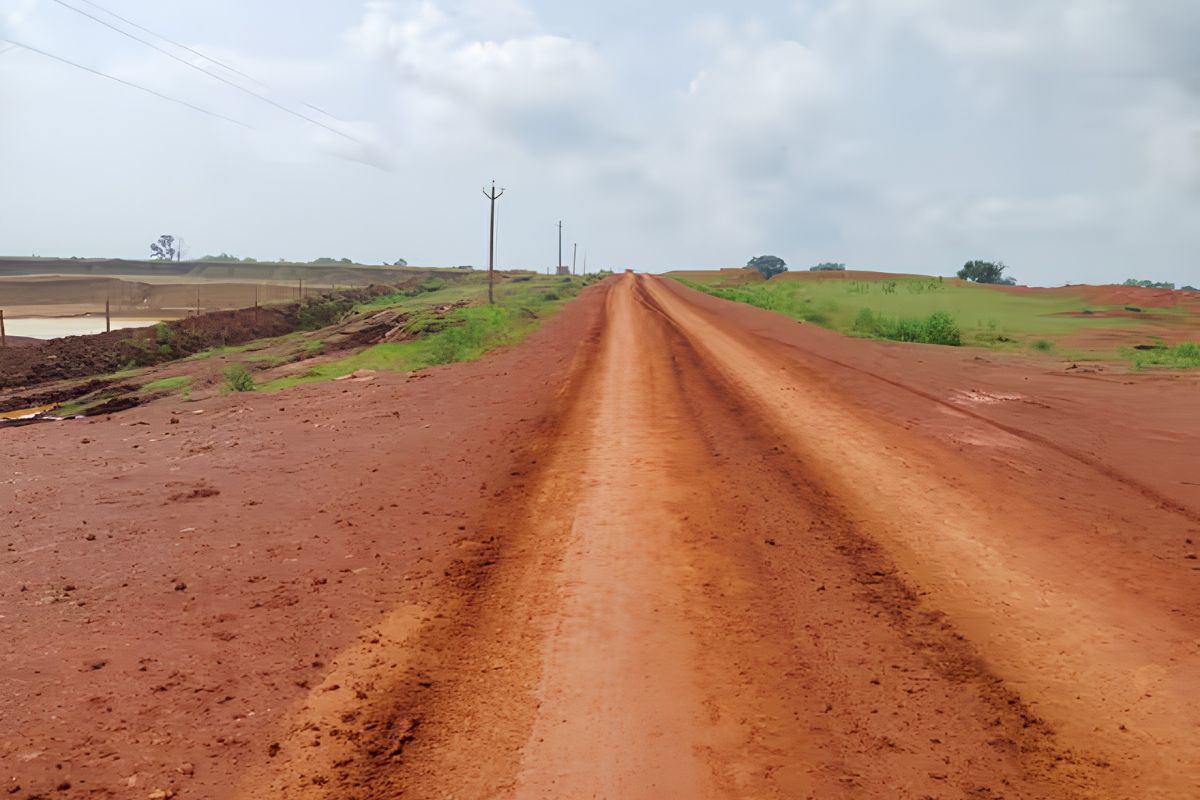
That bond is now under real strain. Around Kujam, red bauxite mining has crept into land that once held thick sal forests and creeper-covered trees. Shukhani remembers when sal trees grew so dense that two grown men could hide behind a single trunk. Today she points instead to raw pits and bare earth.
With nearby forest patches stripped or leased for mining, women now walk ten to twelve kilometres daily to reach denser stretches of the range for leaves and grazing. Such treks over broken, often mined ground wear down the body and give younger people little reason to learn skills tied to a forest they rarely enter.
Pits in the Land and in the Livelihood
Jharkhand sits on large bauxite deposits, and mining in districts like Gumla has spread across many villages, overlapping tribal land and forest. Studies of mining in the state’s tribal belt describe forest clearance, soil erosion, water contamination and displacement of communities who once lived off that land. In Kujam, residents complain of deep pits left behind after bauxite is extracted, pits that swallow stray cattle. Drilling, blasting and heavy trucks run almost without pause, driving wildlife away.
Falling Water, Changing Climate
Mining and forest loss have also reshaped water cycles. Villagers say the water table has dropped so far that women must walk long distances each summer for drinking water. Research on mining across Jharkhand reports damaged aquifers and silted streams, leaving fertile ground barren. Climate change adds a further burden, as mahua, mushrooms and other forest produce grow scarcer and less predictable with shifting rainfall.
Caught Between Forest Law and Mining Lease
Villagers describe feeling pressed from two directions, forest department rules on one side and mining leases on the other. Provisions such as Section 49(b) of the Chota Nagpur Tenancy Act allow farmland to be converted to mining use by government notification, often with little genuine consultation. One study puts the number of people displaced by mining across India at around two and a half million, more than half of them tribal.
A Craft on the Edge of Disappearing
As forest access shrinks and young people move toward wage work, skills like ghunghu weaving edge closer to extinction. Shukhani recalls when everyone gathered maloo leaves and wove their own ghunghu. Today, she says, few still use one, and fewer still know how to make it. Lose the habitat a craft depends on, and the songs and stories built around it tend to vanish too. The Asur’s iron smelting tradition has already fallen away for similar reasons, sitting now on the brink of disappearing altogether.
The Weight Carried by Women
Much of this burden falls on women. They walk long distances for water and forest produce, tend livestock, farm small plots of paddy, maize, and millet, and keep alive crafts that earn little money but hold deep cultural value. However, when mining projects arrive, the talking usually happens with male leaders or outside officials, while the daily work of coping falls to women.
What Repair Might Look Like
Studies on the costs of deforestation in Jharkhand point to clear steps: stronger protection of tribal land rights, real participation by forest communities in decisions that affect them, and mining practices built around ecological repair. For a group like the Asur, this also means active support for traditional crafts, treating the ghunghu as living heritage worth documenting and fairly paying for.
An Umbrella Against the Storm
The ghunghu is more than shelter from rain or sun. It is a fragile shield stitched from leaves, memory and faith, passed down across generations. Shukhani’s belief that it can turn away lightning captures both how exposed her community is and how it has kept going anyway, standing beneath a sky heavy with the clouds of mining and a shifting climate.
If the forest keeps shrinking and the pits keep deepening, the Asur may lose not just a craft but a whole way of reading and shaping the world around them, one that has outlasted centuries of neglect. Protecting that future demands a shift in how Jharkhand treats development: no longer viewing the jungle as expendable or the Asur as invisible, but rather as keepers of a living heritage that deserves room, respect, and forest shade to continue.
Also Read: Inside Hampi’s Monumental Ruins, Where the Glorious Legacy of the Vijayanagara Empire Still Lives On
You can connect with DNN24 on Facebook, Twitter, and Instagram and subscribe to our YouTube channel.