

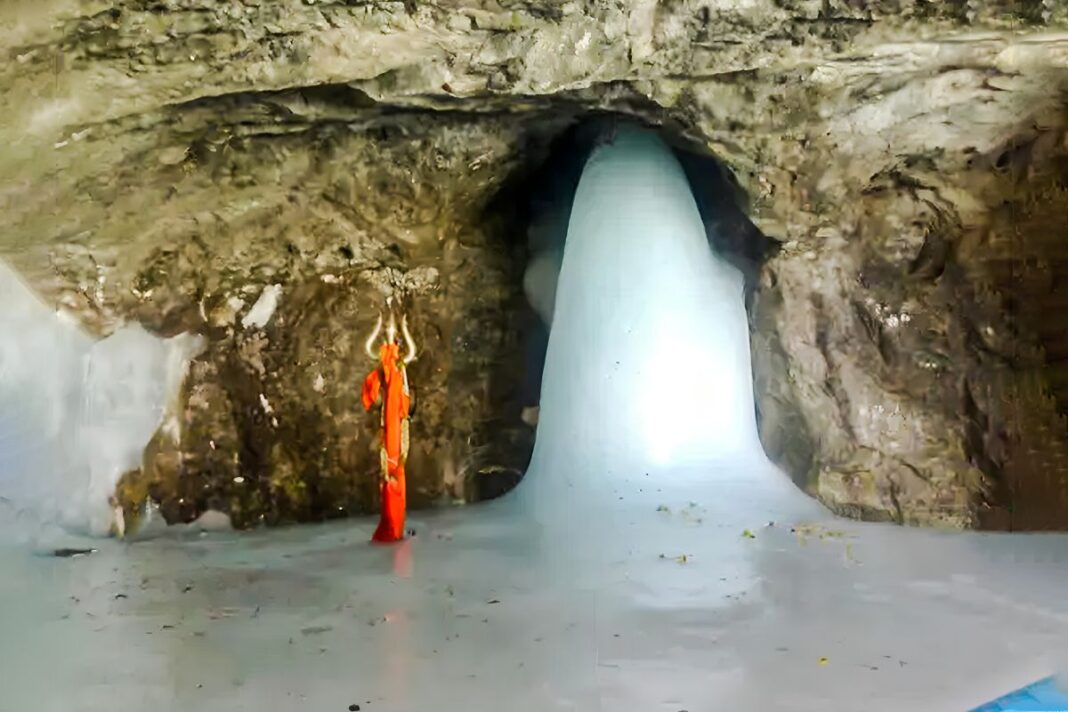

In 2006, while covering the Amarnath Yatra, I spent nearly ten days at an altitude of around 13,000 feet. That year, the biggest story was not the massive influx of pilgrims but the absence of the naturally formed ice Shivling inside the holy cave. The controversy deepened when an artificial ice Shivling was reportedly created for devotees, drawing widespread criticism of the Shri Amarnath Shrine Board.
The Amarnath Yatra is not a recent tradition. It is believed to be thousands of years old and is associated with Sage Bhrigu. Historical references to the pilgrimage also appear in the 12th-century chronicle Rajatarangini. In 2000, the Jammu and Kashmir government established the Shri Amarnath Shrine Board to better organise the annual pilgrimage. Yet, in recent years, the naturally formed ice Shivling has repeatedly melted early or failed to form properly, raising serious questions. Is this a spiritual sign, or is science pointing to a different explanation?
How the Ice Shivling Naturally Forms
The sacred Amarnath Cave is located in Jammu and Kashmir’s Anantnag district at an altitude of about 3,888 metres (12,756 feet). During winter, temperatures in the region often fall below- 20 degrees Celsius. Under these extreme conditions, water continuously seeping from the cave’s ceiling freezes layer by layer, gradually forming an ice pillar that devotees worship as the sacred Shivling.
According to Himalayan geologist Dr S. P. Sati, the formation of the Amarnath ice Shivling is a rare yet entirely natural geological phenomenon. Scientifically, it is known as an ice stalagmite, a structure that grows upward from the cave floor. It forms when water dripping from the cave ceiling freezes immediately upon touching the extremely cold ground.
Heavy snowfall accumulates above and around the cave during winter. As temperatures rise in April and May, the snow slowly melts and seeps through cracks in limestone and gypsum before reaching the cave ceiling. Despite warmer temperatures outside, the cave interior remains at or below freezing throughout much of the summer.
As droplets continue falling onto the same spot, each one freezes instantly. Layer upon layer of ice builds upward, eventually taking the shape of a pillar. Millions of devotees revere this naturally formed structure as Baba Barfani.
Why Is the Shivling Melting So Quickly?
In recent years, the ice Shivling has often melted completely or partially within days of the pilgrimage beginning. Scientists attribute this to several interconnected environmental factors.
Climate Change and Rising Temperatures
The Himalayan region is warming faster than many other parts of the world. March 2024 was recorded as one of the hottest on record, while February 2025 became the warmest February in 125 years. Rising temperatures and frequent heatwaves have made it increasingly difficult for the cave to maintain the freezing conditions necessary for preserving the ice Shivling.
Human Activity Is Altering the Cave’s Microclimate
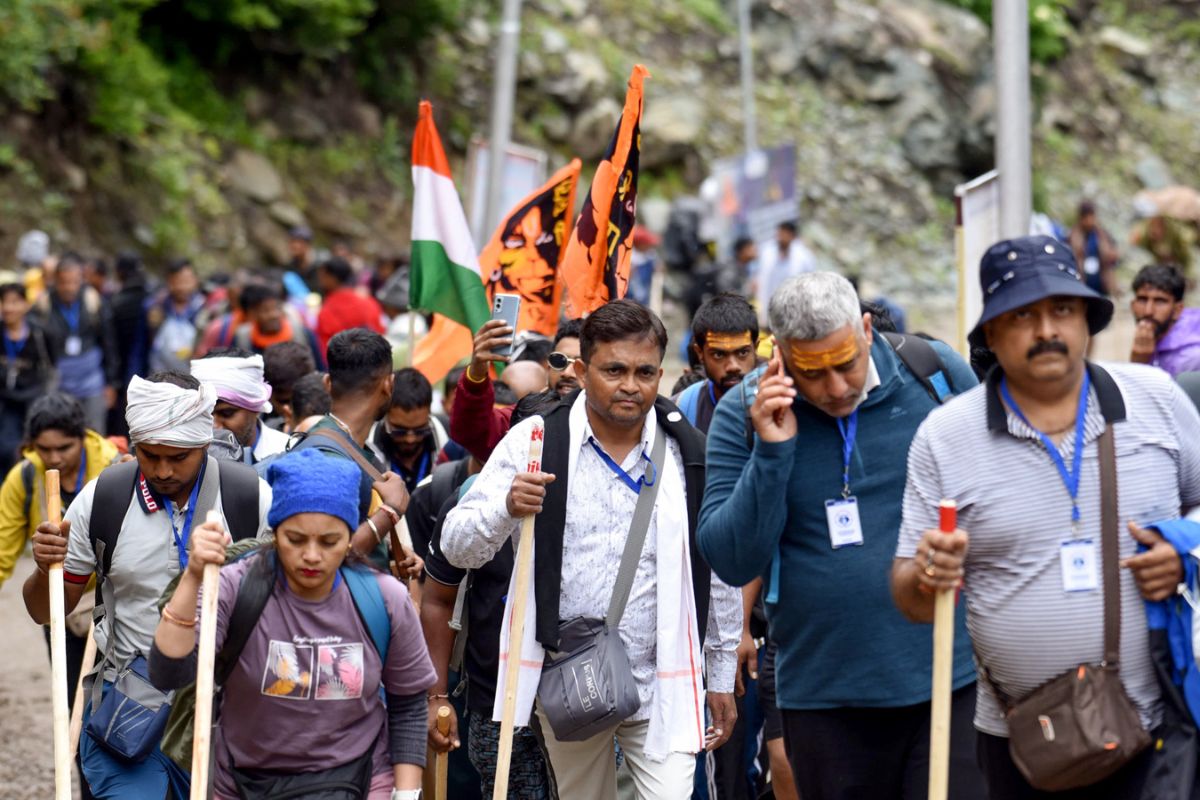
Experts believe that human activity has significantly affected the cave’s delicate environment. Every day, thousands of pilgrims enter the cave. The heat generated by human bodies and the carbon dioxide they exhale gradually raise the local temperature inside the cave.
In addition, generators, helicopters, vehicles, horses, cooking activities and other infrastructure associated with the pilgrimage contribute to increased heat. Around 2.2 lakh devotees visited the shrine annually in 2016. By 2024, the number had crossed a record 5.12 lakh. In 2026, more than 1.25 lakh pilgrims reached the shrine within just the first five days of the Yatra.
Dr Sati explains that India often overlooks the carrying capacity of environmentally sensitive regions. A place that normally remains uninhabited suddenly hosts thousands of people during the day. Human movement, vehicles, horses, helicopters, religious activities and temporary settlements collectively create what scientists describe as a local thermal island, raising temperatures in the surrounding area.
He adds that this problem extends far beyond Amarnath. Similar environmental stress is becoming increasingly visible across the higher Himalayan region. Growing avalanche activity near Kedarnath and Badrinath has also become a matter of concern.
Reduced Snowfall During Winter
The size and longevity of the Shivling depend heavily on winter snowfall. If the cave receives less snow during winter, less meltwater becomes available in summer. Without a steady supply of dripping water, the Shivling remains smaller and melts much sooner.
Infrastructure Expansion Around the Shrine
Road widening, construction near the cave and the extensive use of LPG cylinders in community kitchens have altered the area’s fragile ecosystem. Such development, though intended to improve pilgrim facilities, also increases local temperatures and affects the conditions required for the natural formation of the ice Shivling.
Changing Rainfall Patterns May Also Be Playing a Role
Scientists have observed that northwestern India has experienced increased summer rainfall in recent years. Rainwater entering the cave system is generally warmer than melting snow. As this relatively warm water seeps into the cave, it may accelerate the melting of the existing ice.
The Amarnath Cave depends on a delicate balance of snowfall, freezing temperatures, groundwater seepage and stable climatic conditions. Even small disturbances to this balance can affect the formation of the sacred ice Shivling.
A Growing Environmental Challenge Across Himalayan Pilgrimage Sites
The number of devotees visiting Himalayan shrines every year has risen dramatically over the past decade. Amarnath, Kedarnath, Badrinath and Vaishno Devi are witnessing record crowds, placing enormous pressure on these ecologically fragile regions. Plastic waste, pollution and expanding tourism infrastructure have further intensified the environmental burden.
For example, Delhi resident Prabhunath Yadav says he visits Vaishno Devi every year with his family. Many families have made annual pilgrimages to Himalayan shrines a regular tradition during June and July. While faith remains deeply personal, an important question arises: Should environmentally sensitive destinations continue to receive such large crowds every year, or should tourism become more sustainable to protect these sacred landscapes?
Experts Call for Responsible Pilgrimage
Dehradun-based social and environmental activist Anoop Nautiyal believes the growing number of pilgrims has become an environmental challenge rather than simply an expression of faith.
He says, “The fragile Himalayan ecosystem cannot sustain unlimited crowds every year. Pilgrimage sites such as Amarnath, Kedarnath and Vaishno Devi have a limited carrying capacity, and that limit is repeatedly being exceeded. The government should immediately introduce strict caps on daily and annual visitor numbers. Pilgrimages should be distributed throughout the year on a rotational basis. At the same time, devotees must act responsibly by avoiding plastic waste and reducing the frequency of visits instead of travelling every year.”
Faith and Conservation Must Go Together
The disappearance of the Amarnath ice Shivling is neither a mystery nor merely a matter of religious belief. Scientific evidence points to climate change, rising temperatures, reduced snowfall, and increased human activity as the primary reasons for its early melting.
For millions of devotees, the Shivling remains a symbol of unwavering faith. Protecting this extraordinary natural phenomenon now requires balancing spiritual devotion with environmental responsibility. Preserving the fragile Himalayan ecosystem is essential not only for future generations of pilgrims but also for safeguarding one of nature’s most remarkable and sacred creations.
Also Read: The Road Back from the Red Corridor
You can connect with DNN24 on Facebook, Twitter, and Instagram and subscribe to our YouTube channel.