
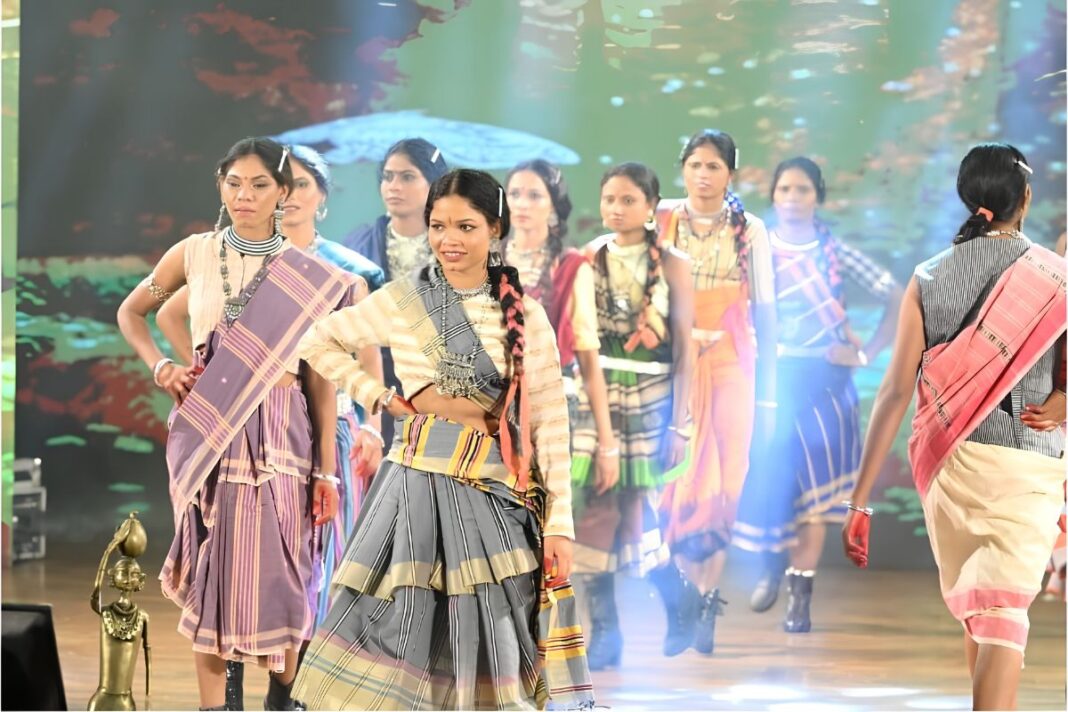

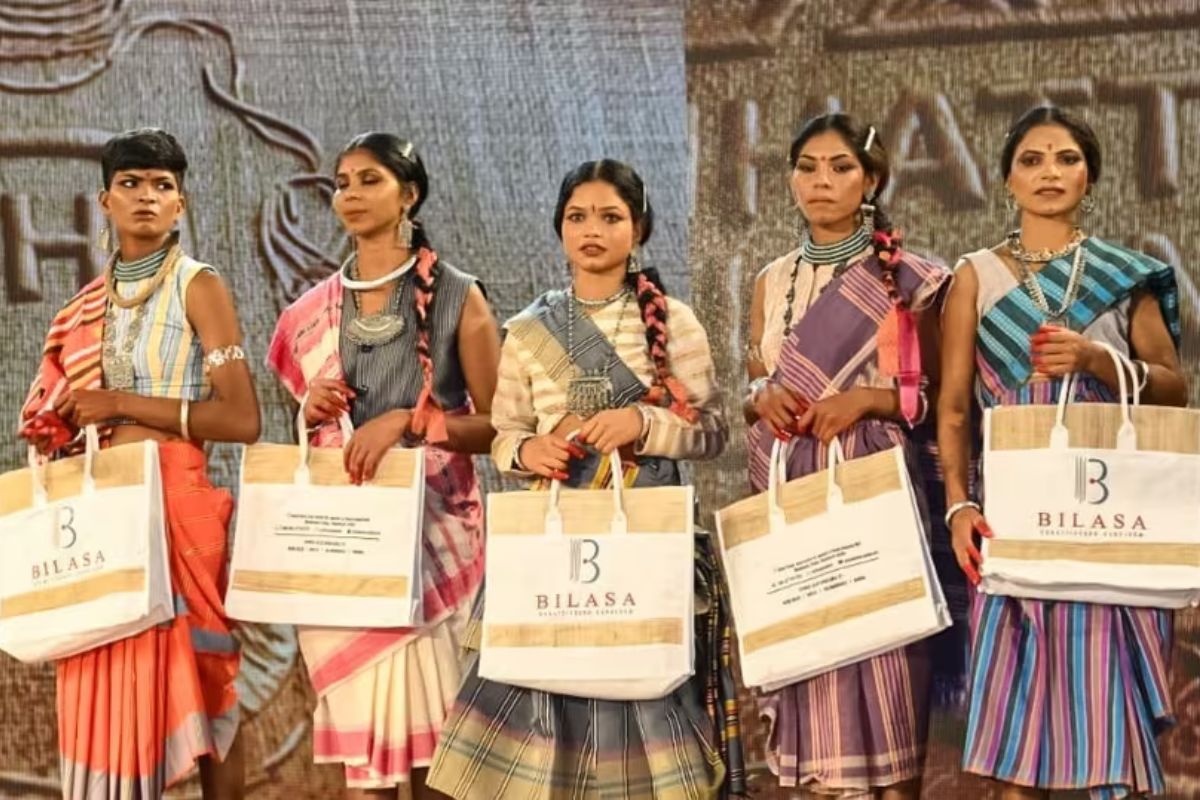
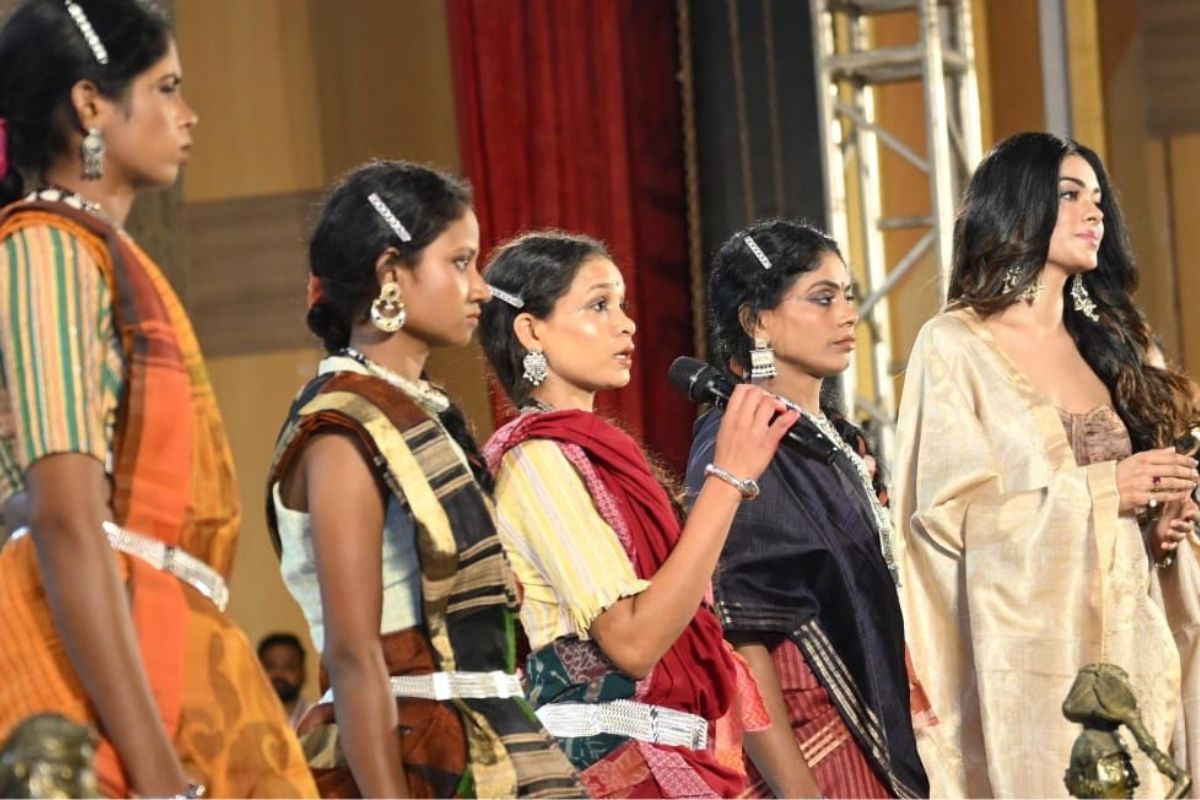
The Naxal women who once carried rifles through the forests of Bastar walked a fashion ramp in Raipur last week, dressed not in fatigues but in handwoven Kosa silk sarees. Nine former members of the Maoist insurgency stood under stage lights before an audience of senior public representatives and government officials, and for a few minutes the story of Chhattisgarh looked nothing like the one the country usually hears.
This was not a fashion show in any ordinary sense. It was a public marker in a long passage from armed conflict toward rehabilitation, livelihood and acceptance. Women once associated with weapons and underground networks appeared instead as calm, composed participants in a cultural programme built around India’s handloom traditions.
A New Chapter in Bastar
The event took place in Raipur as part of a programme marking National Handloom Day, placing Chhattisgarh’s textile traditions at the centre of the evening. The former cadres were presented as models, each wearing garments woven in the state’s regional style.
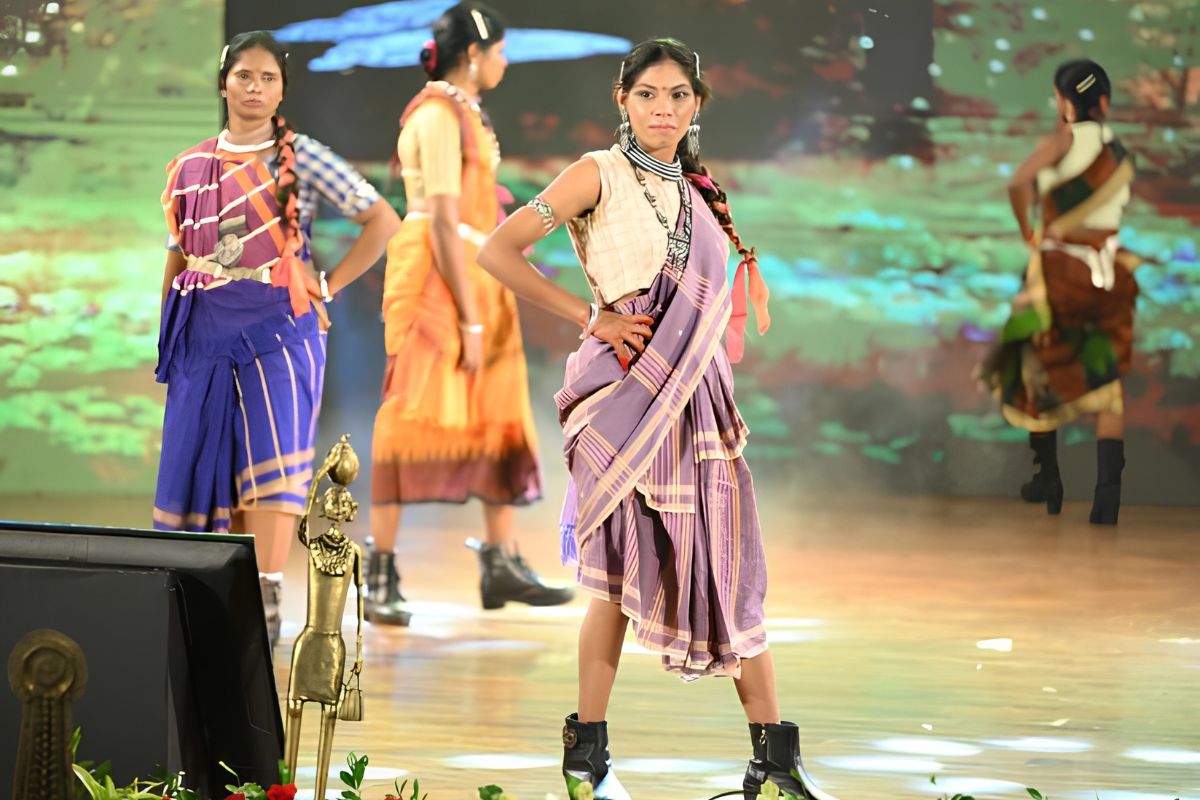
Reports named the nine participants, though different accounts recorded slightly different spellings of some names. Such variation is common when names drawn from local languages are rendered into English, so the correct spellings should be checked against the event’s own records before publication.
The women had reportedly been living at a government-run rehabilitation centre in Sukma, one of the districts once hit hardest by Left Wing Extremism. They rehearsed before appearing in public, then walked the ramp with a steadiness that surprised many in the audience, acknowledging the applause as they went.
The contrast was hard to miss. Women who had once moved through dense forest terrain under the shadow of an armed movement now presented garments shaped by generations of local weavers. But the real meaning of the evening was not the contrast itself. It was the chance to be seen as citizens rebuilding their lives rather than people permanently defined by their past.
From Conflict to Reintegration
Left Wing Extremism, more widely known as Naxalism, touched several states across central and eastern India for decades. Bastar, comprising districts such as Sukma, Bijapur, Dantewada, Narayanpur, Kanker, and Kondagaon, became one of the movement’s most important bases. Difficult terrain, limited road connectivity, and distance from government offices allow armed groups to operate there for extended periods. Tribal communities bore the weight of violence, displacement, insecurity and limited access to roads, schools, healthcare, markets and public services.
Women were never on the margins of the movement. They served in armed units, communications, logistics, and local mobilisation, and many joined at a young age, spending years away from ordinary family life. Their surrender calls for far more than laying down a weapon. It calls for adjustment to civilian life, identity documents, education, healthcare, employment and the slow rebuilding of social relationships.
India’s rehabilitation framework seeks to encourage cadres to surrender and return to society through financial assistance, monthly stipends, skill training, and livelihood support. A government document from June 2026 states that surrendering cadres could receive an immediate grant of five lakh rupees for higher-ranked members and two and a half lakh rupees for others, along with a monthly stipend of ten thousand rupees for thirty-six months.
These measures matter because peace built only on security operations rarely lasts. Former combatants need real alternatives that allow them to earn a living and regain a sense of dignity. Rehabilitation only becomes meaningful when it opens a future rather than shutting a door on the past.
The Handloom as a Symbol
The choice of handloom clothing added an extra layer of meaning to the Raipur event. Handloom is far more than a category of fabric. In many Indian communities, it carries inherited skill, regional identity, women’s labour, local economies and cultural memory all at once.
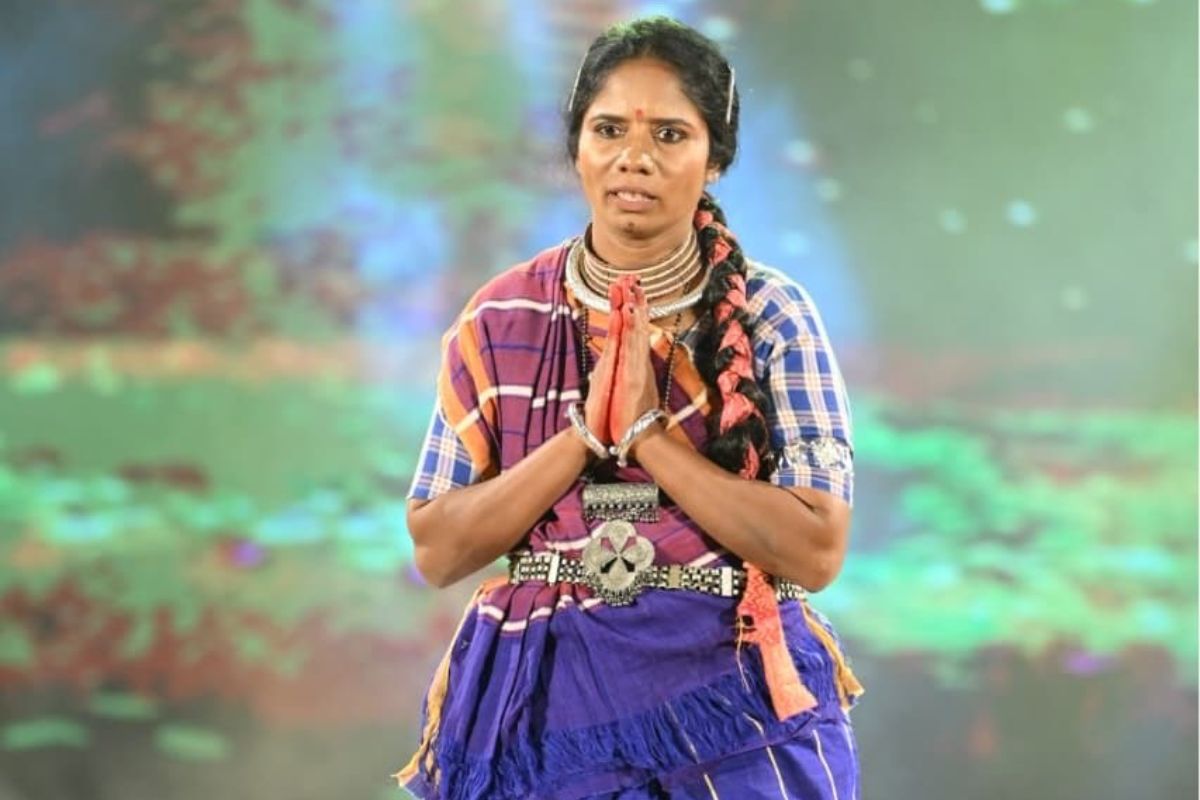
Chhattisgarh’s Kosa silk is deeply tied to the state’s textile heritage. Drawn from the cocoons of the wild tasar silkworm, Kosa is prized for its texture, natural sheen, and long use in sarees and other garments. When the former cadres walked the ramp wearing it, they took part in an event that placed local craft, not conflict, at the centre of public attention.
That symbolism carried particular weight in Bastar, a region whose cultural identity is too often pushed aside by national coverage focused on violence. The ramp offered a different picture of the place, one built on craft, confidence and shared community effort. The women were not shown to the public merely as beneficiaries of a state policy. They were performers in a cultural programme, and their presence suggested that reintegration can include creative expression, public recognition and the slow return of social confidence.
A Wider Transformation
The show took place against the backdrop of a government claim that India had become effectively free from Naxalism on the thirty-first of March, 2026. A Press Information Bureau document reported that districts affected by Left Wing Extremism fell from 126 in 2014 to just 2 by 2026, while incidents fell from 870 to 234 and fatalities dropped from 310 to 100.
The government credits this decline to a mix of security operations, better intelligence, expanded infrastructure, welfare delivery, and rehabilitation policy, resting on three stated pillars: Vishwaas, meaning trust; Nirman, meaning construction and connectivity; and Jan Kalyan, meaning public welfare and dignity. In Bastar alone, the document notes more than three thousand kilometres of new roads and nearly nine hundred mobile towers, along with a rehabilitation plan for roughly three thousand surrendered cadres, backed by an initial allocation of twenty crore rupees for skills and livelihood support.
Those figures describe infrastructure and policy. The women on the ramp represented something harder to measure, the human side of that same change. A road connects a village to a market. A school opens a path to education. But a person’s return to ordinary life shows up differently, in the confidence to stand before strangers and in the acceptance society offers in return.
Peace Must Include Dignity
This story deserves to be told with care. It is genuinely moving, but it should not blot out the suffering the insurgency caused or the circumstances that pushed people toward it in the first place. Communities across Bastar have lived through violence at the hands of armed Maoists as well as the long shadow of prolonged conflict, and any honest account must hold space for victims rather than turn personal histories into spectacle.
At the same time, rehabilitation depends on society accepting that people can change. A person who surrenders cannot rebuild a life if every future door stays closed because of the past. Accountability and rehabilitation are not opposites. A stable society needs both justice and a genuine path back to a peaceful life.
The Raipur event showed how cultural programmes can support that process. A woman walking a public stage is not simply displaying a saree. She is claiming visibility, showing that her identity extends beyond the label of a former Naxal, that she can also be a worker, an artisan, a mother, or a citizen.
A Runway of Hope
The applause in Raipur lasted only a few minutes, but its meaning reaches well past the ramp. It suggests that regions once known mainly for fear can also be known for creativity and self-respect.
The handloom garments carried the labour of weavers who came before. The runway carried the courage of women beginning again. Together they offered an image of Bastar that was neither romanticised nor reduced to conflict, a Bastar where peace has to be woven into daily life through roads, schools and trust.
These women did not erase their past by walking the ramp. They showed that the past need not decide the whole of what comes next. Their journey stands as a reminder that lasting change happens when security is followed by real opportunity, and when rehabilitation comes paired with dignity.
Also Read: Ex-Journalist Built Free Boarding School in India’s Highest Village for Children
You can connect with DNN24 on Facebook, Twitter, and Instagram and subscribe to our YouTube channel.