
She sold every piece of gold she owned, and what she bought with it was a nation’s cinema.
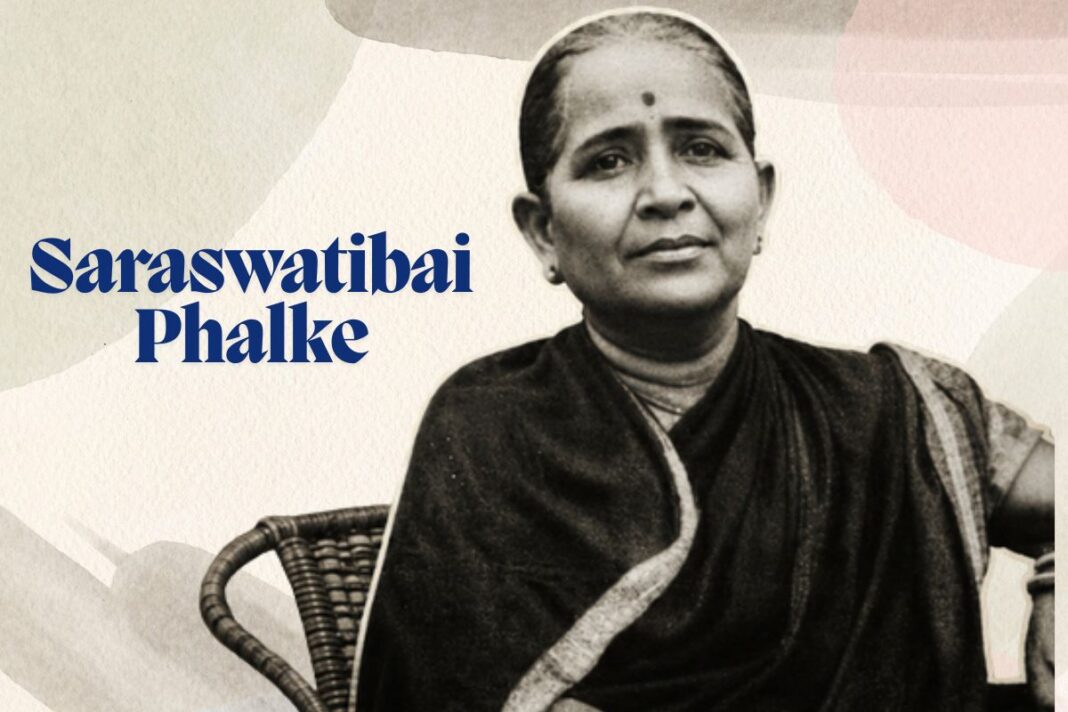
In 1913, inside a cramped studio in Nashik, Dadasaheb Phalke was racing against money, daylight and doubt to finish Raja Harishchandra. This film would later be called India’s first full-length feature. Beside him, night after night, worked a woman whose name most Indians still do not know. Her name was Saraswatibai Phalke, and without her the film almost certainly would not exist.
A Studio Built on Improvisation
There was no film industry to speak of in India at the time, so there was no one to hire either. Saraswatibai became the crew Phalke could not afford. She cut and joined strips of nitrate film by hand, since editing in 1913 meant scissors and glue rather than any machine. She mixed the chemical solutions used to develop exposed reels, a task that punished the smallest error. She perforated raw film stock so it would run through the camera and projector, a job so slow that a single 200 millimetre reel could take four hours of steady work, often finished by candlelight after the rest of the household had gone to sleep.
Her responsibilities did not stop at the editing table. She managed costumes and props for the entire production, keeping track of what each actor needed for every scene in a studio with no dedicated storage and no assistants to call on. She held white bedsheets aloft under the afternoon sun to bounce light onto the actors, standing in for equipment nobody in Nashik owned. And each day, before or after this technical labour, she cooked full meals for a crew that numbered close to seventy people, a task that alone would have filled most people’s working hours.
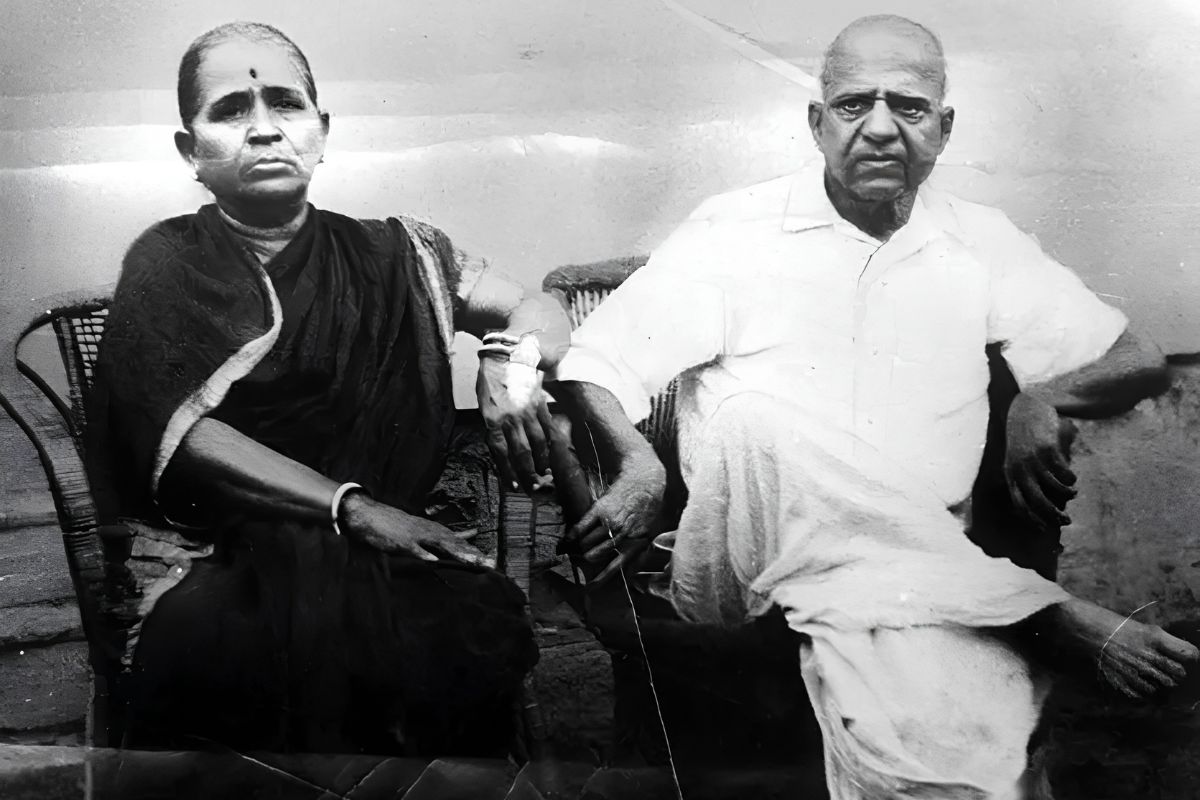
None of this was written into any job description, because no such job had existed in India before. Phalke had studied filmmaking abroad and understood, at least in theory, what a production needed. Turning that theory into a working studio in a small Maharashtra town required someone willing to learn each of those unfamiliar tasks on the spot, and that person was his wife.
The Jewellery That Paid for a Camera
Phalke’s ambitions reached beyond what his savings could support. He needed to travel to London to study the filmmaking methods only just emerging there, and he needed a camera and other equipment that could not be bought in India. Saraswatibai sold her own jewellery, the gold that in most households of that period represented a woman’s only real financial security, to fund the trip and the purchase.
It was not a small gesture dressed up by later storytellers. It was, in practical terms, the seed capital of Indian cinema. A woman gave up her personal safety net so that her husband could bring back a camera from Germany and a working knowledge of how to use it. Few origin stories in any industry rest on a sacrifice quite so direct.
A Household Run Alongside a Revolution
What made her days remarkable was not any single task but the sheer range of them. Saraswatibai raised her children largely on her own during the production, since Phalke’s attention was consumed entirely by the shoot. She fed dozens of crew members daily. She processed film late into the night. In an era when women in India were rarely allowed anywhere near a film set, let alone permitted to touch equipment or chemicals, she was quietly running most of the technical side of the production while also keeping a household together.
There is a particular kind of endurance in that combination, one that rarely gets celebrated because it does not look dramatic from the outside. Nobody photographs a woman perforating film reels by candlelight. Yet that work decided whether the camera could run at all the next morning. A single ruined batch of chemicals or a poorly perforated reel could cost a full day of shooting, and a full day of shooting cost money the Phalke household did not really have.
The Search for a Leading Lady
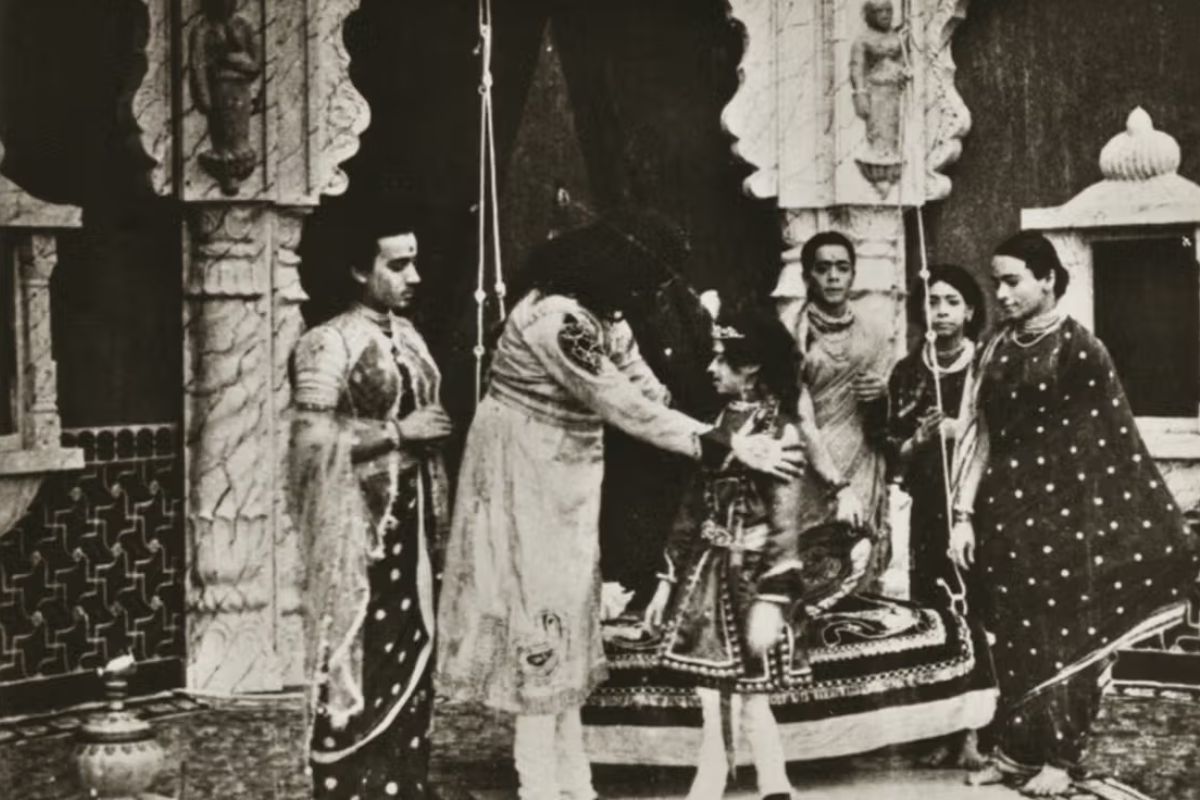
While Saraswatibai carried the technical weight of the production, Phalke faced a separate and almost comic struggle to cast the film’s female lead. He placed newspaper advertisements in Marathi papers calling for actors, and a memorable one specified that only handsome, sober applicants of good character should bother applying. The response was strong for male roles, but almost no woman in Nashik or Bombay was willing to appear in front of a camera. Acting itself carried a social stigma so heavy that even women who worked outside the usual boundaries of respectable society and auditioned for the part of Taramati ultimately walked away rather than accept it.
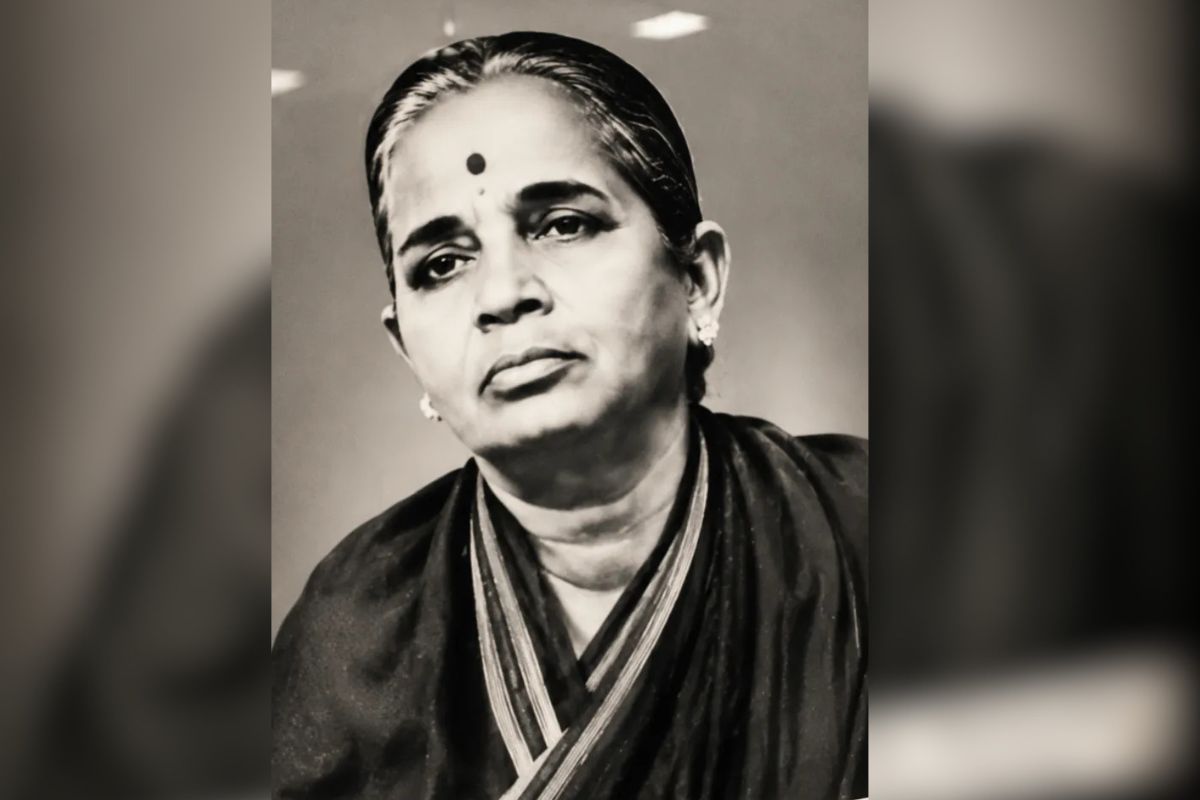
Phalke eventually cast Anna Salunke, a man who had been working as a cook, to play Queen Taramati, because no woman could be persuaded to take the role at all. Seen against that backdrop, Saraswatibai’s position looks almost paradoxical. The one woman closest to the production was not merely willing to work on it but was running most of its technical machinery. In contrast, women approached specifically to appear on screen were refused out of fear for their reputations. She never sought the camera’s attention, and she did not need to. Her work was already the film’s foundation.
She Refused to Act, and Meant It
At one point, Phalke asked his wife to step in front of the camera and act in the film. She turned him down flatly, and her reasoning was simple and pointed. She was already the editor, the chemist, the costume manager and the cook for a crew of seventy, and that was enough for one person. In an age when women were generally expected to comply rather than negotiate with their husbands, this was a quiet but firm assertion of who she considered herself to be. She was a creator of the film, not a performer in it, and she wanted that distinction respected.
Her refusal also draws a sharp line between two very different kinds of courage present on that set. Salunke and the other men who agreed to play female roles were defying stigma from one direction, risking mockery for appearing in a sari on camera. Saraswatibai was defying it from another, working with machinery and chemicals that custom said belonged to men, while staying entirely out of frame. Neither was born of the other, and both were necessary for the film to exist at all.
Credited Late, If At All
Dadasaheb Phalke went on to be called the Father of Indian Cinema, a title that has stuck for more than a century. Saraswatibai’s name appeared nowhere in the official record for decades. She financed part of the production, edited nearly every frame, ran the chemical processing, managed props and costumes, and fed the crew. Yet, the awards and the public memory settled entirely on her husband.
It is only in the last several years that historians and journalists have started to describe her properly, as India’s first female film editor and, effectively, its first female film technician. The fuller picture now includes her as financier, editor, chemist, production manager, cook and mother, all at once, across the months it took to complete a single film.
Why This Story Still Matters
Saraswatibai Phalke never appears to have wanted credit for its own sake. What she wanted was for her husband’s vision to survive contact with reality, and she built the conditions that let it. That kind of work rarely leaves a paper trail, which is exactly why it gets forgotten.
Her story is worth retelling now not simply as a tribute but as a correction. History tends to remember the name on the poster and forget the hands that made the poster possible. Saraswatibai held the scissors, mixed the chemicals, sold the gold off her own wrists and fed the people doing the filming. Indian cinema began, quite literally, with her labour as much as her husband’s ambition, and it took a hundred years for anyone to say so plainly.
Also Read: Ex-Journalist Built Free Boarding School in India’s Highest Village for Children
You can connect with DNN24 on Facebook, Twitter, and Instagram and subscribe to our YouTube channel.