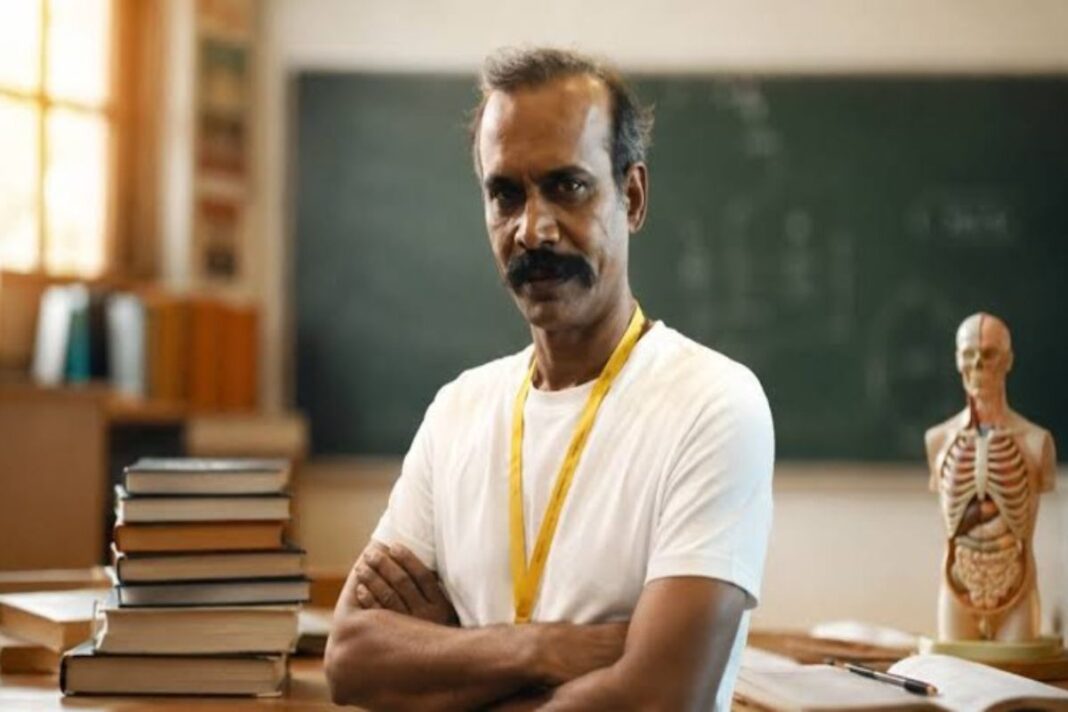


In a small room surrounded by a broken cooler and discarded objects sits a man whose appearance gives no hint of the extraordinary knowledge he possesses. He could easily be mistaken for a cobbler, tailor, or vegetable seller. But the moment he begins speaking, another world opens. He discusses musical notes, traditions and history with the confidence of a scholar. His understanding of music could easily become the subject of university research.
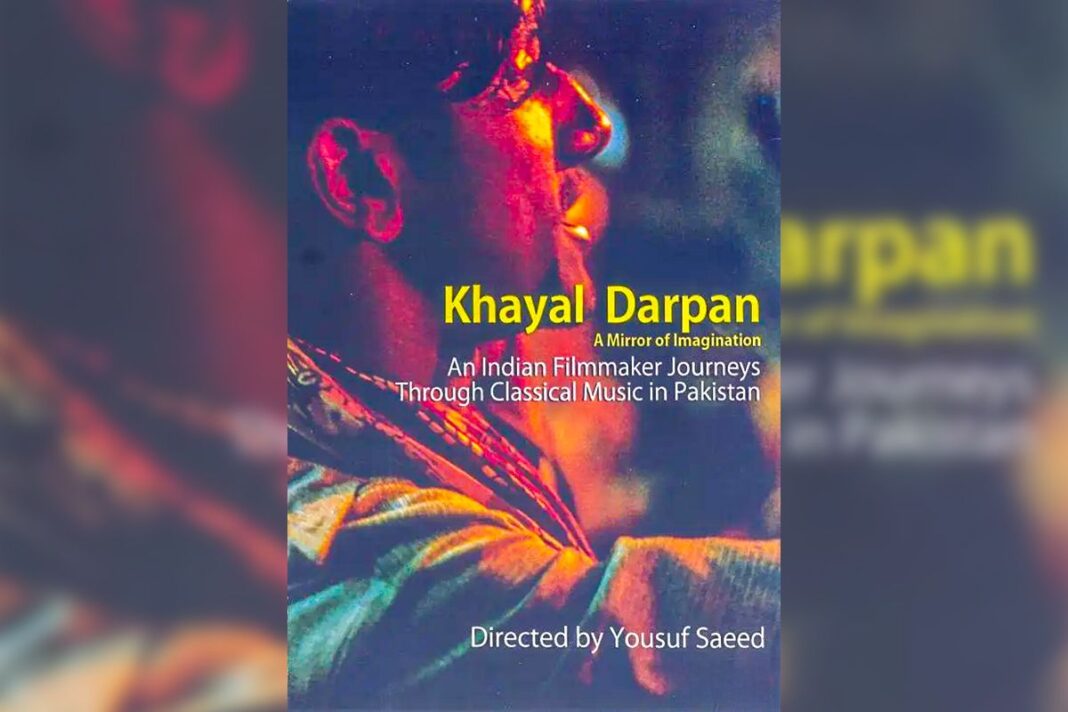
This is the kind of world that filmmaker Yousuf Saeed explores in his remarkable documentary Khayal Darpan, released in 2007. Shot in Pakistan, the film examines Hindustani classical music after the Partition of India and asks a profound question: what happened to a centuries-old shared musical tradition when the subcontinent itself was divided?
The documentary introduces viewers to an extraordinary range of musicians, teachers, historians, critics and ordinary people whose lives remain connected with classical music.
One master vocalist speaks confidently about the ancient beginnings of Dhrupad, effortlessly using Sanskrit terminology as he explains the tradition. Elsewhere, a young folk singer who has traveled through khanqahs and dargahs reflects deeply on Sufi mysticism while also understanding the technical complexity of the taans and murkis associated with masters such as Mehdi Hassan.
Then comes a 90-year-old exponent of the Gwalior gharana. He carefully explains the technical details of a raga and its composition before performing it. Knowledge and performance become inseparable.
Another great singer from the Delhi tradition performs a composition centered on Lord Rama’s journey towards Lanka. Moments such as this reveal how musical traditions crossed religious identities and how deeply intertwined the cultural histories of the subcontinent have always been.
One of the documentary’s memorable figures is a visually impaired young woman who comes to Bhopal to learn Dhrupad. She spends years practicing under her guru. As photographs of the ruins of Harappa and Mohenjo-daro appear on screen, her mature voice performs a Ganesh Vandana. Past and present, archaeology and music, faith and history seem to merge into one continuous cultural memory.
Throughout Khayal Darpan, celebrated names hover over the narrative. Bade Ghulam Ali Khan, Nusrat Fateh Ali Khan, Nazakat Ali and Salamat Ali, Farida Khanum and Iqbal Bano are among the musicians whose legacies remind viewers of the richness both sides of the border inherited.
Archival footage adds another layer. Jahanara Begum appears seated among musicians in a studio, her powerful voice accompanied by the glitter of the diamond ornament on her nose. It becomes difficult to decide which shines more brightly—the jewel or the music.
The documentary does not restrict itself to classical performance.
In Karachi in 2006, a musical gathering pays tribute to legendary Hindi-film composers Shankar-Jaikishan. Amateur male and female singers perform memorable songs from Indian cinema, including the iconic “O Duniya Ke Rakhwale.” The sequence quietly shows how popular culture continued traveling across borders even when politics tried to enforce separation.
Younger musicians also carry the tradition forward. A teenage student receives his first lessons from an ustad. Another small child struggles with a sitar almost twice his own height. These images offer hope that musical knowledge can survive when passed from one generation to another.
Perhaps one of the documentary’s most fascinating personalities is an elderly lawyer who smokes constantly while surrounded by books. His shelves contain a statue of Saraswati, a painting by M.F. Husain and books by Lenin- an unexpected collection that reflects the cultural complexity at the heart of the film.
For around 35 years, this man has worked on developing an instrument called the Sagar Veena. His daughter, Bibi, has accompanied him through this long experiment and has become an accomplished performer of the instrument herself.
Inside their home workshop, father and daughter work over a machine, carefully refining the sound produced by the Sagar Veena’s silver and copper strings. Within minutes, the elderly lawyer explains the traditions, technical complexities and challenges of Indian classical music with astonishing clarity.
Together, these individuals form the emotional landscape of Khayal Darpan. Yousuf Saeed traveled through Pakistan to make the documentary, interviewing musicians and scholars while collecting rare photographs, recordings and archival footage. Yet the film is much more than a historical investigation.
At its center lies the cultural trauma of Partition. For centuries, Hindustani classical music developed through interaction among courts, temples, Sufi traditions, gharanas, teachers and disciples. Musicians traveled freely, learned from one another, and inherited traditions that could not easily be classified as belonging exclusively to one religion or territory.
Partition disrupted that ecosystem. Musicians migrated, patronage networks disappeared, and traditions found themselves separated by a newly created international border.
Yet Khayal Darpan is not merely an account of what was lost. It is equally interested in what survived. Songs survived. Ragas survived. Memories survived. Teachers continued teaching, students continued learning, and musicians continued finding connections across religious and national identities.
That is what gives the documentary its extraordinary emotional force. It feels less like a conventional historical film and more like a carefully composed piece of music. Each interview, performance, and archival image becomes another note in a larger meditation on memory, displacement, and cultural continuity.
Khayal Darpan ultimately reminds us that borders can divide territories far more easily than they can divide cultural memory. The Hindustani classical tradition belongs to generations of people who shaped it together across centuries.
Partition left wounds, but music continued to travel through them.
In that sense, Khayal Darpan is both an elegy for what the subcontinent lost and a celebration of everything its musicians managed to preserve. It asks viewers not simply to listen to classical music, but to recognize within it a shared history that political boundaries could never completely silence.
Also Read: From Guns to Glamour: Surrendered Naxal Women Walk Fashion Ramp
You can connect with DNN24 on Facebook, Twitter, and Instagram and subscribe to our YouTube channel.