
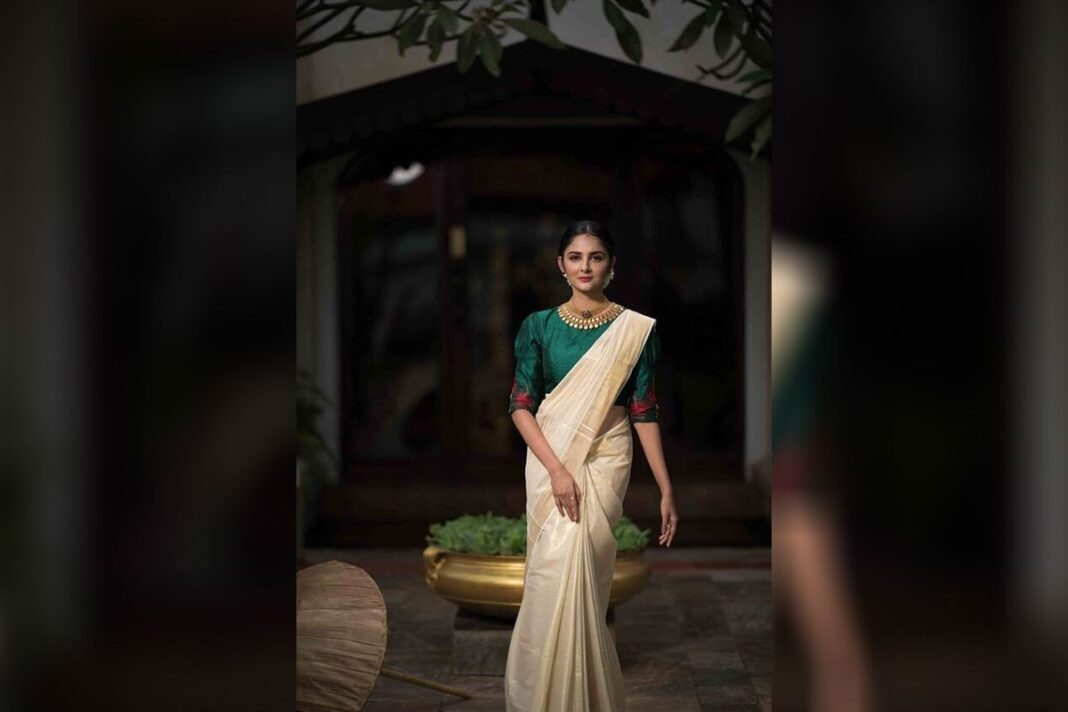

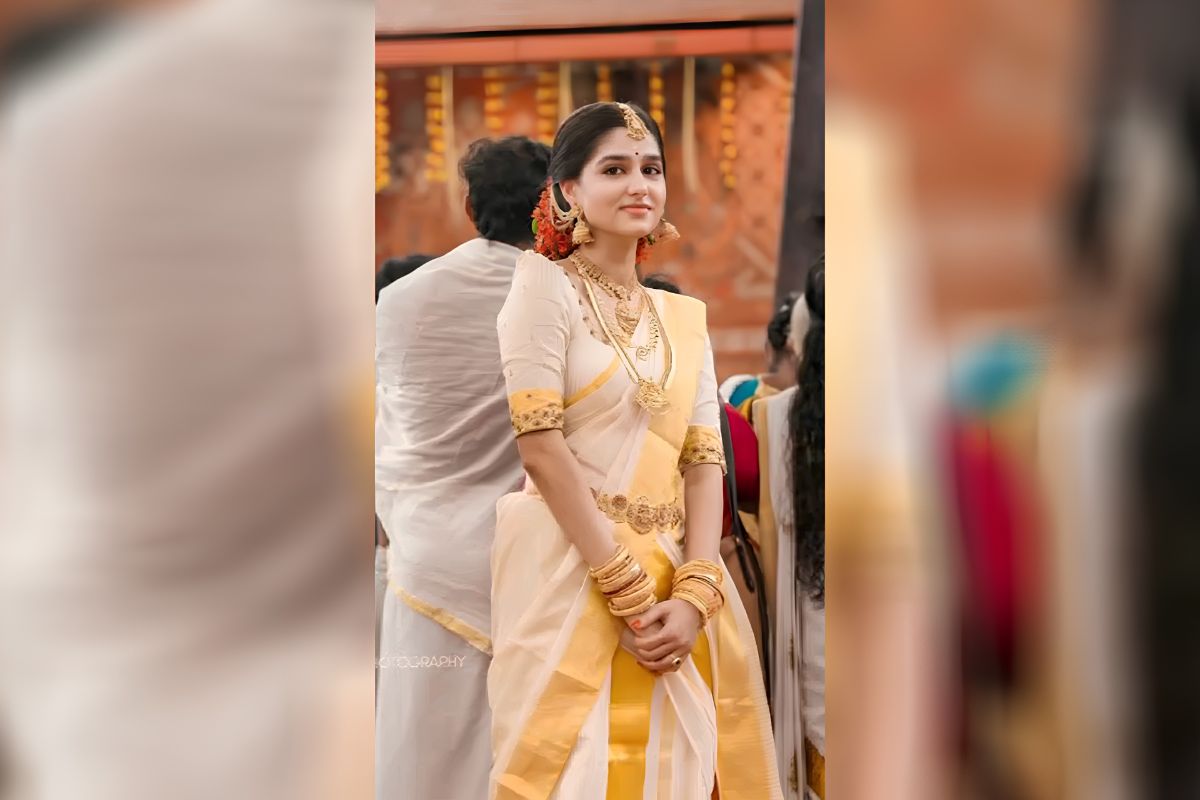
Kerala’s Kasavu saree is instantly recognisable for its elegant combination of pristine white or cream fabric and a shimmering golden border. Simple yet graceful, it has become one of the most enduring symbols of Kerala’s cultural identity. Worn during festivals, weddings, dances and religious occasions, the saree represents a textile tradition shaped by generations of skilled weavers.
The beauty of Kasavu lies in its restraint. Unlike heavily embellished sarees, it relies on clean fabric, fine weaving and a distinctive gold border to create its unmistakable appearance.
What Makes a Kasavu Saree Special?
The word Kasavu traditionally refers to the golden thread used along the border rather than to the entire garment. Historically, gold or gold-coated threads were incorporated into these borders, giving the textile its characteristic richness.
Against an ivory or off-white background, the gold creates a striking contrast. This minimalist aesthetic has allowed Kasavu to remain fashionable even as clothing styles have changed dramatically.
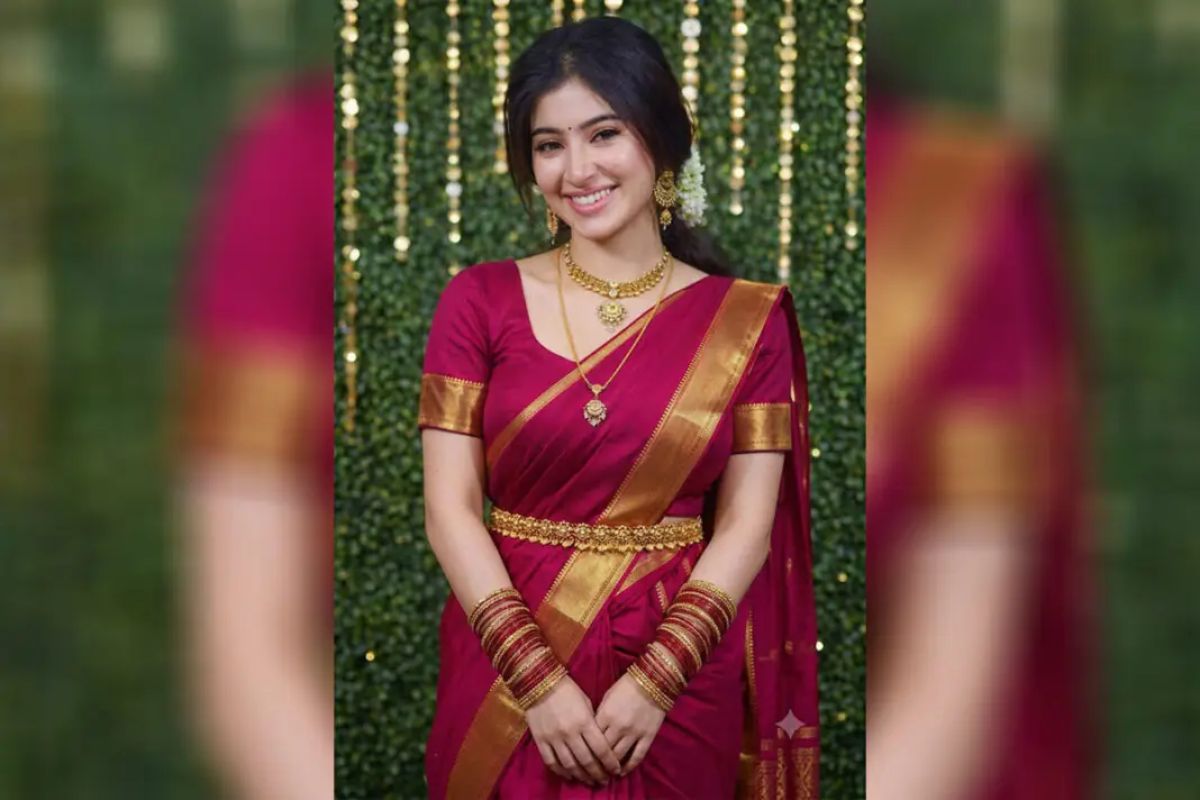
The saree is also closely related to Kerala’s traditional two-piece women’s attire known as Mundum Neriyathum or Set Mundu. The lower cloth is wrapped around the waist, while another piece is draped over the upper body.
A Tradition Shaped by Kerala’s History
Kerala’s present-day Kasavu weaving tradition developed significantly under the royal patronage of the erstwhile kingdom of Travancore. During the reign of Maharaja Avittam Thirunal Balarama Varma in the early nineteenth century, weaving communities were encouraged to settle in the region.
Weavers belonging to the Saliya community are traditionally associated with the development of Kerala’s handloom industry. They produced finely woven cotton garments for the royal household, and the craft gradually became deeply embedded in Kerala’s cultural life.
Its visual simplicity also reflects much older Indian traditions of draped clothing, in which unstitched garments formed an important part of everyday and ceremonial dress.
A Saree for Kerala’s Celebrations
Kasavu occupies a special place during Onam, Kerala’s most celebrated festival. Women frequently wear Kasavu sarees or Set Mundu during festivities, family gatherings and cultural performances.
It is equally important during Vishu. New clothes traditionally form part of festive celebrations, symbolising renewal and prosperity.
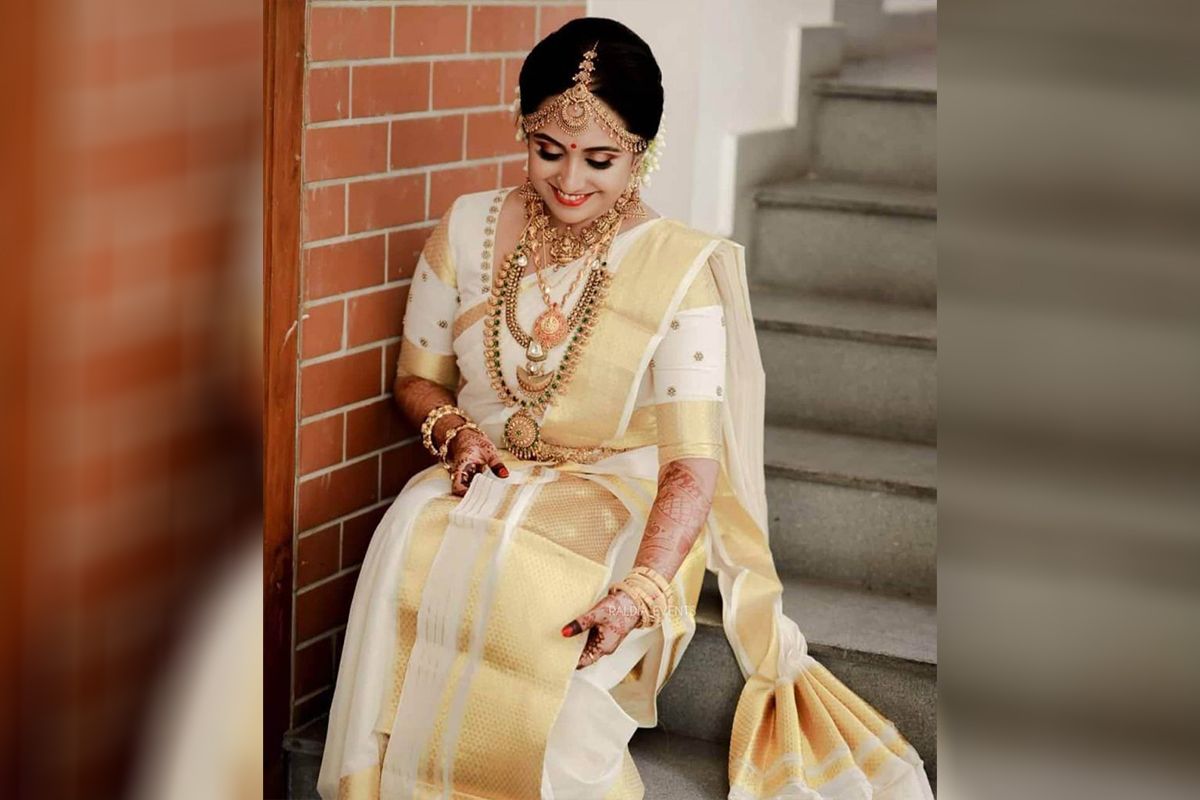
Weddings are another occasion where Kasavu remains prominent. Brides often choose elaborate versions featuring broader golden borders and more detailed weaving.
Traditional dance performances also keep the textile visible. Women performing Kaikottikali and Thiruvathirakali commonly wear Kerala’s characteristic cream-and-gold attire. Its elegance has also become closely associated with the visual identity of classical dance traditions such as Mohiniyattam.
How Kasavu Is Woven
Producing a traditional handwoven Kasavu saree requires patience and considerable skill.
Cotton yarn is prepared first, then carefully arranged on the loom. The weaver controls individual threads to maintain an even texture while simultaneously creating the border.
One of the most significant characteristics of traditionally woven Kasavu is that the decorative border is woven into the fabric rather than printed onto the finished cloth.
Depending on the complexity of the border and motifs, completing a saree can require considerable time and precision. Small variations created by hand also give each piece its distinctive character.
Tradition Meets Contemporary Fashion
Kasavu has successfully adapted to changing fashion preferences without abandoning its traditional identity.
Contemporary designers experiment with different blouse styles, draping techniques and accessories. Alongside the classic golden border, modern versions sometimes feature red, green, black and other colours.
Silk and silk-cotton interpretations have become popular for weddings and formal celebrations, while lightweight cotton versions remain comfortable choices for festivals and daytime events.
Kasavu-inspired dresses, skirts and other garments have also introduced the traditional cream-and-gold aesthetic to younger audiences.
Recognising Traditional Craftsmanship
When choosing a handwoven Kasavu saree, pay close attention to the fabric and weaving. Traditional pieces commonly use cotton or silk-cotton, while the border should appear integrated into the weave rather than merely printed on the surface.
A carefully woven saree generally displays consistent weaving, neat edges and a balanced finish. Handmade textiles can also show subtle variations that reveal the artisan’s involvement.
Golden Threads Connecting Generations
The lasting appeal of Kasavu comes from its ability to appear ceremonial without becoming extravagant. Its light fabric offers comfort in Kerala’s tropical climate, while the golden border adds understated grandeur.
For many families, these garments also carry memories. Sarees are preserved, treasured and sometimes passed between generations, connecting celebrations of the present with those of the past.
That is why Kasavu is more than Kerala’s famous cream-and-gold saree. It is a living textile tradition, one where simplicity, craftsmanship and cultural memory continue to be woven together in every golden-bordered piece.
Read: Why Urdu Poets Never Stopped Singing To Krishna
You can connect with DNN24 on Facebook, Twitter, and Instagram and subscribe to our YouTube channel.