
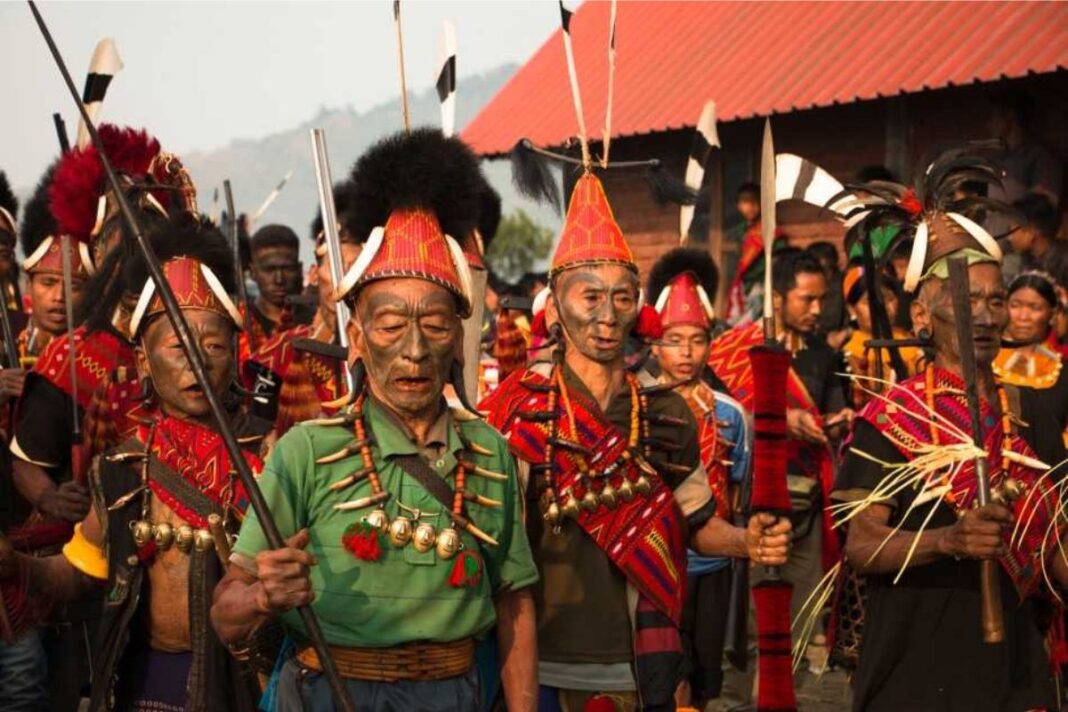

The grandest festival of the Konyak Nagas ends with sweeping the floor. After days of drums, feasting, and dancing, people in Mon district, Nagaland, pick up brooms and clean their houses and village paths. That final act explains more about Aoleang Monyu than any song or costume could.
Aoleang, also spelled Aoling, is held in the first week of April. It lasts six days and falls just after the seeds have gone into freshly cleared jhum fields. The old year closes, the new one opens, and flowers spread across the hills of northern Nagaland. The Nagaland government says the Konyak have kept this festival since time immemorial.
A Prayer Said Before the Harvest
Most harvest festivals give thanks for a crop brought in. Aoleang comes earlier. The seeds are barely settled in the soil, and the community asks for protection and plenty before anything has grown. The festival carries hope and a good deal of responsibility, since everyone knows the year’s work is only beginning.
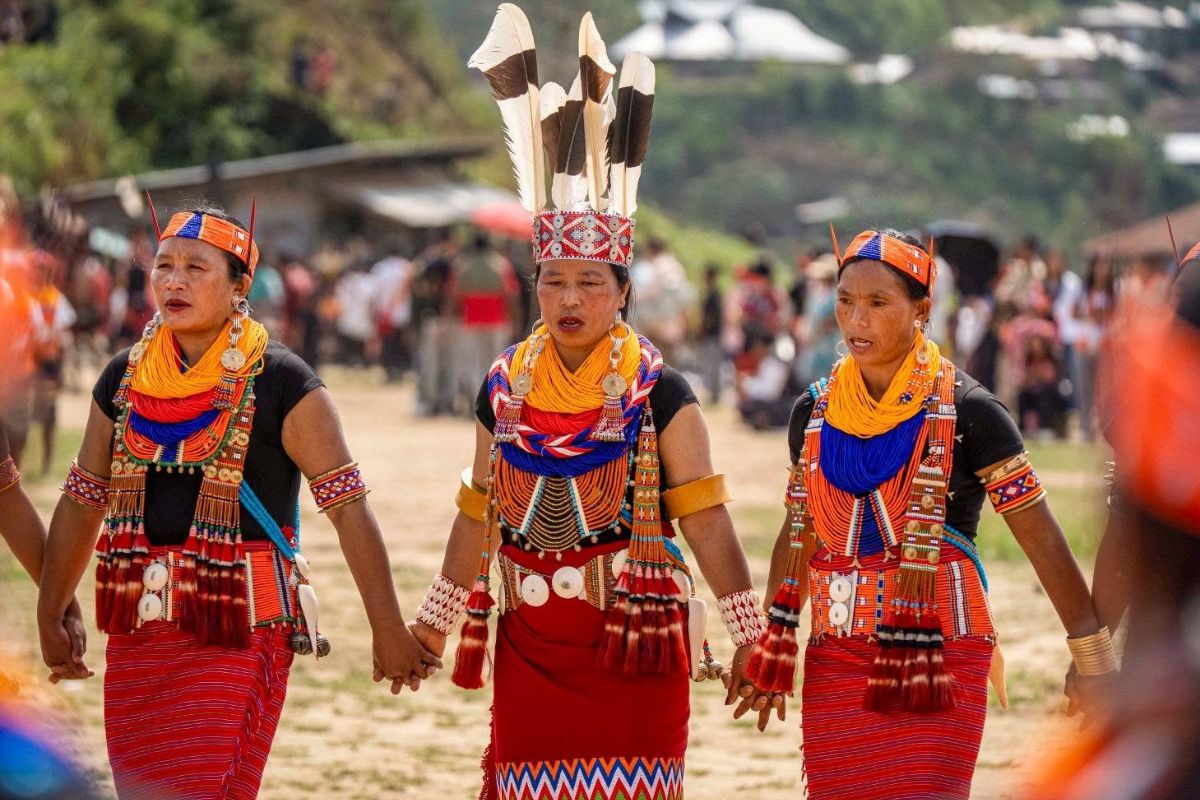
The Konyak are among the major Naga communities, and most of them live in Mon district. Every Konyak village takes part, so the festival works as a shared calendar for the whole people. Each of its six days has a name and a task.
Day One: Hoi Lai Yah Nyih
The first day is for preparation. Families gather firewood, banana leaves, and vegetables. They store rice beer for the days ahead, weave new clothes, and prepare ornaments.
The head of each household walks out to the jhum field and sacrifices a chicken at the Wumjong altar. Warm blood is sprinkled on the altar while the family calls on the supreme power for good crops. The chicken’s intestines are then read as a sign of what the family’s future may hold. Some of the food goes to the neighbor whose new field lies close by, which shows how farming here depends on more than one household.
The same day, young men build a dancing stage called the Aoleang Wakam in every Pans Morung. The Morung is the traditional men’s house, where village life, learning, and defense were once organized.
Day Two: Yin Mok Pho Nyih
The second day is for gathering animals. Buffaloes, mithuns, cows and pigs are chosen and tethered for the feasts to come. The official account also describes older customs tied to head hunting and tattooing. These belong to an earlier social order and do not appear in the same form in the festival today.
Day Three: Yin Mok Shek Nyih
On the third day, the festival formally opens. A decorated bamboo flag called the Koip Hong is raised, and the village takes that as its signal to begin. Young men beat the log drum and go from house to house to kill the animals.
The men then meet at the Morung to share specially chosen food and rice beer before heading home. Young people between 15 and 20 slaughter some animals of their own and carry the meat to their parents after spending the day together.
Meat on this day does not stay where it is killed. It moves from house to house, from age group to age group, and from one neighborhood to the next. A large supply of food becomes a duty to share it.
Day Four: Lingnyu Nyih
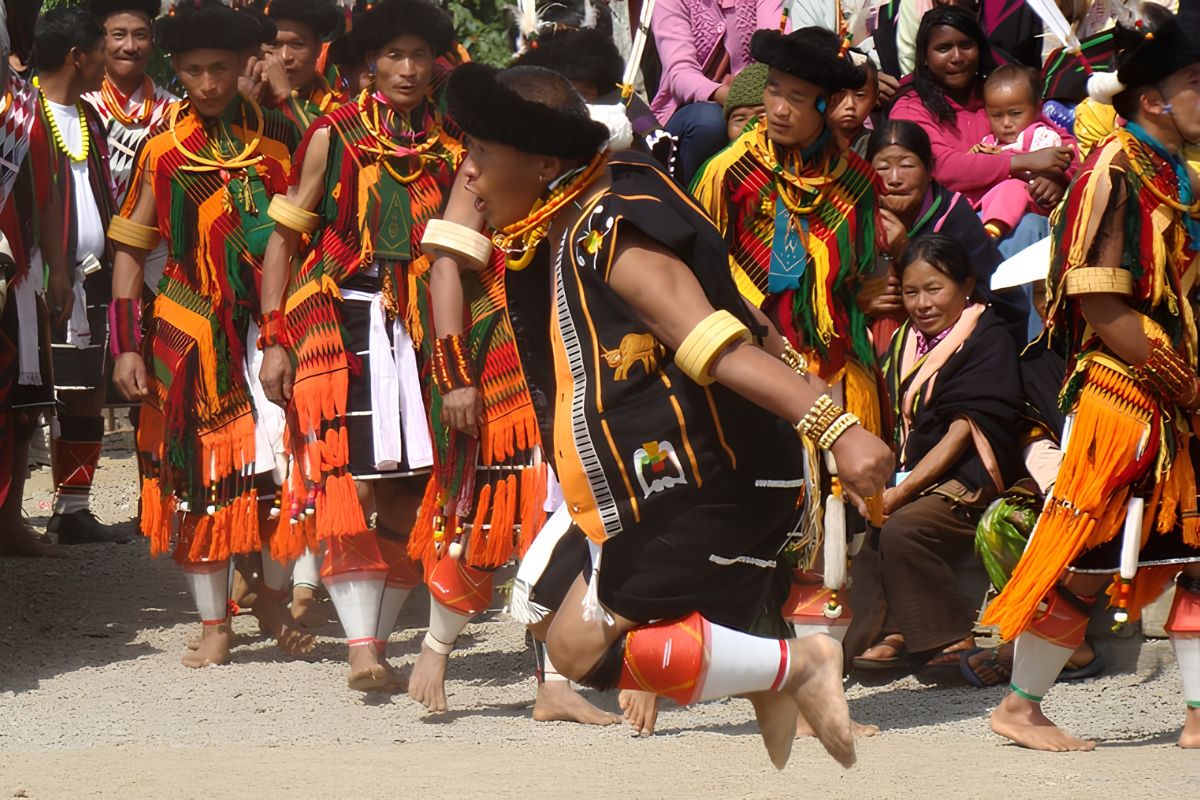
The government calls this the greatest day of Aoleang Monyu. Men and women put on their finest dress and ornaments, and the whole village spends the day feasting, joking, singing and dancing.
Every household cooks its best food and offers it to friends, relatives and neighbors. In the afternoon the men gather at Pejong, the entrance gate of the village, for a communal meal. They walk back in groups according to their Morungs and begin to dance.
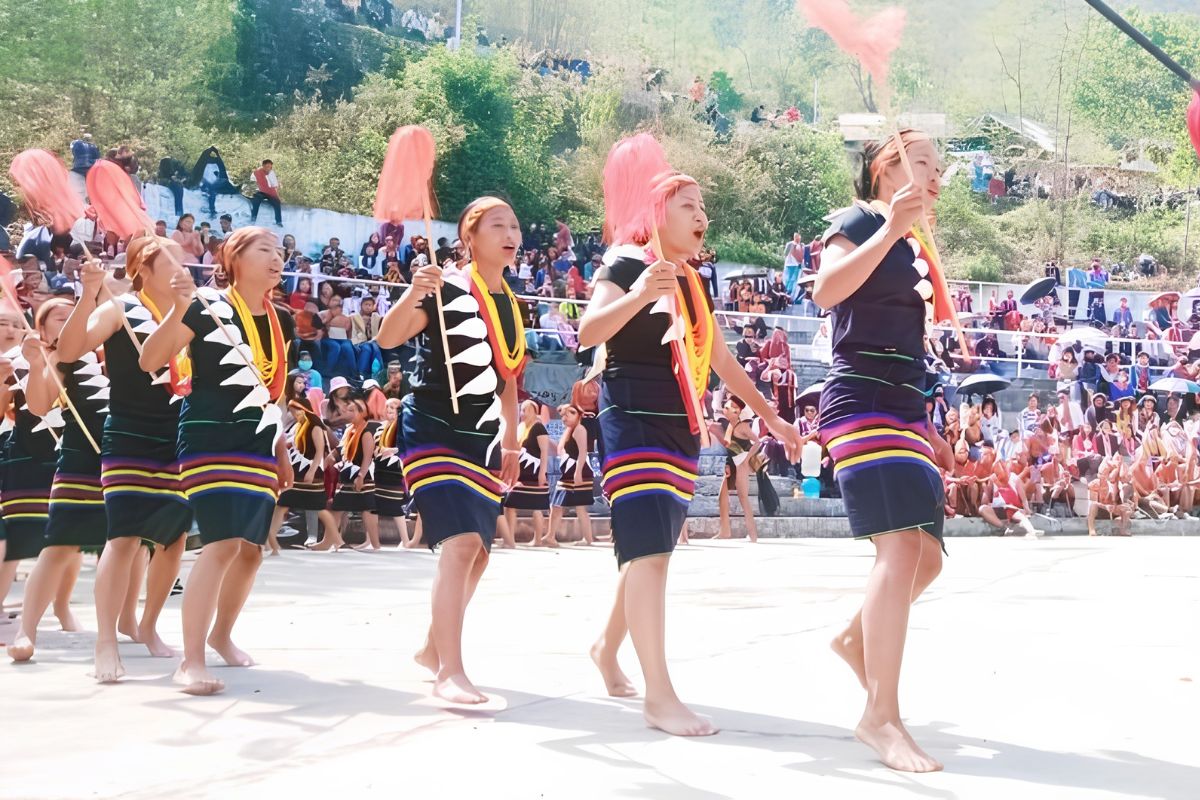
Each group, led by its own leaders, visits the Morungs of the others. The songs they sing praise their hosts’ strengths and name their weaknesses, a frank exchange the hosts accept with good humor. Traditional themes include victory over enemies and prayers for heavy crops.
The official record mentions displays of enemy heads and gunshots at Shaochong, a place linked to the remains of defeated foes. These details come from the Konyak’s old warrior culture. Today, the village expresses its identity through dress, rhythm, song, and a shared table.
Day Five: Lingha Nyih
The fifth day belongs to relatives and friends. Young people pay respect to their elders. Young men and their parents visit married sisters and daughters and serve them a feast. The married daughters then return to their parents’ homes and cook large meals for them.
Families also walk to the burial places of the dead and pay their respects. On this day, the living and the dead are both counted as part of the household.
A special feast renews the friendships that parents have made with other families, and passes them on to the next generation. Families that have long declared themselves household friends trade carefully prepared dishes, including the best cuts of meat. Some of these friendships last for decades, and Lingha Nyih is the day that keeps them in good repair.
Day Six: Lingshan Nyih
The last day is given to cleaning. Days of feasting, dancing and crowded gatherings leave houses and village spaces in a mess, and the people set them right again.
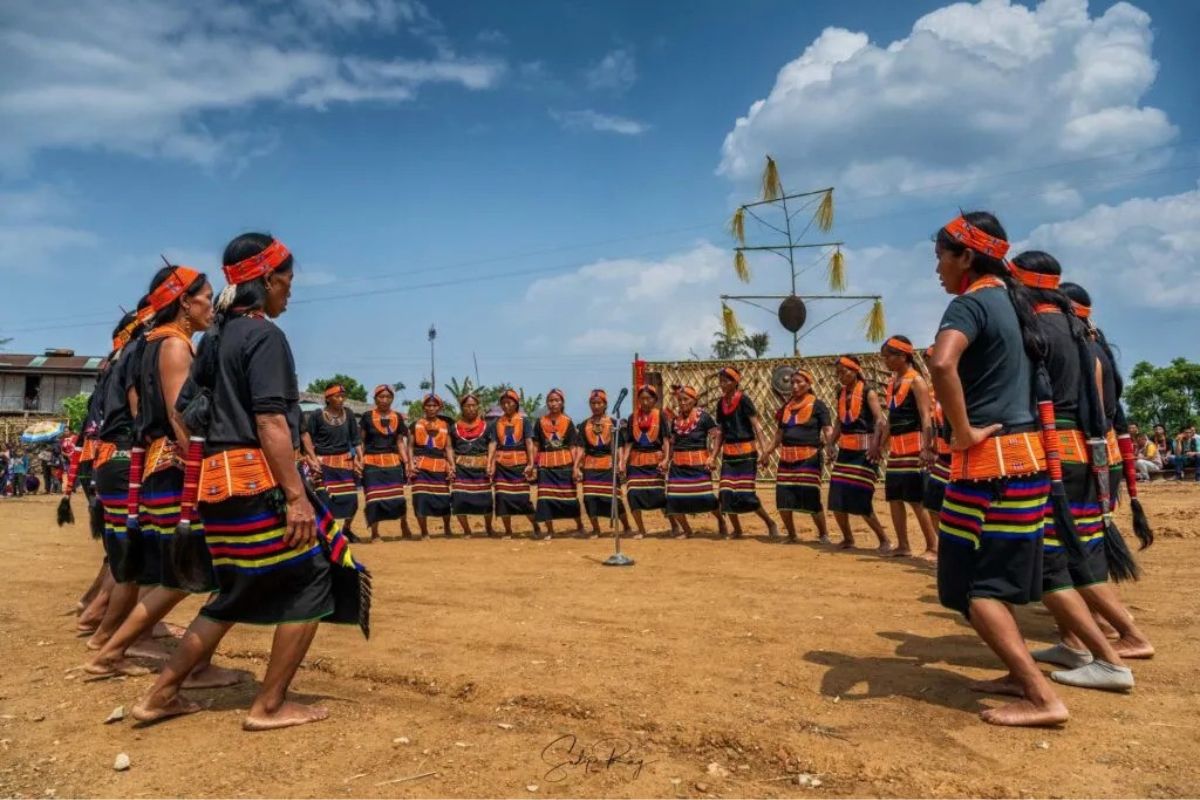
It is a fitting end. The community has prayed for its crops, honored its elders and ancestors, shared its food and danced together. Then it tidies up after itself and turns to the ordinary labor of a new farming year. A celebration like this ends only when the shared spaces have been put back in order.
A Festival Still in Use
Aoleang continues to change with the times. In 2026, Mon held a Konyak Aoleang Monyu cum Mini Hornbill Festival at the Konyak Heritage Complex. Visitors came from Nagaland and neighboring states. The program included traditional welcome ceremonies, log drum performances, and presentations by Konyak groups, along with performers from Arunachal Pradesh.
Gatherings like this show that Aoleang still serves a living community. It holds Konyak families together, displays their heritage to outsiders and gives them a public stage for their own culture.
What the Broom Teaches
Aoleang offers a plain lesson that applies well beyond Mon district. A community does well when it prepares together, celebrates together, remembers its dead together and cleans up together. The drums and the dances draw the crowds, but the six days are built around the tasks that keep a village working.
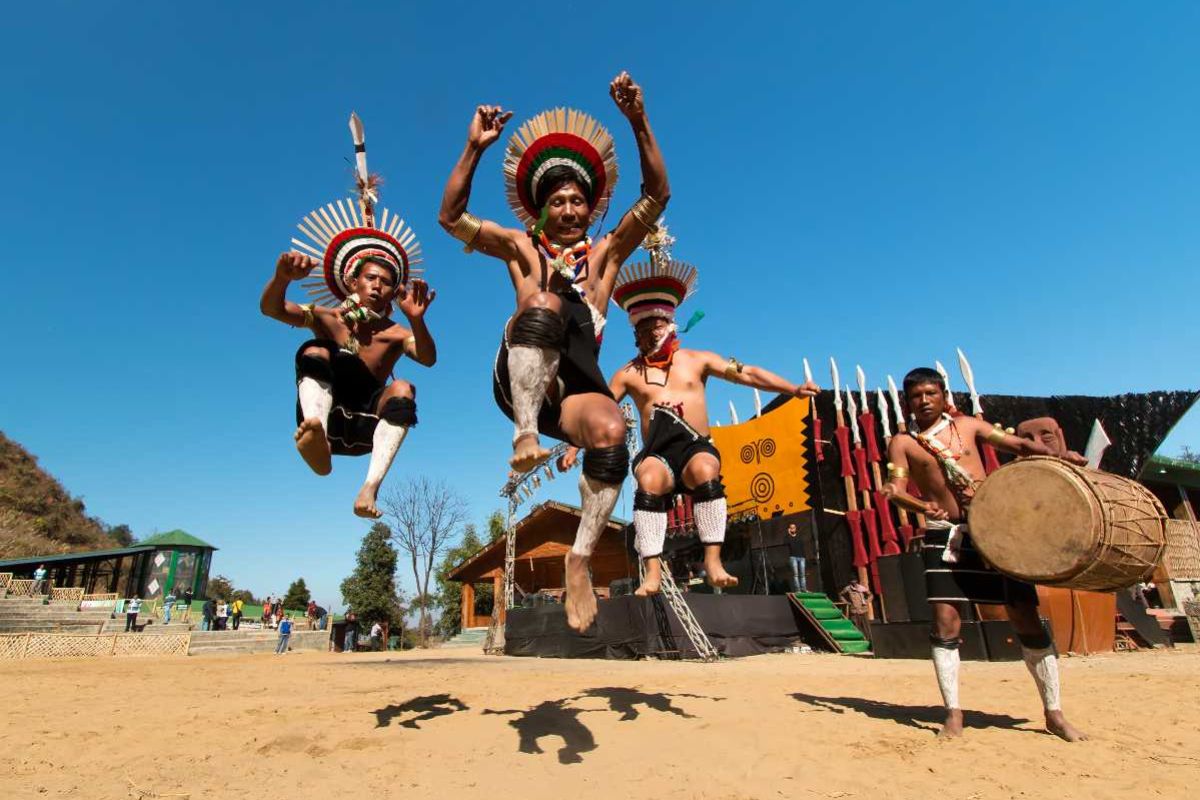
Through its songs, shared meals, and final morning of sweeping, the Konyak people greet spring as a season of flowers, duty, gratitude, and hope.
Also Read: Madai: The Chhattisgarh Festival Where Tribal Communities Carry Their Gods From Village to Village
You can connect with DNN24 on Facebook, Twitter, and Instagram and subscribe to our YouTube channel.