


Almora’s Dussehra is one of those rare cultural festivals where history is not simply preserved in museums. Instead, it remains part of everyday life.
Dussehra in Almora is not just an annual celebration of the story of Lord Ram and Ravana. It is a tradition shaped by the town’s artistic culture, the unity of its neighbourhoods and the collective efforts of people from different communities. Over the years, the festival has continued to change while keeping its cultural roots alive.
The History of Ramlila in Almora
The tradition of Ramlila in Almora began in the nineteenth century. According to available records, Ramlila performances have been held here since 1860. Over time, these performances became an important part of the town’s social and cultural life.
During the third decade of the twentieth century, Uday Shankar established his cultural centre in Almora. His efforts to present Indian dance in new forms helped connect this small hill town with the wider world of Indian art and culture.
Well-known personalities such as Zohra Sehgal, Guru Dutt and Ravi Shankar were associated with his centre. Their presence showed that Almora’s cultural activities were not limited to the town itself. During this period, local Ramlila performers also interacted with people associated with modern theatre and dance.
The People Who Keep the Tradition Alive
This cultural history still influences Almora today. However, Dussehra’s real strength comes from the many people whose names rarely appear in the headlines. From acting and music to costumes, makeup and stage decoration, many people work together to organise the festival. Institutions such as the Hookah Club have played an important role in keeping the Ramlila tradition alive.
Along with organising performances, the club has also trained artists and documented the tradition. Senior members of the club still remember the old stages, performers and performances. Their memories help younger generations understand how Ramlila was performed in earlier times. In this way, the tradition is not limited to performances. It also involves passing knowledge, skills and experiences from one generation to another.
The Unique Tradition of Making Ravana’s Family Effigies
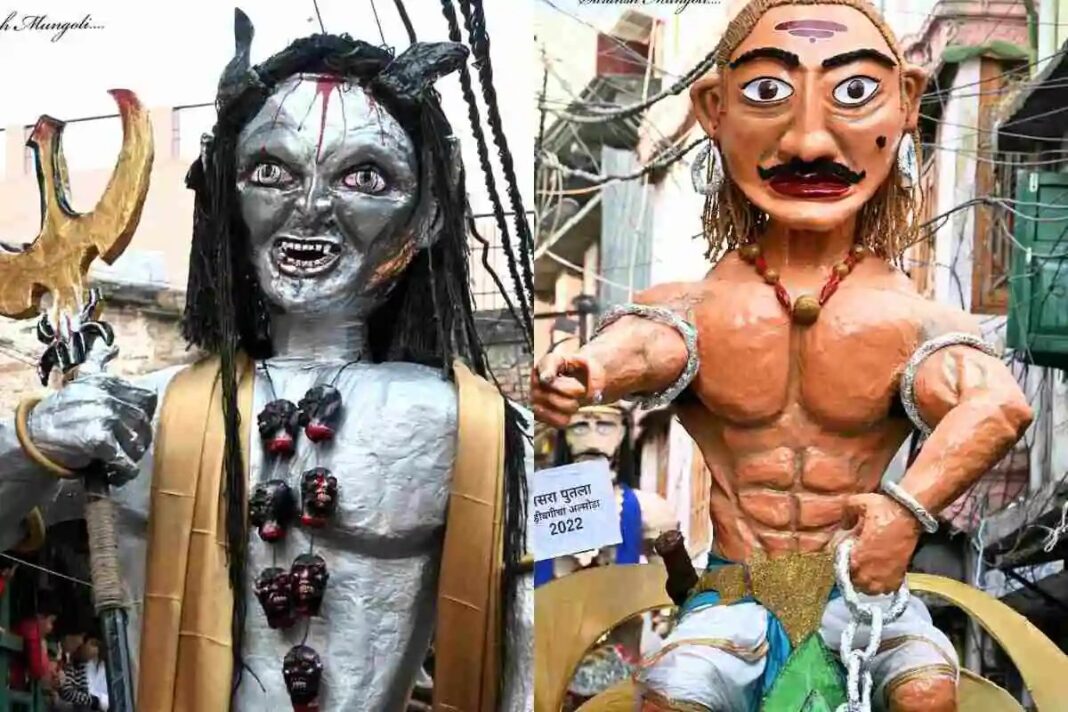
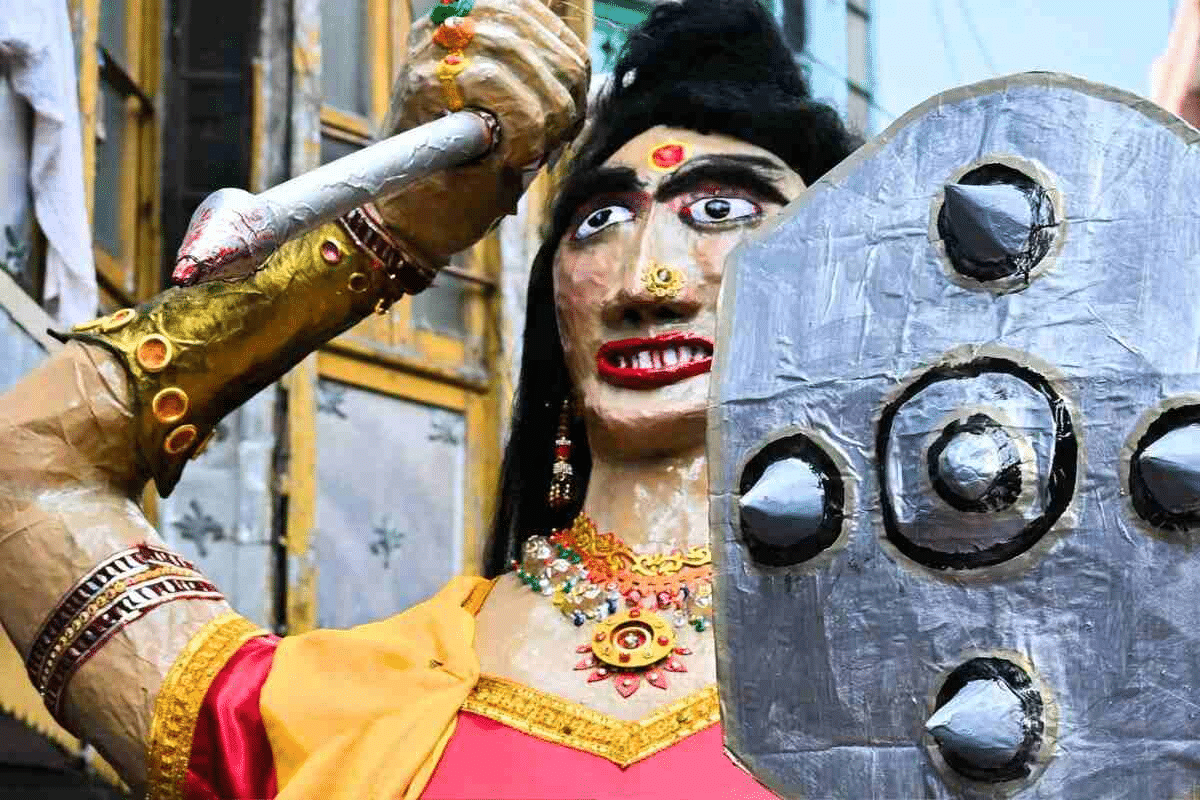
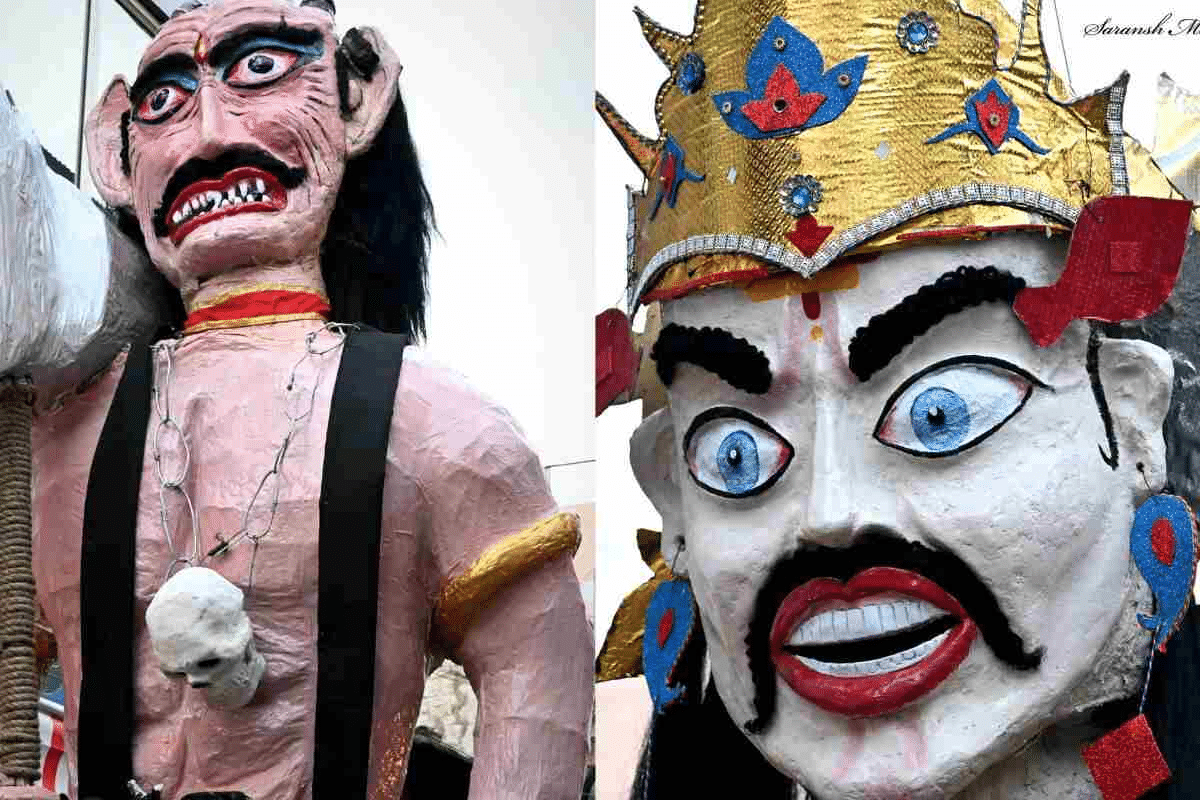
One of the most distinctive features of Almora’s Dussehra is making effigies of Ravana, his family members, and other demon characters from the Ramayana. In many parts of North India, Dussehra is best known for burning Ravana’s effigy. But in Almora, different neighbourhoods prepare effigies of different characters.
These include Kumbhakarna, Meghnad, Tadaka, Maricha, Subahu, Prahasta and several others. The large effigies of these characters give Almora’s Dussehra a different identity.
A local publication from 1936 reportedly included a picture of Ravana’s effigy. In 1974, they made an effigy of Meghnad along with Ravana’s effigy. The following year, in 1975, effigies of Subahu and Tadaka were also added to the tradition. By 2019, the number of effigies had reached 31.
How Effigy-Making Techniques Changed Over Time
The history of Almora’s Dussehra effigies is not only about the increasing number of characters. It is also a story of changing techniques and improving artistic skills.
Earlier, effigies were made using paddy straw. These structures were heavy and difficult to carry from one place to another. Around 1980, artists began using thin bamboo strips and iron wire to make lighter frames. Later, newspaper and papier-mâché became more common. These changes made the effigies easier to handle and transport.
At the same time, artists continued working to maintain their large size and impressive appearance. The skills of local craftspeople have helped this traditional art develop over the years.
A Festival Built on Hindu-Muslim Cooperation
An important part of Almora’s Dussehra is the participation of people from different religious communities. Muslim musicians have helped train Ramlila performers. Muslim artisans have also helped decorate and paint the effigies. Local memories include several examples of their involvement in makeup and stage performances.
During Dussehra, artisans from different communities also work together to make and decorate Durga idols. This cooperation has become an important part of the town’s cultural tradition. The harmony seen during the festival has not developed through slogans. It has grown through everyday cooperation, shared artistic responsibilities and people working together over many years.
When the Entire Town Becomes a Stage
On Dussehra, different neighbourhoods bring out the effigies they prepared in a grand procession. The procession moves through the narrow streets of Almora’s old market, accompanied by the sounds of dhol, damau and ransingha, traditional musical instruments. During this time, the whole town becomes a large open stage.
People gather at windows and balconies of old buildings to watch the procession. The streets become crowded with spectators as the large effigies move through the market. The procession continues for several hours before finally reaching the ground where the effigies are burned. This annual event brings together artists, craftspeople, musicians, performers and residents from different parts of the town.
A Living Tradition That Continues to Change
Almora’s Dussehra is important because its past and present remain closely connected. Old traditions continue through new techniques, changing generations and the participation of local communities. The festival has kept its cultural identity while adapting to changing times.
Every year, people burn the effigies at the end of Dussehra. But the art of making them does not disappear. The hands that create and decorate the effigies return the following year. The people who gather to watch the celebrations also become part of the tradition once again.
This is what makes Almora’s Dussehra a living cultural heritage. It preserves memories of the past without letting the tradition remain unchanged. For more than a century and a half, the people of Almora have kept this shared heritage alive through art, cooperation, and collective participation.
Also Read: India Built Underground Palaces of Water Long Before Modern Water Management
You can connect with DNN24 on Facebook, Twitter, and Instagram and subscribe to our YouTube channel.