
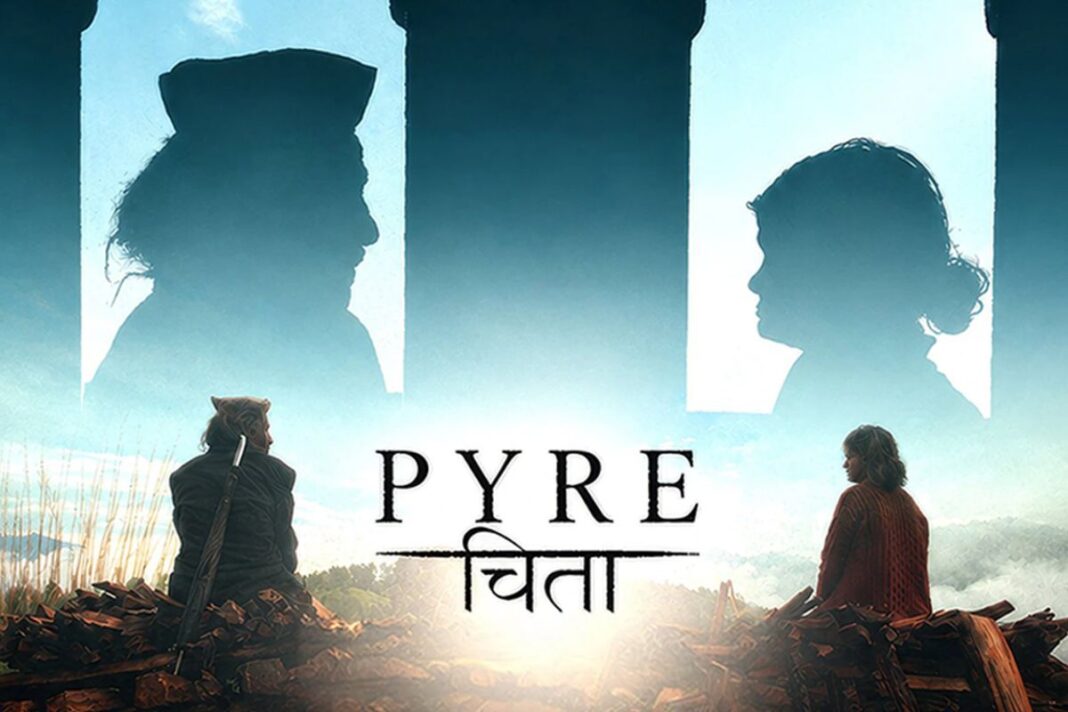

Who will light your funeral pyre when every person you raised has left for the city? That question sits at the centre of Pyre, a film by Vinod Kapri that collected audience awards in Europe, Asia and North America before most Indian viewers had heard of it. It opens in Indian theatres on October 30, 2026. The story it tells is one that many Himalayan families already know by heart.
An old couple and a long wait
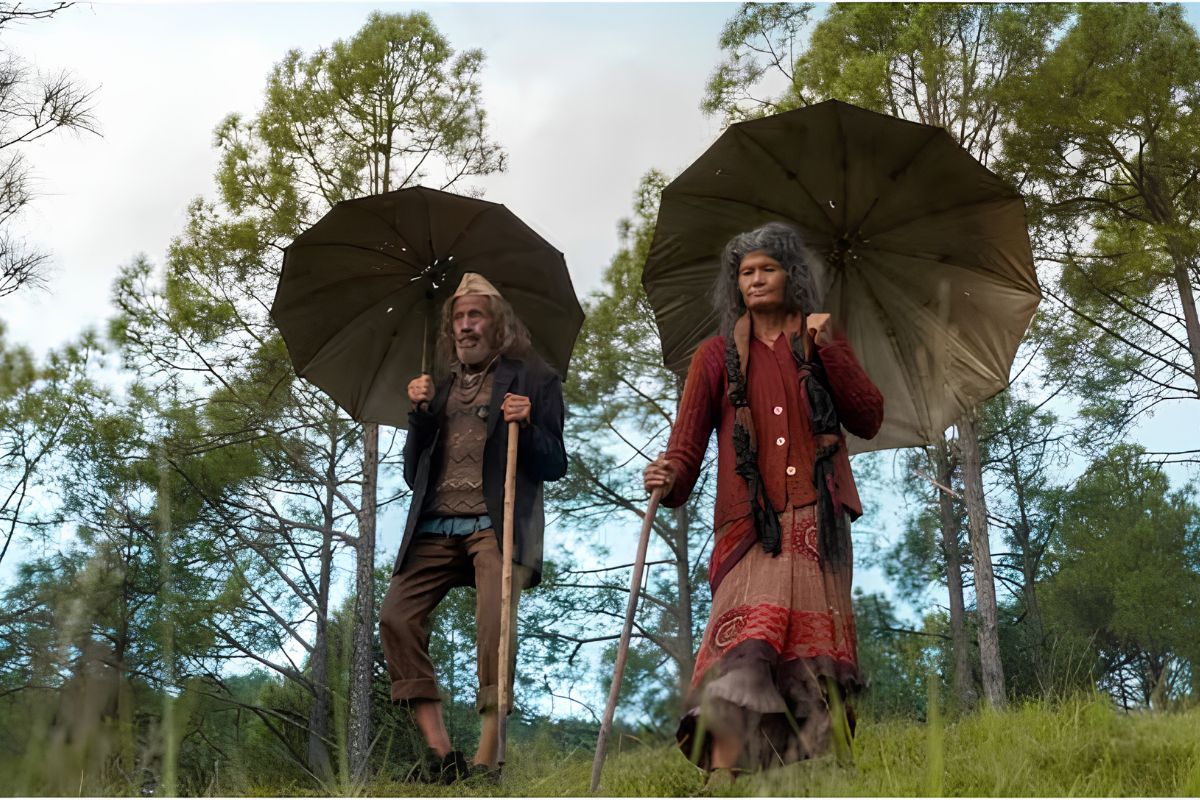
Pyre is set in a remote village high in the Himalayas. Padam and Tulsi are an elderly couple living among houses that grow emptier each year. Their children and their neighbours’ children went down to towns and cities to find work, schooling and a steadier life. The old ones stayed behind with the fields, the snow and the quiet.
Their deepest worry is not hunger or even loneliness. They fear that when they die, nobody will be there to perform the last rites. In Hindu tradition, this duty matters enormously, and the thought of going without it troubles them every day. Then a letter arrives from their son, who has not been in touch for thirty years. Hope returns to the house, though it is a thin and nervous hope, the kind that is afraid to believe in itself.
The film’s official Instagram page calls it a ballad of undying love in “a Dying Land.” The phrase fits. The village is dying slowly, and the love inside it refuses to follow.
The people on screen
Kapri cast people from the Himalayan region who had never worked as actors. Padam Singh plays Bubu, and Hira Devi plays Aama. Both know the cold, the climbing, the chores, and the long evenings from their own lives, and it shows in how they move and sit in silence together.
This was a risky choice. A trained performer can imitate age and hardship, but the imitation usually shows. Singh and Devi carry the real thing in their hands and faces. Audiences abroad noticed. Many could not have found the village on a map, yet they responded to the marriage at its centre.
The story also draws on something true. Across Uttarakhand and other hill districts, villages have been losing their young people for years. Houses stand locked, terraced fields go to weed, and the old stay on. Pyre treats this as the heart of the story and gives the people who stayed behind the camera’s full attention.
A trail of awards
Pyre premiered in November 2024 at the 28th Tallinn Black Nights Film Festival in Estonia. It was the only Indian film in the Official Competition and won the Best Film Audience Choice Award.
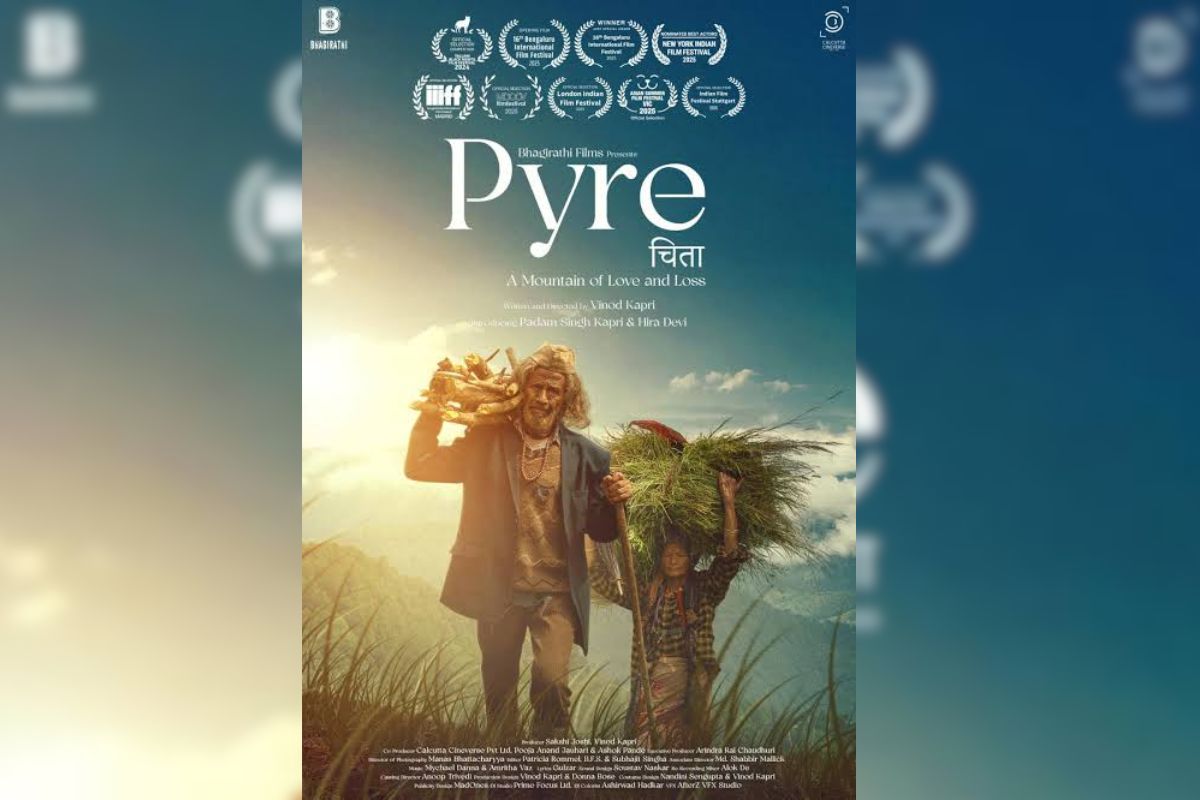
Bengaluru came next. At the 16th Bengaluru International Film Festival, Pyre opened the programme and received the Jury Special Mention Award in the Asian Cinema Competition. The film then travelled to Belgium for the Mooov Film Festival and to the New York Indian Film Festival. In New York, both lead actors were nominated, one for Best Actor and one for Best Actress. Few nonprofessionals ever hear their names read out in such a list.
In July 2025, the film won the Best Film Audience Award at the London Indian Film Festival and at the Birmingham Indian Film Festival. Variety reported that this made three audience awards in eight months. Ordinary viewers vote on audience awards, so they say something about how the film felt in a dark room full of strangers.
Kapri dedicated the honours to his two leads, whom he described as “ordinary villagers from the Indian Himalayas.” Coming from a director, that sentence carries pride and a quiet challenge to an industry that often overlooks such people.
What happens in the quiet
Pyre has no great twist and no villain. Its force comes from small things. A woman waits for the postman. A man tends to his wife’s daily needs. Two people remember a son and say very little about him. These moments pile up until the room’s silence becomes heavy.
Anyone who has watched parents grow old will recognise something here. So will anyone who has left a hometown and felt guilty about it, or waited for a relative to come back. The film does not need to explain these feelings. It trusts the viewer to supply their own.
The people behind the camera
Kapri produced the film together with Sakshi Joshi. Subhojit Singa and German editor Patricia Rommel shared the editing. The songs come from the celebrated lyricist Gulzar. It is a notable mix of talents for a story set in one small village, and it suggests that a very local tale can travel far when told with care.
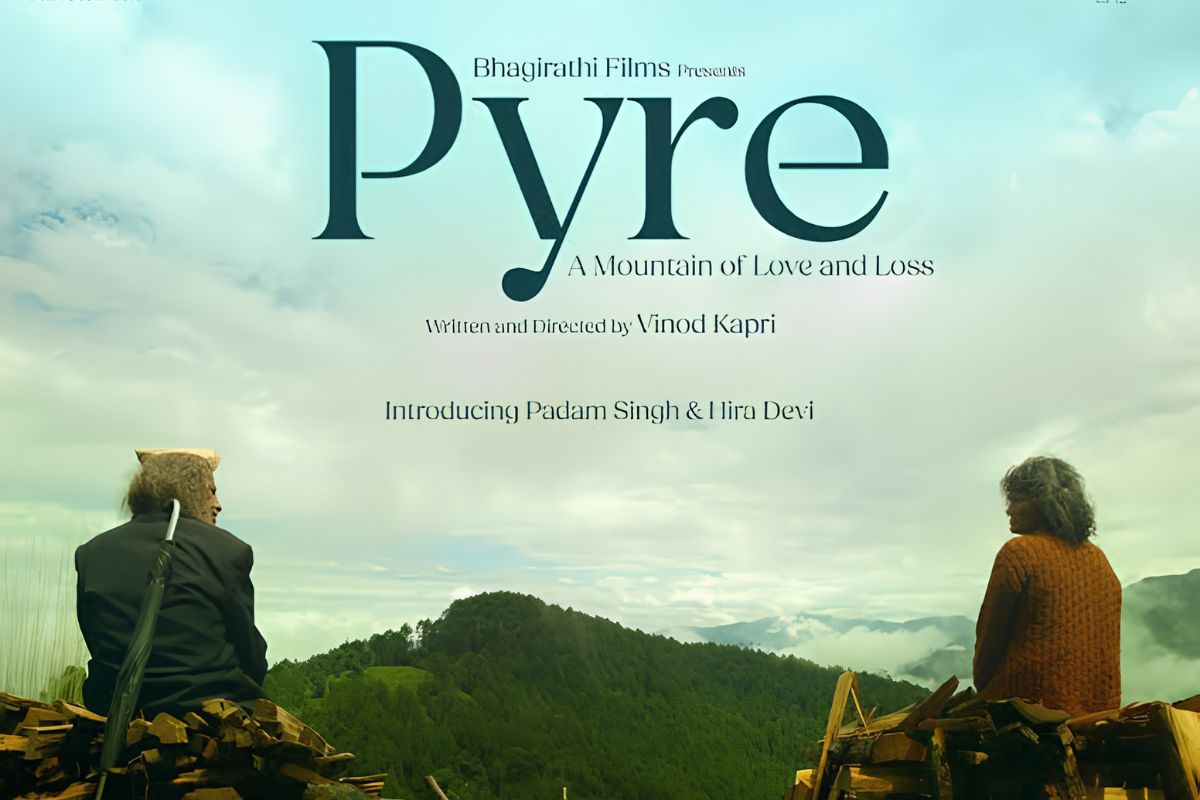
The mountains in Pyre do more than fill the background. They hold the memory of everyone who left, and they watch the ones who stayed. The couple’s bond with the land is as strong as their bond with each other, which makes leaving it so painful.
A release at the right moment
The film’s official social media pages have announced the Indian theatrical release for October 30, 2026. According to the film’s Facebook page, the trailer has passed one million views on YouTube. That is a good sign for a quiet film in Hindi and Himalayan dialects with no famous face on the poster.
The timing seems apt. India is urbanising quickly, and village stories are slipping out of view. Newspapers report them as statistics about migration and falling population. Pyre shows them as a husband and wife sharing a meal in a cold kitchen. A number cannot do that.
Why this film deserves your ticket
Pyre offers no easy ending, and that is part of its honesty. It still insists that hope is possible, even in a place that seems to have little left to give. Padam and Tulsi live with tenderness and courage through hardships that would wear most people down.
The film also teaches something to anyone who tells stories for a living. Listen to a community before you speak for it. By working with people from the Himalayan region, Kapri let the place describe itself. The result feels less like an outsider’s report on rural poverty and more like a shared act of remembering.
After the credits, many viewers will probably be left with an uncomfortable question: who cares for the people left behind? The film also suggests a gentler answer. Care can begin with attention. Seeing an old couple’s life as worthy of a feature film, listening to their silences and recognising their devotion as a kind of heroism is already a small act of kindness.
Pyre is about a funeral, but more about the wish to be remembered, the comfort of a lifelong companion, and the stubborn hope of people who have every reason to stop hoping. Its awards confirm what the story makes clear from the first scene. Some of the strongest stories come from the edges of the map, told with humility and carried by people the world rarely notices.
Also Read:Stories Behind the Making of Bollywood Legends
You can connect with DNN24 on Facebook, Twitter, and Instagram and subscribe to our YouTube channel.