

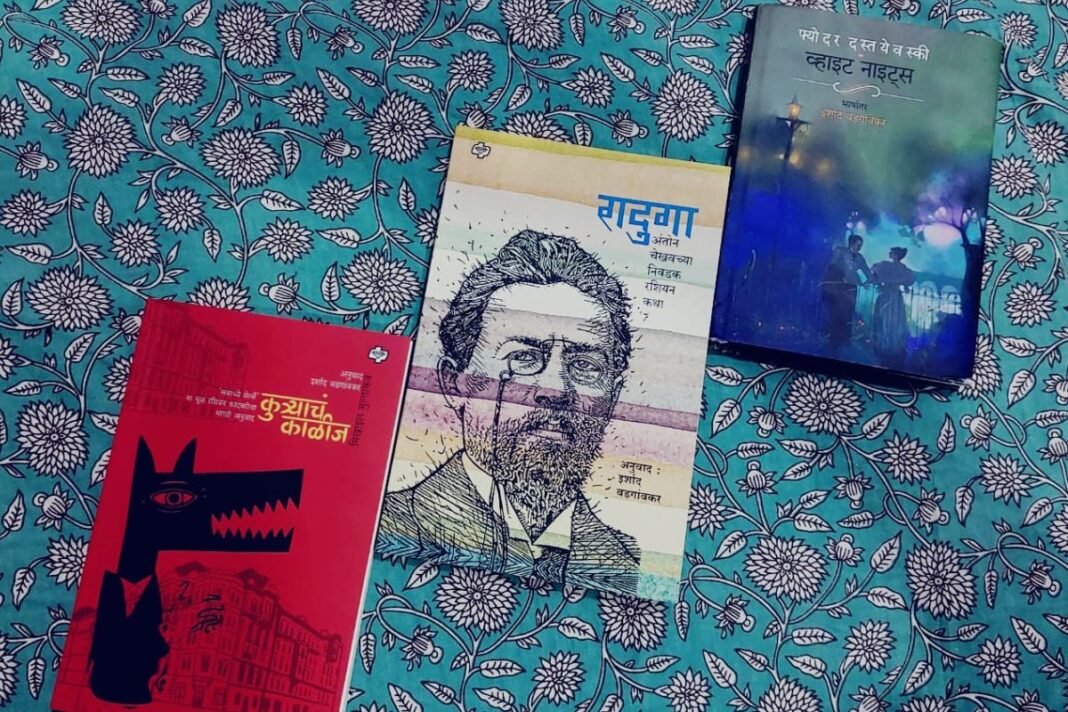

How did a hosiery seller’s son bring Chekhov to Marathi readers? The answer begins in a lane in Kolhapur, in a house with almost no books. It passes through a lost academic year, a mother’s stroke, a library found by chance and an invitation to Russia. Irshad Wadgaonkar is now a Russian language scholar, translator and PhD researcher. His Marathi versions of Chekhov, Dostoevsky and Bulgakov are in print, and a novel by Bunin is on his desk.
A House Without Bookshelves
Wadgaonkar grew up in Somwar Peth, in the Lugdi Ol area of Kolhapur. His grandfather ran a small kiosk that sold paan and eggs. His father studied only up to the fourth grade and has sold hosiery on Mahadwar Road for more than thirty years. His mother studied only up to the sixth grade. Nobody in the family had a literary background or the advantages that usually come with a scholar’s upbringing.
As a boy, he knew only a handful of famous Marathi titles, among them Batatyachi Chal and Shyamchi Aai. His father had a simple reason for disliking books: they crowded a two-room home. A future in translation would have sounded strange to anyone who knew the family then.
The Library That Changed Things
Class 12 at New College in Shivaji Peth brought about a big change in Wadgaonkar’s life. The T.H. Aparadh Library showed him a world he didn’t know existed. He read Gangadhar Gadgil’s Bandu series and Suhas Shirvalkar’s suspense novels, and he found he could read for long stretches. What began as a pastime soon became a habit, and the habit turned him in a particular direction.
A Costly Change of Course
While studying for a B.Com, Wadgaonkar decided that his real love was English literature. He moved to a B.A. in English ignoring the objections of people around him. The move cost him an academic year. It was a hard decision, and it was the first time he chose a dream over his circumstances.
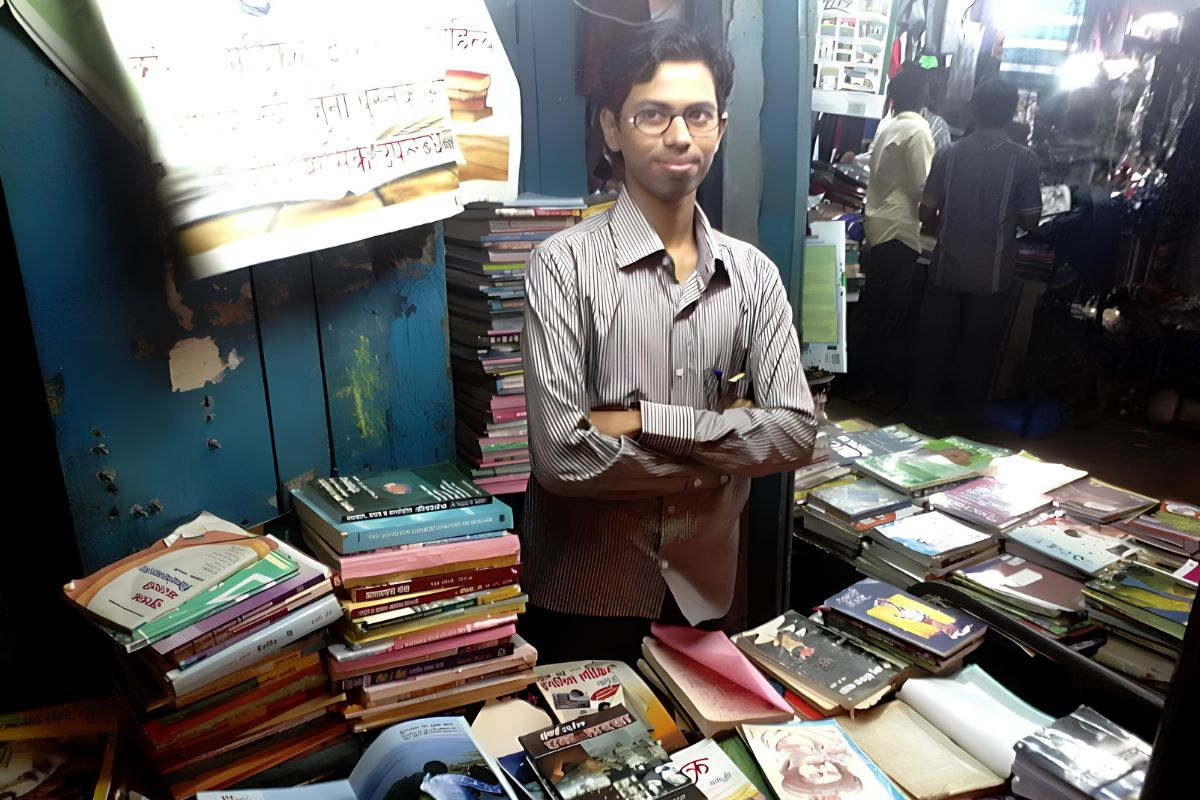
He also worked part-time at Chand Book Stall near Mahalaxmi Market. Often he took his pay in books instead of cash. Professors and readers who visited the stall talked with him, and those conversations became a second education in literature, one no classroom had offered him.
Russia Through a Phone Screen
Through the World Literature syllabus, he was introduced to Fyodor Dostoevsky, Maxim Gorky and Anton Chekhov in English translation. Poor People, White Nights and Crime and Punishment held him from the first pages, and Dostoevsky became his favourite writer.
During his M.A. in English at Shivaji University, he learned about the Foreign Language Department. He decided to learn Russian so that he could read these authors in the original. His first try, with textbooks alone, discouraged him, and he gave it up. Some professors suggested German instead.
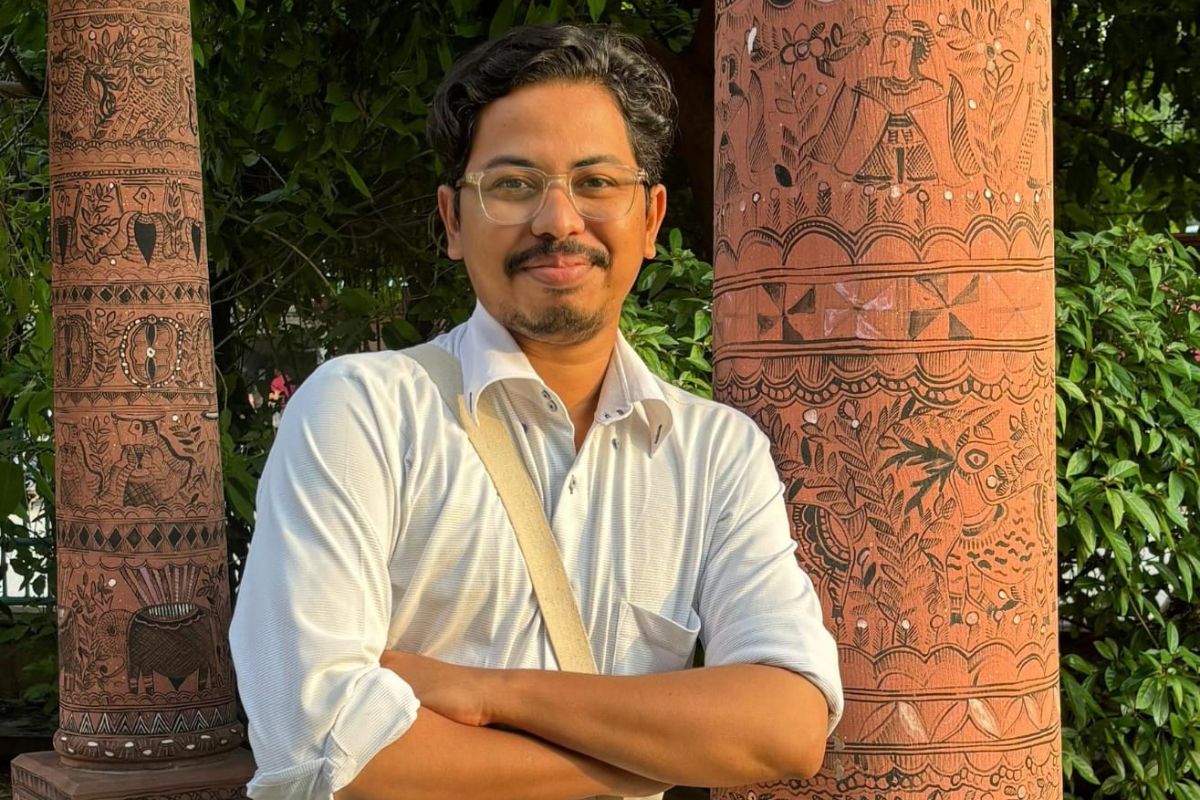
He came back to Russian with a different method. Through social media and language apps, he found Russian-speaking friends and practised with them over WhatsApp, audio calls, and video calls. Alongside his M.A., he finished a Certificate, a Diploma and a Higher Diploma in Russian. Talking with real people helped where textbooks could not.
The Years That Tested Him
In 2015, his mother suffered a brain stroke, and Wadgaonkar left his M.A. in its second year. For two years, he taught English at a school and ran private classes for competitive examinations and spoken English. He set aside the studies he had started, though he had not given them up.
Later, he worked as a research assistant on a university project, and that work drew him back to academics. He finished his M.A. in Russian and cleared the NET examination. He became the first student at Shivaji University to receive the NFOBC (JRF) fellowship in Russian.
He then sat entrance examinations at EFLU Hyderabad, Santiniketan and Jawaharlal Nehru University, and he was selected for doctoral studies at JNU. He spent three and a half years there, in a demanding academic setting, and he taught a grammar paper for one semester.
Chekhov in Marathi
His translation work began on a blog called Kavadse, where he posted Russian short stories in Marathi. Chekhov’s plain Russian and humane way of telling a story appealed to him most. Readers responded warmly, and that encouragement carried him from the blog to published books.
Diamond Publications published his first collection, Raduga, in 2023. The word means “Rainbow.” The book offers selected Chekhov stories in Marathi, and its look recalls the old Soviet publications. A library catalogue lists it as Raduga: Anton Chekhovchya Nivadak Russian Katha, translated by Irshad Wadgaonkar and published by Diamond Publications in Pune in 2023.
Next came the first Marathi translation of Mikhail Bulgakov’s ‘Heart of a Dog’. After that, he translated Dostoevsky’s ‘White Nights’ for Warden Prakashan. The last of these brought him full circle, since ‘White Nights’ was among the books that first pulled him toward Russian literature.
Recognition and a Trip to Russia
His Marathi translation of ‘Heart of a Dog’ was nominated for the Balshastri Jambhekar Translation Award, given by Antarbharati. He also received a grant from Russia’s Institute for Literary Translations to translate ‘The Village’, a novel by the Nobel laureate Ivan Bunin.
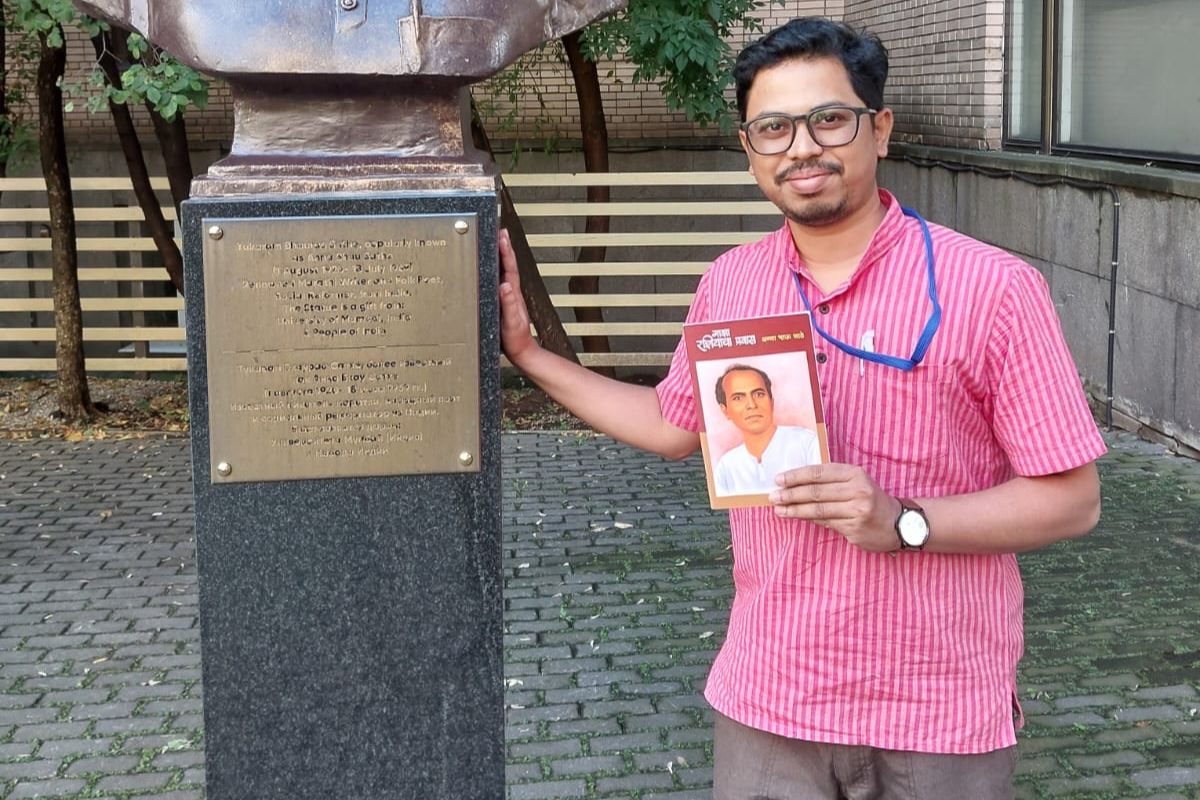
In September, he travelled to Russia at the institute’s invitation. There he presented a research paper titled “Problems in Translating ‘Heart of a Dog’ into Marathi.” The paper deals with the difficulty of carrying political satire from one language into another. He is also completing a PhD on coming-of-age novels in contemporary Russian literature, where he studies the inner lives of teenagers in twenty-first-century Russian fiction.
What His Story Shows
Wadgaonkar’s story shows how far literature can travel across class, language and place. He comes from a two-room home in Kolhapur where his father once resented the space books took up. Today, he keeps a home library of his own. He built a rack with his own hands and brought back the books he had once left with friends and relatives.
Wadgaonkar has also said something worth remembering about language. A person learns it from people, culture, history and even food, as well as from books. Russian widened his picture of Russia beyond the familiar names and images of Lenin, Stalin, Red Square, war and politics.
He took up a foreign language and ended up with a place between two literary worlds. Each page he translates tells readers the same thing. Talent can start in a small lane, and with persistence, education and courage, it can reach readers far from home.
Also Read: India Built Underground Palaces of Water Long Before Modern Water Management
You can connect with DNN24 on Facebook, Twitter, and Instagram and subscribe to our YouTube channel.