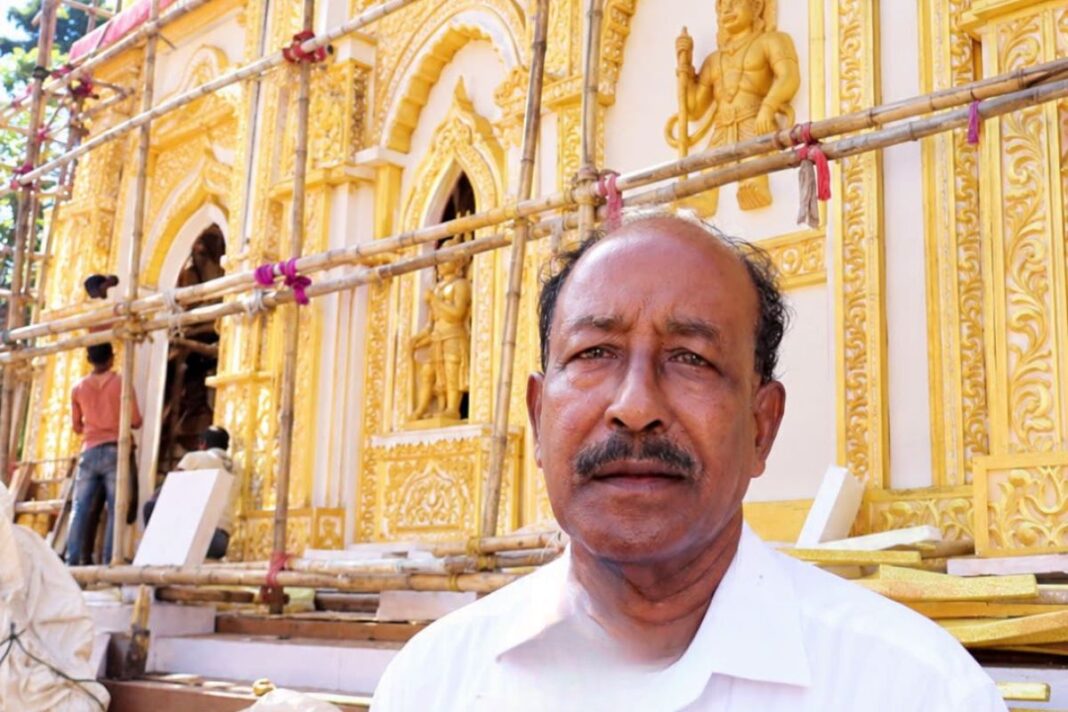


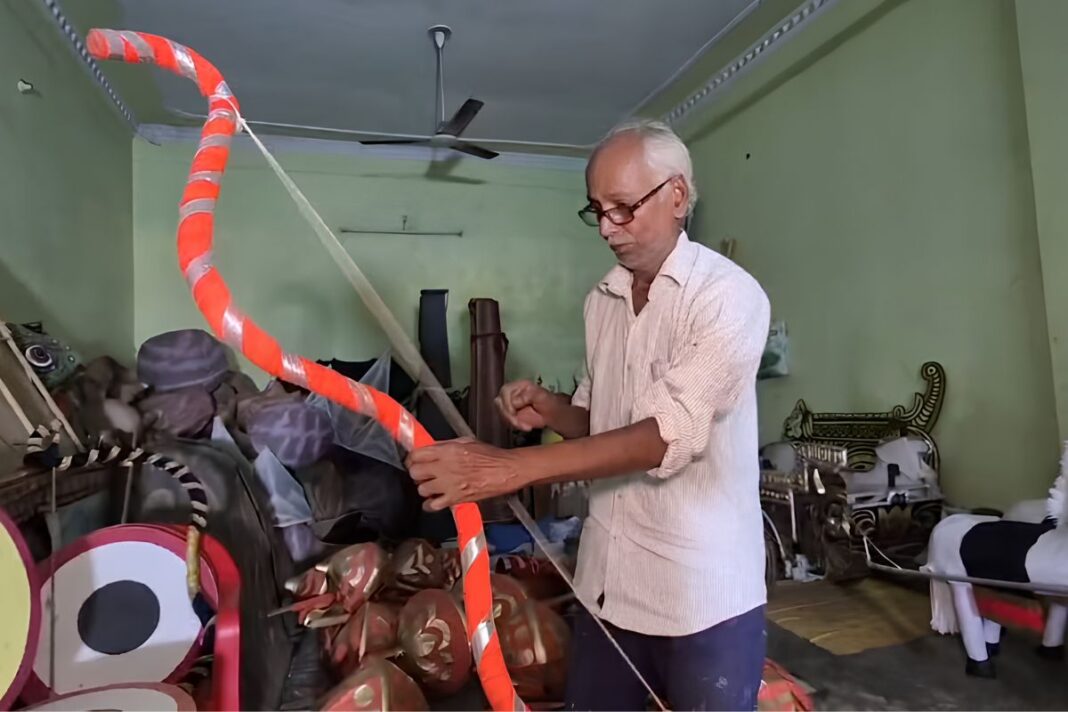

Every year, a few weeks before Dussehra, a man in Prayagraj’s Chowk area begins building Ravana’s chariot. He has done this for most of his life, and he is a Muslim. His name is Nisar Ahmed, and the workshop where he works holds a story that the crowds at the Patharchatti Ramlila rarely hear.
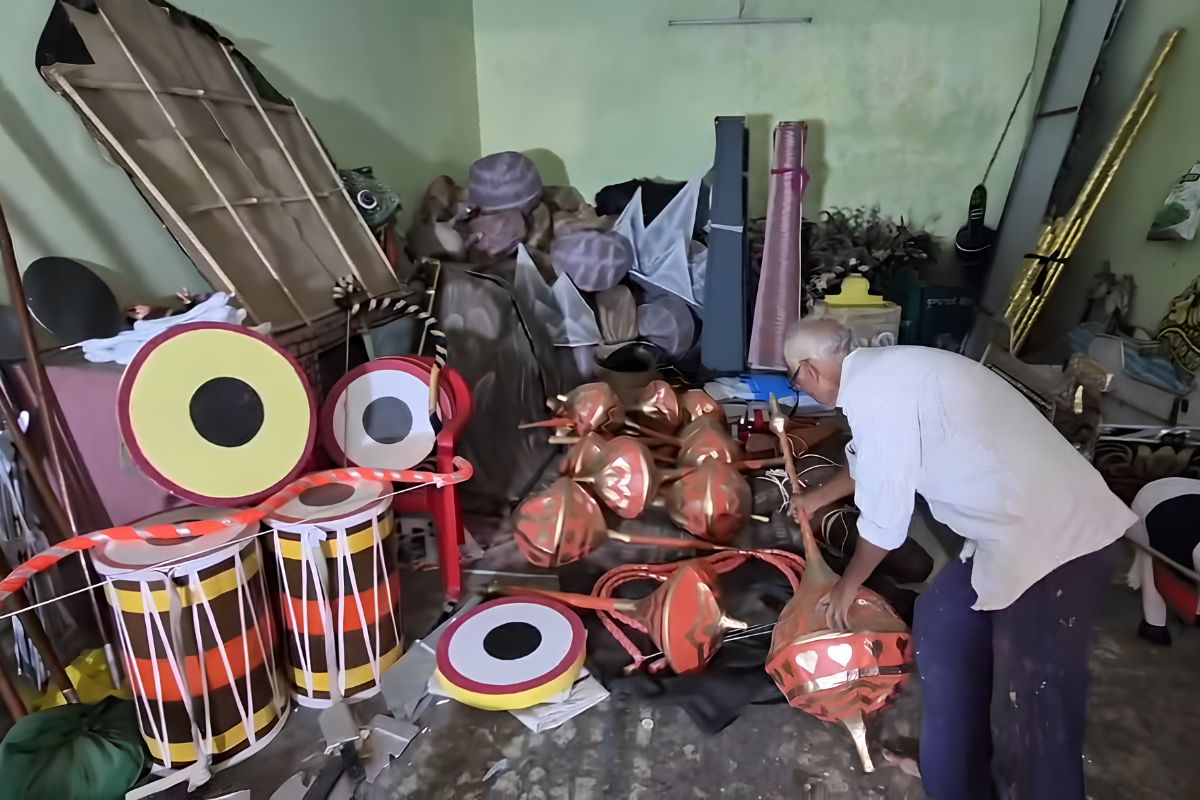
For Ahmed, these weeks mean a return to the family workshop and to memories of his father and grandfather. He makes bows and arrows, maces, swords, tridents, chariots and effigies of figures from the Ramayana. Prayagraj has long spoken of the Ganga Jamuni tehzeeb, the shared culture of Hindus and Muslims. Ahmed’s work gives that phrase a face and a pair of hands.
A Trade Passed Down
Ahmed did not stumble into this trade. His grandfather, Ali Hussain, worked on Ramlila material, and his father, Basir Ahmed, carried it on. Nisar was twelve when he first began helping his father prepare and decorate effigies.
The count of his years varies from one report to another. By 2024, he had been making effigies for the Patharchatti Ramlila for 22 years, and a report from 2026 puts the figure at about 24. An earlier report quotes him describing around four decades of painting and colouring the masks of Ramlila characters. The numbers differ because they measure different things. One counts full effigy-making for Patharchatti, and the other counts broader work across Ramlila crafts. Either way, the work has filled his life, and it reached him through two generations.
“I started helping my father Basir Ahmed in preparing and decorating effigies for Ramlila when I was just 12 years old,” Ahmed told The Times of India.
What the Workshop Produces
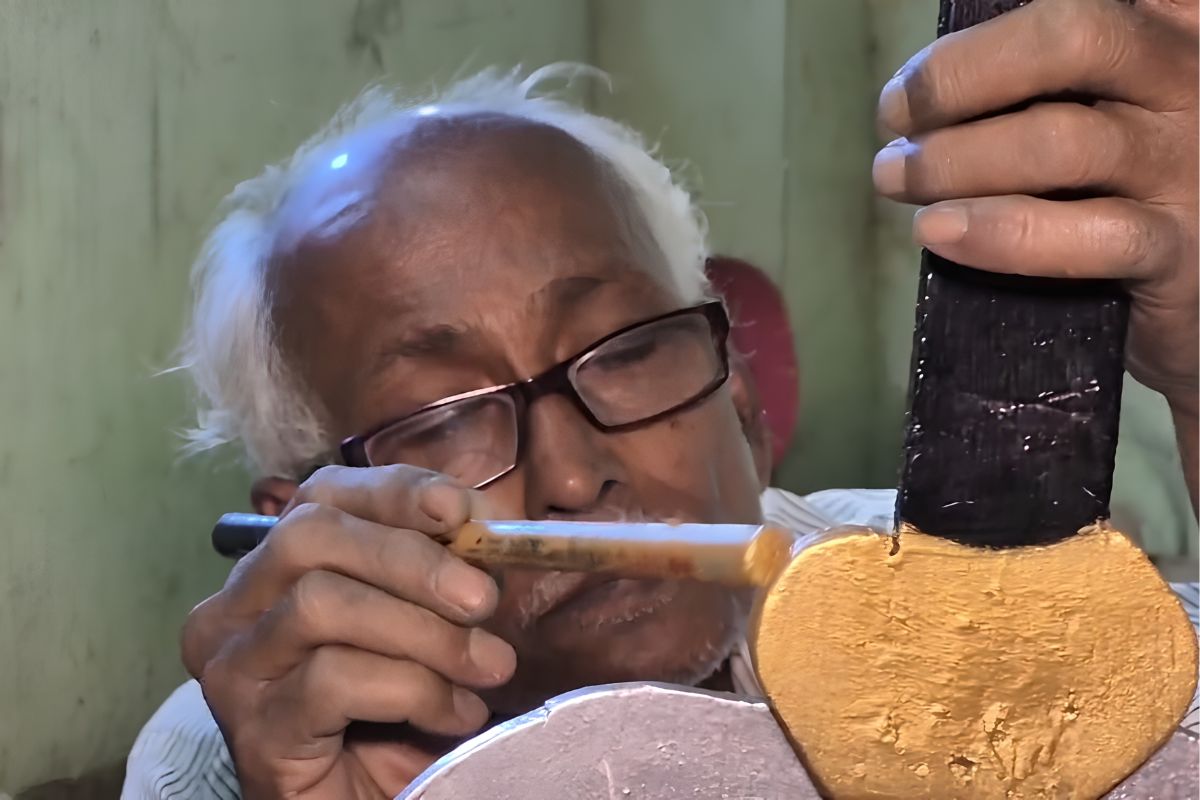
Patharchatti Ramlila is regarded as the oldest Ramlila in Prayagraj, and Ahmed has long prepared its effigies and cared for them throughout the year. His list includes life-size figures of deities and mythological characters, Ravana’s chariot, and weapons such as the gada, bow and arrow, and swords. In one year he made small effigies of Ravana and Sursa, along with a Kumbhakaran that stood 25 feet tall. He built them from waste paper, fibre, plywood and an iron frame.
The materials are cheap and plain, yet the result has to look grand from the back of a crowd. A mace must seem heavy. A chariot must look as if it has carried a king into battle. A giant Kumbhakaran has to make a child look up and go quiet. Ahmed says making these figures is “very fascinating and inspiring,” and it is the work he enjoys most. Before Dussehra, he sets other assignments aside to concentrate on Ravana, Sursa, Kumbhakaran and Sita.
Tazias and Chariots Under One Roof
Ramlila is only part of the family’s craft. They are also known for making tazias during Muharram, the structures linked with Shia Muslim mourning. The hands that shape a tazia in one season build a chariot for Ravana in another. The family that takes part in one community’s sacred remembrance also helps another community stage its best-loved epic.
Ahmed calls himself and his family “true Ram Bhakts,” devotees of Lord Ram, because of the satisfaction they feel while shaping Ramlila effigies. The phrase should not be read as a rejection of his own faith. It tells us how fully he has entered the world of the festival he serves. His respect for Ram shows in months of patient labour: cutting, shaping, painting, repairing and finishing.
A Short History of the Stage
Patharchatti Ramlila reaches back several centuries. Local tradition places its beginning in the 16th century, in an open field near the Kamaurinath Mahadev temple on Hewett Road. A popular story says the Mughal emperor Akbar watched a performance there and wept during the scene of Sita’s farewell. Local historians link this to his interest in other faiths, though the story is best treated as local tradition, since it is not fully documented.
The name comes from the stones that once surrounded the site. In 1837, the Ramlila moved to the city centre as audiences grew. Its Ram Dal procession, with actors playing Ram, Lakshman and Sita in tableaux, became a mark of Prayagraj. Patharchatti and Pajawa are widely regarded as the city’s two oldest Ramlila committees, though which came first remains unclear. Under colonial rule, the tableaux carried historical and social themes and stirred patriotic feeling against British rule.
The path was not smooth. Communal violence halted the Ramlila from 1924 to 1936. In 2020, the pandemic caused another pause, the first in about 84 years. Even then, the committee kept up daily worship and held the Karnaghoda procession inside the premises. In the 1980s, it became the first Ramlila committee in the country to use sound and light staging.
A Promise Kept Each Year
Age has not slowed Ahmed’s commitment. In his mid-sixties, he works with the same care he showed when young, and he wishes to give his whole life to this service connected with Ram. The promise is renewed every year in bamboo, paper, fibre, paint, iron and glue. Just as he learned from his father and grandfather, he hopes young artisans will watch him work and see that a tradition survives when people choose to take part.
The Name Behind the Props
When the drums sound and Ramlila begins in Prayagraj, the audience will see Rama’s bow, Ravana’s chariot and Kumbhakaran rising above the stage. Few will know the name of the man behind them. Yet his hands are in every prop and every restored effigy. Many hands make and keep culture, and Ahmed’s workshop shows it plainly. Where speeches fall short, a well-made bow can do the talking.
Also Read: India Built Underground Palaces of Water Long Before Modern Water Management
You can connect with DNN24 on Facebook, Twitter, and Instagram and subscribe to our YouTube channel.