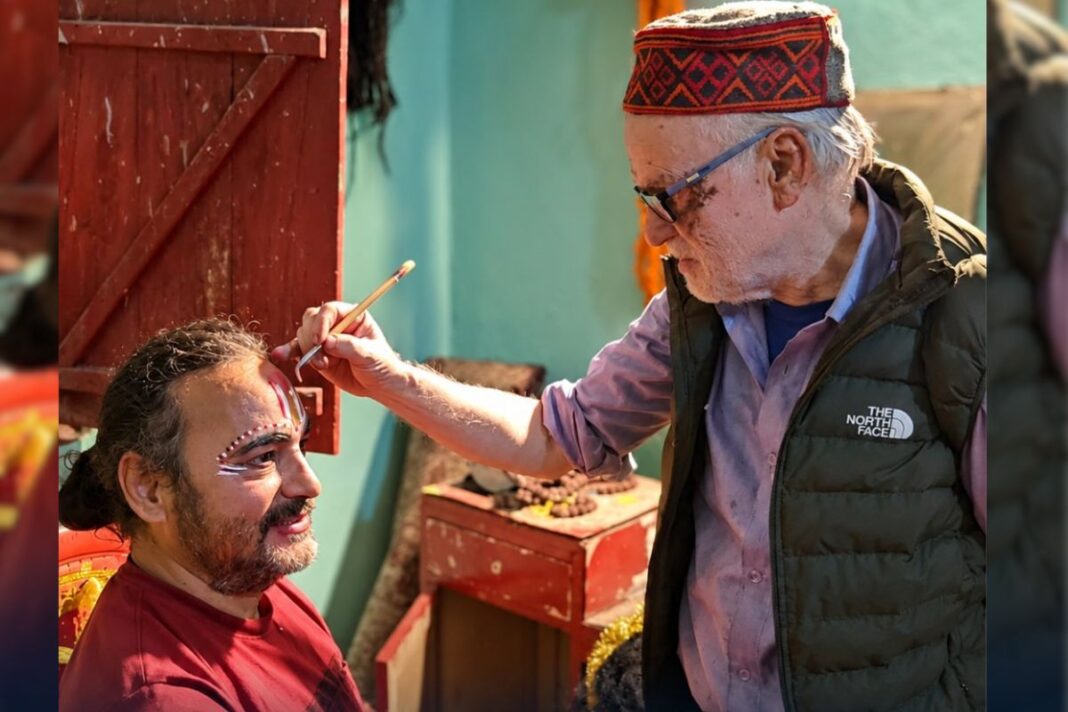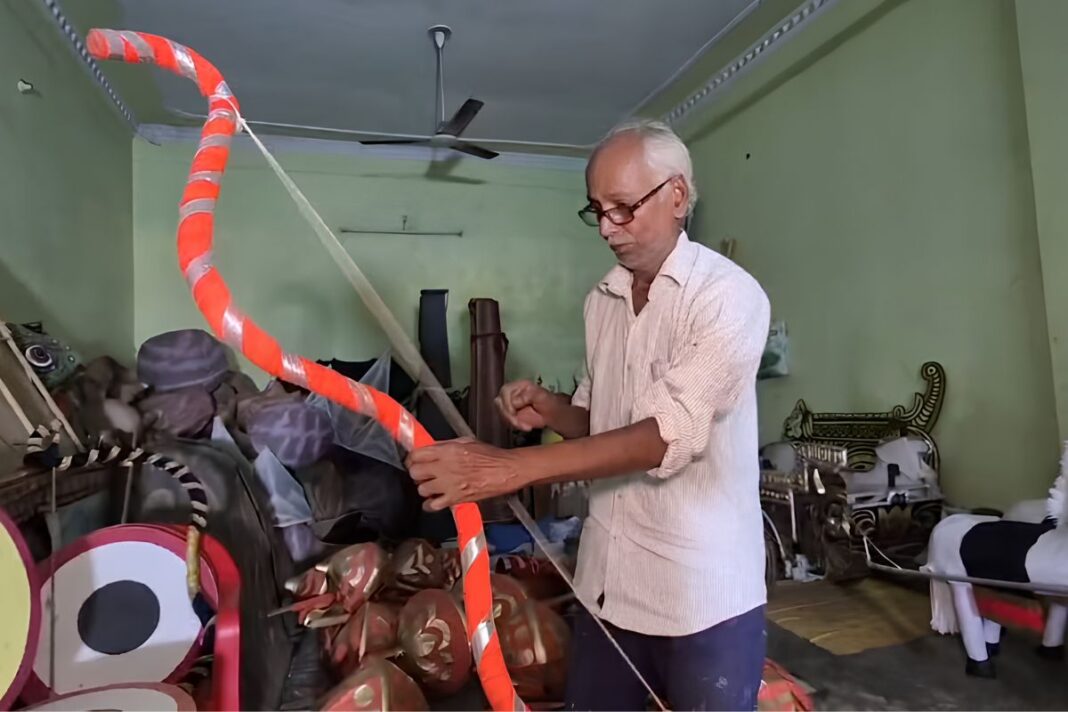


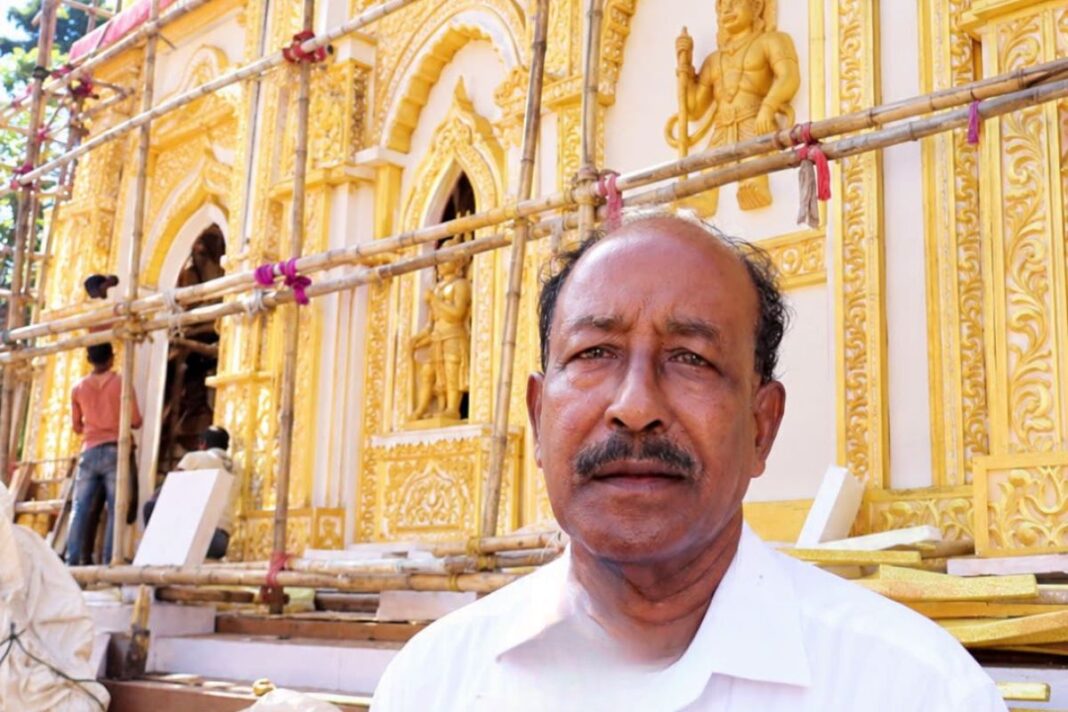

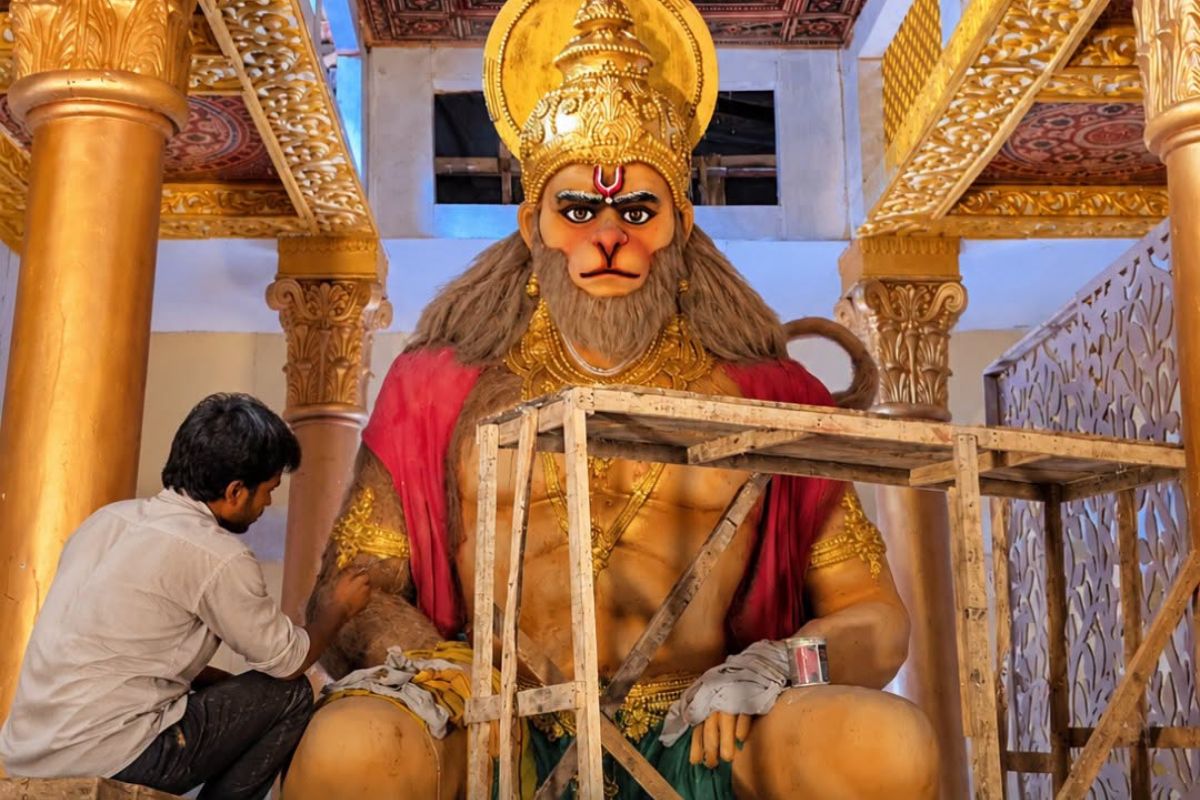
A Muslim sculptor from Assam has built the monkey kingdom of the Ramayana in the middle of a Guwahati neighbourhood, and Durga Puja visitors are walking straight into its caves. The kingdom is Kishkindha, the home of the vanara kings Bali and Sugriva. Padma Shri Nuruddin Ahmed raised it, and the place is the Bishnupur Bimala Nagar Sarbajanin Durga Puja, organised by the Sunflower Club. Few pandals this season have carried a story as large as the one behind this one.
The man behind the caves
Ahmed is among Assam’s best-known sculptors, art directors, and stage designers. He received the Padma Shri in 2026 after nearly fifty years of work. In that time, he designed stagecraft for more than 450 mobile theatre productions and gave art direction to around 5,600 plays. Those numbers are hard to picture until you consider how many nights of work they stand for.
He had already won the Sangeet Natak Akademi Award in 2017 for Allied Theatre Arts and Stage Craft. The official citation calls him a visionary art director, sculptor and set designer who brought modern techniques into sculpture and stagecraft while keeping traditional Assamese aesthetics alive.
For Ahmed, a pandal is theatre built on the scale of a whole community. His work has moved for decades between the stage, public festivals, sculpture and heritage design. That experience gives him a rare skill: making an old myth feel close and real to ordinary visitors.
Inside Kishkindha
In the Ramayana, Kishkindha is the capital of Bali and Sugriva. After Bali dies, Sugriva and Hanuman side with Lord Rama, and the vanara sena plays a decisive role in the campaign to rescue Sita from Lanka.
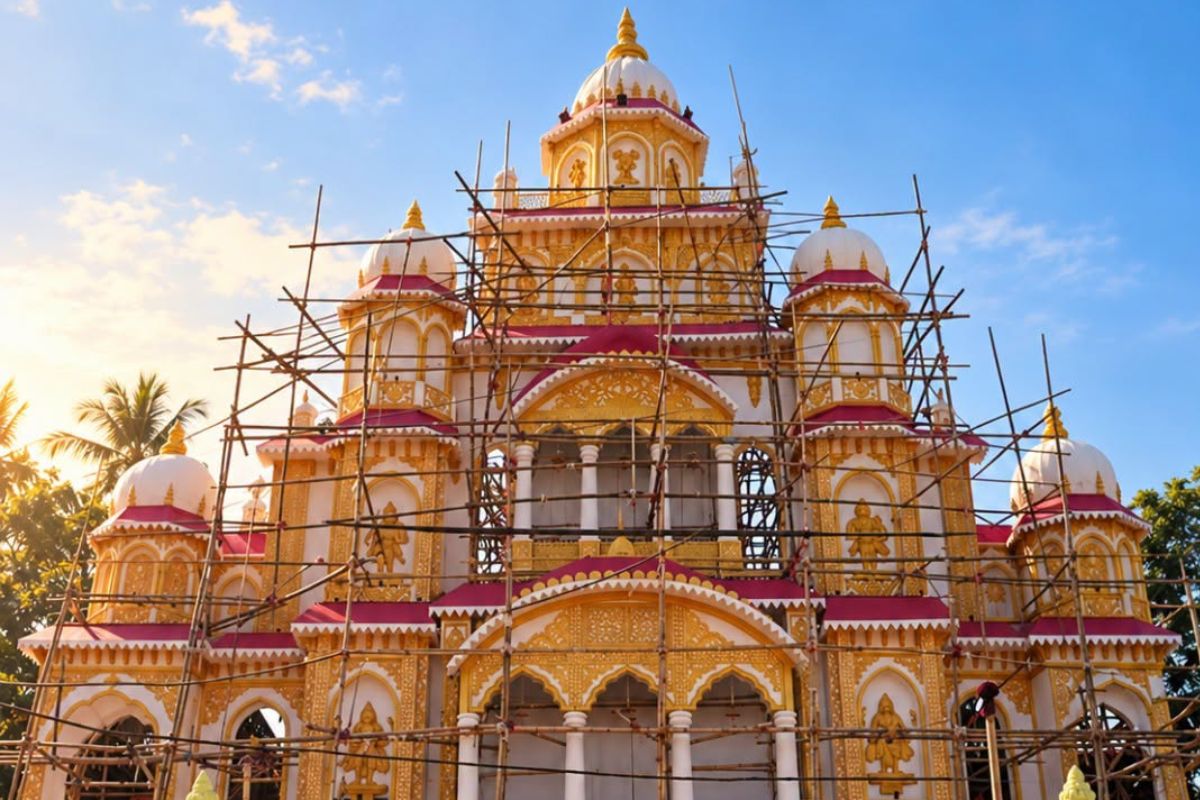
Ahmed and his team built that world with a cave-like interior, royal courts, tunnels, and an outer landscape of trees and greenery. Two huge guards from the monkey army stand at the entrance. Hanuman is shown flying above the puja grounds.
“We are depicting the battle between Bali and Sugriva and the way the simian army helped Lord Rama,” Ahmed told Awaz-The Voice. He added that the team tried to recreate the royal courts inside, and that the caves also show how people were held captive.
Visitors first see the kingdom from outside. Then they move through caves and tunnels where the story of Bali and Sugriva unfolds, and deep within is a royal palace. People can pray here and walk through a tale from beginning to end.
Forty artists and nearly two months
Ahmed led a team of 40 local artists. They worked with plaster of Paris, fibre, clay and plywood, materials that every pandal maker knows well. The difference lies in the scale and the detail, which belong to a major stage production.
The work took close to two months. Ahmed said the theme was hard because the team had to build an outer kingdom and an inner cave world, and also show the part played by the vanara army.
He is no stranger to this puja. Vicky Roy, secretary of the Bishnupur Bimala Nagar Sarbajanin Durga Puja Committee, said Ahmed has been part of the festival for seven or eight years and joins the preparations nearly two months ahead. “He works on it as though it were his own,” Roy said. “His artistry needs no introduction from me. He surprises us every time.”
The organisers put the budget at about 35 to 40 lakh rupees, with most of it going to the pandal. Such a sum shows how much public art now matters to Guwahati’s Durga Puja. Pandals here compete in devotion, and they also compete in imagination, craftsmanship and civic pride.
A city that builds for its gods
Guwahati’s 2026 Durga Puja is a large affair. The city hosts more than 500 public and private pujas, and several pandals have become major attractions because of their themes and designs.
One of them is the Bishnupur High School Durga Puja, which marked its 75th anniversary with a floating pandal called Naglok on a lake. It was built with bamboo and other natural materials. A Shivling sits beneath a waterfall, and sculptures of the Naag Devtas stand around it. Local reports name Pappu, son of Nuruddin Ahmed, as its constructor.
Taken together, these pandals show a festival culture that is changing while keeping its roots. The pandal is still a place of worship. It has also become a public classroom where visitors meet myth, ecology, design and shared labour.
Bamboo, Babylon and a floating serpent world
Ahmed’s link with Durga Puja art goes back to 1975, when he built his first pandal in Assam. Since then, he has made more than 200 Durga idols and designed many pandals.
His most famous earlier work is the bamboo idol of Maa Durga made for the Bishnupur Sarbajanin Durga Puja in 2017. Ahmed and about 40 artisans built a structure 101 feet tall from split bamboo woven around bamboo poles, with no metal and no plastic. The Indian Express later reported that the 98-foot version was recognised by the Limca Book of Records as the world’s tallest Durga idol. Nearly a lakh people came to Bishnupur to see it, and public demand led the organisers to keep it up for an extra week after the festival. Ahmed said the idol was meant to be environmentally friendly and to bring Assam’s bamboo craft to a national and international audience.
In 2025, the Bishnupur Bimala Nagar committee asked him to design a pandal on the Hanging Gardens of Babylon, one of the Seven Wonders of the Ancient World. The committee called it a blend of history and art and gave a decoration budget of around 40 lakh rupees. The theme showed that Ahmed’s range goes well beyond Indian mythology. He could turn a wonder of the ancient world into the language of a Guwahati neighbourhood puja, using large construction, sculptural detail and a space that visitors can enter.
This year he also guided the design of the Naglok pandal, built on a reported budget of 25 lakh rupees. IANS reported that he designed it under his guidance, with a water-filled interior for devotees. Its mix of ritual symbols and an unusual setting on water drew wide attention.
Across all these projects, the same signature shows. He works on a monumental scale, using traditional materials such as bamboo, clay, and fibre, with themes that invite people to step inside a story. His work travels easily from the caves of Kishkindha to the gardens of Babylon and the serpent world of Naglok, and it stays rooted in Assamese craftsmanship.
What the crowds are seeing
The meaning of Kishkindha lies partly in its artistry and partly in a quieter fact. A Muslim artist from Assam has given weeks of skilled labour to a Hindu epic, working with local artisans for a community Durga Puja. The result has drawn visitors from every religious and social background.
None of this is a fresh political slogan dressed up as culture. It belongs to an older, more lasting India, where traditions borrow from one another, artists cross community lines, and whole cities share festivals. Ahmed’s career fits that picture. His Padma Shri honours an Assamese artist whose work has served theatre communities across the state, and his Kishkindha pandal puts the same craft to work for an epic known nationwide.
The theme also carries a gentle message. Ahmed said he wanted visitors to see that “monkeys, too, can help human beings.” The vanara sena of the Ramayana is a fantastic army, and it also symbolises loyalty, courage, and effort shared among many.
A kingdom for the festival
In Guwahati, Kishkindha is now more than a legendary city from an ancient epic. For the length of the festival, families can step into it, children can explore it, artisans can take pride in it, and strangers can admire it alongside them.
Nuruddin Ahmed’s pandal shows that India’s diversity is a creative force. At its best, it can turn faith into art, local skill into public wonder, and an ancient story into a celebration that everyone in the crowd can share.
Also Read: Nainital’s Ramlila Will Not Begin Without This Muslim Artist
You can connect with DNN24 on Facebook, Twitter, and Instagram and subscribe to our YouTube channel.