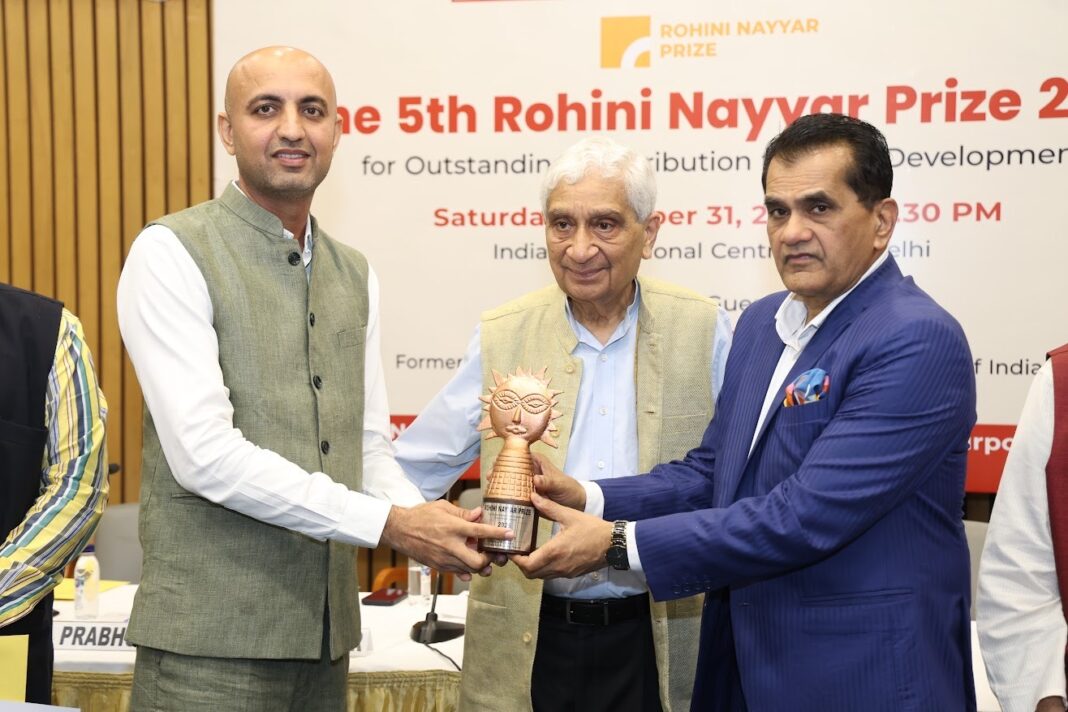

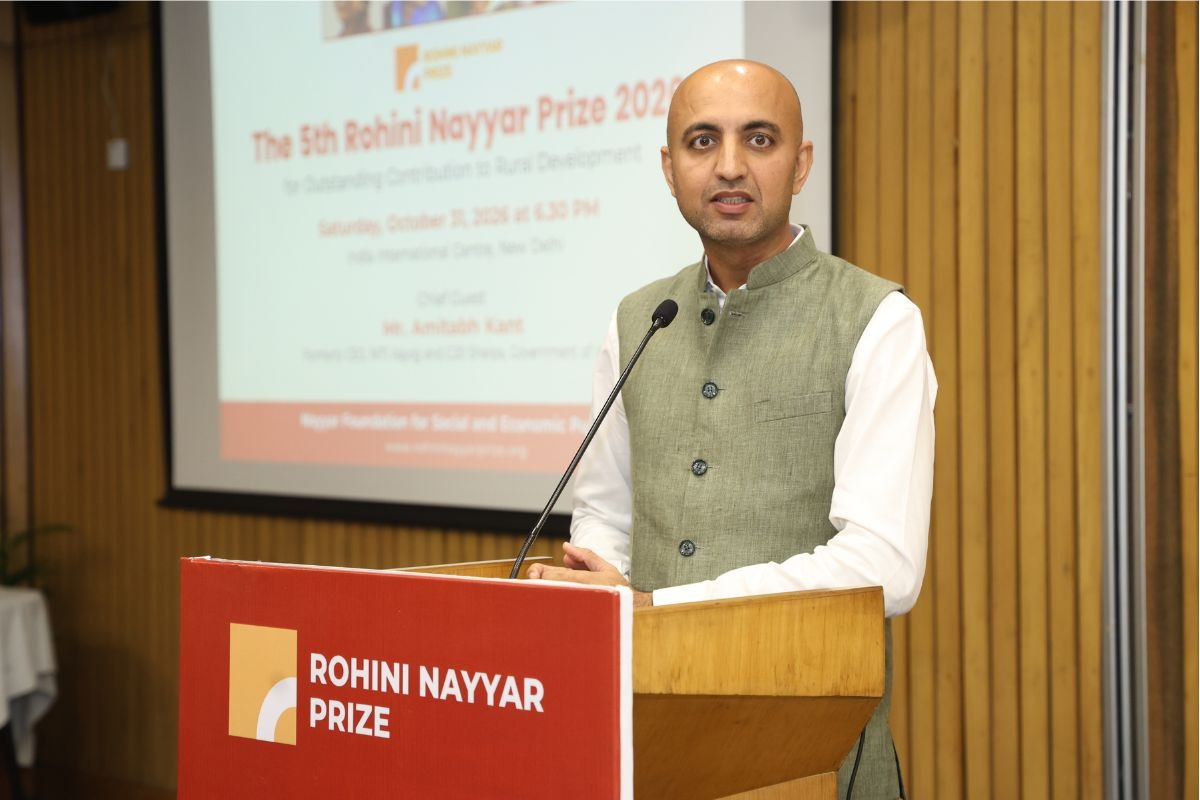
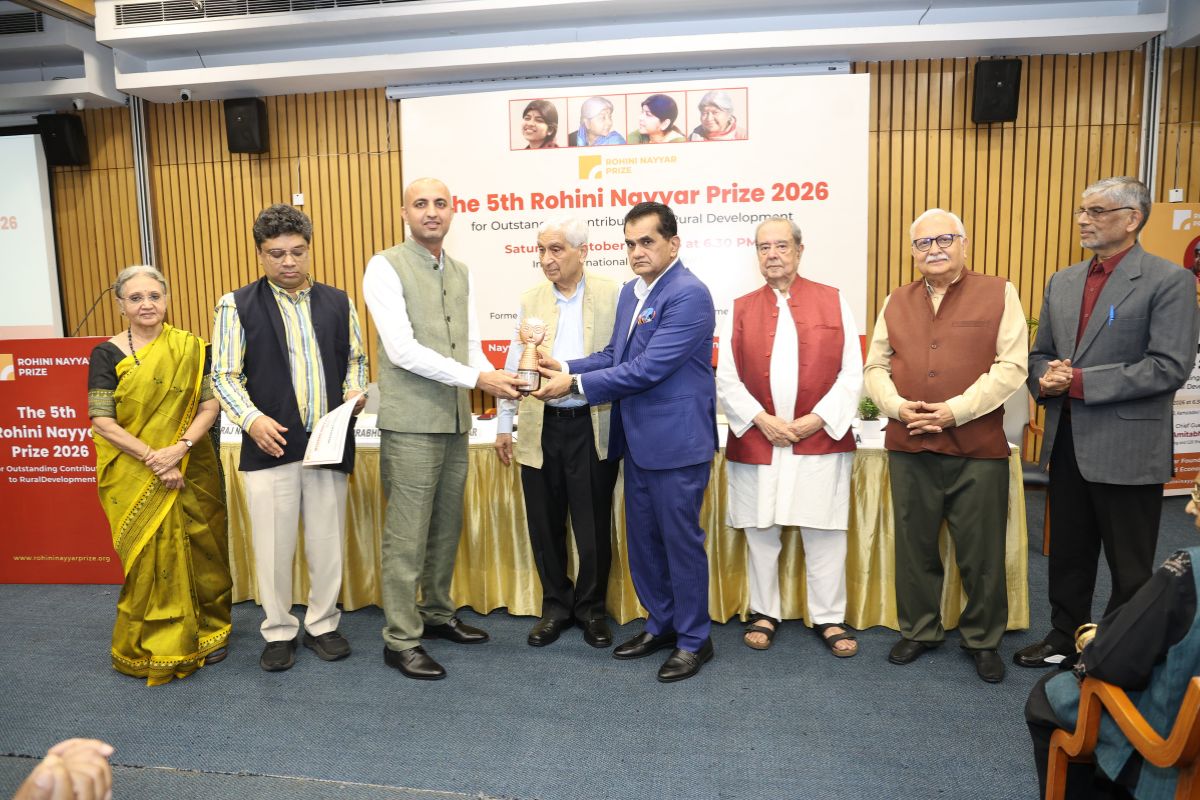
The fifth Rohini Nayyar Prize for Outstanding Contribution to Rural Development by a person aged 40 or under was presented in New Delhi on Saturday, October 31. The winner is Prashant Chaudhary, a technology educator from Dehradun, Uttarakhand. Amitabh Kant, former CEO of NITI Aayog and G20 Sherpa for the Government of India, handed the prize to Chaudhary. Kant has spent years watching how policy is implemented on the ground, so his presence at an award built around rural India carried some weight.
The boy from near Meerut
Prashant Chaudhary grew up in a village near Meerut in Uttar Pradesh. In 2010 he became the first person from that village to graduate from IIT Delhi. Many people with that degree would have taken a desk in a big city. Chaudhary went home and started teaching technology to students from his own village.
Some of those students later joined companies such as Apple, Microsoft and Adobe. Many were the first in their families to hold jobs of that kind. Their results gave him an idea worth betting on. In 2020, he started the CodeYogi Foundation and paid for the early work himself.
A classroom that fits in a pocket
Most rural homes in India have no desktop computer. Many schools have no computer lab, and plenty have no teacher who can explain coding. The smartphone, though, has reached almost every corner of the country. CodeYogi was built around that fact.
The platform runs entirely on family smartphones. Lessons come in Indian languages, so a student does not need English to begin. There is no computer, no lab and no trained teacher in the picture. The first courses taught coding, and students proved they could write real code and build working web applications on a phone.
The programme has since grown into a 30-day applied AI fluency course. Students use real AI tools for tasks that matter in their studies and at home. The lessons cover education, health, research, business and the checking of false news.
Why speed and cost matter
Chaudhary puts his reasoning in a single sentence. “AI is evolving faster than school systems,” he says. Labs take years to build and teachers take years to train, and a rural student who waits for both arrives at the subject far behind. CodeYogi goes around that wait.
The programme runs at under ₹10 per student per month. A model that depends on human instructors in every district cannot come near that figure, and it is the reason a target of one million learners is realistic.
What the numbers say
In the last three years, the programme has reached more than 350,000 students across nine states and 120 districts. Those districts cover about 30 per cent of India’s geographical area. Girls make up 48.6 per cent of learners. About 95 per cent study on a smartphone alone, and 59 per cent are advanced learners from backgrounds outside science and technology.
The foundation also reports that more than one lakh students have built their first digital creation on a phone. It says 80 per cent of its alumni have found jobs, with starting packages of Rs 6 lakh a year. Many of those are remote software roles, so young people can earn a salary without leaving their villages. For a family with little or no land, that salary is a second source of income that does not depend on the monsoon.
The road to one million
CodeYogi expects to reach one million learners by March 2027. It plans to make 30 lakh students AI literate, to produce more than 60,000 advanced AI learners and to partner with five or more state governments.
Chaudhary hopes for a generation of rural youth who never think of technology as something that belongs to someone else. The question of whether a village student can learn it has been answered. The one left is how far that student can go.
The woman behind the prize
The prize honours the late Dr Rohini Nayyar, an eminent scholar and administrator who spent much of her professional life on rural development in India. Her family set up the Nayyar Foundation for Social and Economic Purpose, which gives the award every year to support social and economic development in the country.
Also Read: How Persian Art Found a Home in Kashmir and Became Part of Its Cultural Identity
You can connect with DNN24 on Facebook, Twitter, and Instagram and subscribe to our YouTube channel.