
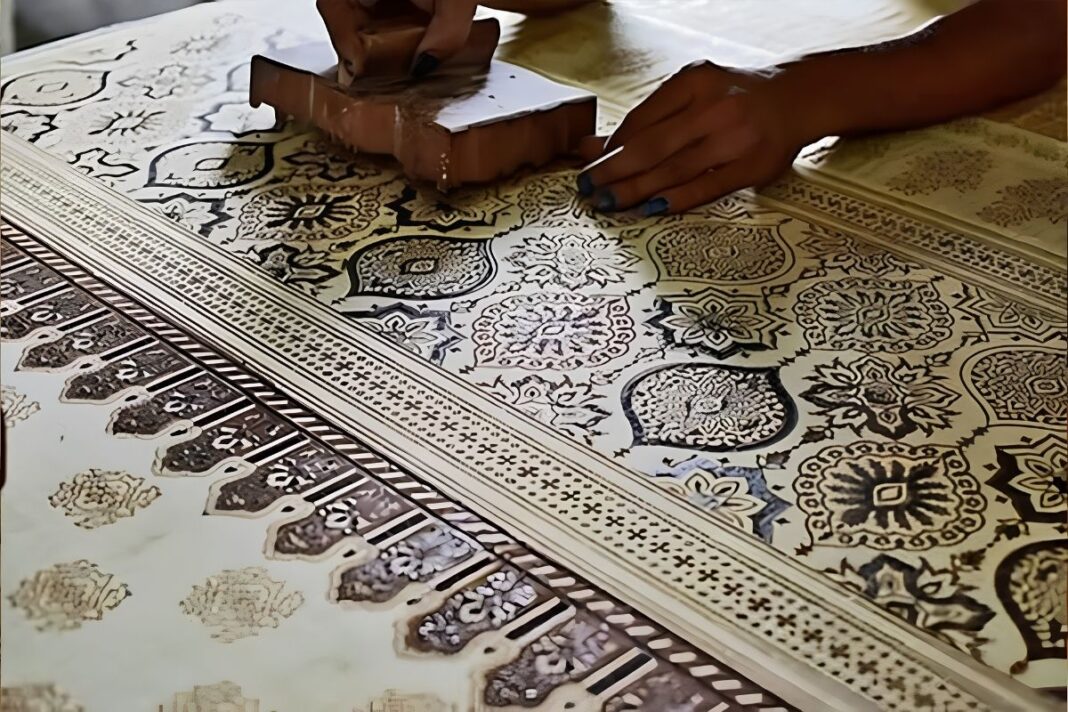

Ajrak is more than a patterned textile. With its deep indigo blues, rich reds, crisp whites, and intricate geometric forms, it carries centuries of craftsmanship, particularly associated with Sindh and Kutch. Created through a demanding process of hand-block printing, resist printing and repeated dyeing, Ajrak reflects the relationship between artisans, natural materials, mathematics and the landscapes they inhabit.
For generations, the craft has been closely associated with the Khatri community, whose artisans have preserved and adapted complex dyeing and printing knowledge. Every piece requires precision, patience and an understanding of how different substances react with cloth, water and colour.
Geometry Written on Cloth
Ajrak is instantly recognisable through its symmetrical patterns. Stars, floral forms and geometric arrangements are repeated with extraordinary precision across the fabric. Traditional colour combinations are dominated by indigo blue, madder red, black and white.
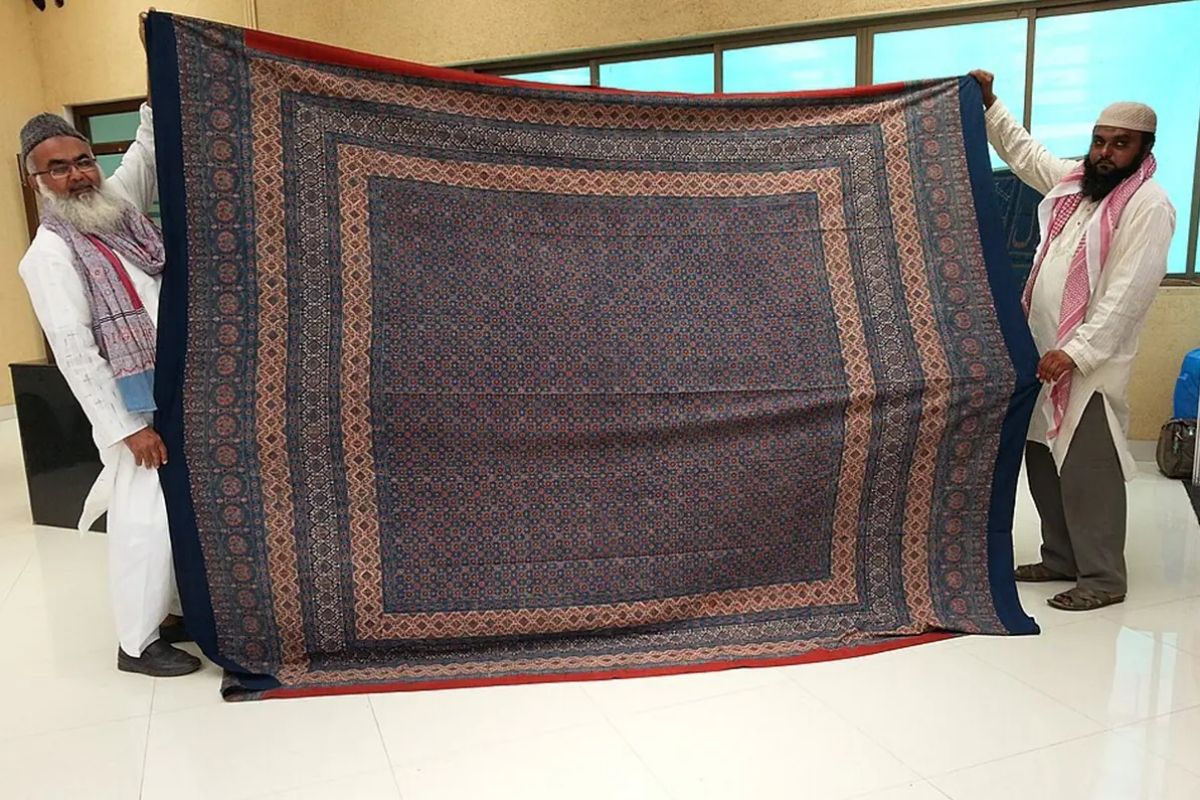
One of its most admired forms is double-sided printing, where patterns appear with remarkable clarity on both sides of the cloth. Achieving this requires exceptional alignment during repeated stages of printing and dyeing. The result is a textile in which geometry becomes an artistic language.
Ancient Roots and Cultural Connections
Ajrak’s history is often connected to the ancient textile traditions of the Indus region. The famous so-called “Priest-King” sculpture discovered at Mohenjo-daro wears a patterned garment decorated with trefoil motifs. While it cannot simply be identified as modern Ajrak, the image is frequently discussed when tracing the region’s long fascination with patterned textiles.
Over centuries, Sindh and Kutch became crossroads of trade and cultural exchange. Ideas travelled through these regions alongside merchants, craftspeople and communities. Persian and Islamic artistic traditions also contributed to the development of complex geometric aesthetics. Ajrak eventually became deeply embedded in everyday life, particularly in Sindh and Kutch.
A Cloth With Many Lives
Traditionally, Ajrak has never been limited to ceremonial clothing. It can be worn as a turban, draped over the shoulders or wrapped around the body. A piece of Ajrak can become a covering, a prayer cloth or a practical bundle for carrying everyday belongings.
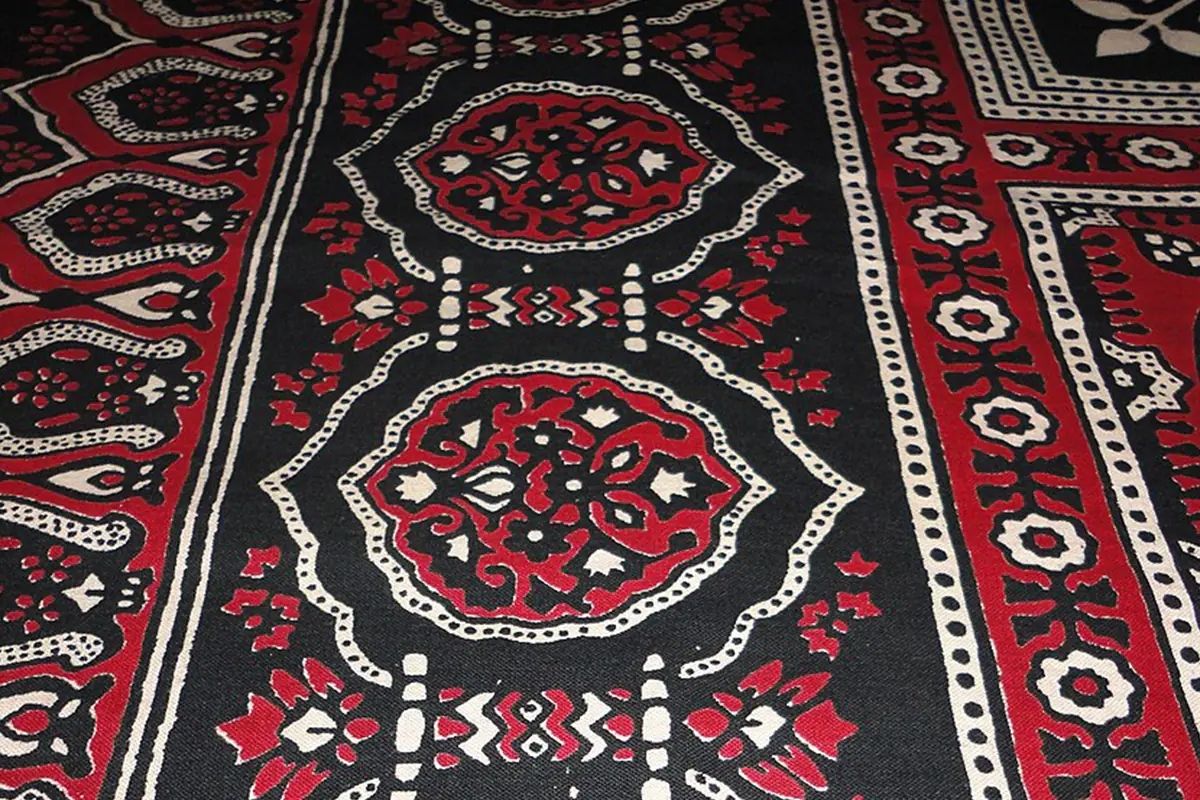
Its motifs draw inspiration from geometry and the natural world, including stylised flowers, leaves and other familiar forms. Repetition and symmetry create the visual rhythm that distinguishes authentic hand-block-printed Ajrak. This versatility transformed the textile into something far more intimate than fashion. It became part of everyday identity.
Colour Created Through Chemistry
Traditional Ajrak production combines artistic skill with practical chemistry. Natural indigo produces its celebrated blue, while madder creates shades of red. Black can traditionally be developed using iron and other ingredients, while resist pastes protect selected portions of cloth during dyeing.
The textile passes through numerous stages of washing, mordanting, printing, dyeing and drying. Artisans traditionally use materials such as harda, gum and natural dyes during different stages.
Water is especially important. Its mineral composition can influence how dyes develop, which is one reason traditional Ajrak-making communities have historically maintained close relationships with particular landscapes and water sources. Each stage depends on the previous one. A mistake in alignment, preparation or dyeing can affect the entire textile.
Tradition Meets the Modern Market
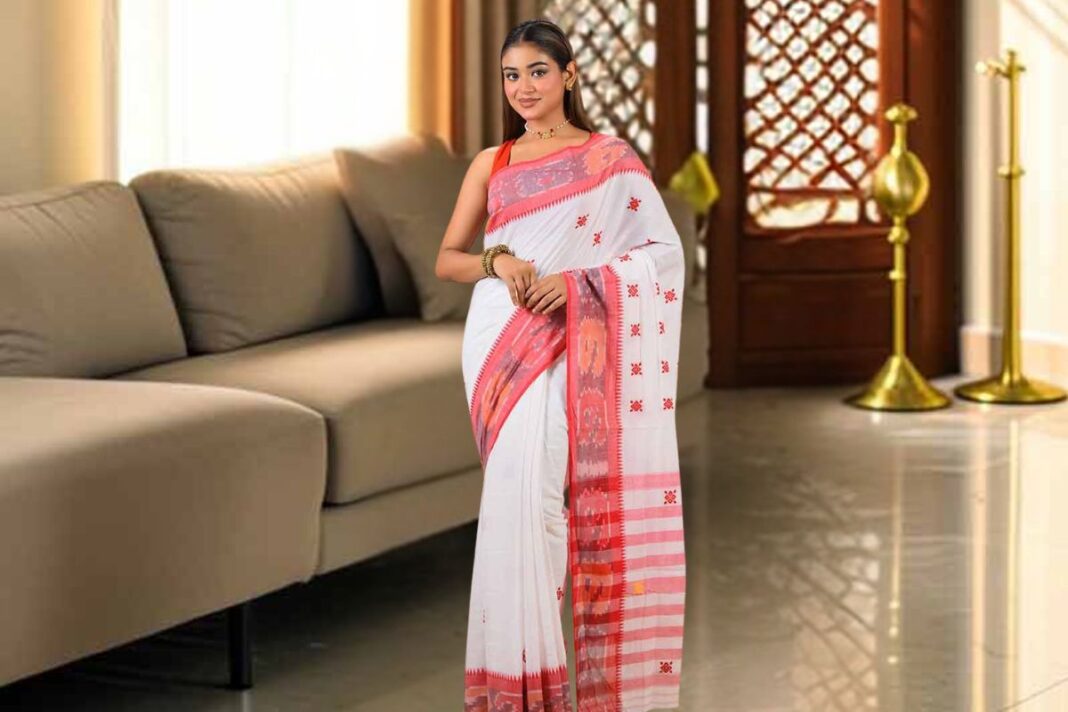
Ajrak has experienced renewed attention in contemporary Indian fashion. Designers have adapted its patterns for sarees, dupattas, jackets, dresses and home furnishings, bringing the craft to audiences far beyond its traditional regions.
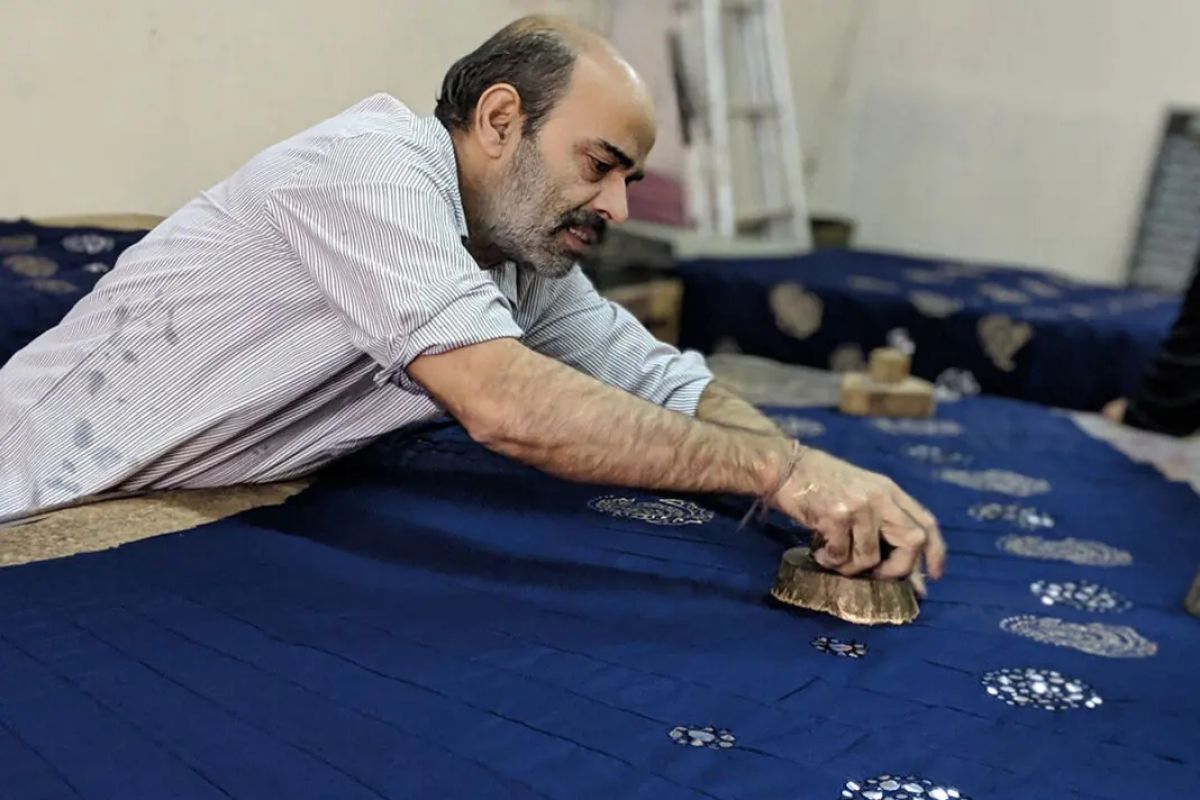
This popularity, however, creates challenges. Faster industrial printing and synthetic dyes can produce inexpensive fabrics that resemble Ajrak visually but require far less time and labour. For traditional artisans, competing with mass-produced imitations while maintaining complex handmade processes can be difficult.
At the same time, growing interest in sustainable fashion has created new appreciation for natural dyes, handmade textiles and artisan knowledge. This provides opportunities for craftspeople who continue to preserve traditional methods.
More Than a Textile
Ajrak ultimately represents a relationship between people, landscape and inherited knowledge. Its geometry reflects extraordinary mathematical precision. Its colours reveal generations of experimentation with plants, minerals and natural materials.
Its printing techniques demonstrate the patience of craftspeople who repeat complicated processes until separate layers become one harmonious design.
To examine authentic Ajrak closely is to encounter traces of the regions that shaped it: the earth of Kutch and Sindh, the intensity of the desert sun, the depth of indigo and generations of skilled hands.
That is why Ajrak should not be understood simply as another beautiful fabric. It is a living textile tradition in which history, science, identity and craftsmanship remain woven together.
Also Read: Maheshwari Sarees: The Royal Weave of Maheshwar
You can connect with DNN24 on Facebook, Twitter, and Instagram and subscribe to our YouTube channel.