
In the lush Ziro Valley of Arunachal Pradesh, where forested hills meet carefully cultivated rice fields, the Apatani community has developed a textile tradition closely connected to everyday life, identity and inherited knowledge. Here, weaving is far more than the production of clothing. It is a cultural practice through which generations of women have preserved skills, patterns and memories.
Apatani textiles are distinctive for their restrained beauty. Instead of elaborate floral decoration or shimmering embellishments, they are recognised for straight lines, stripes, geometric arrangements and zigzag patterns. Their strength lies in simplicity, rhythm and the careful relationship between colour and form.
Women Who Keep the Loom Alive
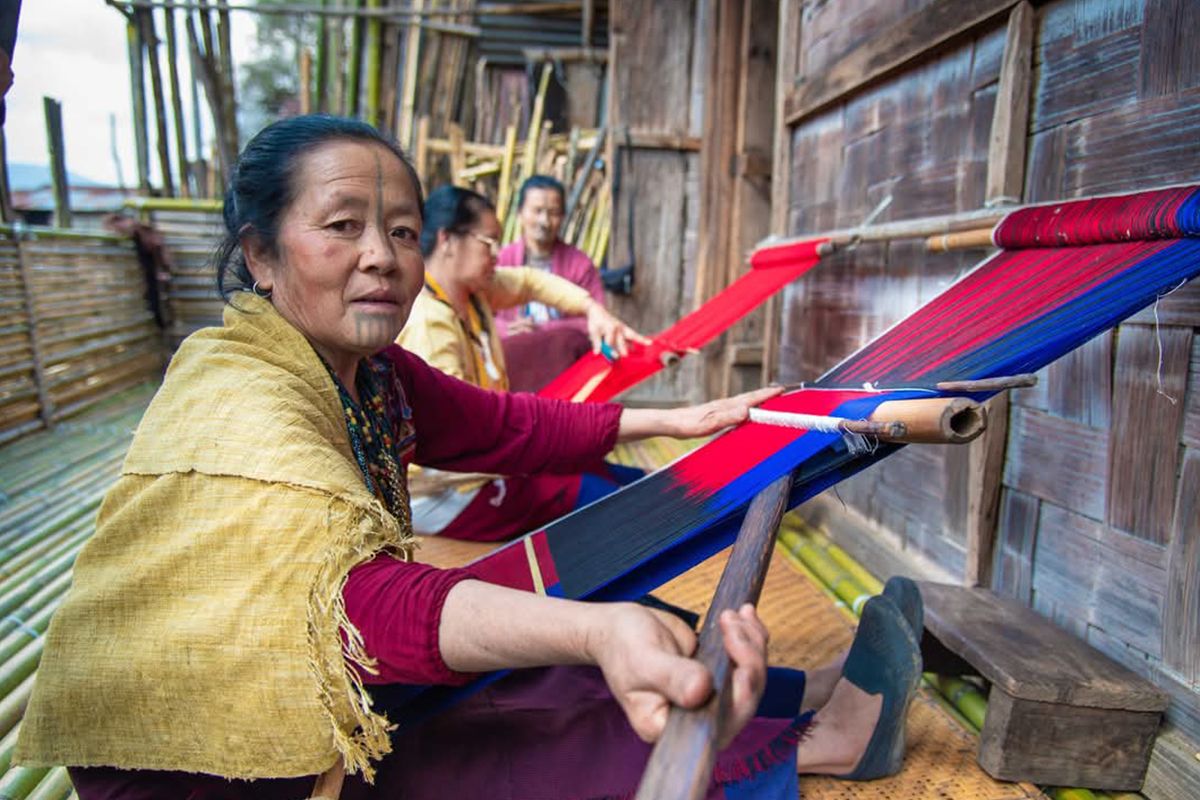
Traditionally, weaving among the Apatani is largely practised by women. Knowledge passes within families, often from mothers and older women to younger generations. Girls learn by observing thread preparation, understanding patterns, and eventually working independently on the loom. This makes weaving an important form of intergenerational knowledge.
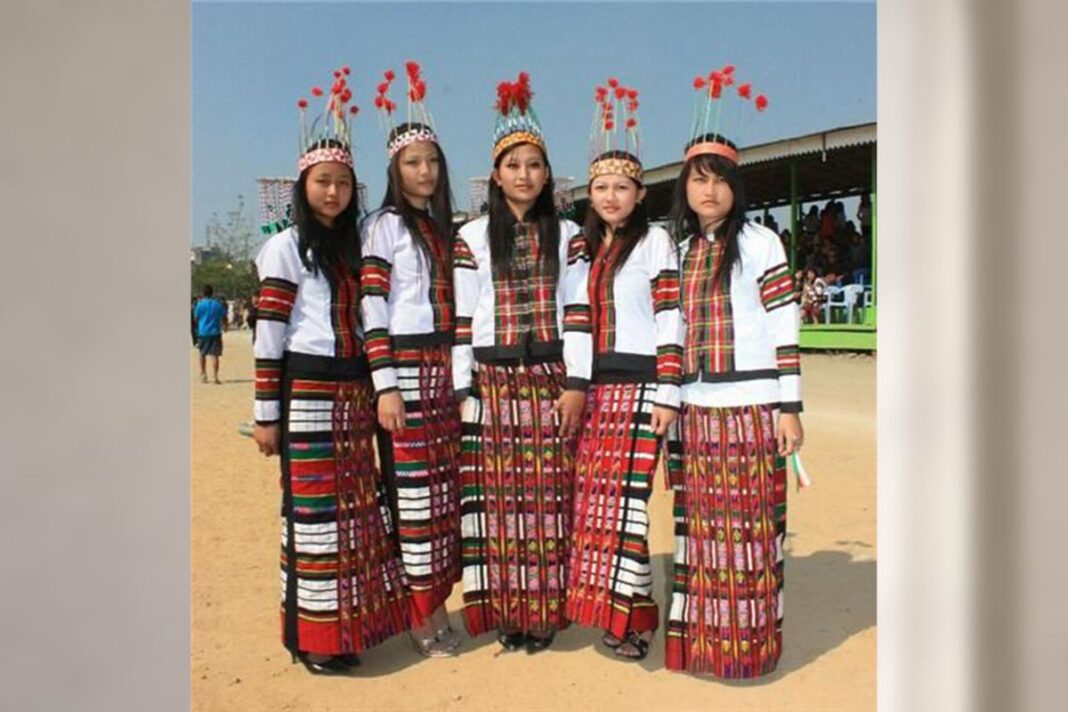
Traditional clothing also becomes especially visible during community celebrations. Festivals such as Dree, associated with agriculture and hopes for a prosperous harvest, and Myoko, connected with friendship, prosperity and community relationships, bring people together in traditional attire.
Handwoven garments therefore carry meanings that extend beyond appearance. They can communicate belonging, cultural continuity and participation in community life.
History Preserved Through Memory
Much of Apatani cultural history has traditionally been transmitted orally rather than through written records. Ritual narratives, songs and stories preserve memories of ancestors, migration, beliefs and social practices.
This oral tradition provides an important context for understanding weaving. Textile knowledge was similarly transmitted through demonstration and memory. A particular pattern did not require a written manual when generations of women knew how to reproduce it through practice. The loom itself became an archive.
From Fibre to Colour
Traditional Apatani textile production relied heavily on materials available within the surrounding environment. Cotton was processed into thread through several stages before weaving could begin.
Natural colouring methods also reflected detailed knowledge of local plants. Bark, leaves, roots and other materials could provide shades used in textiles. Red, orange, yellow and earthy tones appeared alongside darker colours, creating striking contrasts.
Such practices demonstrate the relationship between textile making and ecological knowledge. Artisans needed to understand not merely how to weave but also where materials came from and how they behaved. Today, commercially available yarns and dyes have also become common, reflecting the inevitable evolution of a living craft tradition.
The Back-Strap Loom
One of the most fascinating elements of Apatani weaving is the back-strap loom.
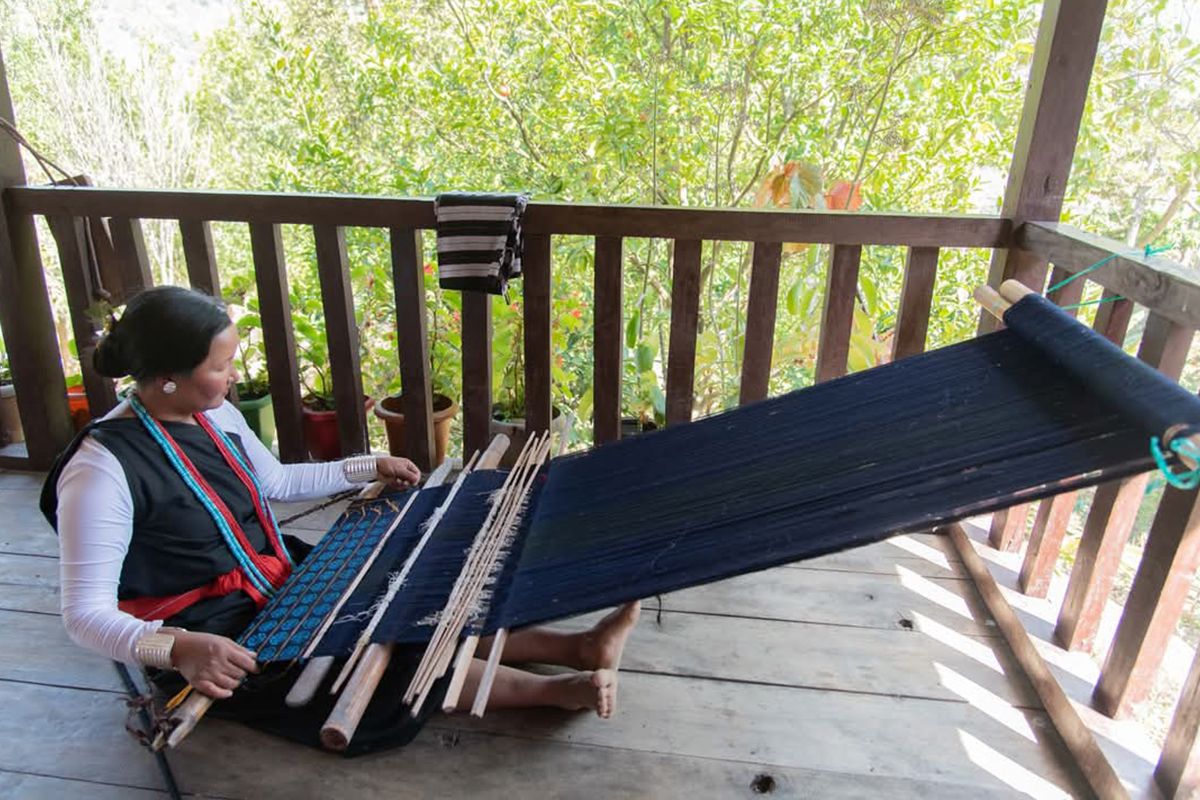
Simple in construction yet remarkably versatile, the loom is traditionally made from wood and bamboo. One end is secured to a fixed support while the other is connected to a strap around the weaver’s body. The weaver controls the tension by shifting her body backwards or forward.
This means weaving becomes a highly physical process. The artisan’s body effectively becomes part of the loom, controlling tension while her hands manipulate threads to construct the textile gradually.
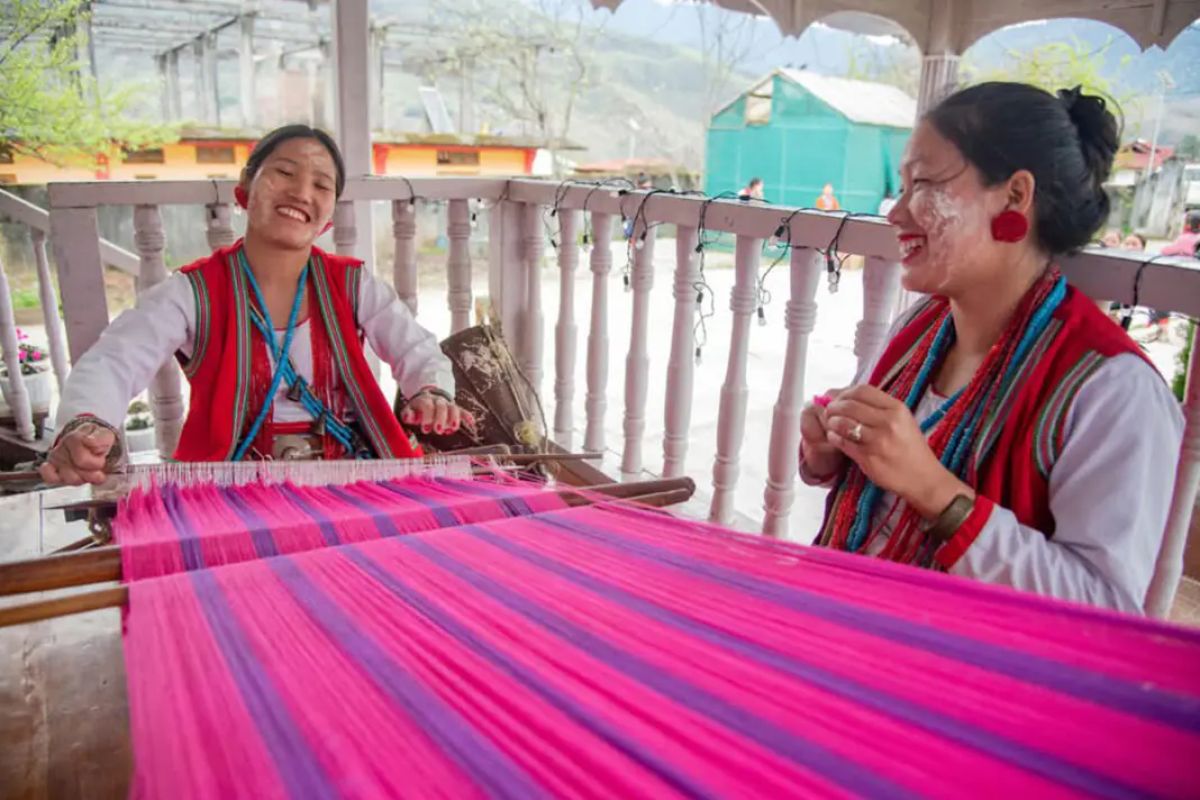
Unlike large mechanical looms, a back-strap loom can be relatively compact and portable. Yet producing consistent patterns requires concentration, coordination and experience.
Patterns With a Distinct Identity
Apatani textiles frequently rely on straight geometric compositions. Stripes of varying widths create visual rhythm, while zigzag patterns introduce movement across the fabric. Combinations of black, red, yellow, blue and orange can provide contrast without overwhelming the underlying geometry.
These designs are not simply decorative additions. Together with weaving techniques, garment forms and colour choices, they contribute to a visual identity immediately associated with the community.
Protecting a Tradition
Like many traditional Indian crafts, Apatani weaving faces modern challenges. Education, migration and changing employment opportunities mean younger generations may have less time or economic incentive to master labour-intensive handloom techniques.
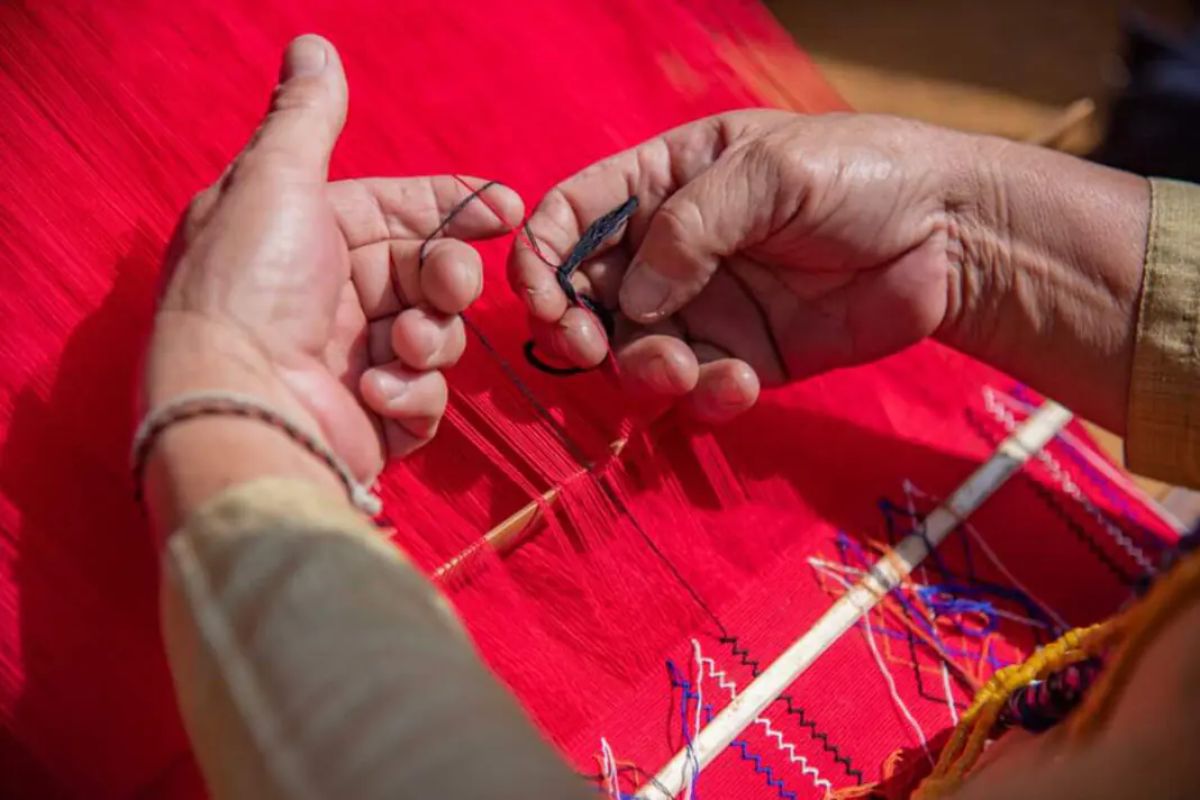
Machine-made textiles can also imitate traditional appearances much faster and more cheaply than handmade production.
Recognition of indigenous crafts, improved market access and geographical identification can therefore play an important role in ensuring artisans receive both visibility and economic value for their knowledge.
But preservation cannot depend on recognition alone. A weaving tradition survives only when people continue learning, practising and finding reasons to pass it forward.
That is what makes Apatani weaving particularly meaningful. Every thread connects an artisan to knowledge inherited from previous generations. Every pattern carries traces of landscape, community and memory.
Apatani weaving is not simply fabric produced in Arunachal Pradesh. It is a living cultural language, one that continues to weave itself, woman by woman and generation by generation.
Read: Maheshwari Sarees: The Royal Weave of Maheshwar
You can connect with DNN24 on Facebook, Twitter, and Instagram and subscribe to our YouTube channel.