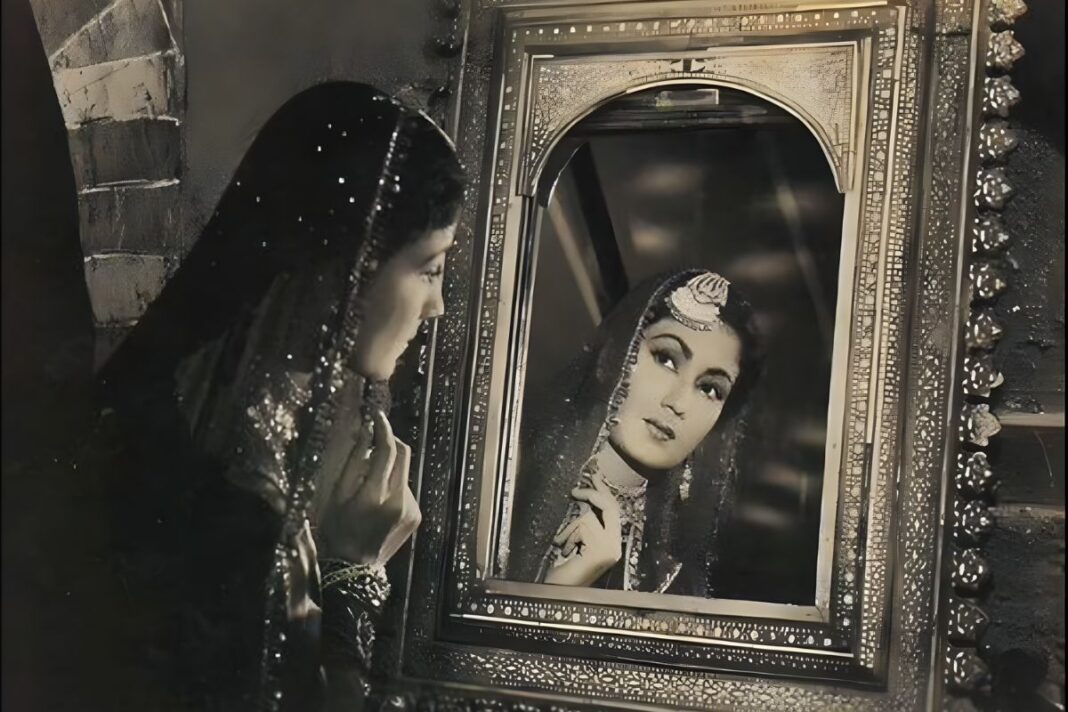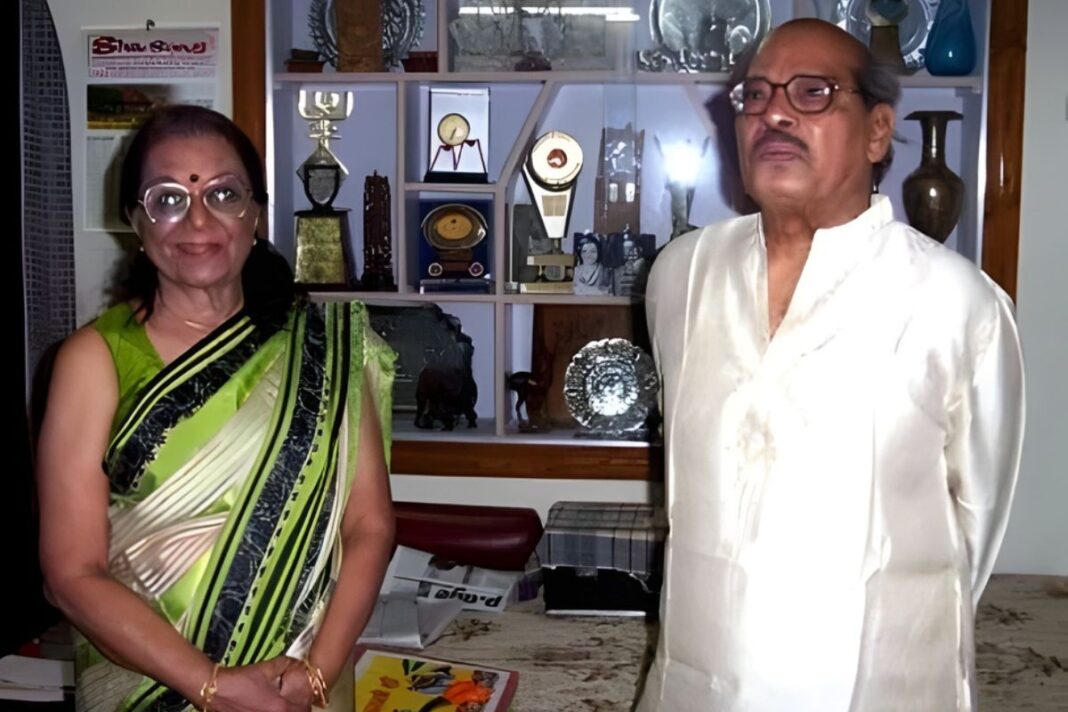

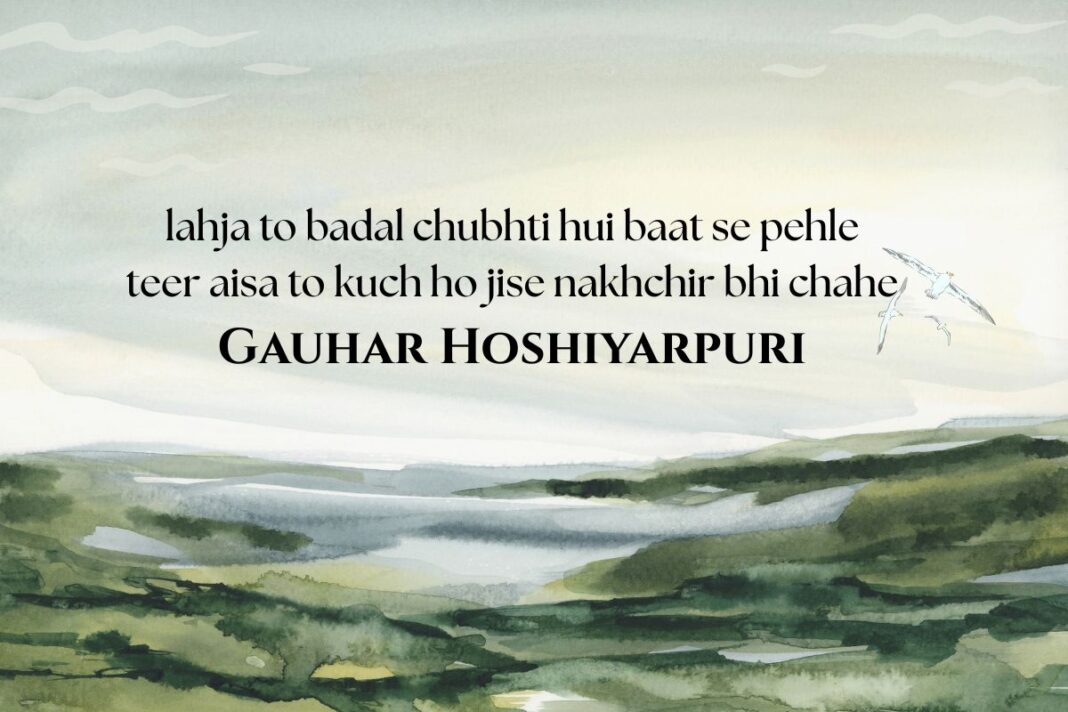

Hoshiarpur sits quietly on the map of Punjab, just another town with narrow lanes and ordinary stories, except that it gave birth to a voice that refuses to fade. Gauhar Hoshiyarpuri, a poet whose life spanned seven decades from 1930 to 2000, left behind words that still breathe on screens and in mehfils across India and Pakistan.
kaise Duba Dub gaya
Gauhar Hoshiyarpuri
Dubne wala Dub gaya
His takhallus carried his hometown like a badge, binding place to poetry so tightly that saying “Hoshiyarpuri” became less about geography and more about a certain gentleness in speech, a particular way of turning pain into beauty without crying about it.
dukhi dilon mein, dukhi sathiyon mein rahte the
Gauhar Hoshiyarpuri
ye aur baat ki hum muskura bhi lete the
You will not find thick biographies or detailed interviews. Gauhar believed the poetry should speak louder than the poet, and so he slipped through the documentation net, leaving only his shers as evidence that he walked this earth. What remains are collections on Urdu platforms, verses passed between lovers of ghazals, and a reputation built not on publicity but on the stubborn survival of lines that people cannot forget. When someone searches for him today, they find mostly silence about the man and thunder about his metaphors, which is probably exactly how he wanted it.
jati rut se pyar karoge
Gauhar Hoshiyarpuri
kar lo baat udhaar karoge
The Philosophy Hidden in a Capsized Boat
One couplet has become Gauhar’s signature across generations: “naav na Doobī dariyā meñ, naav meñ dariyā Doob gayā.” The boat did not drown in the river; instead, the river flooded the ship. At first glance, it sounds like wordplay, a clever reversal. But spend an hour with it and the line cracks open into something enormous.
mata-e-ishq zara aur sarf-e-naz to ho
Gauhar Hoshiyarpuri
tazzi-e-umr ka aaKHir koi jawaz to ho
It speaks of how a single human heart can contain oceans of feeling, how our small vessels of flesh and bone somehow swallow entire rivers of destiny, grief and desire. The image flips our understanding of scale: we think we are tiny things tossed by fate, but Gauhar suggests we are actually vast, capable of drowning reality itself inside our emotions.
hai jo bhi jaza saza ata ho
Gauhar Hoshiyarpuri
hona hai jo aaj barmala ho
Another line takes this drowning further: people rush to the shore only to discover that “kināra Duub gayā,” the bank itself has sunk. The safe place, the refuge, the ground you thought was solid, turns out to be as vulnerable as everything else. This is Gauhar’s poetic signature, gentle catastrophe delivered in a calm voice, the kind of wisdom that does not shout but leaves you staring at walls afterwards.
shairi baat nahin garm-e-suKHan hone ki
Gauhar Hoshiyarpuri
shart hi aur hai shaista-e-fan hone ki
His shayari operates in small spaces where tone matters more than volume, where a shift in lahja can turn an ordinary observation into philosophy. He trusts the reader to do half the work, to bring their own losses and loves to the table and find their reflection in his carefully chosen syllables.
Between Borders and Belonging
Gauhar’s birth year places him at the edge of one of history’s cruellest experiments. Born in 1930, he would have been seventeen when Partition carved Punjab into two bleeding halves, when trains became coffins and rivers carried bodies instead of boats. Hoshiarpur lay in what became India, but the cultural winds blew in every direction. Many poets fled, many stayed, but all carried the wound of a home that could be snatched overnight and yet continue to exist in language, in memory, in the stubborn refusal of Urdu to belong to only one flag or faith.
bandon ka mizaj hum ne dekha
Gauhar Hoshiyarpuri
kya kuchh nahin aaj hum ne dekha
Gauhar never wrote propaganda. His work does not argue for borders or against them. Instead, it inhabits that older world where Urdu was a shared inheritance, a house with many doors, where a Hindu could write a nazm and a Muslim could recite a bhajan, and nobody found it strange.
dil silsila-e-shauq ki tashhir bhi chahe
Gauhar Hoshiyarpuri
zanjir bhi aawaza-e-zanjir bhi chahe
Reading his verses today feels like opening a time capsule from an era when poetry was not about identity politics but about the universal algebra of heartbreak and hope. He stood among a generation of Punjabi Urdu poets who believed in craft over noise, who polished each sher until it could cut glass, who knew that a poem’s job was not to explain but to illuminate.
Flowers That Bloom Only for Greetings
Gauhar had a gift for making the ordinary sacred through attention. In one verse, he says that flowers become meaningful only when they bloom as a greeting for the beloved. The flower does not change, but context transforms it into something precious. This is how he saw the world: full of objects waiting for the right relationship to reveal their true worth. Another sher presents faces, both bright and dull, appearing before us “ujle maile pesh hue… jaise hum the pesh hue,” as if we ourselves are standing there, exposed, neither entirely good nor entirely bad, just human and mixed.
dariya mein ye naw kis taraf hai
Gauhar Hoshiyarpuri
pani ka bahaw kis taraf hai
There is no moralising in these observations, no finger wagging about how we should be better. Gauhar simply holds up a mirror and lets us see our own contradictions without shame. His economy of language is striking. Where some poets pile image upon image, he uses one carefully chosen metaphor and then steps back, trusting that less is enough.
apna dukhDa kahte hain
Gauhar Hoshiyarpuri
aur tujhe kya kahte hain
This restraint gives his work a timeless quality. You can read a Gauhar couplet in 1975 or 2025, and it feels freshly written because it avoids the decorative excess that dates so much poetry. He writes as if he knows his words will outlive him and therefore refuses to waste a single syllable.
The Lesson of Lahja in a Shouting Age
We live now in a time when everyone has a megaphone, and nobody wants to listen. Social media has turned conversation into performance, where being loud matters more than being right, where nuance dies under the weight of hot takes and viral anger. This is precisely the world that makes Gauhar’s emphasis on tone feel revolutionary. He understood that the same truth can heal or wound, depending on how it is delivered; that dignity in speech is not weakness but strength; and that the ability to say hard things gently is a skill worth cultivating.
sar par koi aasman rakh de
Gauhar Hoshiyarpuri
ek munh mein magar zaban rakh de
His image of the boat swallowing the river captures something essential about modern life. Our phones are tiny boats into which we try to fit entire oceans of information, outrage, love and distraction, and sometimes it feels as if reality itself is drowning inside our timelines.
yahan kaun is ke siwa rah gaya
Gauhar Hoshiyarpuri
zamana gaya aaina rah gaya
Gauhar lived before smartphones, but he understood the human tendency to let the container become bigger than the contained, allowing our egos, fears, or desires to grow so large that they swallow the world. His poetry invites a different rhythm: fewer words, more silence, deeper listening, greater care for how we enter another person’s emotional space.
A Quiet Elder in the Digital Library
For a young reader in India today, stumbling upon Gauhar Hoshiyarpuri can feel like discovering a forgotten ancestor in the family attic. He is not the loudest name, not the easiest to Google, not accompanied by documentaries or bestselling biographies. But once you find him, something shifts. Two lines of his shayari can suddenly explain what love feels like, or why loss refuses to leave, or how home exists more in language than in streets, and you realise that fame is not the same as importance.
ek saya-e-sham yaad aaya
Gauhar Hoshiyarpuri
KHushbu ka KHiram yaad aaya
Gauhar chose to let his work walk ahead while he stayed in the shadows. In doing so, he offers a quiet protest against the modern addiction to personal branding, to curated profiles, to the performance of identity. His biography is almost invisible, but his words are everywhere, passed mouth to mouth, screen to screen, generation to generation. This is the paradox of true poets: they disappear so completely into their art that the art becomes immortal.
naav na doobi dariya mein
Gauhar Hoshiyarpuri
naav mein dariya doob gaya
Gauhar Hoshiyarpuri from a small Punjab town proved that you do not need to be loud to be heard, that two perfect lines matter more than a thousand average ones, and that sometimes the river really does drown in the boat, especially when the ship is filled with words that refuse to die.
Also Read:Faheem Gorakhpuri: Gorakhpur Poet Shayari That Still Burns
You can connect with DNN24 on Facebook, Twitter, and Instagram and subscribe to our YouTube channel.