


With just five borrowed rupees, Tassar Khadi Weavers Samitti began a quiet revolution, restoring dignity to rural hands and turning forgotten looms into symbols of self-reliance and collective hope across India.The year was 1998 in Bhagalpur. The Ganges carried stories of loss through narrow lanes where kerosene lamps burned past midnight. Sita Devi sat before her loom, a widow with five children and empty grain jars. Her husband had died in a mill accident three months earlier. Moneylenders arrived at dawn.
“Sell the loom or watch your children starve,” they said.
She borrowed five rupees from her neighbour instead.
With that coin, Sita Devi gathered 12 women from families below the poverty line. Most were Muslim minorities. None had eaten properly in weeks. They had no office, no plan, no promises. Just hands that knew silk and hearts that refused defeat. This meeting gave rise to Tassar Khadi Weavers Samitti, now certified by the Khadi Village Industries Commission under the Ministry of MSME and recognised by the Silk Mark Organisation of the Central Silk Board.
What nobody discusses is the 2004 flood. Water rose to the ceiling. Looms floated away like broken boats. Sita pawned her wedding bangles to rebuild. When women wept, she said something that became their battle cry: “Our threads are our blood.”
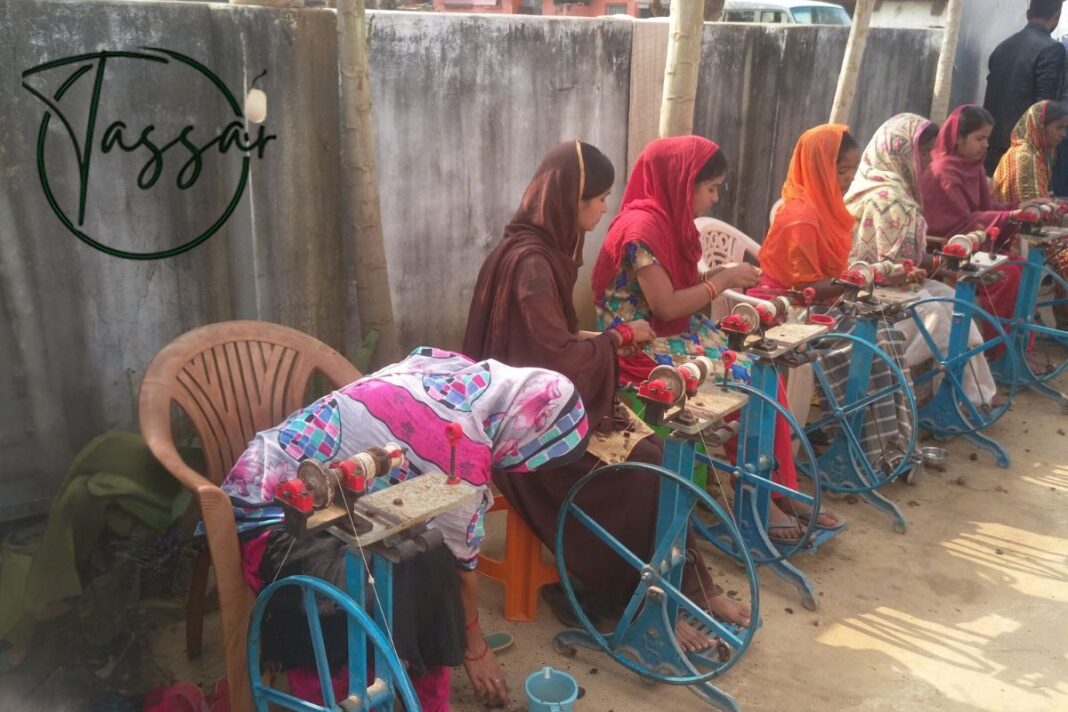
Today, this non-profit organisation stands as the nation’s largest guardian of artisan welfare. It operates through volunteers across India, linking rural poor to markets, health services, and dignity. The women who once hid their poverty now train hundreds in embroidery, appliqué, tie-dye, hand printing, and wall hangings. Their products reach Parliament lobbies, state Bhawans, international exhibitions, and export houses.
Rukhsana lost her teenage son to migration. He left for construction sites in Mumbai and never returned. She joined the samitti with trembling hands, learned tie-dye under lamplight, and sold her first scarf to a Delhi buyer. “My hands healed what my heart could not hold,” she says, folding silk that smells of turmeric and survival.
The Artisans Nobody Photographs
Walk into the Bhagalpur workshop during the monsoon season. The air smells of wet silk and determination. Fatima sits in the corner, her arthritic fingers moving across fabric with impossible grace. She learned embroidery here in 2010, fifteen years after marrying at fourteen and bearing eight children through drought and despair.
Her husband left during the 2012 water crisis. She scavenged metal scraps to feed her family. “My hands were my only home,” she remembers. The samitti taught her appliqué. Her first wall hanging sold to a Patna exporter for five hundred rupees. That money bought rice for three weeks.
In 2018, fire destroyed six months of inventory. She cried for days. Now her designs hang in government buildings. “Threads mended what poverty broke,” she says quietly.
The crafts these women practice carry Bhagalpur’s heritage. Embroidery blooms across tassar khadi like jasmine at midnight. Appliqué pieces together stories of resistance. Tie-dye captures monsoon skies in swirls of indigo. Hand printing uses wooden blocks carved by grandfathers. Wall hangings transform village memories into art that decorates official chambers.
These products travel to resource centres across Bihar, reach exporters in significant cities, and appear at national exhibitions. Each piece carries certification marks that open doors: KVIC approval for khadi authenticity, Silk Mark for quality assurance.
Lakshmi once faced beatings for weaving. Men in her village called it inappropriate work. She continued anyway. Today, she leads training workshops. On a loom scrap, she wrote: “From dust I rise, silk in my sigh.” The samitti keeps that paper framed on the wall.
Floods Cannot Drown Dreams.
Meera was pregnant when the 2015 floods came. Water swallowed her village overnight. She watched her loom float away, holding her belly and whispering promises to her unborn child. Samitti volunteers arrived in boats. They brought her to safety, sheltered her, and taught her hand printing.
She delivered twin daughters that winter. Her first tie-dye design, violent reds and oranges, sold at a Lucknow exhibition for more than she had earned in a year. “Floods took my home. The samitti gave me wings,” she says, surrounded by silk bolts in colours that shout defiance.
The organisation targets BPL communities, particularly minority artisans who face layered disadvantages. Training camps transform trembling beginners into skilled crafters. Awareness programs fight cultural erosion and preserve techniques that factories cannot replicate. Health linkages ensure women receive medical care previously beyond their reach.
During the COVID lockdowns, Gulshan faced starvation. She has polio. Her twisted legs made travel impossible. The samitti conducted virtual workshops via phone, teaching wall-hanging techniques through patient descriptions. Her first online sale went to a buyer in Kolkata. She wrote in her diary: “My twisted legs, straight-threaded dreams.”
The 2020 pandemic cancelled exhibitions nationwide. The samitti pivoted to local haats and weekly markets. When patriarchy mocked their work as women’s whims, they responded with sold-out collections. Sita Devi’s journal, discovered after she died in 2022, contained this line: “Each knot is a prayer against poverty.”
Volunteers across India amplify this mission. They preserve Bhagalpur’s silk traditions against industrial homogenisation. They connect artisans to buyers who value handmade authenticity. They document techniques before they disappear.
What Five Hundred Rupees Can Purchase
Products from Tassar Khadi Weavers Samitti adorn Rashtrapati Bhavan. State assemblies purchase their wall hangings. International buyers order embroidered pieces for galleries abroad. Bihar resource networks buy in bulk, creating sustainable income cycles.
Behind each triumph sits an untold story. Ayesha battled cancer in 2019. Chemotherapy made her hands shake. She could barely hold the thread. The samitti funded her treatment through emergency sales of her previous work. During recovery, she created a tie-dye phoenix design. It was sold to a Mumbai collector for enough to cover six months of medicine. “Death knocked. I knotted it away,” she says, laughing through tears that never quite stop.
The organisation runs regular training programs. Fifty widows learn embroidery in summer camps. Youth attend printing workshops that teach marketable skills. Awareness drives education about heritage preservation and prevents illegal silk poaching that undercuts artisan livelihoods.
Khadija is seventy. She lost vision in one eye from decades of close work under poor light. The samitti taught her to create wall hangings by touch alone. Her first sale to a Delhi Bhawan paid for a family celebration. She wrote on a scrap of paper: “Eyes fade, but heart sees sales.”
The 2008 riots displaced Muslim families across Bihar. The samitti rebuilt looms as bridges between communities. When market crashes threatened income, KVIC awards and recognition opened new doors. The organisation grew into the most prominent NGO serving weavers, spinners, and artisans in the country.
Sita Devi died before seeing the full scope of what she built. Her final words, recorded by a volunteer: “Our samitti is India’s unsung saree.”
Today, thousands of women work through the network she started with five borrowed rupees. They transform poverty into patterns, pain into products that travel the world. Their lives become poems stitched into silk, stories printed onto fabric that refuses to forget.
In Bhagalpur, where the Ganges still whispers to working hands, women gather at looms before dawn. They tie threads that connect hunger to hope, desperation to dignity. Each knot proves that one woman’s refusal to surrender can weave endless new beginnings.
Also Read:Saheli Women’s Revolution: When Needles Sparked Strength and Change
You can connect with DNN24 on Facebook, Twitter, and Instagram and subscribe to our YouTube channel.