

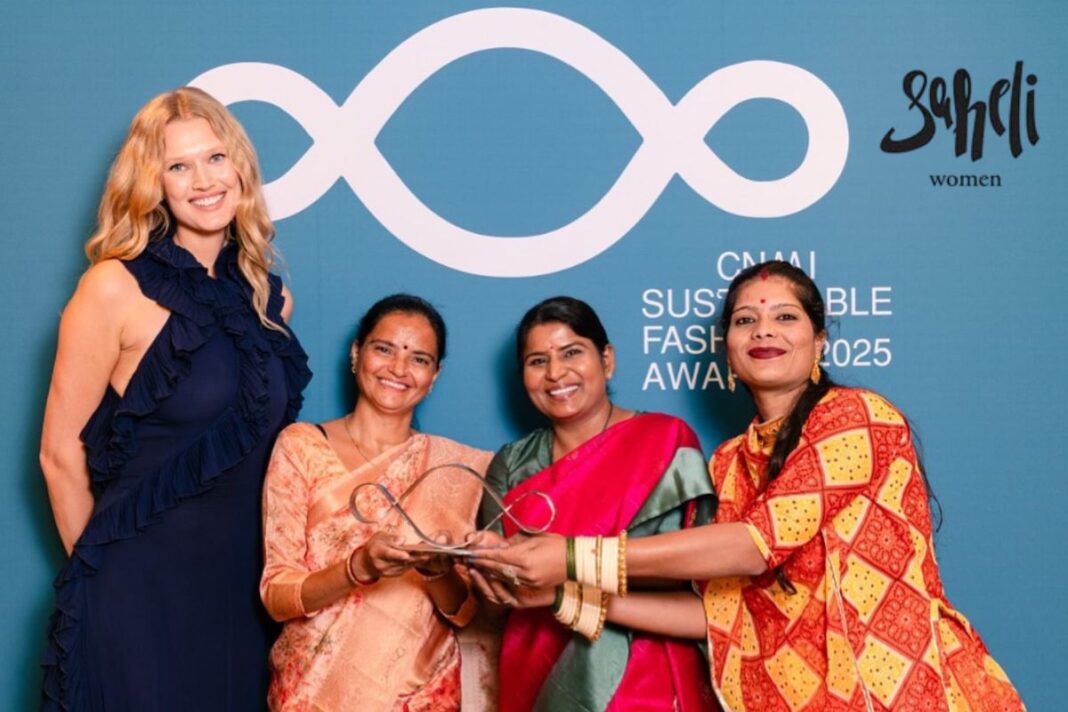

Madhu Vaishnav arrived in Bhikamkor village in 2015 for what should have been an ordinary wedding celebration. The Rajasthani sun beat down on narrow lanes filled with the scent of marigolds and sweets. But something caught her attention beyond the festivities. When needles became tools of resistance, Saheli Women stitched dignity, income, and courage together, turning everyday skills into a quiet revolution that reshaped lives, livelihoods, and self-belief across communities.
The women of Bhikamkor carried themselves with a peculiar contradiction. Their hands bore the marks of relentless labour, yet their eyes held an unmistakable brightness. They laughed freely despite living on the thinnest margins. One widow shared her story quietly, explaining how she had kept her dowry sewing machine running for years while her own dreams remained unfed.
That encounter split Madhu’s world in two. She returned home and threw herself into university courses on sustainable development. Books and theories filled her mind, but they felt hollow without action. So she went back to Bhikamkor, this time armed with workshops on health and hygiene.
The women absorbed every lesson with hunger. Yet hunger itself remained the problem. Knowledge could not fill empty stomachs. Jobs did not exist. Money stayed stubbornly absent.
Then Madhu noticed what had been there all along. Nearly every household owned a sewing machine, gathering dust under layers of tradition and restriction. She saw potential where others saw obstacles. Her solution was not to train these women but to liberate them.
Under her nonprofit organisation, IPHD, Saheli Women was founded. The women picked up their needles with a new purpose, transforming from invisible labourers into skilled artisans. Doubt filled many nights. Husbands frowned. Neighbours whispered. But Madhu’s conviction spread like wildfire.
Today, Saheli Women stands as a beacon of ethical fashion, placing worker welfare above profit margins. Their sustainable practices feed families and restore dignity. This was never charity. It was a revolution born of an observation on a wedding day.
When Villages Became Battlegrounds
Rural Rajasthan does not easily surrender its traditions. Breaking social norms there requires courage that most people cannot fathom.
Five women completed Madhu’s first training programme in 2016. Rukmini, Sita, Geeta, Kamla, and Priya became pioneers in a movement they barely understood yet. Consider Priya’s path. Married at sixteen, she had buried her love for stitching beneath layers of expected obedience. When she announced her intention to work, her husband erupted in anger. The neighbours would talk. The family name would suffer.
Village gossip turned vicious. Accusations flew about homes being destroyed and traditions being trampled. Families wavered under the weight of potential shame.
But these five fought battles that nobody saw. They rose before dawn to stitch by lantern light. They absorbed insults while balancing household duties with their newfound work. They pushed through when orders disappeared during monsoon floods. They mourned when broken machines seemed to break their hopes along with them.
Madhu wept alongside them during those dark periods. She had her own struggles, having left comfort for dusty village paths and faced funders who dismissed village women as incapable.
Yet transformation came through unexpected allies. Priya’s husband changed his stance when her first payment of three thousand rupees purchased their son’s school textbooks. Other husbands followed. As brand partnerships grew, monthly salaries climbed to twelve to seventeen thousand rupees.
Now, villages compete to host Saheli studios. The women who once faced scorn now command respect. Interviews with these artisans often dissolve into tears as they recall those brutal early days. Madhu puts it simply: “We broke chains without snapping family bonds.”
These women rewrote the rules through quiet rebellion. Every stitch became an act of resistance. Every garment proved that strength can bloom even in sandstorms.
Victories Measured in Vision and Tears
Saheli’s trajectory gleams with achievement. Madhu Vaishnav now serves as an advisor to the UN Conscious Fashion and Lifestyle Network. She speaks at events like the Fashion Impact Fund in New York City, representing a journey from rural fields to global platforms.
But the untold stories matter more. Meera’s eyesight deteriorated from years of fine stitching work. She squinted through pain, hiding her struggle to keep feeding five children. When Saheli organised an optician’s clinic, 80% of workers received free glasses. Meera’s reaction was immediate and raw: “I see my children’s faces clearly now.”
The organisation expanded to employ over one hundred women through comprehensive skills programmes. FCRA registration opened doors to foreign funding. Maternity leave policies changed lives. New mothers could stitch cradles while receiving paid rest.
Partnerships formed with ikat, silk, and cotton weavers. Bhikamkor women learned handloom techniques that connected them to India’s textile heritage. International collaborations produced sustainable garments that married fairness with quality.
Yet darkness never disappeared entirely. COVID lockdowns shuttered studios and erased orders overnight. Women like Kamla faced crushing debt and whispered fears about returning to begging. Madhu pawned her jewellery to meet salary obligations.
They survived by sharing tea and transforming struggles into songs. These statistics represent heartbeats. These numbers are women who converted dowry machines into sources of dignity.
The Thread That Binds Tomorrow
Saheli Women continues to grow, its story pulsing with raw inspiration. From five pioneers earning pocket change to over one hundred artisans securing steady incomes, the transformation speaks to collective determination.
Madhu’s vision of ethical fashion sustaining families bloomed despite cultural resistance, partnership failures, and lean years when machines sat idle. One artisan, Sunita, shared her diary entries during interviews. They revealed her lowest point: her husband’s illness drained all savings, forcing her to stitch through feverish nights with a single vow: “My hands will heal us.” Today, she trains recruits while her salary covers his medical care and a new home.
Challenges persist. Climate disruptions affect cotton supplies. Young people chase city opportunities. But unity continues to triumph. Relationships with artisan communities across India have produced ecological garments that appear on international runways.
Madhu reflects on the journey with evident pride: “These women are not workers. They are queens reclaiming thrones.”
In a world addicted to fast fashion, Saheli deliberately slows time to preserve dignity. Villages now form queues requesting studios. One spark has indeed ignited forests.
This story belongs to India’s unsung sisters who stitch tomorrow brighter with resilient needles. Their struggles mirror universal challenges. Their victories fuel collective dreams. The fabric of change needs many hands. The revolution continues, one careful stitch at a time.
Also Read:Interview with Kajal Srivastava: Kalaripayattu and Social Change Champion
You can connect with DNN24 on Facebook, Twitter, and Instagram and subscribe to our YouTube channel.