

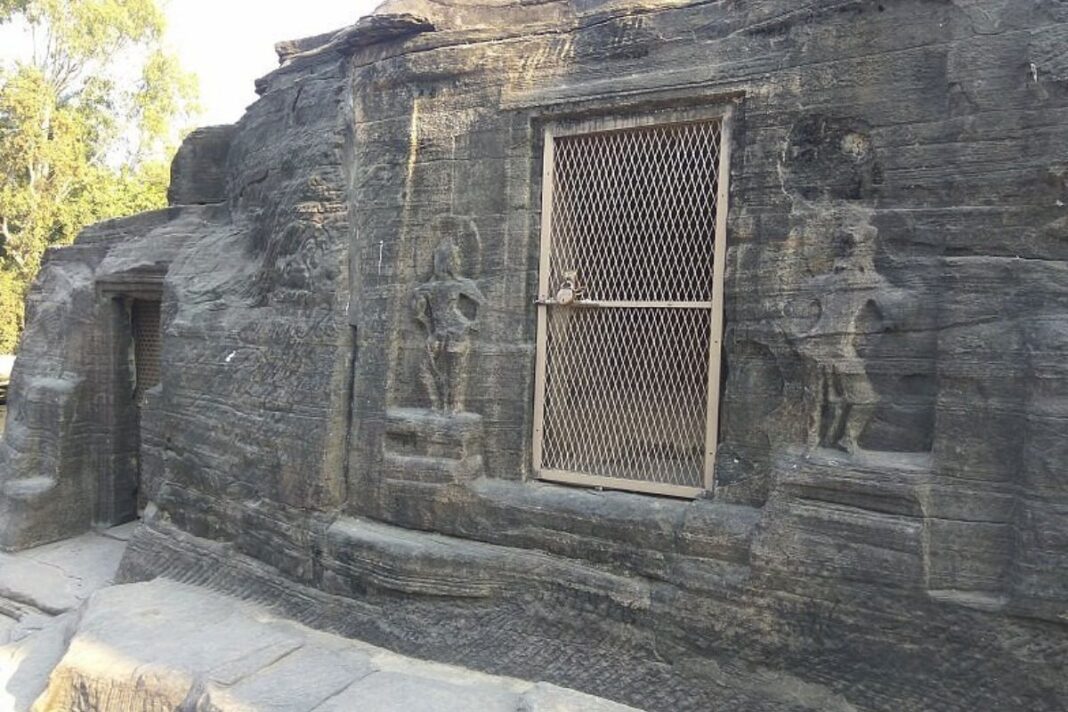

Stand before a hill that holds secrets from 1,600 years ago, where rocks tell stories of gods and kings that still speak today. Udaygiri Caves near Vidisha in Madhya Pradesh house 20 rock-cut chambers carved during the golden Gupta period around 400 CE, and what you find inside will change how you see ancient India forever.
Udaygiri Caves: The Birth of Sacred Stone
A sandstone ridge rises beside the Bes River, once the chosen retreat of Vidisha’s royal families, now home to divine stories frozen in rock. During the late 4th century, the great Gupta king Chandragupta II, known in legends as Vikramaditya, selected this location for a sacred project that would outlast his empire. He called it Udayagiri, meaning Sunrise Hill, though some scholars link it to Vishnu’s foot-hill. The choice was deliberate and astronomically significant.

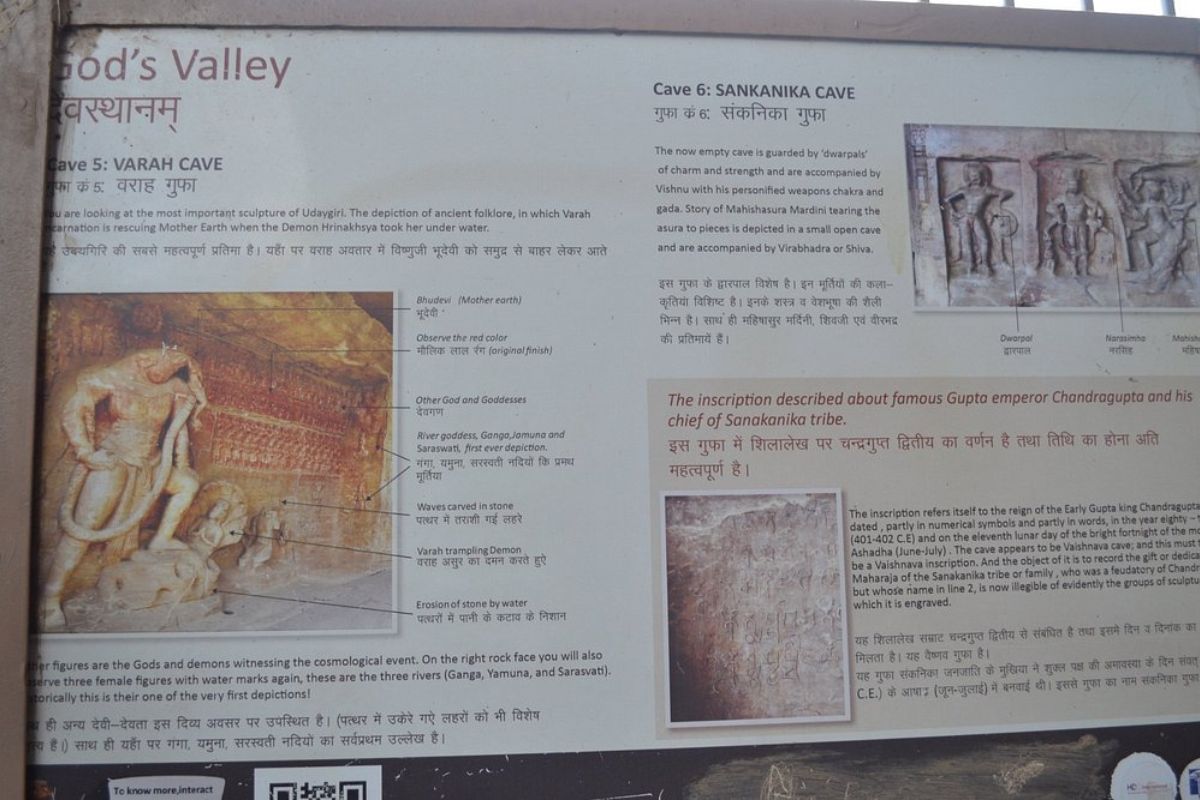
The Tropic of Cancer passed directly overhead during that era, making the summer solstice sun blaze straight down at noon, creating a cosmic connection between heaven and earth that the king wanted captured in stone.Between the 3rd and 5th centuries CE, skilled workers transformed raw rock into twenty magnificent caves. These became the earliest surviving Hindu temples with fully developed sculptural programs. Cave 6 contains a Sanskrit inscription from the Gupta year 82, corresponding to 401 CE, praising Chandragupta with his minister Virasena mentioned by name.
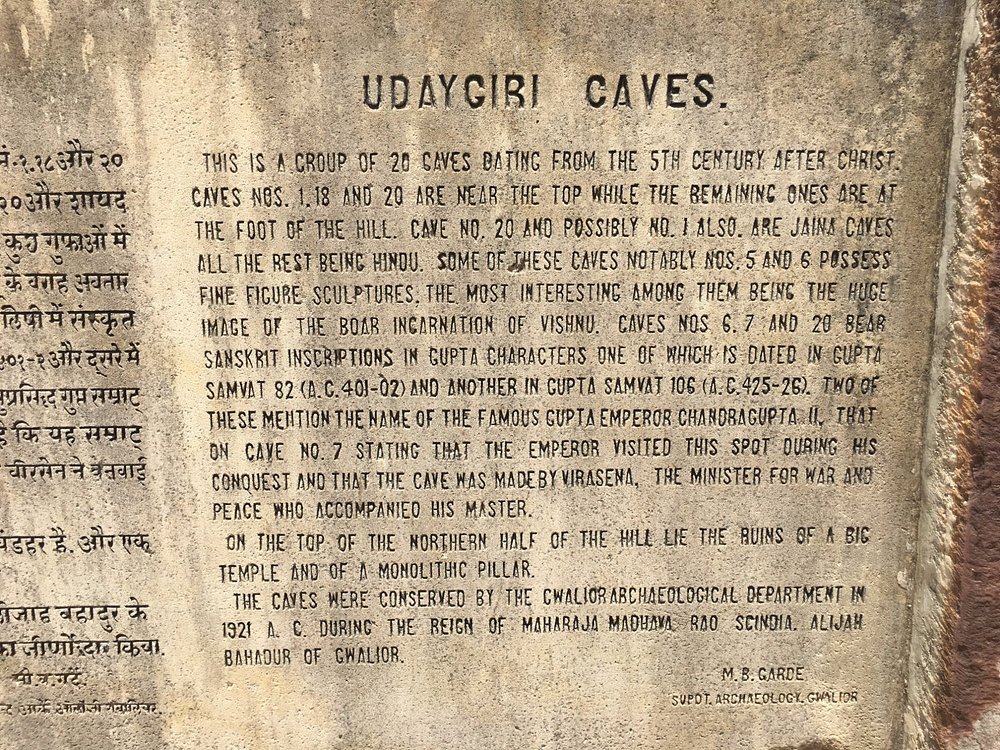
This proves that royal visits happened while construction was still underway. The nearby Heliodorus pillar from the 2nd century BCE suggests that Bhagavata worship had roots here long before the Guptas arrived. Ancient Sankha Lipi inscriptions predate the caves themselves, showing that this was a center of learned activity well before the first chisel struck stone. The classical poet Kalidasa makes a subtle reference in his Meghaduta to cave dwellings on Nicaih hill near Vidisha, likely describing these very structures as picnic spots for the urban elite.
Udaygiri Caves: Royal Vision Carved in Rock
The rhythm of chisels echoed under Chandragupta II’s watchful eye as his empire stretched across northern India, yet his devotion remained fixed on Vishnu. Cave 5 houses the masterpiece that defines Udaygiri: a colossal Varaha avatar standing seventeen feet tall. Vishnu appears as a mighty boar, lifting the earth goddess Bhudevi from the cosmic floods, her garment clinging to his tusk, as the gods gather in celebration. Brahma sits on a lotus, Shiva rides his bull Nandi, and sages hold their prayer beads. Below this divine scene, the Gupta minister Virasena and the king himself appear in stone, forever bowing in devotion.
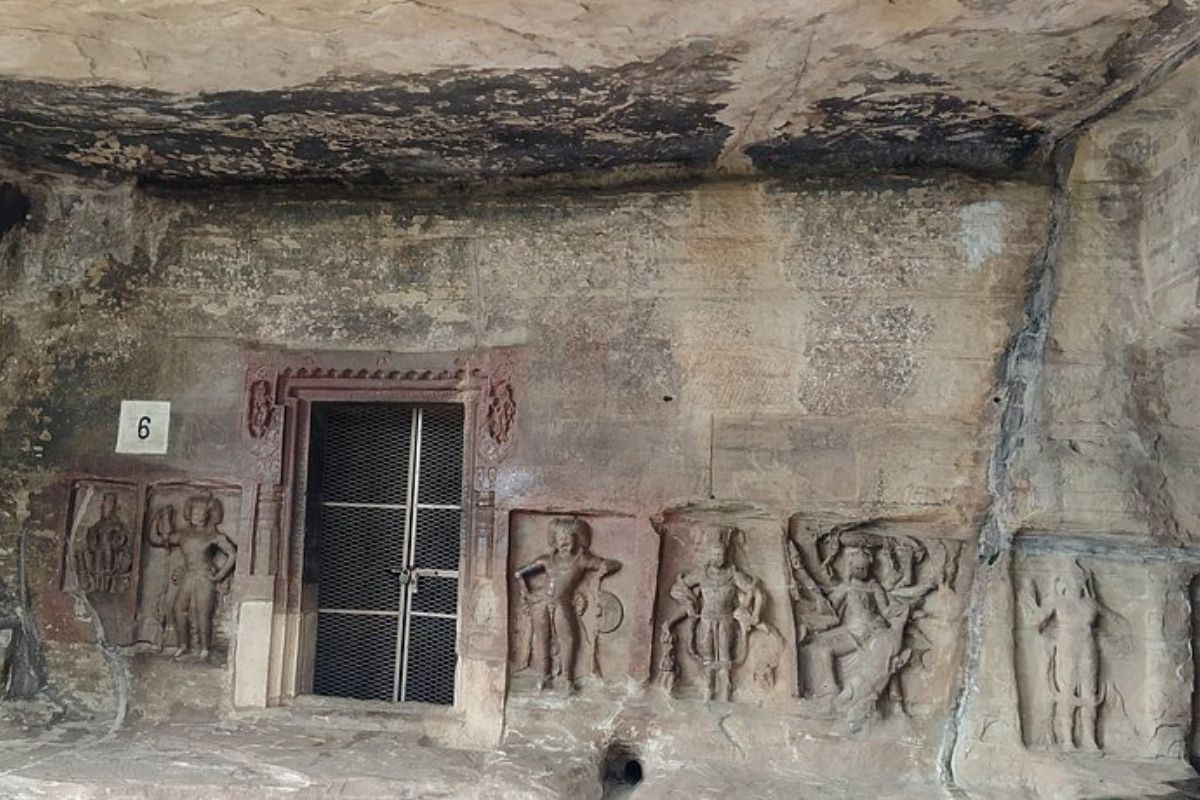
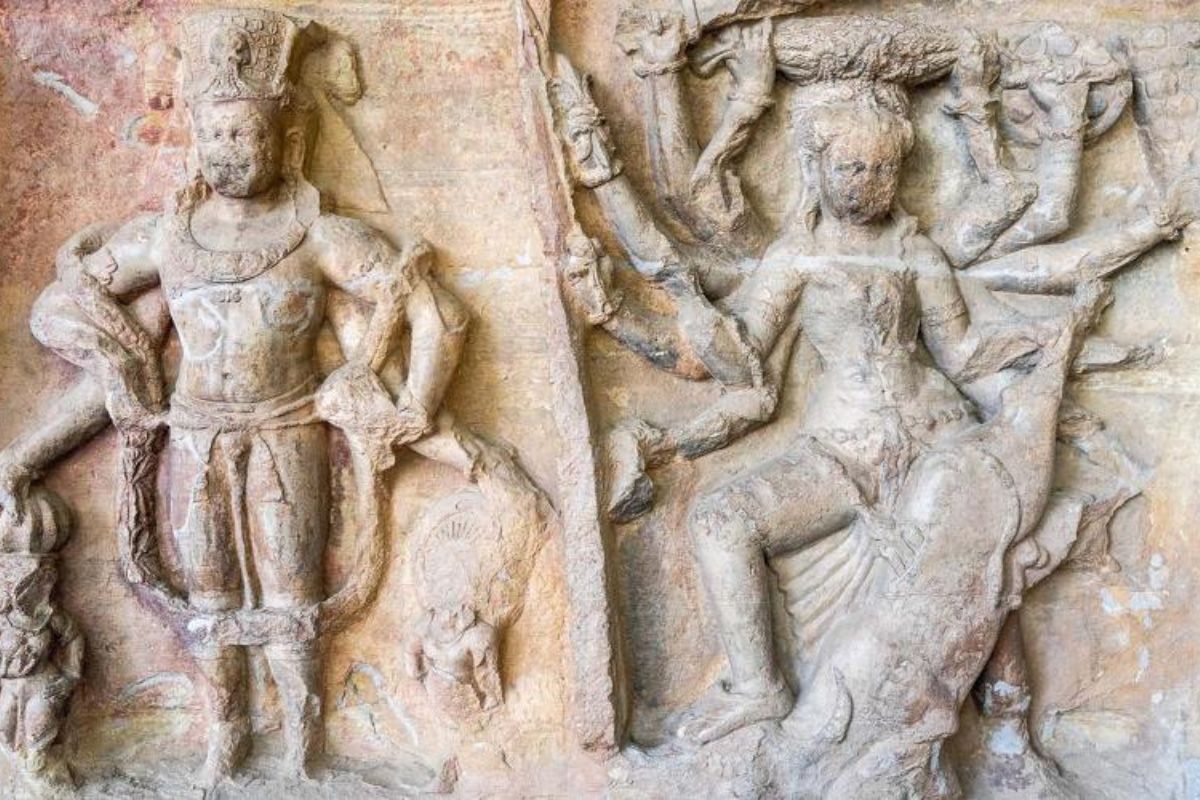
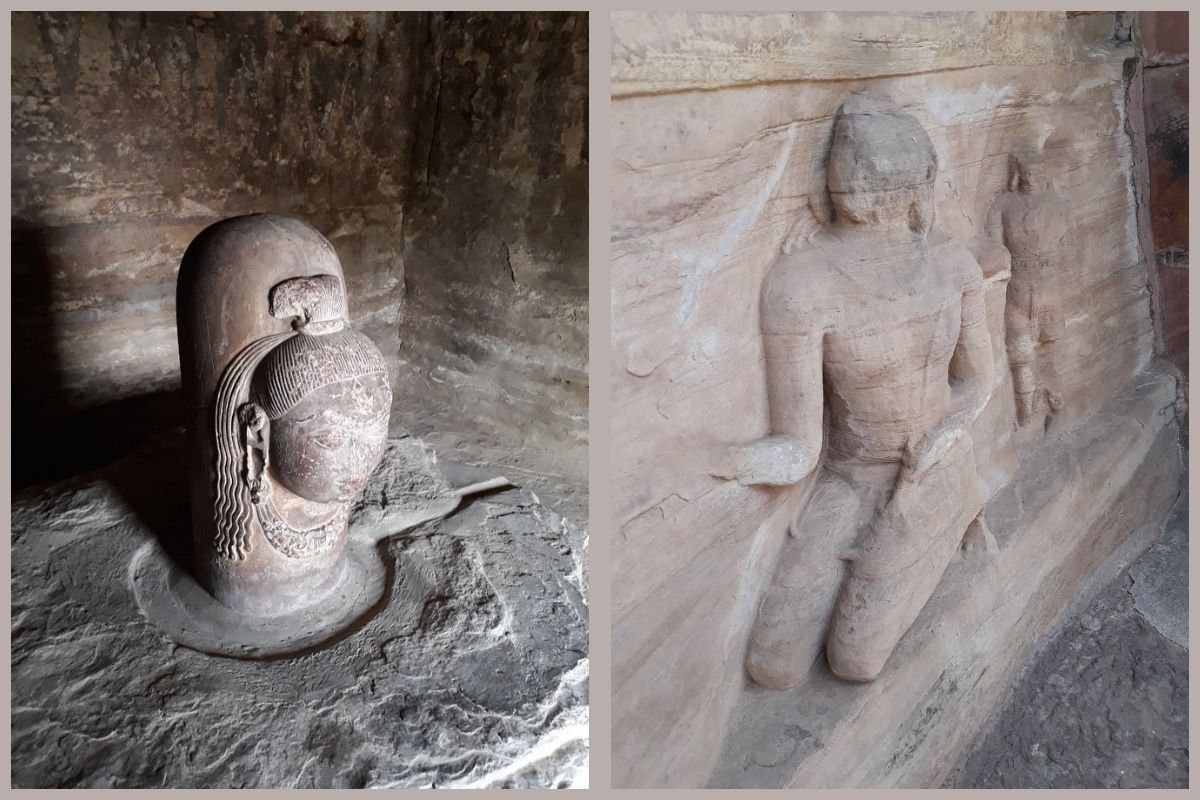
Cave 6 features a stunning T-shaped doorway depicting Durga spearing the buffalo demon and a pot-bellied Ganesha, the earliest confirmed images of his worship, established by 401 CE. The matrikas, fierce mother goddesses, guard Shaiva lingas in Cave 4, while the lintel shows a harpist frozen mid-performance. Cave 19 is the grandest structure, with four pillars adorned with winged creatures. Above its entrance, the churning of the cosmic ocean unfolds with Ganga and Yamuna river goddesses flanking the sides, while two lingas inside pulse with Shiva’s presence.
Cave 3 displays a muscular Skanda, Cave 7 shows eight matrikas wielding various weapons, and Cave 12 features Narasimha in his fierce lion-man form. The lone Jain structure, Cave 20, dates to 425 CE under Kumaragupta I and shelters Parsvanatha under a serpent hood with ceremonial umbrellas over other Jinas. All caves follow square plans, with hints of mandapas in the ruins, and ceilings decorated with lotus patterns, representing pure Gupta architectural poetry that blended functional design with transcendent artistry.
Udaygiri Caves: Stories That Never Sleep
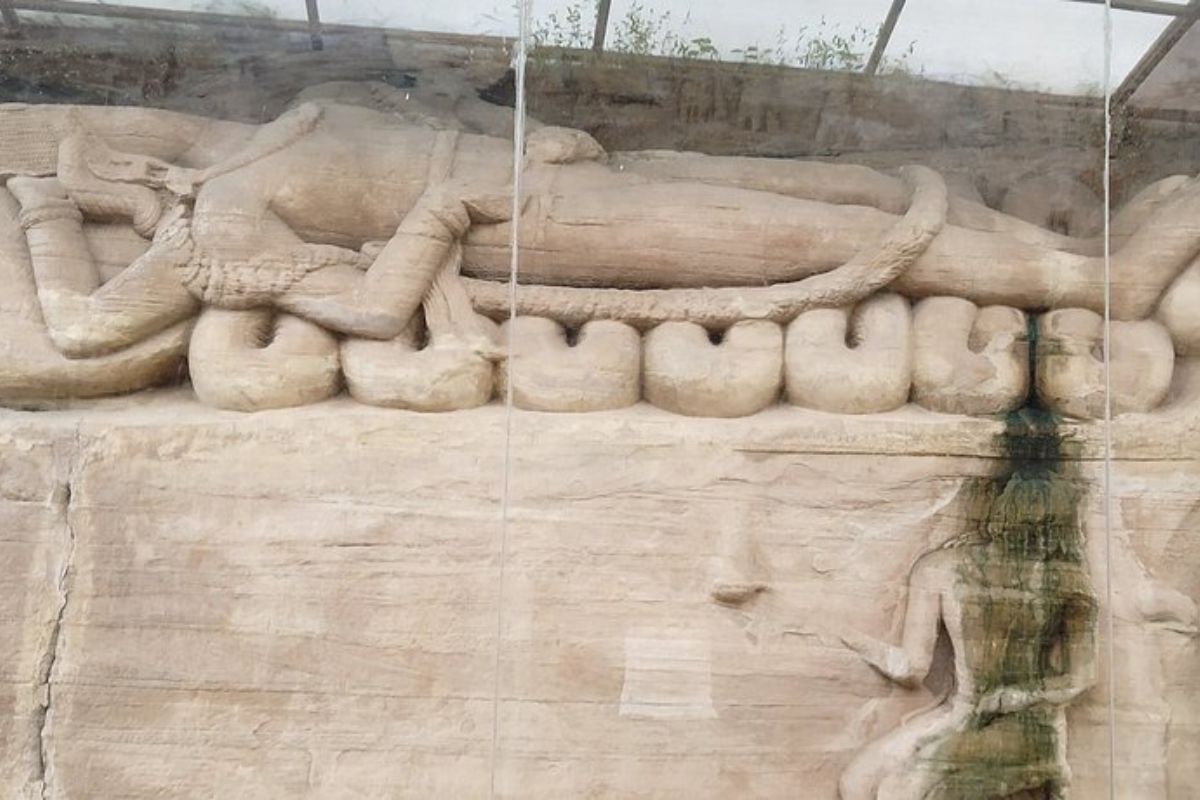
Enter the niche of Cave 5, and the Varaha sculpture overwhelms with its muscled power. The tiny Bhudevi perches on the tusk, surrounded by the twelve Adityas with their solar halos, fiery Agni, airy Vayu, and the Rudras in their primal forms. The entire Hindu divine court gathers to witness Dharma’s victory over Chaos. This scene draws on the Taittiriya Samhita and other Vedic texts, where the boar rescue tale becomes a monumental political statement, with the king serving as the avatar’s earthly representative. Cave 13 shows Anantasayana Vishnu reclining on the serpent’s coils, measuring 3.6 meters of serene divinity, with Chandragupta kneeling below in namaste pose, a personal surrender to cosmic rest.

Ganesha appears throughout the complex: the sweet-loving version in Cave 6, the four-armed form with a banana bearer in Cave 18, the axe-wielding warrior in Cave 20. The matrikas multiply across Caves 4, 6, and 7, showing fierce Shakti with blades, marking early acceptance within the Shaiva-Vaishnava blend. Cave 19’s pillars display horned flying figures with capitals as intricate as palace architecture, showing the churning ocean with gods and demons twisting the serpent Vasuki like a rope. Door guardians, river maidens, and members of Parvati’s family appear nearby, creating a complete divine family in stone.
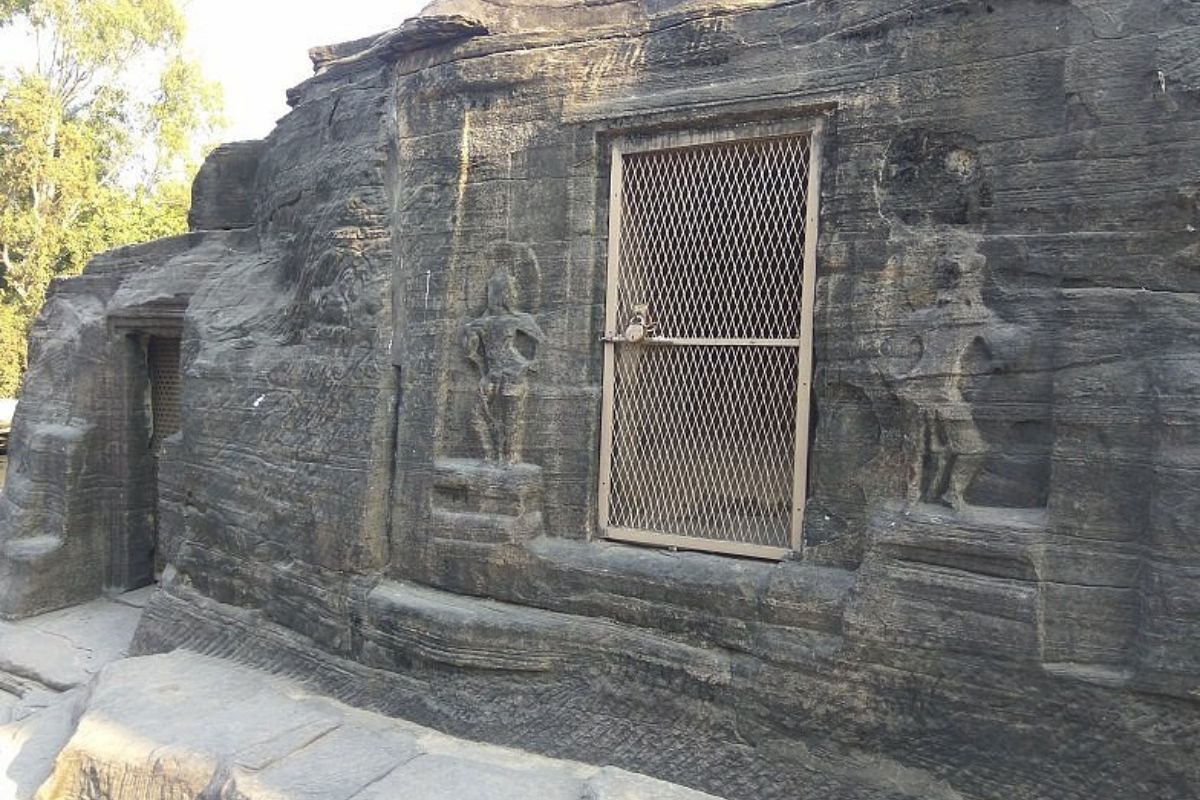
Smaller caves like 9 through 11 contain Vishnu fragments; Cave 17 shows another Durga slaying scene; and geometric lotus patterns on the ceilings mirror mandala meditation designs. These sculptures breathe with life. The Varaha’s heroism mirrors the king’s victories over the Shakas, while Narasimha’s roar echoes Gupta military valor. Rock art predating the caves, along with water tanks and fort remains, whispers of settlement life stretching back to the 6th century BCE when Vidisha was a thriving suburb.
Udaygiri Caves: Voices Across Time
After 401 CE, pilgrims continued visiting for centuries. A 1037 CE inscription in Nagari script records a donation by someone named Kanha in Cave 19 for Vishnu worship. Another from 1179 CE mentions Damodara’s gift to the temple. Land grants supported religious ceremonies until the 12th century, when invasions began stripping away treasures. The famous Delhi Iron Pillar likely originated at Udayagiri; its Brahmi inscription praising Vishnu aligns with the themes of Cave 6’s Chandra hymns. Some historians believe the Iltutmish armies hauled it away during their raids. British archaeologist Alexander Cunningham rediscovered the site in the 1870s, though he mistakenly searched for Buddhist structures, digging beneath the Lion Capital platform for stupas that never existed.
Bhandarkar excavated extensively in the 1910s but found nothing to support Buddhist theories. The Hindu and Jain roots remained firm, with evidence of Saura sun worship predating any Buddhist influence. Excavations in the 1960s by Khare revealed mound structures suggesting a 6th-century BCE town. Modern scholarship in the 2000s by Willis confirms there was no religious conversion here, just a pure Hindu heartland with a tolerant Jain presence. Artifacts now rest at the Gwalior Museum, while Sanchi houses the Sahasralinga collection.

Kalidasa’s poetic references endure as the site’s sacred geography pulses through medieval records. The Gupta approach of keeping Vishnu paramount while treating Shiva and Durga as equals demonstrates the royal policy of henotheistic balance. Some scholars see clear political messaging in the Varaha panel, added after military victories, with the Vikramaditya title claimed through stone rather than just coins. From ancient Vedic boar myths to Gupta imperial boar sculptures, Udaygiri weaves Dharma’s thread through generations, offering justice tales that transcend time.
Udaygiri Caves: A Heritage That Breathes Today
Climb Udaygiri today and find the Archaeological Survey of India protecting these caves on the northeast hill faces, open from dawn to dusk as the Bes River breeze carries ancient whispers. After 2025, Madhya Pradesh tourism will strengthen promotion of Sanchi, just 60 kilometers from Bhopal, with easy highway access, yet wild enough to stir the soul.
The Varaha greets modern visitors with lessons about rescuing the earth that resonate powerfully during our climate crisis, while the Gupta water management systems demonstrate environmental wisdom worth studying. Contemporary eyes recognize a model of tolerance where Hindu and Jain traditions coexisted peacefully, offering lessons for modern religious divisions. Chandragupta’s humble bow before the divine inspires today’s leaders to dive deep into duty and lift nations from Chaos.
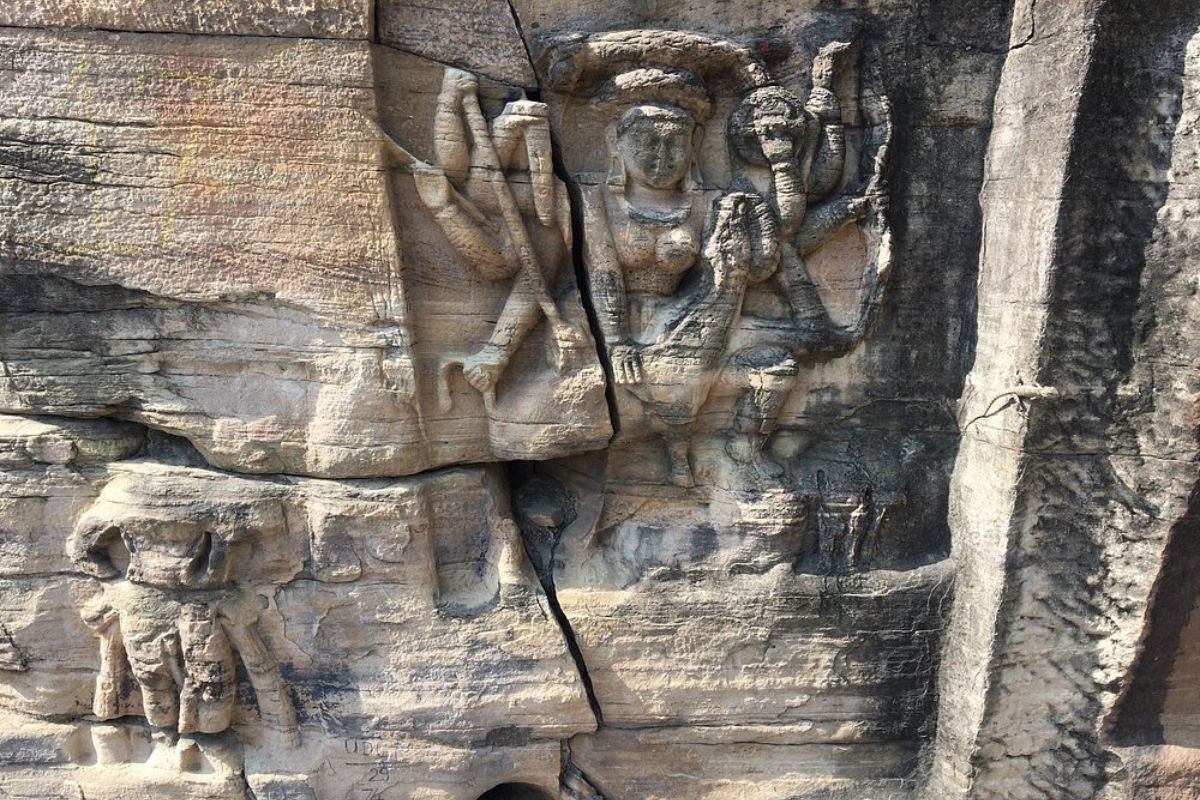
Young people trek here for photographs while elders meditate on the matrikas’ strength. Schools weave Udaygiri into the curriculum as a living heritage rather than dead history. Conservation work continues as the ASI repairs weathering damage while unexplored mounds await excavation that could reveal connections to ancient Vidisha as a significant urban center. Future possibilities include amphitheaters similar to those in Odisha, electric vehicle paths, and medicinal herb gardens that could transform Udaygiri into an ecological heritage hub.
The sunrise solstice calculations performed here lay the foundation for calendar revival projects, while astronomy enthusiasts chart the stars using techniques the ancient kings employed. In times troubled by corruption and confusion, the Gupta purity shines through art created without agenda and devotion expressed without pretense. Visit and touch the trace of Varaha’s tusk to feel the earth-lifting thrill yourself. Udaygiri calls across centuries not as a dead relic but as a living memory, urging us to reclaim Dharma’s charge against modern challenges. It’s your turn to carve this story into your heart.
Also Read: Eklakhi Mausoleum: Pandua’s One Lakh Rupee Royal Secret
You can connect with DNN24 on Facebook, Twitter, and Instagram and subscribe to our YouTube channel.