
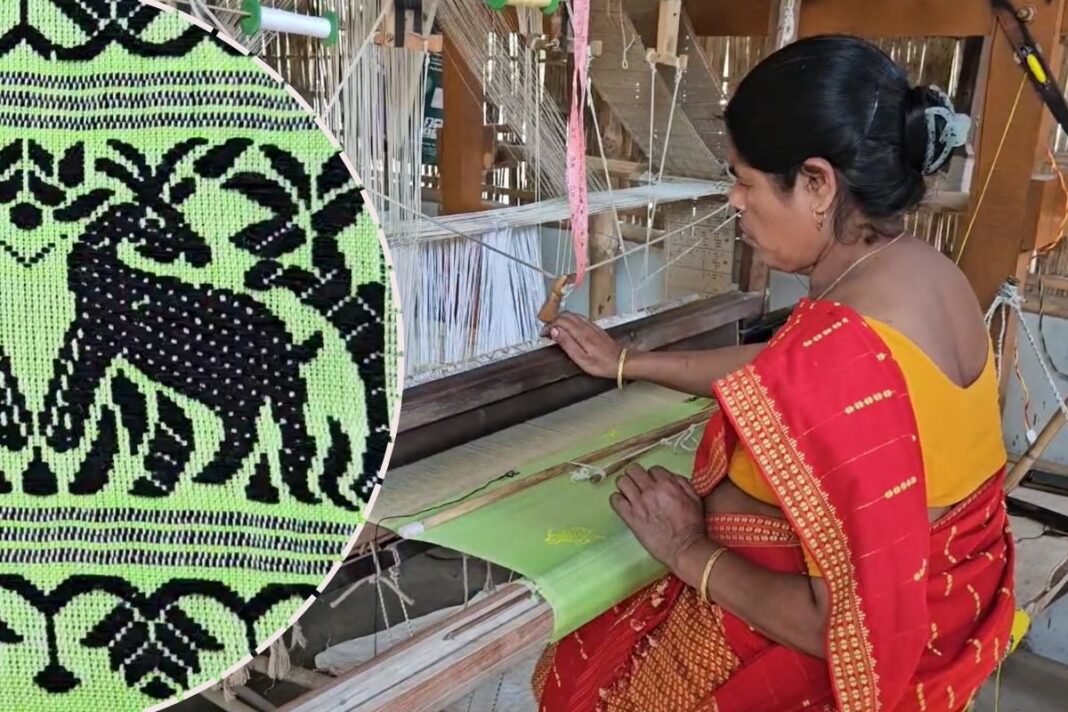

Near the lush landscapes of the Pobitora Wildlife Sanctuary in Assam’s Morigaon district, a quiet but powerful story of creativity, conservation, and community empowerment is unfolding. Women from Auguri village, located on the fringes of the sanctuary, are reviving Assam’s rich handloom tradition by creating eco-friendly textiles that are increasingly drawing the attention of tourists from across the country.
The creative talent of Assamese women has long been admired. Mahatma Gandhi himself once praised their weaving skills, calling them a symbol of India’s self-reliance and cultural strength. Decades later, that legacy continues as local women blend traditional craftsmanship with contemporary themes inspired by nature and wildlife.
Weaving Livelihoods Through the Eco Development Society
Under the guidance of the Eco Development Society (EDC), an initiative formed by the Forest Department in collaboration with Pobitora authorities, these women have received structured training in handloom weaving and design. The program aims not only to generate sustainable livelihoods but also to actively involve local communities in conservation efforts around the wildlife sanctuary.
Textiles Inspired by Pobitora’s Wildlife
The women artisans produce a variety of traditional Assamese textiles, including gamosas, chadars, and stoles. What sets their creations apart is the distinctive storytelling woven into each piece. The textiles feature artistic motifs of the iconic one-horned rhinoceros—Pobitora’s most celebrated resident—along with birds, grasses, and other elements of the sanctuary’s rich biodiversity. Floral patterns inspired by the surrounding wetlands and forests add elegance and visual depth to the designs.
Eco-Friendly Craftsmanship and Sustainability
Each handwoven piece reflects a close relationship between the artisans and their environment. Using eco-friendly methods and locally sourced materials, the women ensure that their craft aligns with the principles of sustainability. The absence of heavy machinery and the reliance on traditional looms further reduce the environmental footprint of the production process.
Tourists Embrace Handwoven Stories
Tourists visiting Pobitora Wildlife Sanctuary have shown a growing interest in these unique textiles. Many see them as meaningful souvenirs that capture the essence of Assam’s natural and cultural heritage. The demand has provided the women with a steady source of income, enhancing their financial independence and social standing within the community.
Conservation Through Community Empowerment
Beyond economic benefits, the initiative has fostered a deeper sense of environmental responsibility among the participants. By linking livelihoods with conservation, the EDC program encourages women to act as stewards of the forest and its wildlife. Their success demonstrates how community-driven efforts can play a vital role in protecting fragile ecosystems while preserving traditional knowledge.
The story of Auguri village is a reminder that sustainable development thrives when local talent is recognized and nurtured. As Pobitora continues to attract nature lovers and wildlife enthusiasts, the handwoven textiles crafted by these women stand as living symbols of harmony between people, culture, and nature—proving that conservation and creativity can indeed go hand in hand.
Also Read: Eklakhi Mausoleum: Pandua’s One Lakh Rupee Royal Secret
You can connect with DNN24 on Facebook, Twitter, and Instagram and subscribe to our YouTube channel.