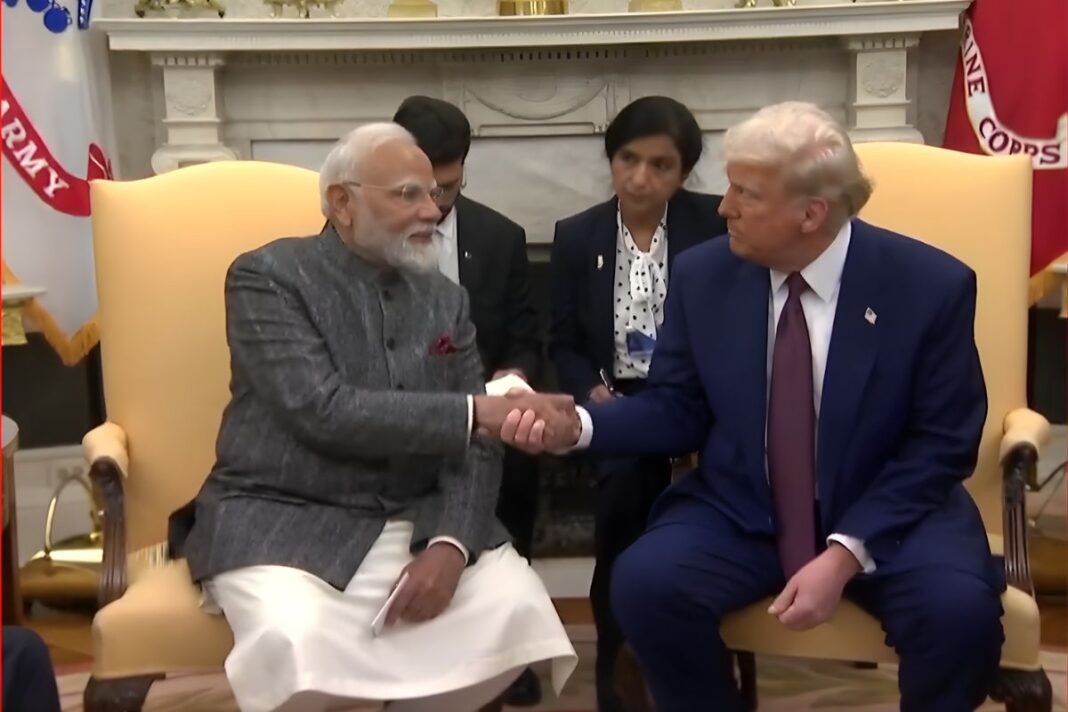

Close on the heels of the ‘mother of all trade deals’ between India and the European Union, the announcement of the Indo–US trade deal marks a decisive moment in India’s external economic engagement. US President Donald Trump’s late night post, following a telephone conversation with Prime Minister Narendra Modi on 2 Feb, 2026, talked about scaling down of US tariffs on Indian goods from nearly 50% to 18% while expecting India to progressively dismantle their tariffs and non-tariff barriers against the US. While the finer details of the agreement will be negotiated over the coming months, the political signal is unambiguous: India–US economic ties are back on track after a period of visible strain.
The announcement is particularly striking given the downturn in bilateral relations over the past year. Despite the much-publicised personal rapport between the two leaders, 2025 saw relations unravel over punitive US tariffs, tightened visa regimes affecting Indian professionals, and uncomfortable allegations of targeted overseas operations attributed to Indian intelligence agencies. Against this backdrop, the Modi-Trump phone call suggests a conscious effort on both sides to arrest the drift and place the relationship back on a strategic trajectory.
More significantly, the announcement points to renewed momentum toward a comprehensive India-US Bilateral Trade Agreement (BTA), that will help expand bilateral trade to USD 500 billion. For Washington, as for Brussels, India represents not just the largest consumer market in Asia but also a critical hedge against over-dependence on China-centric manufacturing and supply chains. For India, the timing could not be better. As global firms seek to diversify production amid geopolitical uncertainty, India is positioning itself as a stable, scalable, and strategically aligned alternative.
Beyond economics, these deals underscore India’s growing importance in the Indo-Pacific strategic matrix. For both the US and the EU, India is a strategic partner in maintaining regional balance, securing supply chains, and addressing global security challenges. Trade, in this context, becomes a tool of strategic alignment rather than a standalone economic transaction.
Domestically, improved market access- particularly for labour-intensive sectors such as textiles, leather, and light manufacturing- could provide a much-needed boost to employment and reinforce the government’s ‘Make in India’ push. Agriculture, the sticking point in trade negotiations, also stands to gain if managed carefully. Expanded export opportunities in rice, wheat, spices, and processed foods could benefit farmers across states such as Punjab, Haryana, and Maharashtra, while encouraging investment in food-processing infrastructure.
Equally important is the signalling effect. Enhanced trade and investment flows strengthen India’s bargaining power in global economic institutions and reinforce its claim to a larger role in shaping international rules and norms. Increased foreign investment in infrastructure, technology, and advanced manufacturing would further anchor India’s long-term growth story.
Taken together, these agreements are about far more than tariffs and market access. They reflect India’s emergence as a key player in a rapidly evolving global order—one whose economic weight now carries strategic consequence. If executed with care, they can enhance India’s economic resilience, support internal stability, contribute to regional security, and give New Delhi a more decisive voice in shaping the new world order.
Disclaimer: The views expressed in this article belong solely to the author and do not reflect the views or opinions of DNN24 or any affiliated organization.
Also Read: Narcotics and the Geopolitics of a New Hybrid War
You can connect with DNN24 on Facebook, Twitter, and Instagram and subscribe to our YouTube channel.