

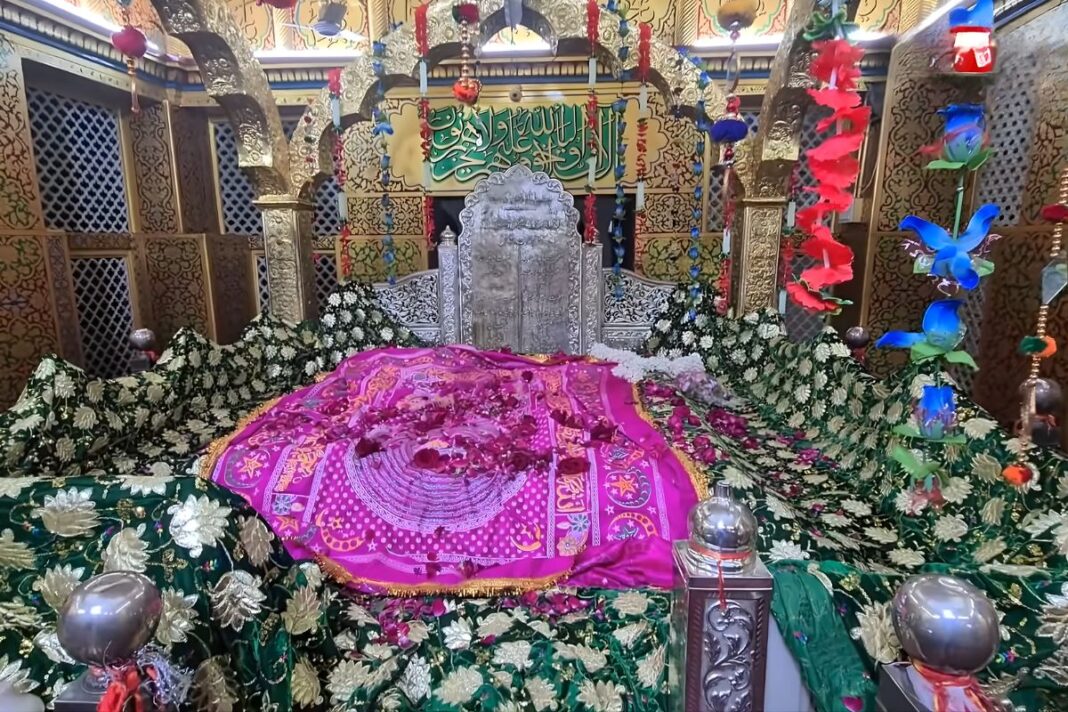

Everyone knows Hazrat Nizamuddin Aulia. His dargah draws thousands of devotees who travel from distant lands seeking blessings. However, who knows the woman who raised this saint? The woman whose dargah exists quietly in Delhi, carrying within its walls the story of patience, devotion, and a mother’s sacrifice.
We are speaking of Bibi Zulekha, the mother of one of India’s most revered Sufi saints. Her tomb lies in Delhi, yet many remain unaware of her existence. Today, we uncover the life of this remarkable woman, whose influence shaped not just a son but an entire spiritual movement that continues to touch lives eight centuries later.
The Shrine That Time Forgot
Tucked away in the bylanes of Delhi stands a shrine known as Mai Sahiba Dargah, or The Mother’s Courtyard. This is where Bibi Zulekha rests. The structure is over 800 years old, its silver filigree dome catching the afternoon sun, its walls adorned with intricate jali work that speaks of forgotten craftsmanship.
Unlike the famous dargah of her son, this place carries a different energy. It is quieter, more intimate. Visitors who come here do not arrive in throngs. They come with whispered prayers, with the knowledge that the woman buried here had something special inside her. She raised a saint. What kind of mother does that?
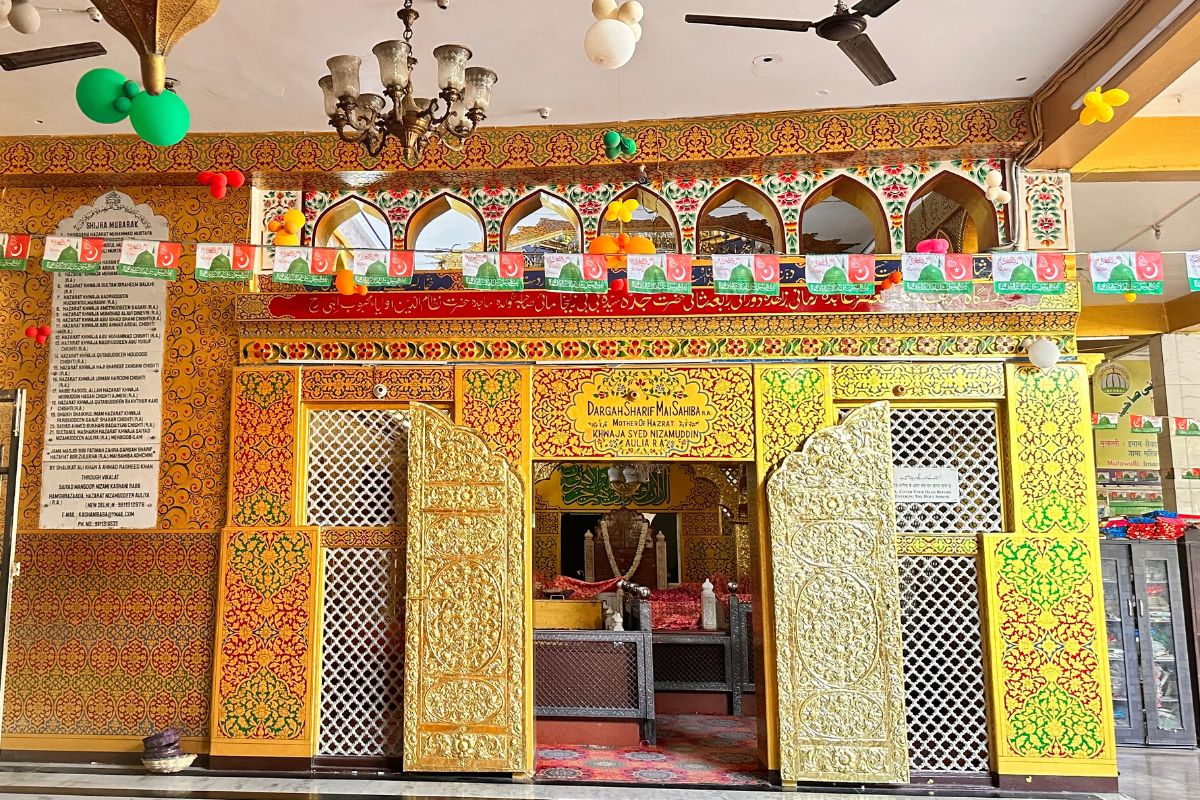
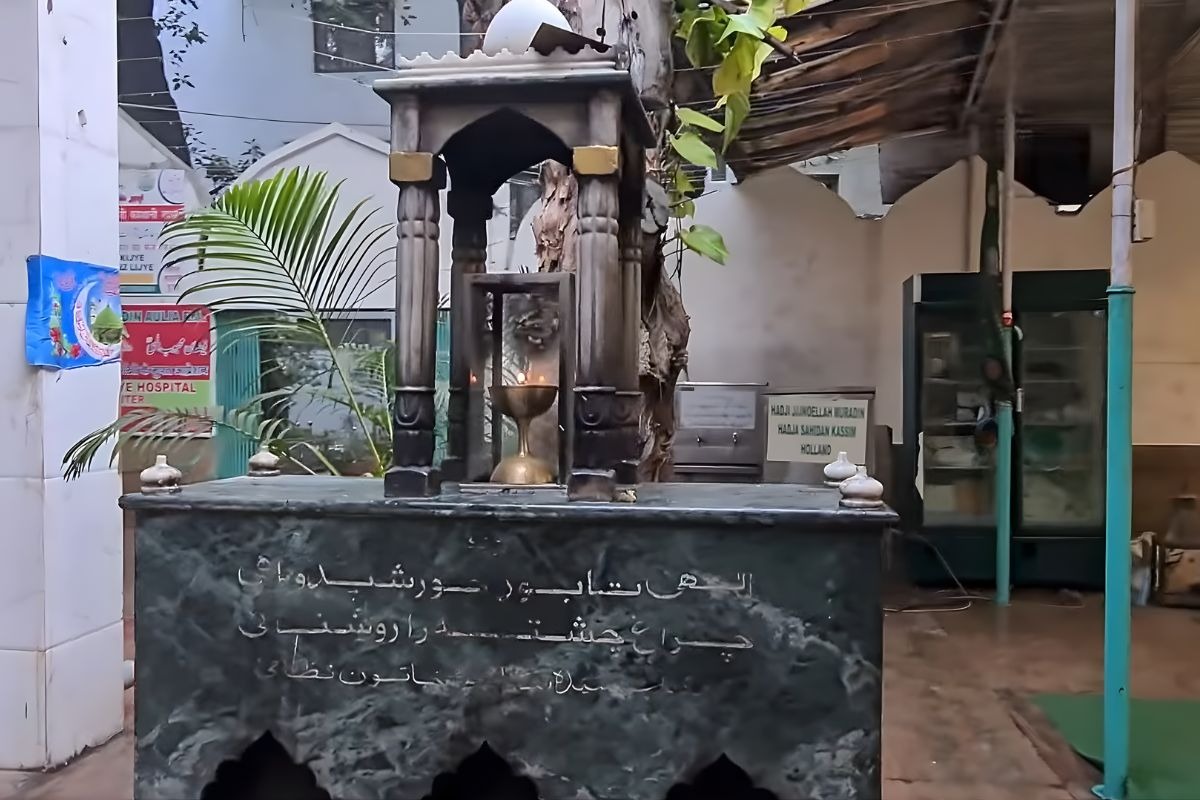
Bibi Zulekha is buried here alongside her daughter and granddaughter. Two other women, Bibi Hoor and Bibi Noor, believed to have been in her service, also lie in the compound. The place was once known as their residence. It later became her final resting place, transformed into a shrine that bears witness to a life lived in devotion.
From Bukhara to Badaun: A Journey of Loss
Bibi Zulekha was married to Khwaja Syed Ahmad. Her parental home was prosperous, her early life comfortable. However, life had other plans. When her husband passed away, her son Nizamuddin was barely five years old. Some accounts say he was only two. Either way, he was too young to understand the weight of orphanhood.
She had two children to care for, a son and a daughter. She could have returned to her father’s house, where comfort awaited. Many women in her position would have. However, Bibi Zulekha chose differently. She chose hardship with dignity over ease with dependence.The family migrated from Bukhara to Badaun, and eventually to Delhi. Each move was a step into uncertainty. However, she carried her children forward, determined to give them what their father could no longer provide: a proper education and a foundation of faith.
The Widow Who Spun Her Way to Sainthood
When Bibi Zulekha arrived in Delhi, she settled near the madrasa of Najeemuddin Mutawakkil, the brother of the great Sufi saint Baba Farid Ganj Shakar. She had one clear goal: to ensure her children received the finest education in both religious and worldly matters. The results of her decision stand before us today.
However, education requires money. A widow with no income could not afford the madrasa fees. So Bibi Zulekha worked. She spun cotton thread late into the night, her fingers moving in the dim light of an oil lamp. The thread was sold in the market through her maidservant. With that meagre income, she fed her children and paid for their studies.
She did not complain. She did not seek pity. She accepted her reality and worked within it. While her children slept, she prayed. While they studied, she spun thread. Her nights were divided between worship and labour, her days between raising children and maintaining hope. This was not the life she was born into. This was the life she chose when she refused to be broken by circumstance.
Patience as a Spiritual Practice
Bibi Zulekha’s greatest quality was sabr, or patience. Not the passive waiting kind, but the active, disciplined endurance that transforms suffering into strength. She knew hardship. She felt loss. However, she never let those experiences define her children’s future.Historian Syed Mubeen Zahra describes her as a woman of deep devotion and worship. She would spend nights in prayer, seeking guidance and blessings for her family. Her relationship with God was intimate, personal. She did not perform rituals for show. She lived them.
It is said that the qualities we see in children often reflect what they absorbed from their parents. If Hazrat Nizamuddin Aulia became known for his compassion, his generosity, and his humility, we must ask: where did he learn these values? The answer lies in the woman who raised him in a single room, spinning thread by lamplight, refusing to let poverty touch his soul.
A Syncretistic Legacy in Stone and Silver
The architecture of Mai Sahiba Dargah tells its own story. The dome was added later, with its exterior entirely covered in silver plating. Delicate engravings and calligraphy adorn the surface, each pattern a prayer frozen in metal. The jali work, those latticed screens that filter light into geometric shadows, speaks of an era when art and faith were inseparable.
What began as a simple residence became a shrine. What began as a place of survival became a place of remembrance. People come here not because the place is grand, but because it is real. This is where a mother lived, worked, prayed, and died. This is where her influence continues to radiate.
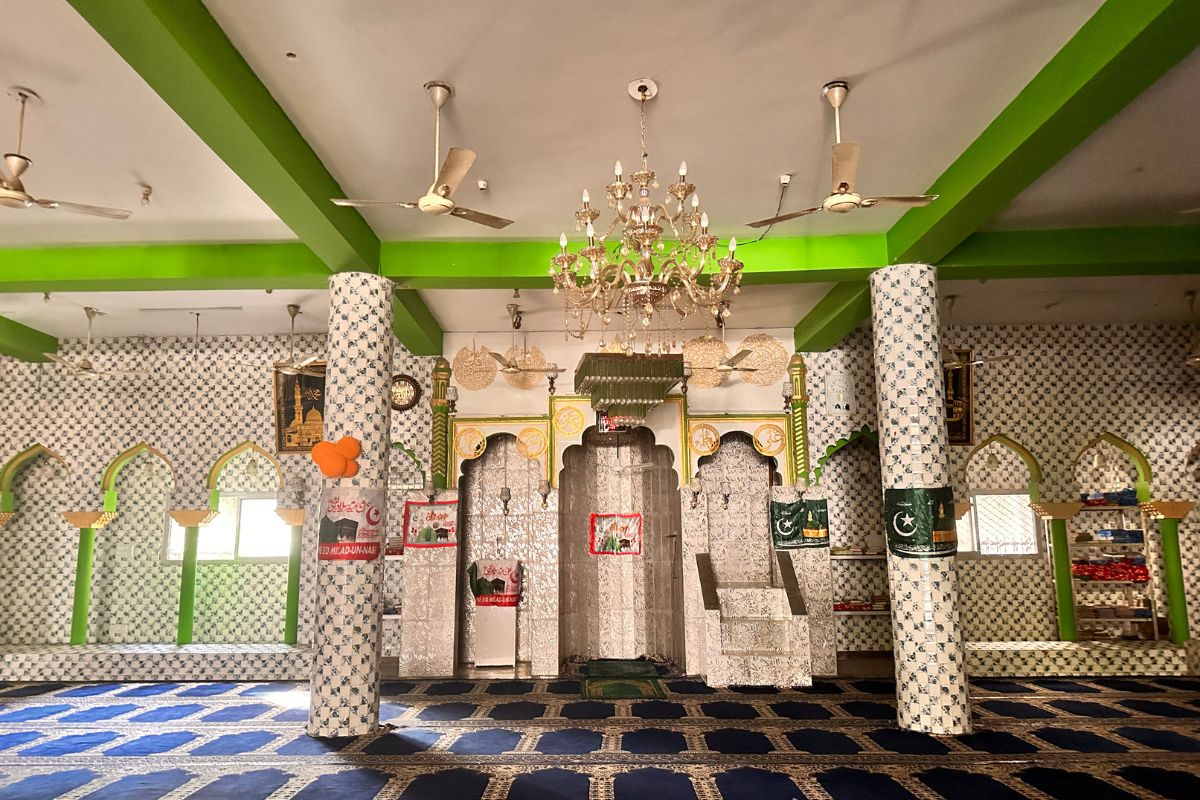
The shrine also represents the syncretistic culture of India, which Hazrat Nizamuddin Aulia came to symbolise. A culture where different faiths coexisted, where respect and love transcended religious boundaries. His mother’s example of humility and service laid the foundation for this worldview.
Why So Few Know Her Name
Strangely, more people do not know about Bibi Zulekha. Her son’s dargah attracts millions. Qawwalis echo through its courtyards. Flowers and chadors pile at his tomb. However, his mother’s shrine remains relatively unknown. The reason may be simple: this place was never commercialised. There are no grand festivals marketed to tourists. No loud processions. Just a quiet stream of devotees who come, often from far away, to pay their respects and seek blessings.
Every Wednesday, prayers are offered here. Yellow rice is prepared and distributed. During her urs, the annual commemoration believed to fall in Jamadi-ul-Awwal, crowds do gather. People come to honour the woman who raised a saint, the mother whose patience and devotion became the invisible foundation of a spiritual empire.
Lessons From a Life of Quiet Strength
What can we learn from Bibi Zulekha? In a world that celebrates loudness, she teaches us the power of quiet determination. In an age that values comfort, she shows us that hardship can be a teacher. In times when people seek shortcuts, she reminds us that great things take time, patience, and relentless effort.
She was not a scholar. She did not write books or deliver sermons. She lived her values. She worked when work was needed. She prayed when prayer was needed. She made choices that prioritised her children’s spiritual and intellectual growth over her own comfort.
Mothers everywhere do this. They sacrifice silently. They endure privately. They shape futures without ever appearing in history books. Bibi Zulekha is exceptional not because she was different from other mothers, but because her influence became visible through her son’s legacy. She reminds us that behind every great soul is often another great soul who prepared the ground, watered the seeds, and stood back to let the tree grow.
Visiting Mai Sahiba Dargah Today
When you visit the dargah of Hazrat Nizamuddin Aulia, take a moment to ask for directions to Mai Sahiba Dargah. It is not far. Walk through the narrow lanes, past the shops selling roses and incense, past the vendors calling out their wares. You will find it. Inside, you will feel the stillness. You will see the silver dome catching the light. You will sense the presence of a woman who chose courage over comfort, faith over fear. You may offer prayers. You may sit quietly. You may acknowledge what this place represents.
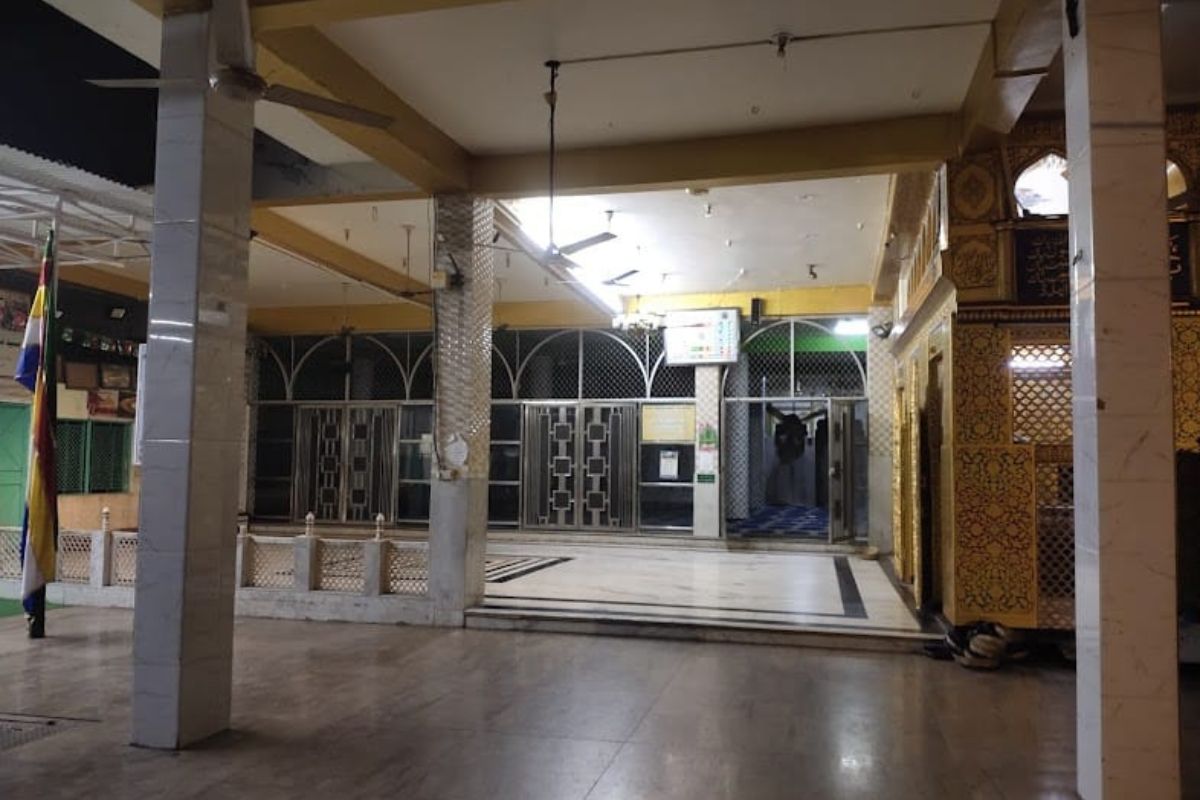
Bibi Zulekha sleeps peacefully here, her work complete. She raised a son who became a light for millions. She lived a life that honoured struggle without being defeated by it. She showed that greatness often begins not in palaces, but in small rooms where mothers spin thread and whisper prayers into the night.
The Silent Foundation of Greatness
We celebrate saints and their miracles. We build shrines and compose poetry in their honour. We remember their words and study their teachings. However, we often forget the hands that first held them, the voices that first taught them to pray, the hearts that first showed them what love looks like in practice.
Bibi Zulekha did not seek fame. She sought only to fulfil her duty as a mother. However, in doing so, she became something more. She became proof that the most significant influence often happens in silence, that the most profound teaching occurs through example, and that the most actual strength reveals itself in patience.
Her tomb may not attract as many visitors as her son’s. However, those who do visit leave changed. They leave understanding that behind every towering figure in history stands someone who believed in them first, who quietly sacrificed for them, who loved them without condition. Bibi Zulekha was that person for Hazrat Nizamuddin Aulia. Moreover, through him, she continues to touch the world. Her spinning wheel has long since turned to dust. However, the thread she wove holds strong, binding past to present, mother to son, devotion to legacy.
Also Read:Saheli Women’s Revolution: When Needles Sparked Strength and Change
You can connect with DNN24 on Facebook, Twitter, and Instagram and subscribe to our YouTube channel.