

The man who filled India’s first tank of petrol had no meter, no safety standard, and no real sense that he was standing at the start of a country’s motor age.
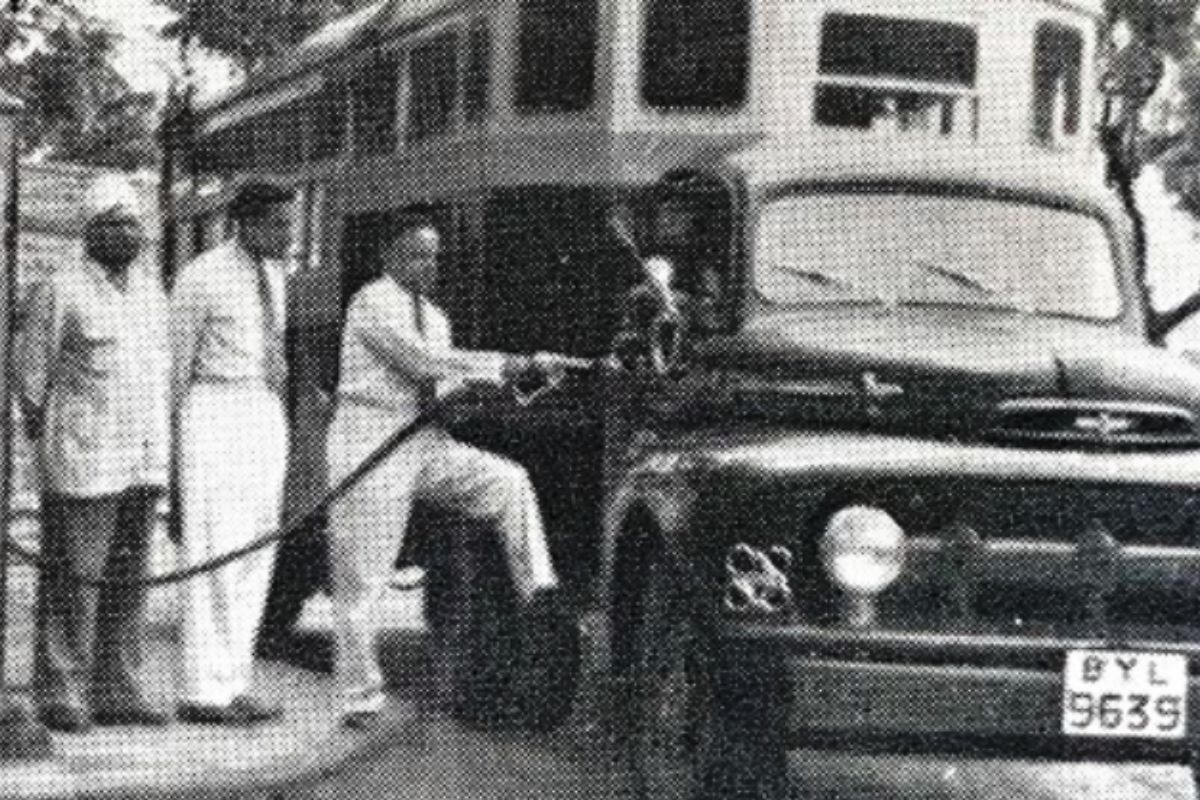
In 1928, a hand-operated fuel dispenser appeared on Hughes Road in the Worli district of Bombay. It belonged to the Burmah-Shell Oil Storage and Distributing Company of India. Nobody marked the occasion with a ceremony. There was no ribbon, no official photograph, no announcement in the press. That modest shed, with its two dispensers and drum storage of roughly 900 to 1,200 litres, planted the first formal node of what would grow into a national fuel network serving hundreds of millions of people across a subcontinent.
Where the First Pump Stood and What It Looked Like
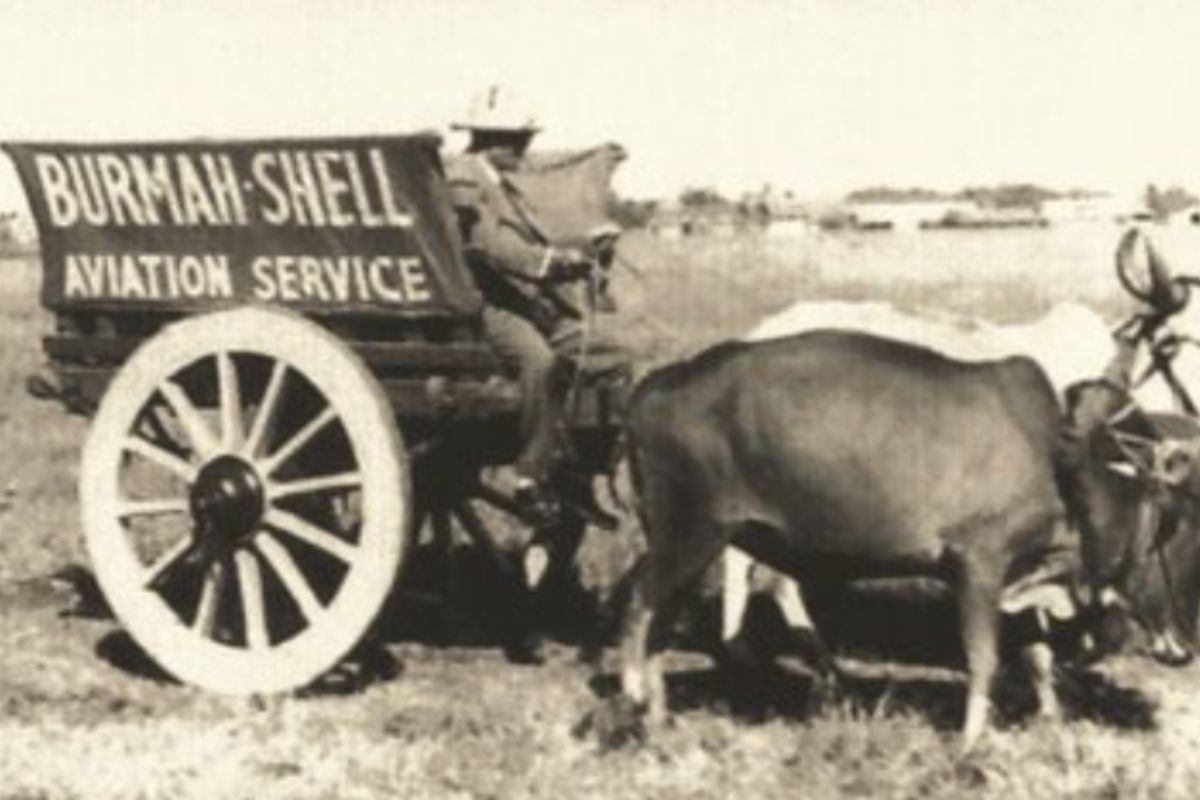
Hughes Road, today known as Annie Besant Road, ran through a part of the city that was neither fully residential nor fully commercial. Worli sat at the edge of Bombay’s organised districts, and that semi-industrial character made it a practical choice for a storage and dispensing operation. The station carried no underground tanks. Petrol arrived by ship from Burma, Iran, and the Gulf, then moved in 40-gallon drums by truck or bullock cart before being tipped into the station’s own modest reserves.
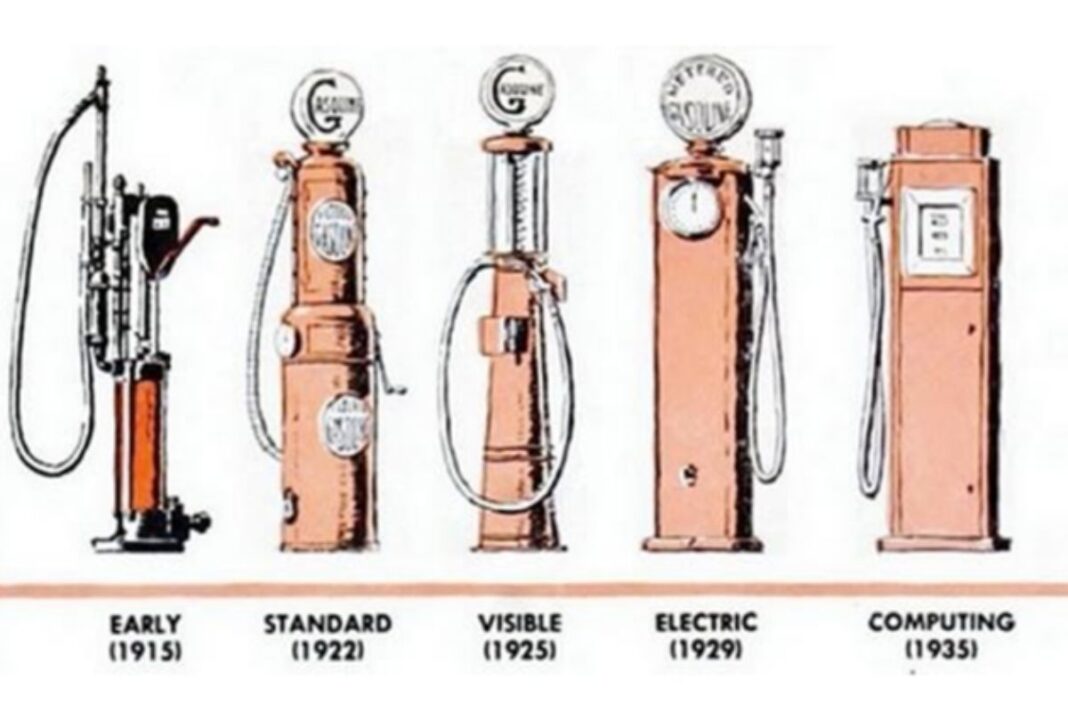
The dispensers were hand-cranked. An attendant repeatedly pulled a lever, watching the fuel rise through a glass gauge and then flow by gravity into a calibrated can, which was then tipped into the customer’s tank. There was no meter in the modern sense. Measurement was manual and approximate. Safety standards, by present reckoning, were nearly absent.
Petrol sold for somewhere between six and twelve paise per litre, roughly one to two annas. That sounds inexpensive until one notes that a common labourer earned less than one rupee for a full day’s work. Fuel was not cheap for ordinary people. It was not meant for them, not yet.
The Customers Who Arrived in 1928
The clientele at Worli was narrow and deliberate. Parsi and Gujarati business families, British civil servants, senior military officers, and the occasional maharaja’s representative formed the core of the early trade. Taxi drivers, particularly from the Parsi community, were also regular visitors. Bombay had introduced its first organised taxi service in 1911, and by the late 1920s, a small but active fleet of motor cabs operated across the city.
Each visit to the pump followed a careful procedure. The attendant refueled the car while the customer or his driver waited beside it. There were no canopies overhead, no shops attached, no queues. Owning a motor car in 1920s India was a declaration of extraordinary social standing. Across the whole country, no more than fifteen thousand to twenty thousand cars were in use at any one time. Bombay alone held roughly 6,000 to 7,000 of them. The Worli pump served that concentrated community and almost nobody else.
India’s First Petrol Car and Its Owners
The pump of 1928 was a late arrival compared to the country’s first petrol-driven car, which appeared thirty-one years earlier. In 1897, an English officer named Mr. Foster, employed by the British firm Crompton Greaves, arranged for the import of a motor vehicle through Calcutta. The car was almost certainly a French De Dion-Bouton or a similar European model of that period. It came off the docks into a city that had no paved motor roads and no garages, only a pressing curiosity about what this machine could do.
Within a year, Jamsetji Nusserwanji Tata, the founder of the Tata Group, became the first Indian to own an automobile in the country. His purchase in 1898 was not simply a personal acquisition. It was a statement that Indian industrial capital was prepared to engage with the machinery of the modern world on its own terms. In the years that followed, maharajas and princes acquired ornate carriages from French and British makers, sometimes shipping them to India packed in crates. Cars served as instruments of diplomacy, display, and private pleasure.
Between 1897 and 1928, petrol was sold through garages, agents, and makeshift arrangements near railway depots. The Worli pump changed that by introducing, for the first time in India, a dedicated retail point solely for motor fuel.
How Burma Shell Built More Than a Pump
The Burmah-Shell Oil Storage and Distributing Company of India Limited was formed in 1928 through a merger of the Scottish Burmah Oil Company and Asiatic Petroleum (India), a Shell subsidiary. Its first task was kerosene distribution, not petrol. The company shipped kerosene in four-gallon and one-gallon tins to households across India, supplying light to homes without electrical connections. That early distribution network, built on port depots and truck routes, gave the company the logistical foundation it later used for petrol retail.
Burma Shell’s engineers designed safer kerosene lamps and trained local agents to sell and service them. This education-and-distribution model was applied again when the company introduced LPG cylinders in the mid-1950s, running demonstration programmes and showing households that still burned wood and dung cakes how to use cylinder-based stoves. The company was not simply selling fuel. It was, deliberately or otherwise, reshaping domestic energy habits across a vast and varied country.
The Trombay Refinery and the Turn Toward Self-Reliance
A more significant chapter opened in 1951 when Burma Shell signed an agreement with the Government of India to build a refinery at Trombay, near Bombay. Construction began in 1952. On 30 January 1955, the facility was inaugurated by Dr. S. Radhakrishnan, then Vice President of India. The refinery processed 2.2 million metric tonnes of crude oil per year at its opening, making it the largest in the country at that time.
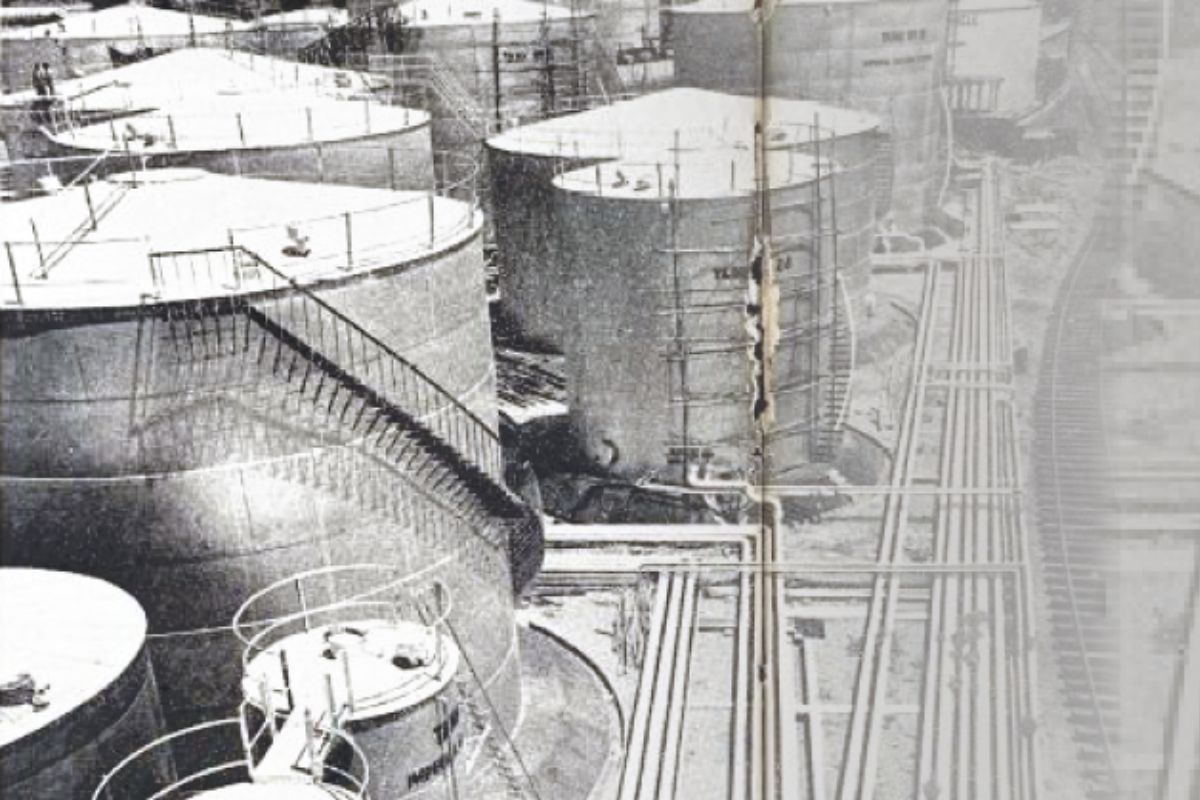
The Trombay plant could produce petrol, kerosene, diesel, lubricating oil, bitumen, and aviation fuel from a single site. That breadth mattered enormously. Until then, India had depended almost entirely on refined product imports. The refinery reduced that dependence and gave Indian planners a working model for the state-owned energy companies they would build in the following decades.
Aviation Fuel and the Flight That Defined an Era
Burma Shell’s connection to Indian aviation is specific and well-documented. In 1932, J. R. D. Tata completed a solo flight from Karachi to Bombay in a De Havilland Puss Moth aircraft, carrying a cargo of mail. The fuel for that journey came from Burma Shell. That flight established what became Tata Airlines and, in time, Air India. A single tin of aviation gasoline placed Burma Shell at the origin point of the country’s commercial aviation story.
The company went on to supply fuel for early flying-boat services and coastal air routes, embedding itself into the infrastructure of a country that was beginning to connect its distant regions by air.
The Colonial Distribution Model and Its Lasting Shape
Colonial fuel distribution followed a centripetal logic. Ports received the product. Depots stored it. Trucks and railway wagons carried it inward. The cities of Bombay, Calcutta, and Madras sat at the centre of this system, and the countryside beyond remained largely outside it until the 1940s. That geography was not accidental. It reflected the priorities of a trading empire more concerned with coastal commerce than with rural energy access.
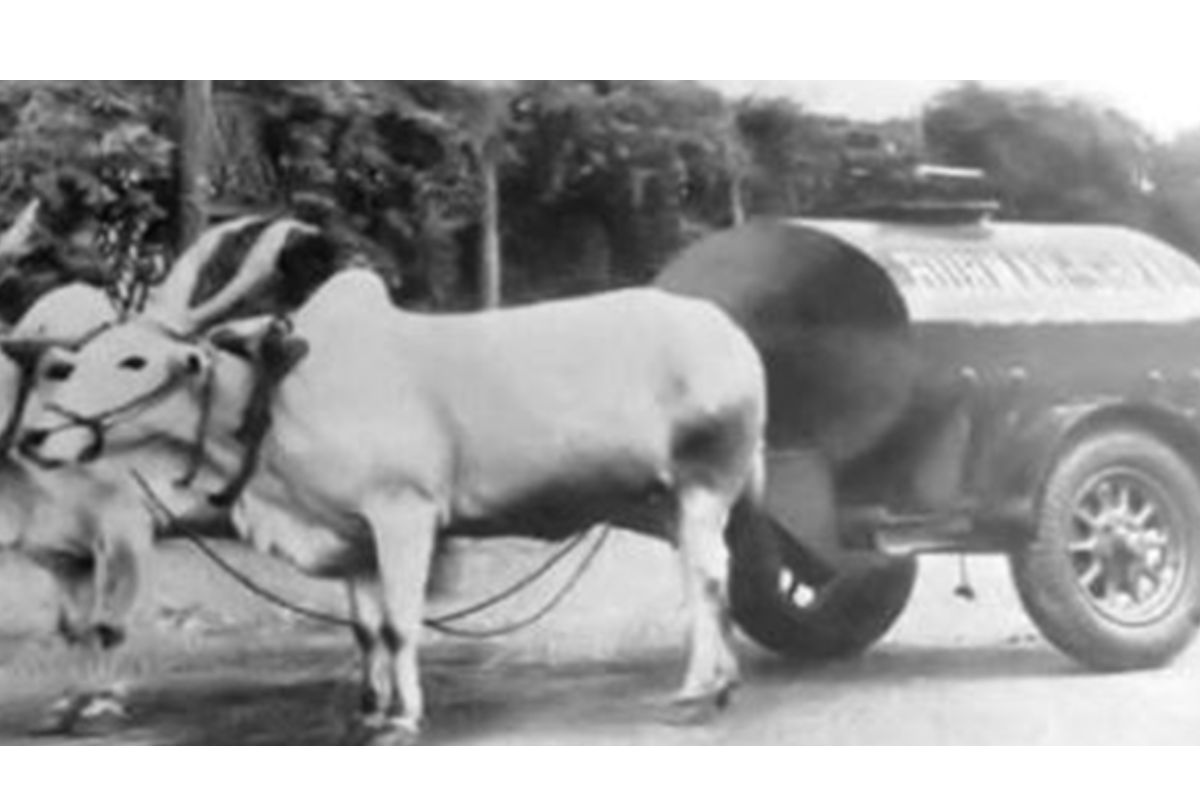
The rail network carried petroleum products in tank cars from the early twentieth century, using dedicated sidings at inland depots. These rail routes later became the backbone of independent India’s fuel supply chains. The infrastructure did not need to be rebuilt. It needed to be repurposed and expanded.
Nationalisation and the Birth of Bharat Petroleum
In 1976, the Government of India nationalised Burma Shell’s Indian operations. The company’s refining and marketing arms were brought under state control as Bharat Refineries Limited, later reorganised as Bharat Petroleum Corporation Limited in 1984. The new company inherited the Trombay refinery, the retail pump network, decades of accumulated technical practice, and an established presence in lubricants and fuel quality.
The transition was not a dismantling. It was an absorption. BPCL took what Burma Shell had built and extended it through state policy into towns and districts that a private oil company had no commercial reason to serve. The pump that opened on Hughes Road in 1928 became, in that sense, the first unit of a system that eventually reached the far edges of the country.
From One Shed in Worli to a Nation in Motion
India today consumes fuel in quantities unrecognisable to the attendant who cranked that first dispenser in Worli. The country operates hundreds of thousands of filling stations. Daily consumption is measured in hundreds of thousands of tonnes. And yet the lineage is direct and traceable.
The first car arrived in 1897. The first pump opened in 1928. Burma Shell built a refinery by 1955. Nationalisation followed in 1976. Each step was consequential, and none of it happened by accident. What began as a foreign oil company serving a colonial elite eventually supplied the fuel that now moves goods, people, and livelihoods across an entire subcontinent. The road from that hand-operated pump in Worli to the present runs without a break, and the attendant who first pulled that lever had no way of knowing what he was setting in motion.
Also Read:The Journey of Harmonium From France to India
You can connect with DNN24 on Facebook, Twitter, and Instagram and subscribe to our YouTube channel.