

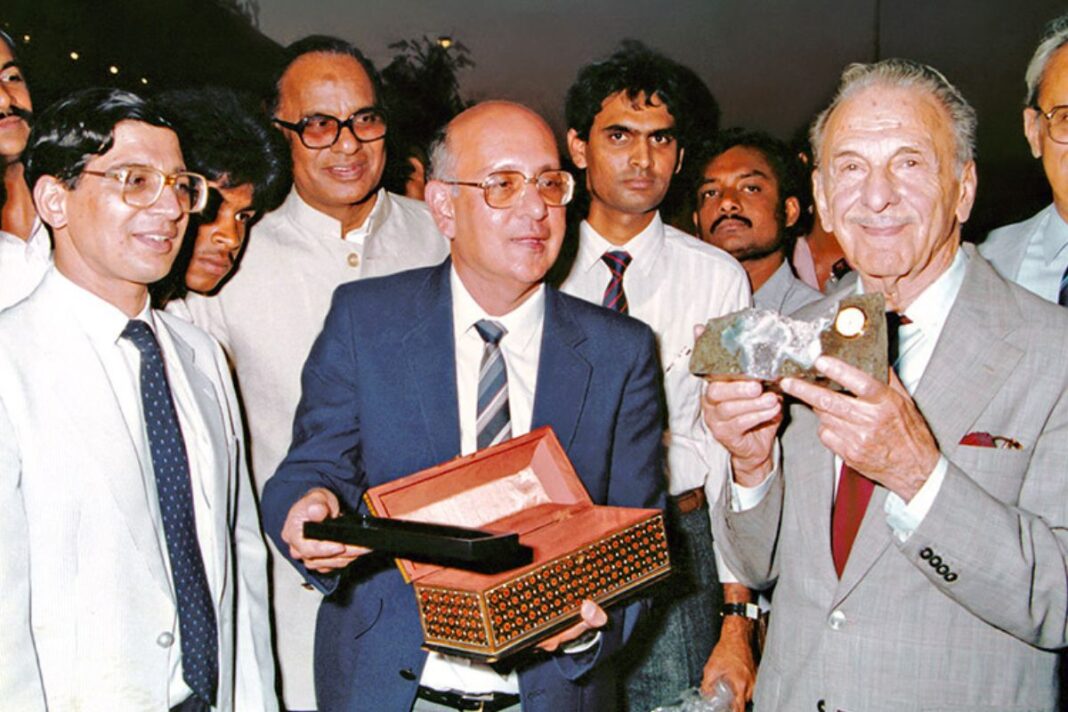

In 1978, a Swiss watchmaker told J.R.D. Tata, more or less to his face, said that Indians did not have what it took to build a serious watch brand. It was the kind of remark that stings precisely because it is said with confidence. Tata executive Xerxes Desai, Oxford-educated and newly assigned to look into the watch industry, took note. He also took it personally, which turned out to be rather useful.
What followed was not a quick success story. It was nearly a decade of paperwork, rejections, and financial headaches before a single watch rolled off a production line. However, on July 26, 1984, Titan Company Limited was formally incorporated as a joint venture between Tata Industries and the Tamil Nadu Industrial Development Corporation (TIDCO). It was, even then, more than a business venture. It was a quiet argument, made in steel and quartz, that Indians could build something the world would respect.
Now, in June 2026, that argument has been made again on screen. Made in India: A Titan Story premiered on Amazon MX Player on June 3, directed by Robbie Grewal, with Jim Sarbh playing Xerxes Desai and Naseeruddin Shah as J.R.D. Tata. The series offers a useful occasion to set the record beside the drama, and to ask what each one illuminates that the other cannot.
The Real Story: From Hosur to Eight Billion Dollars
When Titan formally began operations in 1986, the Indian watch market was largely the domain of HMT, the state-run manufacturer that controlled roughly 90% of sales. Customers waited months for basic timepieces and had little say in what they received. Desai saw this not as a barrier but as a vacancy. Indians, he believed, did not merely want watches. They wanted choice.
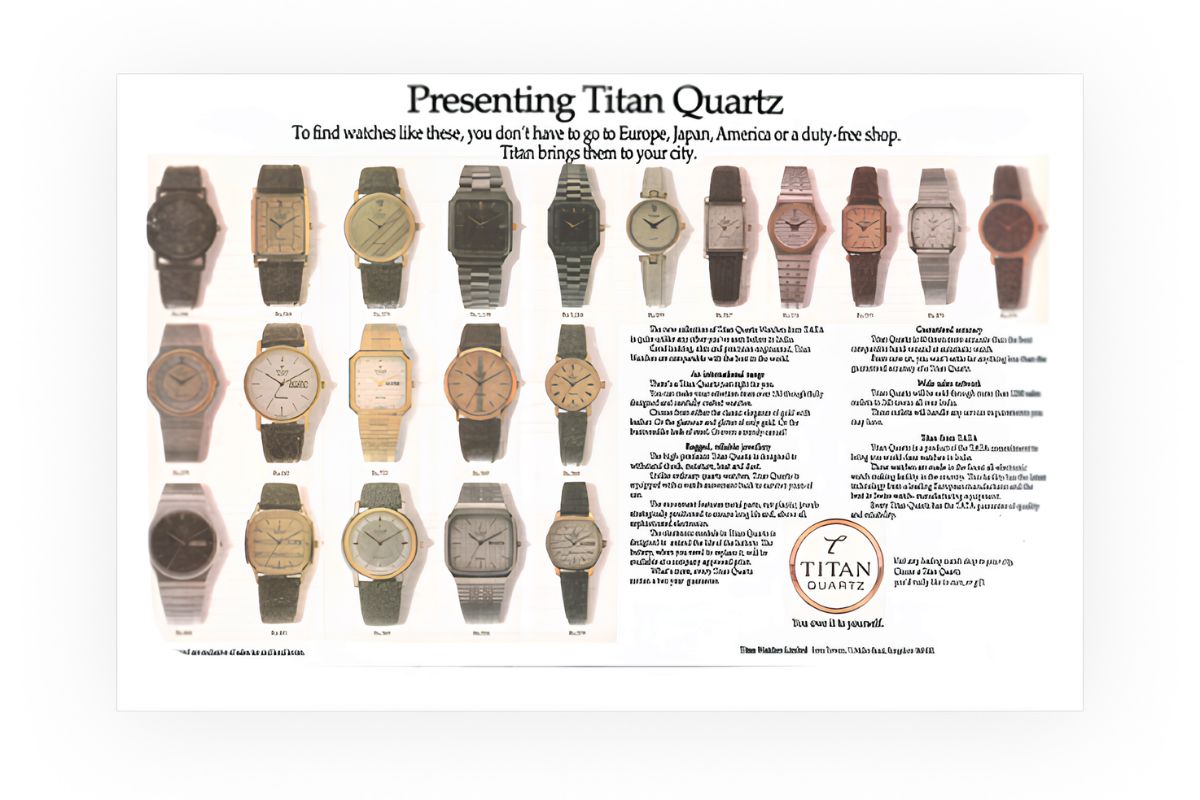
Titan’s first strategic bet was on quartz technology at a time when HMT still devoted itself to mechanical movements. The company set up its factory in Hosur, Tamil Nadu, partly because TIDCO could provide land and infrastructure, and partly because Hosur is close enough to Bangalore to draw technical talent from HMT itself. In November 1986, Titan signed an agreement with Casio to manufacture two million digital and analog-digital watches. The watches were stylish, reliably accurate, and available in proper retail stores, which was in itself a novelty. A Mozart-derived tune accompanied the television advertisements and, over the years, became one of the most recognised sounds in Indian consumer culture.
The company grew with a discipline that is sometimes obscured by the romance of the founding years. A timeline of its expansions reads like a map of middle-class India’s changing ambitions. In 1994, Tanishq, the jewellery brand, was launched, which would eventually account for 80% of Titan’s total revenue. Fastrack arrived as a youth-oriented accessories label in 2005. Titan EyePlus followed in 2007. In 2011, the company acquired Swiss watchmaker Favre-Leuba for two million euros, closing a particular circle with quiet satisfaction. In 2013, the year Titan changed its name from Titan Industries to Titan Company Ltd., HMT’s watch division closed permanently, having accumulated losses of roughly sixteen hundred crore rupees.
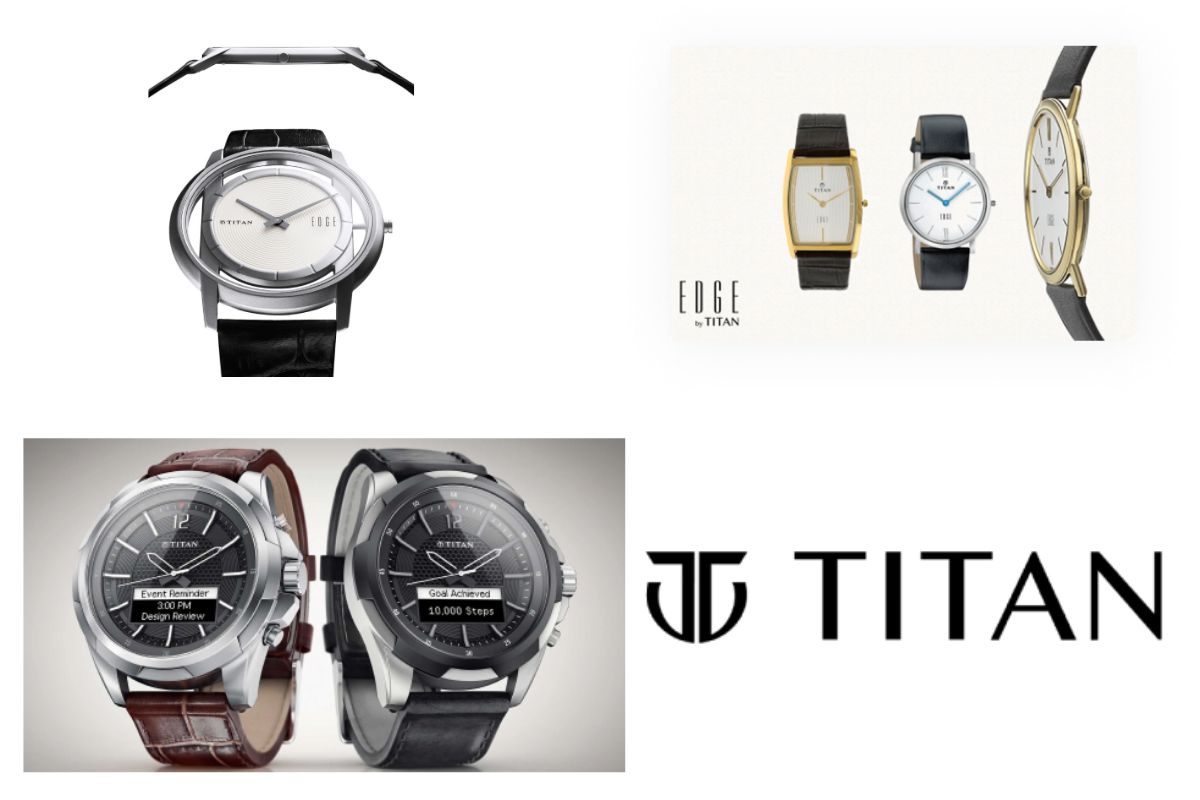
By the financial year ending 2026, Titan reported revenue of eighty-eight thousand crore rupees, equivalent to approximately 9.2 billion US dollars. Net income stood at 5,073 crore rupees. The company operates more than two thousand retail locations. It is the fifth-largest watch manufacturer in the world by volume and holds six percent of the organised jewellery market in India. In 2025, Titan acquired a sixty-seven percent stake in UAE-based Damas Jewellery, extending its reach across the Gulf.
Xerxes Desai was inducted into the Advertising and Marketing Hall of Fame in 1994 and was rated among India’s five best chief executives by Business World in 1997. In 2007, he received a lifetime achievement award from the National Institute of Design.
The Silent Partner: What TIDCO Actually Did
The Tata name travels easily. TIDCO’s contribution is less often told, though it was indispensable.
Tamil Nadu, in the late 1970s and early 1980s, had land, infrastructure, industrial licences, and a state government under M.G. Ramachandran wanted serious manufacturing to come to the state. TIDCO had actually begun the process before Tata entered the picture, making contact with France Ebauches SA in 1978 to explore setting up a watch plant, and later approaching Tata Press as the industrial partner.
The division of roles was clear and sensible. Tamil Nadu provided the physical resources, regulatory support, and political will to push the project through an exceptionally difficult licensing environment. Tata brought management culture, distribution, brand thinking, and access to technology. TIDCO invested under ten crore rupees and today still holds a twenty-seven-point-eight percent stake in the company, which contributes meaningfully to state revenues.
In the era of the licence raj, navigating Reserve Bank of India regulations on foreign exchange and securing government approvals for a new category of consumer product required exactly the kind of institutional backing that a private house alone could not provide. TIDCO was, in effect, the venture capitalist, the landlord, and the licence navigator, and it knew when to step back once operations were established.
The Reel Story: Six Episodes, One Fable
Made in India: A Titan Story is based on Vinay Kamath’s book Titan: Inside India’s Most Successful Consumer Brand. Karan Vyas writes the series and runs it for six episodes. It begins in 1978 Bombay and follows Desai and a colleague, Akash Dikshit, as they work to build a world-class Indian brand against a market dominated by smuggled foreign watches and a complacent state monopoly.
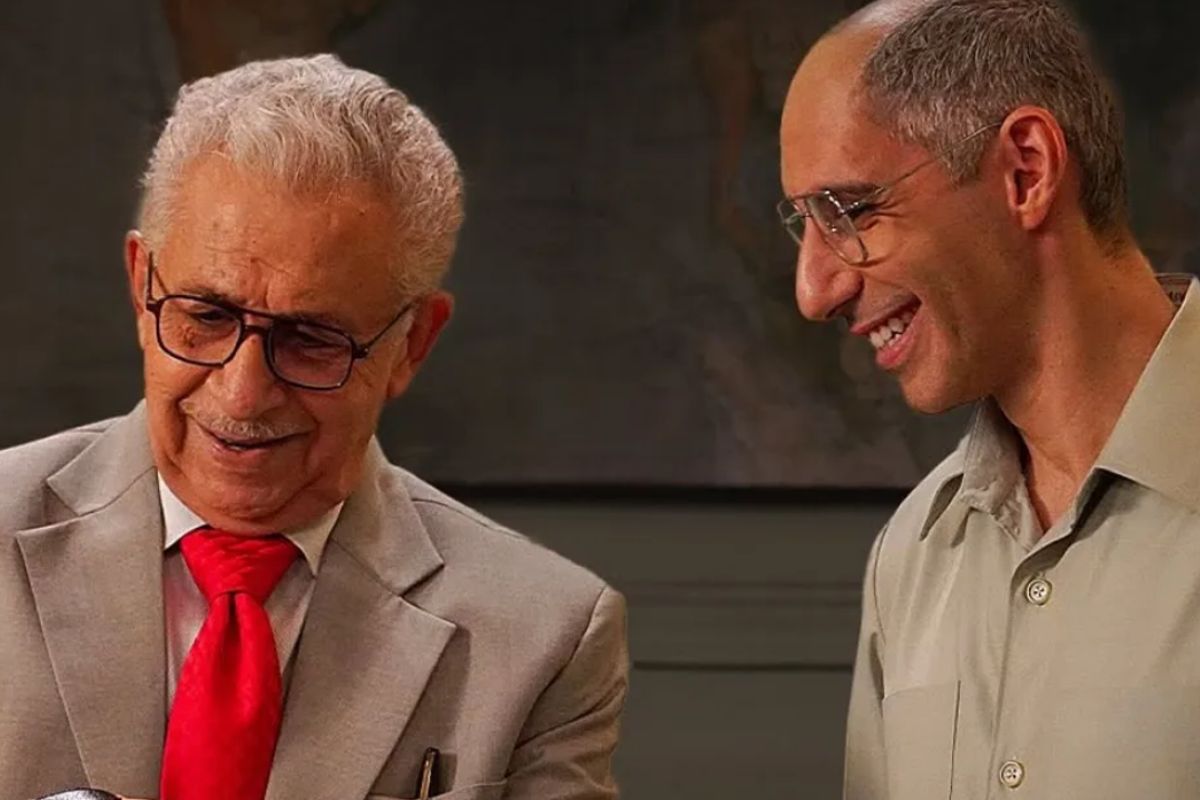
Jim Sarbh’s performance as Desai has attracted particular attention. The role seeks a man who is both visionary and stubborn, able to absorb repeated failure without losing the conviction that the project is worth it. Sarbh carries this without apparent effort. Naseeruddin Shah’s J.R.D. Tata is used sparingly, which suits the character. His scenes carry weight precisely because they are few.
Vaibhav Tatwawadi as Akash Dixit provides the series with much of its warmth. The writing by Vyas is precise without being cold, and the research shows in detail, with a feel that is accurate rather than assembled for period effect.
Critics have noted that the series belongs to the same tradition as Rocket Boys, another production that found genuine emotional life in the story of Indian institution-building. Several reviewers have called it unexpectedly moving, given that it is, at its core, a story about a watch company. The passage of two decades is perhaps the weakest element. The characters do not age visibly, which creates a mild but persistent sense of compression that the narrative cannot entirely overcome.
Director Hansal Mehta described the series as a fitting tribute to the people who built the foundations of modern Indian consumer culture. That assessment holds.
Real Against Reel: What Each Version Carries
The factual account of Titan is a story of business judgment, manufacturing discipline, and market timing. The numbers are impressive by any standard. However, numbers do not explain why a particular person persisted through seven years of bureaucratic refusal, or what it felt like to sell seventeen watches on the first trading day and believe, against all available evidence, that this was only the beginning.
The series fills that space. It does not attempt to cover the full span of Titan’s history, and it does not need to. What it does is locate the founding moment inside the lives of the people who lived it, and allows an audience to understand why it mattered to them personally, not only economically.
Together, the two versions form something more complete than either could alone. One tracks the arc from a provocation in 1978 to annual revenue of $8 billion. The other makes clear that the arc was not inevitable, and that it required, at every stage, people who chose to continue.

Titan’s brands today include Titan Watches, Tanishq, Fastrack, Raga, CaratLane, Taneira, Skinn, and beYon, a lab-grown diamond label launched in 2025. From seventeen watches sold on opening day to a market presence in the Gulf and a global position among the top five watch manufacturers, the trajectory is one of the more consequential in Indian business history.
The Swiss watchmaker who doubted India’s capability in 1978 has not, as far as records show, been asked for his opinion since.
Also Read:Stories Behind the Making of Bollywood Legends
You can connect with DNN24 on Facebook, Twitter, and Instagram and subscribe to our YouTube channel.

Tatas were teased quite many times and every time they silently retorted. Tisco, Taj hotel, JLR, Titan and list goes on.
We Indians must be proud of Tatas. Regret no airport is named after JRD. It would be not only a great honor for the pioneer in indian aviation but fitting response to JFK Newyork airport. Government should still consider this.
Xerxes Desai and Titan (watch) are synonymous. The series therefore focusses on that association alone. Yet, watching a ten year old interview of him, one came to know of the man’s active iparticipation not only in other Tata enterprises but also his deep involvement in urban planning and management.
The movie leaves out how their journey began with a tie up first with Hegde and Golay where at one stage even the Company name was changed to Tata Hegde Golay. How can they leave out in mentioning about the great Mr Shankar Hegde B T who pioneered the art of horology in the small scale industry even frightening the mighty and one only HMT. The interest of Tata was only after they collaborated with Mr Shankar Hegde and parted ways . Courtesy demands they should have atleast made a mention of Mr Hegde whose wife passed away recently.
Xerxes Desai and Anil Gore were there from beginning of tieup to withdrawal from it and I don’t think their short on memory. A deliberate attempt to hide facts and show as though everything was above board. Findout what they have to say and let’s see they are honest about it or not. While doing this kind of films they should do research properly and can’t go by what is being fed to them just because they are so and so.