



Walk along almost any lane in India during a festival, and you will see a string of mango leaves, sometimes broken up with orange marigolds, stretched across the top of the entrance. It is called a toran, a torana, or a bandanwar, and it signals that a celebration is happening inside.
Families put it up for Diwali, Navratri, Ganesh Chaturthi, Ugadi, Gudi Padwa, weddings, and griha pravesh, the housewarming ceremony. It looks like decoration but it carries a deep significance, and its story is worth knowing.
A Green Welcome at the Threshold
In many Hindu households, the toran is fixed along the upper frame of the main door. People tie fresh mango leaves to a thread, often placing flowers between them, and hang the garland over the door before guests arrive or rituals begin.
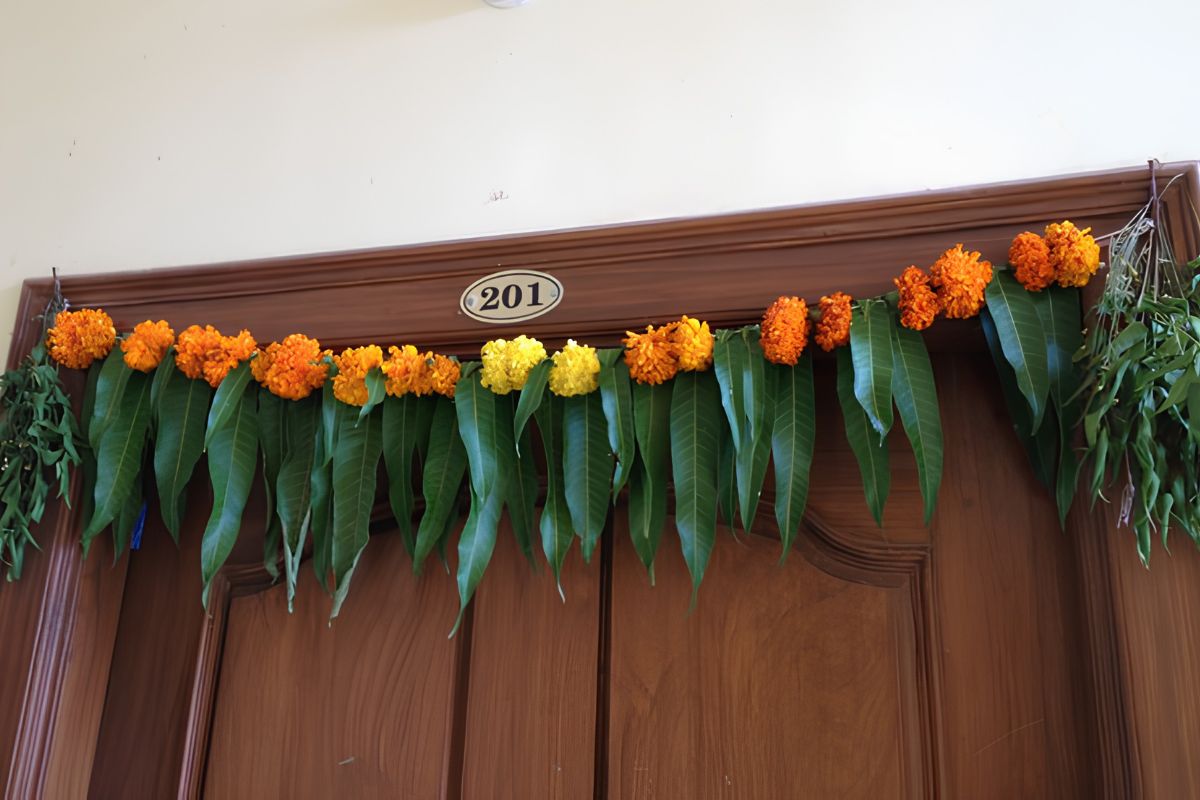
Torana is an old Indian term. It describes a decorated archway or a festooned hanging over a doorway, a gate, or a sacred place. Traditional architectural texts mention several kinds, including those made of flowers, jewels, and paint. A toran made of leaves is called a patra torana, the kind most families know today.
So, a household that hangs mango leaves is speaking in a very old visual language. The green festoon says that a celebration is underway, that the house is ready to receive visitors, and that those visitors may be relatives, neighbours, deities, or good fortune itself.
Why the Mango Tree Gets the Honour
The mango tree holds deep significance in Indian religious and cultural life. People use its leaves in worship, including during Vasant Panchami and Ganesh Chaturthi. For centuries, the tree has been linked with abundance, fertility, love, and sacredness. The mango is native to South Asia and appears in early Sanskrit writing under names such as aamra, rasaal, etc.
It also has a practical side to it. Flowers wilt within hours, but a mature mango leaf is thick and tough, and it stays green for several days after being cut. Before synthetic garlands came in vogue, mango leaves were an obvious choice for festivals that last many days. A family could pick leaves from a nearby tree, string them in minutes, and replace them whenever they dried.
Availability counted for something too. A tree in the courtyard or at the edge of the village made sure the cost-free custom was kept alive.
Prosperity, Protection, and a Fresh Start
At its core, the mango leaf toran stands for mangalam, the quality of being auspicious. Many families believe it invites Goddess Lakshmi, associated with wealth and well-being, into the house. On Diwali, it becomes part of a larger preparation routine. Families sweep the courtyard, light lamps, draw rangoli, and hang a toran over the door.
The doorway itself matters greatly in traditional Hindu thought. It is the line where the outside world ends, and the family’s protected space begins. A toran marks that line. Many people describe it as a kind of filter, one that welcomes good fortune and divine grace and prevents ill feeling from stepping in.
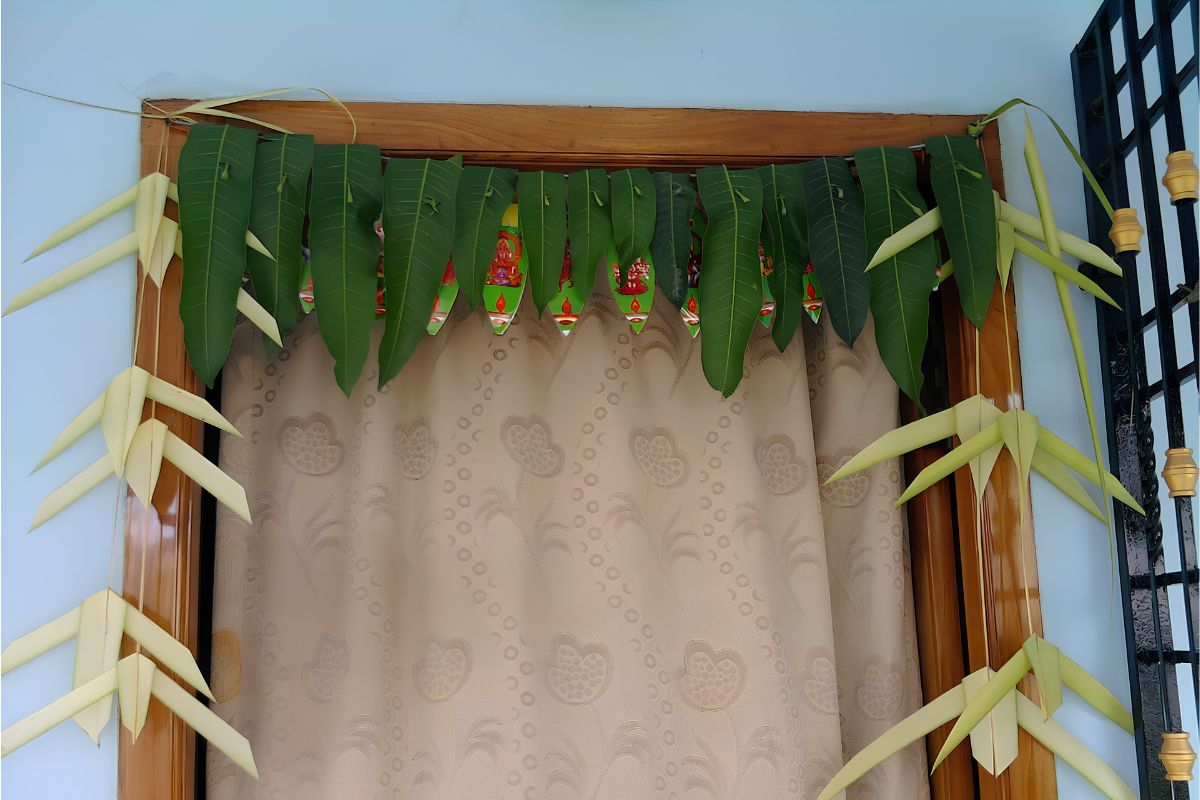
A new house, a marriage, or a major festival should not slip in unnoticed. It deserves to be announced and honoured. The leaves signal that the moment matters.
Leaves That Stand for Life
Mango leaves also carry the meaning of growth and fertility. At weddings, they symbolise blessings for a long, fruitful married life. At a housewarming, they stand for a fresh beginning and the hope that the new home will be filled with health, peace, and plenty.
They turn up in other rituals as well. A kalash is a ceremonial pot used in many Hindu rites, and people commonly place mango leaves around its rim, where they represent life and the presence of the divine.
The habit also has a quiet poetry. A leaf taken from a living tree and tied above a doorway reminds a family that its celebrations rest on what the natural world provides. In an age of climate crises, the custom revives an old idea each time a festival comes round. Prosperity and the land’s health have always been connected.
What Science Can and Cannot Say
Popular explanations often claim that mango leaf torans clean the air, drive away insects, or go on releasing oxygen long after being cut. These claims are repeated everywhere, and they deserve some caution. A cut leaf may continue exchanging gases for a short time, but it cannot clean the air of a whole house. There is no strong scientific evidence that a toran keeps out mosquitoes or dust.
The appeal may lie elsewhere. Fresh greenery at an entrance looks pleasant, and green is widely connected with calm and renewal. A natural toran brings a little of the outdoors to the doorstep, and many people find that cheering. Still, the custom’s value lies mostly in its cultural, emotional, and spiritual meaning.
A Custom That Moved to the City
The toran has changed over time. For major religious occasions, many homes still insist on fresh leaves, since freshness forms part of the offering. In other homes, families use reusable torans of cloth, beads, or embroidery, cut in the shape of mango leaves. These reduce waste while keeping the look and feel of the old practice.
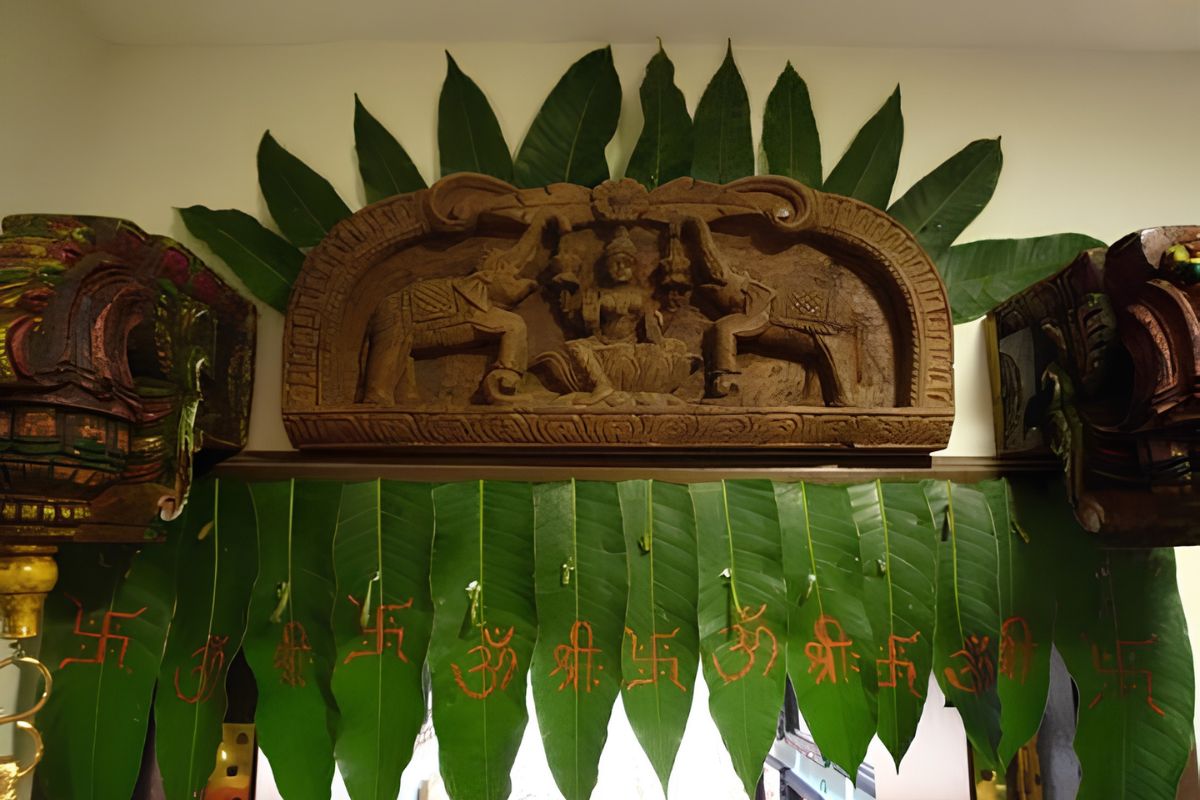
The custom also differs from region to region. In Tamil homes, the mango leaf festoon is called maavilai thoranam. In Maharashtra and other regions, similar torans appear at Gudi Padwa, Diwali, and weddings. Materials, colours, and rituals vary, but the central idea is easy to recognise. People make the entrance auspicious before the celebration begins.
In cities, apartment doors have replaced village courtyards. A family may live on the fourteenth floor, far from the mango orchards their grandparents knew, and still tie green leaves above the door before a festival. In doing so, they pass along a shared inheritance without any fuss.
The Quiet Prayer Above the Door
This one small gesture holds several of India’s oldest values- hospitality, hope, respect for nature, and faith in new beginnings.
A toran greets a guest before a word is spoken. It announces joy without needing an explanation. It turns a plain doorway into a place of intention, asking that those who enter find warmth and those who live inside find peace. It reflects a family’s quiet prayer that the house may stay green with possibility, open to kindness, and blessed with plenty.
Also Read: The Lost Cities of Medieval India and the Stories Behind Their Decline
You can connect with DNN24 on Facebook, Twitter, and Instagram and subscribe to our YouTube channel.