

On Bhai Dooj 2026, the day death came to dinner, families across India will gather on Wednesday, 11 November, to repeat a custom that began with a god, his sister and a shared meal. Yama, the lord of death, is said to have visited his sister Yamuna after a long separation, and what followed gave Hindus one of their warmest festivals. It carries several names, including Bhaiya Dooj, Bhau Beej, Bhai Phonta, and Yama Dwitiya. Whatever a family calls it, the day brings tilak, sweets, gifts and blessings to the table, and it asks brothers and sisters to set aside a few hours for each other.
The Date and the Right Time for Tilak
Bhai Dooj falls on the Dwitiya Tithi, the second lunar day of the Shukla Paksha, or bright fortnight, in the Hindu month of Kartika. In 2026, the festival is observed on Wednesday, 11 November, throughout India.
A reader might notice that the Dwitiya Tithi begins at 2:00 PM on 10 November, a day earlier. The main observance still falls on 11 November because the afternoon period favoured for the tilak falls within the tithi on that day. The tithi closes at 3:53 PM on 11 November.
For New Delhi, the traditionally recommended tilak muhurat runs from 1:10 PM to 3:20 PM on 11 November, a window of about two hours and ten minutes. Some panchang reports give an Aparahna puja period of 1:30 PM to 3:46 PM instead. The two figures differ because panchang calculations shift slightly by location and depend on which auspicious period the compiler chooses to use. Families outside Delhi should look up a panchang prepared for their own city and follow the timing it gives.
The Story of Yama and Yamuna
The best-known account of the festival’s origin concerns two children of the Sun god. Yama became the ruler of the dead. His sister Yamuna, who became the river that carries her name, stayed in a different realm, and for a long time the two did not meet.
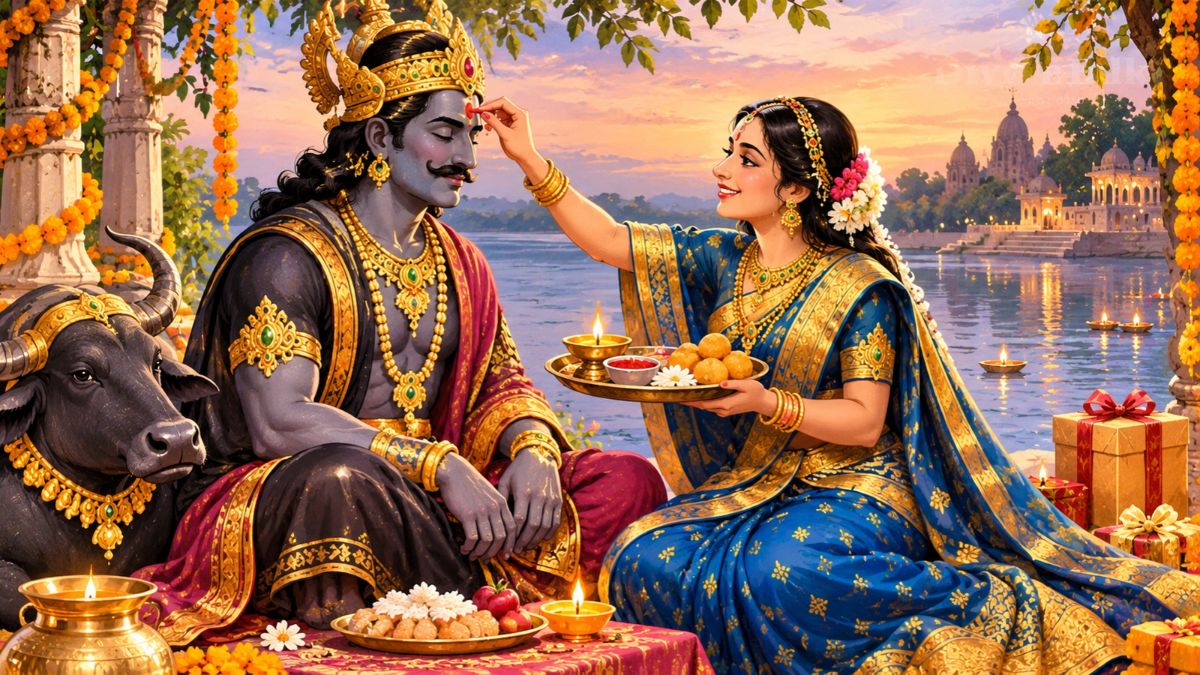
One day Yama went to see her. Yamuna welcomed him with joy, marked his forehead, offered him food, and treated him as an honoured guest. Yama, who spends his days among the departed and seldom receives such tenderness, was deeply moved. He told his sister to ask for any gift she wished.
Yamuna asked for something on behalf of all brothers. She wanted every brother who visited his sister on this day, ate the food she prepared and received her blessing to be spared an untimely death and a life of suffering. Yama agreed and declared the day sacred. This is why the festival is also called Yama Dwitiya, and why sisters pray for their brothers’ long lives on this date.
The tale carries a plain lesson. A sister’s affection is strong enough to soften even the god who is feared more than any other, and a brother who honours that affection is considered to be doing something that matters.
What the Festival Means
Bhai Dooj rests on four ideas: affection, protection, gratitude and shared responsibility. Sisters pray for their brothers’ health, prosperity, and safety. Brothers, in turn, honour their sisters and renew a promise to look after them.
The festival also serves a practical purpose in family life. Siblings grow up, marry, move to other cities and take on jobs that leave little spare time. Bhai Dooj sets a fixed date on the calendar when many of them make the effort to meet, telephone one another or at least sit down to a meal together. A small ritual repeated every year keeps a bond in working order.
How the Tilak Ceremony Is Performed
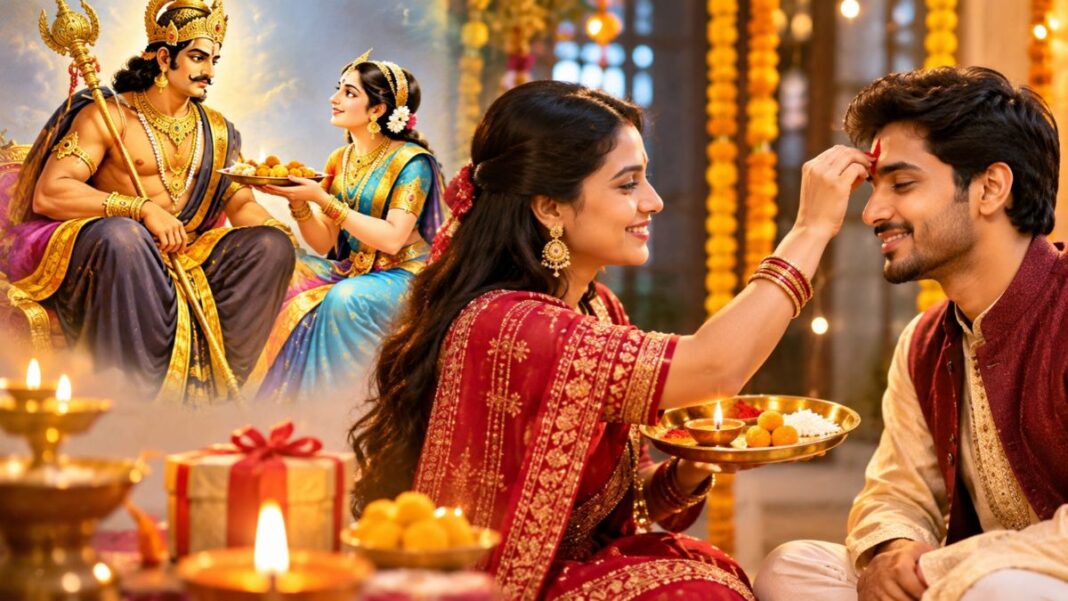
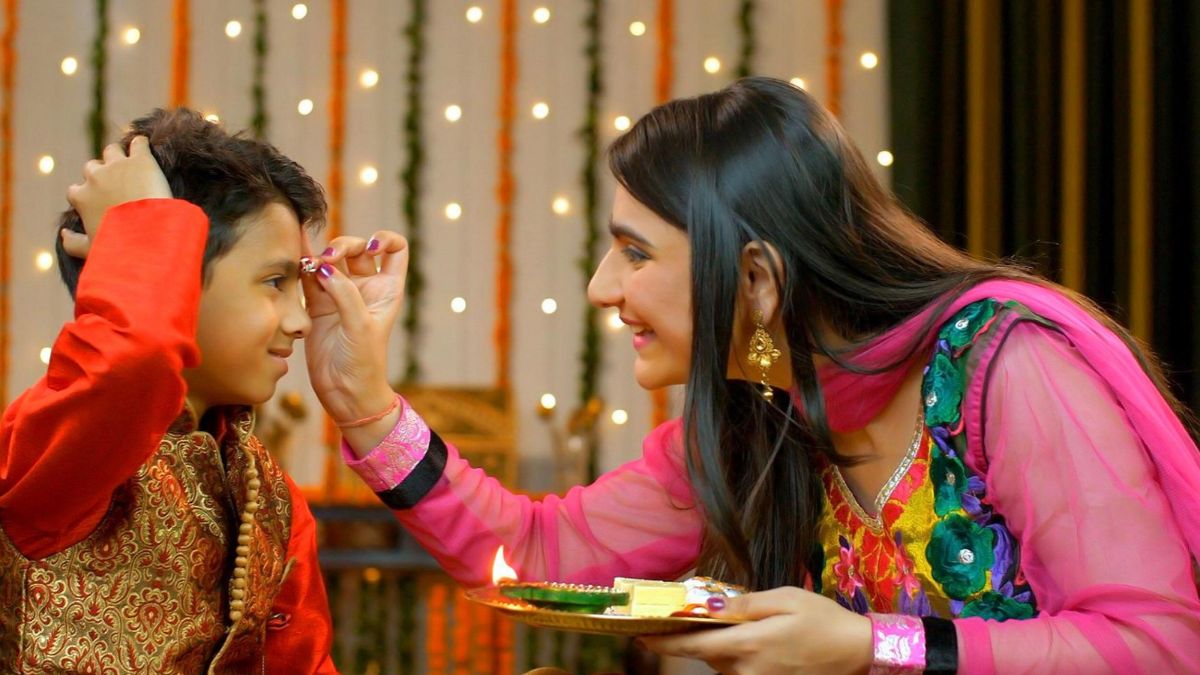
The heart of the day is the tilak. A sister prepares a puja thali, which is a plate holding the items needed for the rite. She then applies a sacred mark to her brother’s forehead, usually made from roli or kumkum, sometimes with sandalwood paste, and she presses a few grains of rice onto it.
A typical thali holds roli, kumkum, or sandalwood paste for the mark; akshat, which means whole grains of rice; a lit diya; incense; flowers; a little water; sweets; fruit; and a special dish prepared for the day. Some families add a coconut or betel leaves, and others include items handed down from earlier generations.
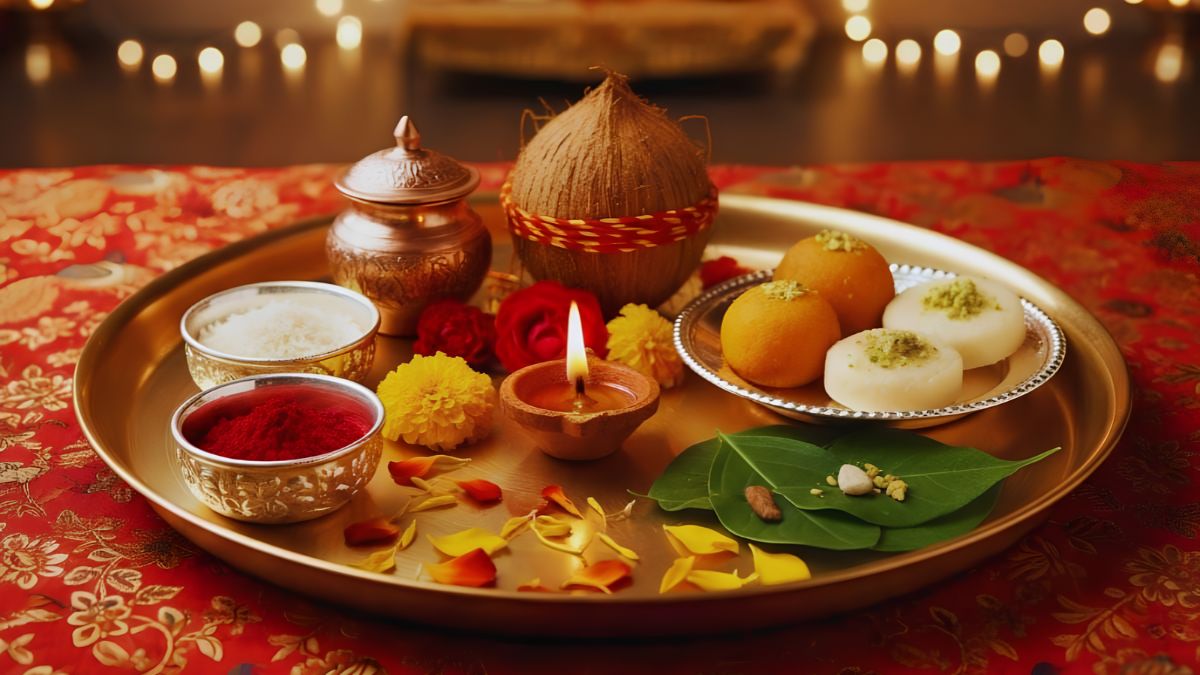
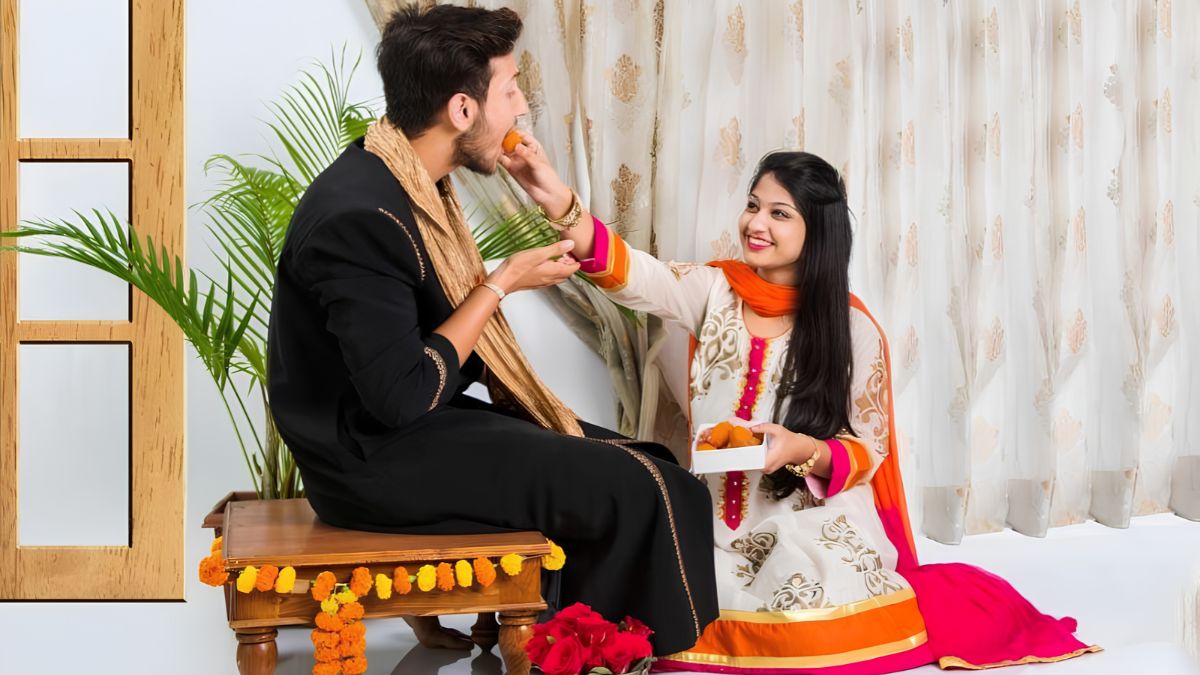
After the tilak, the sister performs aarti by moving the lamp in circles before her brother. She prays for his long life and well-being and gives him something sweet to eat. He accepts her blessing, usually touches her feet or bows if she is older, and hands her a gift in return. A meal follows, often cooked by the sister to suit her brother’s taste.
Brothers and sisters who live far apart have found ways to keep the day. Video calls let a sister perform the aarti on a screen. Gifts and sweets travel by post. Some siblings eat the same meal at the same hour in two different cities. The form changes, but the purpose stays the same.
Names and Customs Across India
In North India, Bhai Dooj is celebrated two days after Diwali, and in many communities it closes the five-day Diwali season. Homes are busy with relatives, sweets and the exchange of presents. In Delhi and nearby towns, the afternoon muhurat carries particular weight for the tilak.
Other regions use other names. Maharashtra calls the festival Bhau Beej, and West Bengal calls it Bhai Phonta. The rituals differ in detail, yet each region keeps the same centre of attention: the bond between siblings.
The custom also crosses borders. During Tihar in Nepal, sisters apply a multi-coloured tika to their brothers, walk around them in a ritual circle, and pray to Yama for their long life, prosperity, and happiness. The echo of the old story is easy to hear.
How Bhai Dooj Differs From Raksha Bandhan
Both festivals honour brothers and sisters, but they fall at different times of year and centre on different acts. Raksha Bandhan falls on Shravana Purnima, usually in August, and its main ritual is the tying of a rakhi on the brother’s wrist. Bhai Dooj falls on Kartika Shukla Dwitiya, shortly after Diwali, and its main ritual is the tilak and aarti.
The emphasis varies a little as well. Raksha Bandhan stresses a brother’s pledge of protection. Bhai Dooj stresses the sister’s blessing for his long life and prosperity, and it recalls Yama’s visit. Together, the two festivals mark siblings as lifelong companions and well-wishers.
Gifts and Ways to Spend the Day
Traditional gifts include sweets, dry fruits, clothes, jewellery, books, gadgets and personalised keepsakes. Thought counts for more than price. A brother’s present shows his gratitude, and a sister’s blessing shows her steady concern for him.
Families who want to make the day feel more meaningful have plenty of choices. A sister can cook the dish her brother loved as a child. Siblings can look through old photographs and trade memories. They can visit an elderly relative together or give to a cause in each other’s name. Some sit down for a long and unhurried conversation, which many people find harder to arrange than any gift.
What is the date of Bhai Dooj in 2026?
Wednesday, 11 November 2026. The Dwitiya Tithi begins at 2:00 PM on 10 November and ends at 3:53 PM on 11 November.
What is the correct time for the tilak?
For New Delhi, the recommended muhurat is 1:10 PM to 3:20 PM on 11 November. Other cities should check a panchang made for their own location.
Why is it also called Bhaiya Dooj?
Bhaiya Dooj is a common regional and everyday name for the same festival. Yama Dwitiya is also used, in memory of Yama and Yamuna.
Does Bhai Dooj come after Diwali?
Yes. It is observed two days after Diwali and, in many parts of India, brings the five days of Diwali to a close.
Bhai Dooj 2026 is more than a mark on the calendar. It gives people a reason to pause, return to their family and honour the sibling who has known them longest. The old story says that even the god of death was softened by a sister’s welcome, and a family that gathers on 11 November has good reason to try the same.
Also Read: Bihar Museum: A Global Landmark of India’s Living Heritage
You can connect with DNN24 on Facebook, Twitter, and Instagram and subscribe to our YouTube channel.