



Best of Sadda Punjab
Every religion in the world has certain beliefs and traditions that give it a distinct identity. Hinduism, Islam, and Christianity have their own special teachings and values. Similarly, Sikhism has several important principles that make it different from other religions.
Sikhism began during the Udasis, or religious journeys, of Guru Nanak Dev Ji. During these journeys, Guru Nanak Dev Ji shared his teachings with people, who gradually began to follow them.
As more people accepted his teachings and started searching for the path of truth, Sikhism began to develop its own identity. The Sikh Gurus established several principles and practices to guide Sikhs’ lives. One important practice is that every Sikh should offer Ardas, or prayer, before God every day. At the end of the Sikh Ardas, devotees ask God for four special blessings.
Naam, Chardi Kala, Tere Bhane and Sarbat Da Bhala
These words carry an important message. They teach people to remember God’s name, stay hopeful and courageous, accept God’s will, and pray for the welfare of the entire world. Sarbat Da Bhala means the welfare of the whole creation. It is a prayer for the well-being of everyone and everything in the universe. It includes human beings, animals, birds, and every other living creature.
This belief in the welfare of all creation is considered one of the most important principles of Sikhism. The teachings of the Sikh Gurus became a great source of strength for Punjabis during the Gurus’ time and in the centuries that followed. During the Guru period, Sikhs prayed through Ardas for the welfare of all humanity. These teachings encouraged people to follow the right path and live better lives.
In later years, when Sikhs faced oppression under different rulers and invading forces, the words Chardi Kala and Sarbat Da Bhala continued to give them courage. After Guru Gobind Singh Ji passed away, Banda Singh Bahadur also inspired Sikhs to move forward with the same determination. He was earlier known as Madho Das. Later, he became a follower of the Guru and traveled from Maharashtra to Punjab to fight against the Mughals.

Even after Banda Singh Bahadur, many Sikhs had to make great sacrifices for their faith and principles. Some were subjected to terrible punishments. Their bodies were cut into pieces, while others were scalped. Despite such suffering, they did not lose their courage.
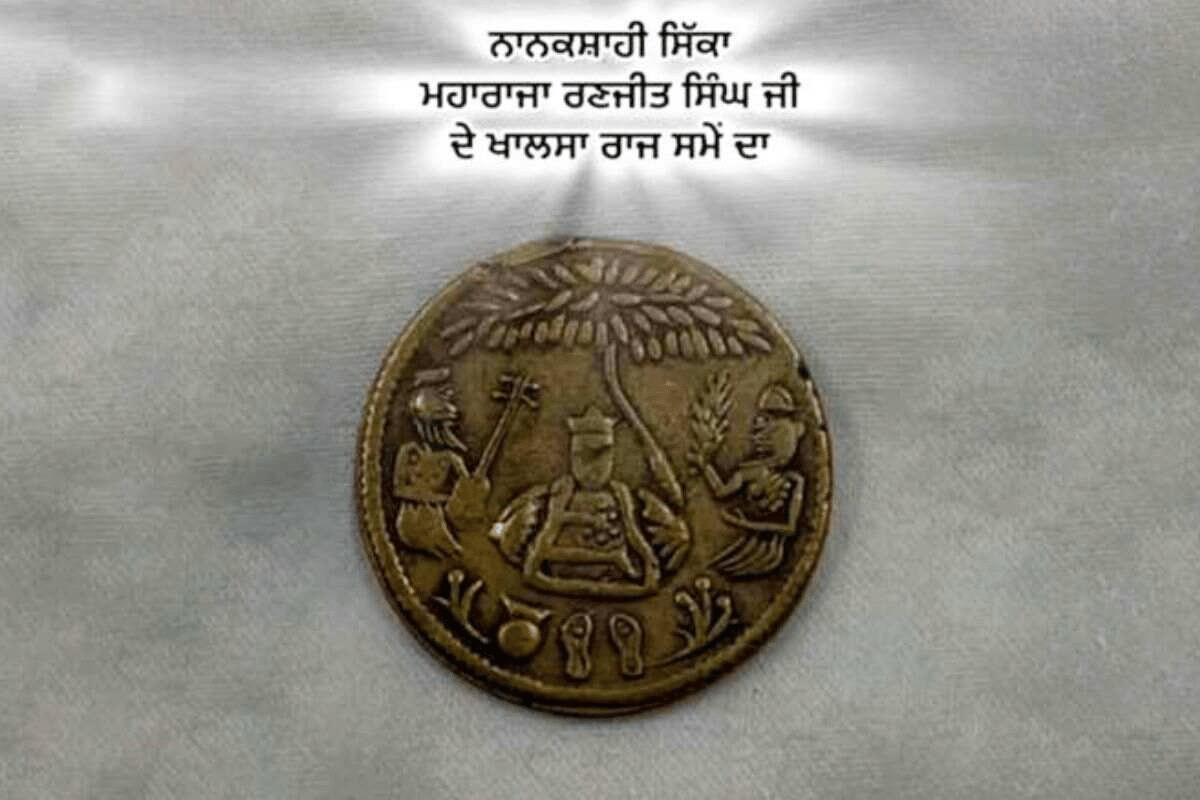
Even when facing death, they continued to pray for Chardi Kala and Sarbat Da Bhala. Many sacrificed their lives for their community while remaining firm in their beliefs. Maharaja Ranjit Singh also considered himself a servant of Guru Nanak Dev Ji and Guru Gobind Singh Ji. During his rule, he issued Nanakshahi and Gobindshahi coins. He encouraged Punjab and its people to remain in a spirit of Chardi Kala.
During his lifetime, even the British East India Company did not dare to challenge his Sikh Empire. The Sikh community’s courage and determination to defend itself are considered key reasons behind this strength. After Maharaja Ranjit Singh, Sikhs faced several more difficult periods. However, they continued to maintain their courage and determination.

Because of its location on the northwestern frontier, Punjab has experienced many invasions and hardships throughout history. From Alexander’s invasion to the attacks of Ahmad Shah Abdali, Punjab repeatedly faced foreign invaders.
When Alexander invaded India, King Porus of Punjab tried to stop him near the Jhelum River. Some people also know him as Raja Puru. Sikhism had not yet emerged then. However, the people of Punjab had already shown their determination to defend their land against invading forces.
Inspired by such historical examples and the teachings of the Sikh Gurus, Punjab also made an important contribution to India’s struggle for independence. Punjab’s role in the freedom movement is considered significant alongside the contributions of Bengal and Maharashtra. Many Punjabi patriots sacrificed their lives for India’s independence. Others participated in the freedom struggle and lived to see the country become independent.
Gradually, the message of Chardi Kala and Sarbat Da Bhala began spreading beyond Punjab to other countries. People living abroad also came to understand these words and were influenced by the Sikh community’s values. Many foreigners began wearing turbans and adopted the prayer of Nanak Naam, Chardi Kala and Sarbat Da Bhala. Several trusts and organizations were also established in different countries under the name Sarbat Da Bhala.
Even today, many individuals and organizations continue to work for humanity’s welfare while following this principle. S.P. Singh Oberoi, from a well-known Sikh family in Punjab, also runs a trust called Sarbat Da Bhala. The trust carries out various activities to help people in need. Similarly, several newspapers in Punjab are known as Chardi Kala. A television channel called Chardi Kala Time TV is also operating.These names reflect how deeply the teachings of the Sikh Gurus have become part of Punjabi life and society.

A few years ago, when farmers from Punjab began their protest movement, many traveled to Delhi. People from different districts of Punjab arrived at Delhi’s borders with tractors and trolleys. They organized protests and continued their demonstrations for a long period.
Eventually, the farmers achieved success. After this victory, many young Punjabis credited their success to the teachings of Guru Nanak Dev Ji. They remembered the words that have guided generations of Sikhs through difficult times:
Nanak Naam, Chardi Kala, Tere Bhane Sarbat Da Bhala.
These words continue to express the importance of remembering God, maintaining courage, accepting divine will, and praying for the welfare of all creation.
Article by: Prof. Ravindra Singh
Read this article in Punjabi & Hindi
Also Read: Ranakpur Jain Temple: A Rare Gem of History Carved in Marble, a Temple With 1,444 Pillars
You can connect with DNN24 on Facebook, Twitter, and Instagram and subscribe to our YouTube channel.