

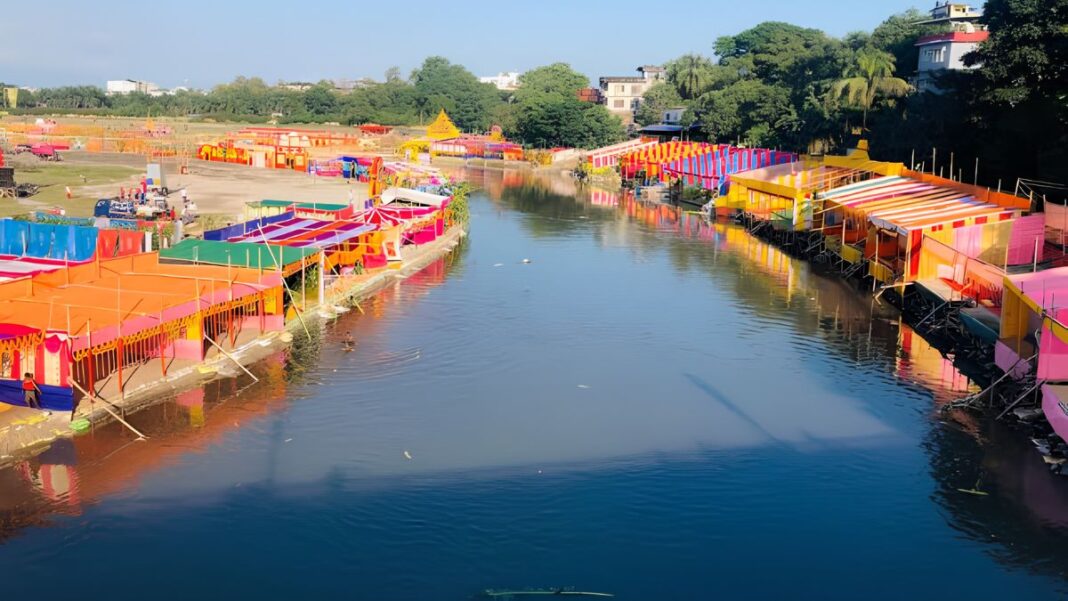

Why would millions of people wade into cold water before sunrise, hungry and holding baskets of fruit, when a warm home is a short walk away? The answer says a great deal about Chhath Puja, and it begins with water.
A temple with no roof
Chhath is offered mainly to Surya, the Sun God, and to Chhathi Maiya. It runs for four days, usually in the month of Kartika, and includes prayer, fasting, ritual bathing, and the offering known as arghya.
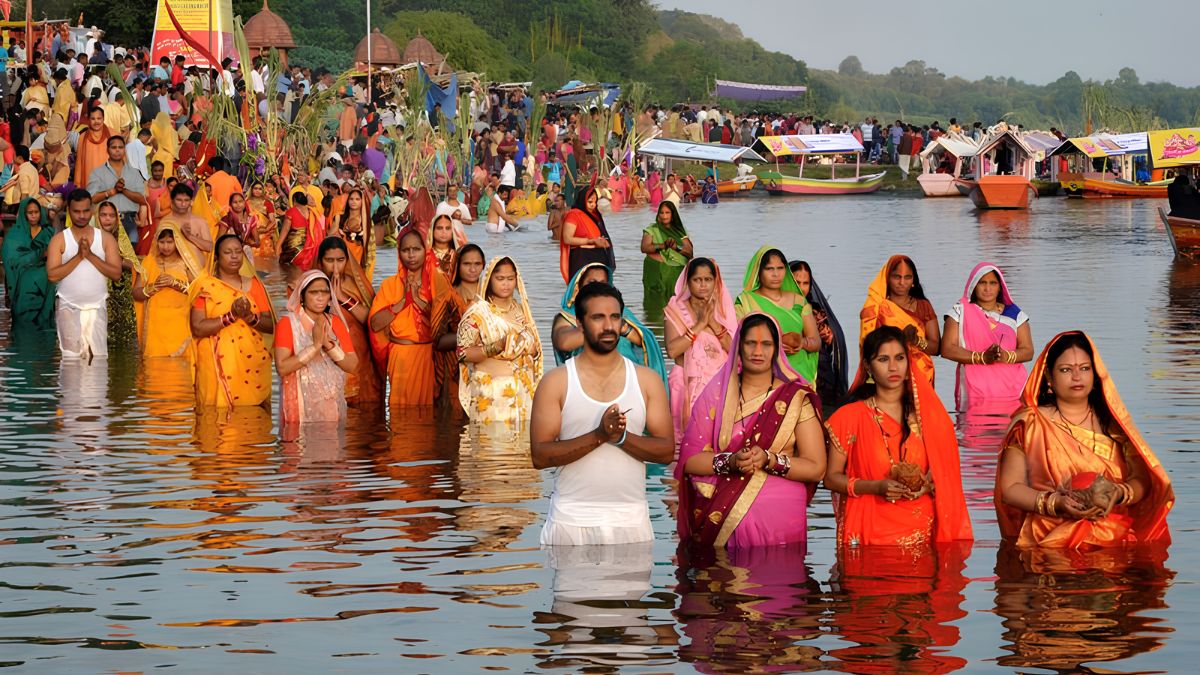
Most festivals draw people into a temple. Chhath sends them outdoors. A riverbank, a lake, a village pond or a specially prepared ghat becomes the place of worship. In the evening, devotees offer Sandhya Arghya to the setting Sun, and at dawn they offer Usha Arghya to the rising one. The meaning is plain once you think about it. The Sun gives light and warmth, water keeps every living thing alive, and the soil produces food. Chhath places all three before a family at the same moment and asks them to say thank you.
What the water means
Water sits at the centre of the rite. On the first day, called Nahay Khay, devotees bathe in a river or another body of water and often carry some of that water home to cook the ritual food. Many people regard the bath as a washing of body and spirit together.
The best-known picture of Chhath shows a devotee standing in water and facing the Sun. Into the water go fruit, sugarcane, thekua and other offerings. The posture shows humility before the forces that keep people alive, and the water around the devotee is the very thing being thanked.
The river as a meeting place
In Bihar, eastern Uttar Pradesh, Jharkhand and parts of Nepal, rivers such as the Ganga, Gandak, Koshi, Sone and Bagmati fill with families during the festival. They arrive with baskets, sing folk songs and wait together through the night for the morning offering.
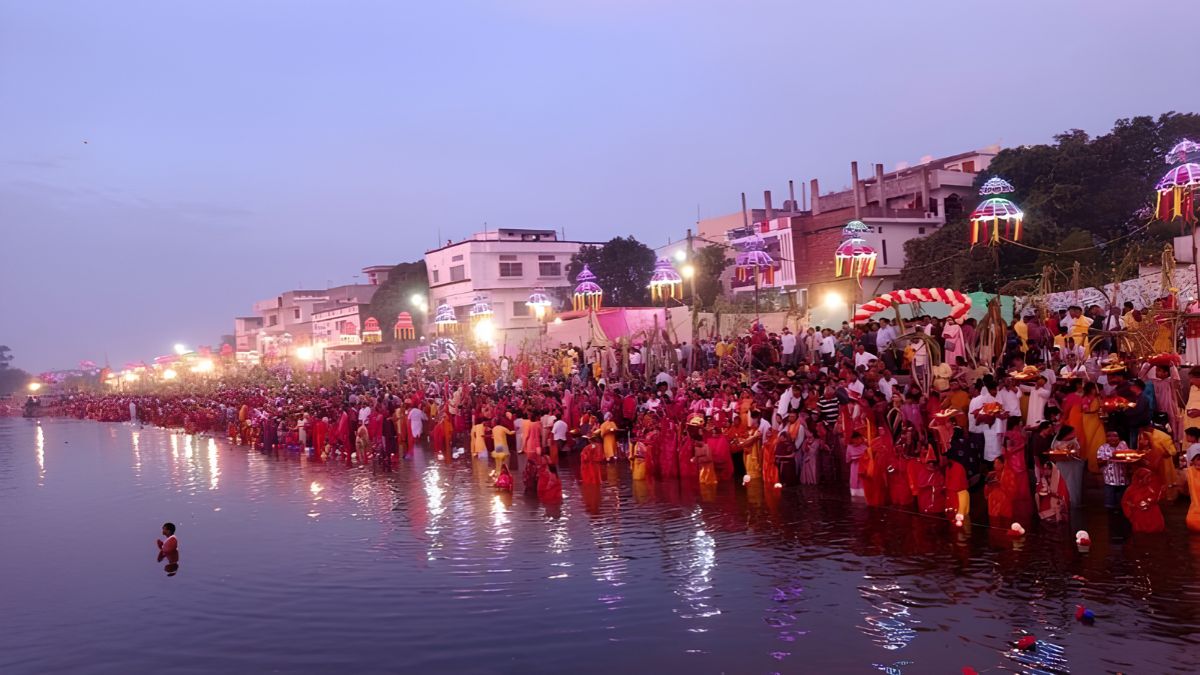
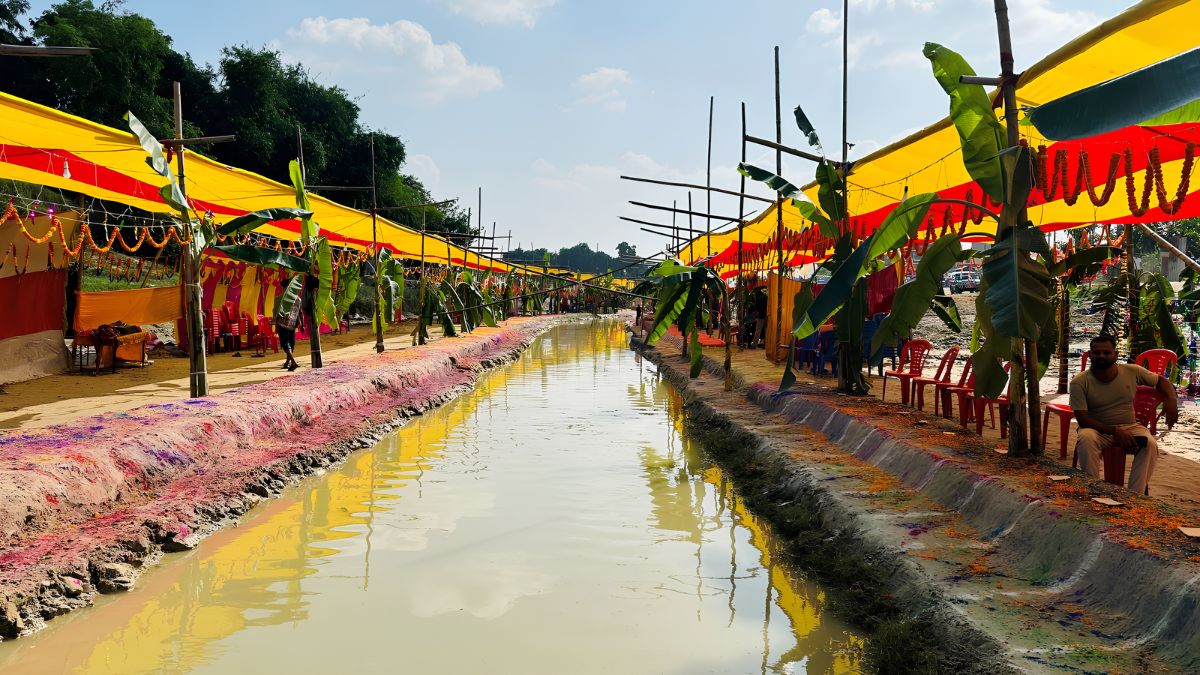
The ghat becomes a place for far more than prayer. Grandparents meet grandchildren there, and neighbours help each other carry loads and find a good spot. People mark out their places, sweep the bank and decorate it simply with banana plants and flowers. The result is a small town of devotion that lasts a few days and is remembered for years.
Families who live far from a river do not go without. A pond, a lake, a community tank or a carefully arranged water space at home can serve the purpose. What matters is that the worship takes place in front of water, with thanks directed to the Sun.
Two Suns, one lesson
The third day brings Sandhya Arghya as the Sun goes down, and the fourth brings Usha Arghya as it comes up. A person who stands in the water at both hours learns something about the shape of a day and, by extension, of a life. Beginnings follow endings, and dark hours give way to light. The devotee who gives thanks at dusk returns the next morning to give thanks again.
The fast adds weight to all this. Many devotees go without food and water for more than 36 hours. It takes discipline and endurance, and when the fast is finally broken after the morning offering, the relief and gladness are shared by the whole family.
Offerings from the field
Look closely at what the devotees carry, and you find a farmer’s list. Bamboo baskets and soops hold coconuts, sugarcane, fruit and thekua. Every item comes from the earth, and every item depends on a long chain of help. Sunlight ripens the crop, water feeds the field, soil holds the roots, and a farmer turns it all into food.
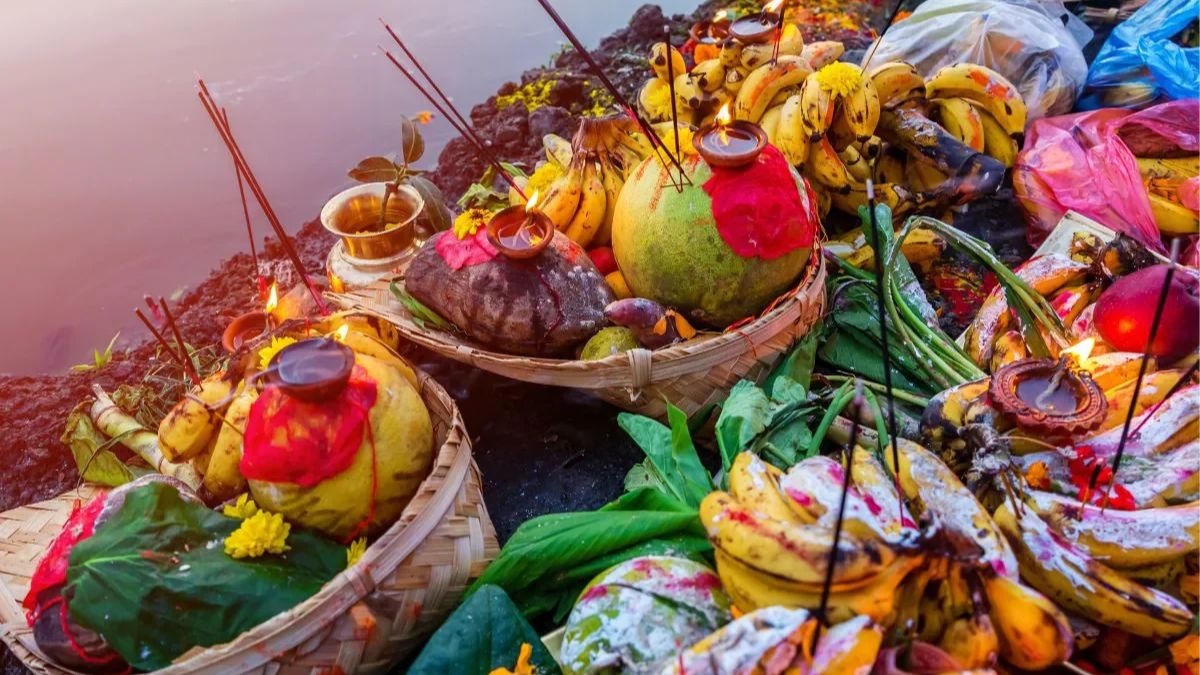
Seen this way, the offering is a record of thanks to the whole system behind a meal. The riverbank becomes something close to a harvest altar. It reminds a community that good crops and a comfortable life depend on clean water, fertile land and sensible care of both.
Why the cleaning comes first
Here is the part of Chhath that surprises many visitors. Weeks before the festival begins, families, volunteers, municipal workers and local officials start cleaning the ghats. They remove plastic, flower waste and other litter from the bank and the shallow water. They cut weeds and bushes that hide hazards. They level rough ground and mend the paths so that older adults, children and fasting devotees can walk safely. Silt is cleared where needed, with some care taken to leave the riverbed and its creatures undisturbed. Safe places to enter and leave the water are marked, and dangerous stretches are identified.
In older times, neighbours did this work by hand and saw it as part of the devotion. A river honoured as the witness of the arghya should be fit to be a witness. Prayers offered beside a heap of rubbish contradict themselves, and most devotees understand this without being told.
Zero waste on the riverbank
Modern cities have begun to add organised planning to that old habit. In Patna, authorities have prepared many ghats and ponds with lighting, barricades, drinking water, temporary toilets, changing rooms and safety arrangements. The Municipal Corporation has also run a zero-waste Chhath Puja at chosen ghats. Separate bins are placed on site, special vehicles collect the waste, and wet waste is turned into compost. The use of plastic is restricted.
The reasoning is practical. A festival that draws very large crowds produces a great deal of rubbish, and when biodegradable material is kept apart from plastic, packaging and decorations are far less likely to end up in the river. A month of public information encourages residents and devotees to keep the place clean before, during and after the festival, so that tidy habits become part of the celebration.
Back to bamboo and clay
Environmental writers, including those cited by India Water Portal, point out that the older materials of Chhath were gentle on the land. Bamboo baskets, soops, clay lamps, flowers, fruit and sugarcane all break down easily. The trouble comes from newer additions such as plastic decorations, synthetic offerings, and firecrackers, which can damage the water and the bank when left behind.
The remedy is easy to state. Use reusable or biodegradable materials, avoid single-use plastic, carry packaging home, and dispose of offerings only through the arrangements made for them.
The other 360 days
A hard question follows from all this. Some community accounts note that certain rivers are cleaned only for the festival and then ignored for the rest of the year. A cleanup that ends with the last arghya hasn’t done its job.
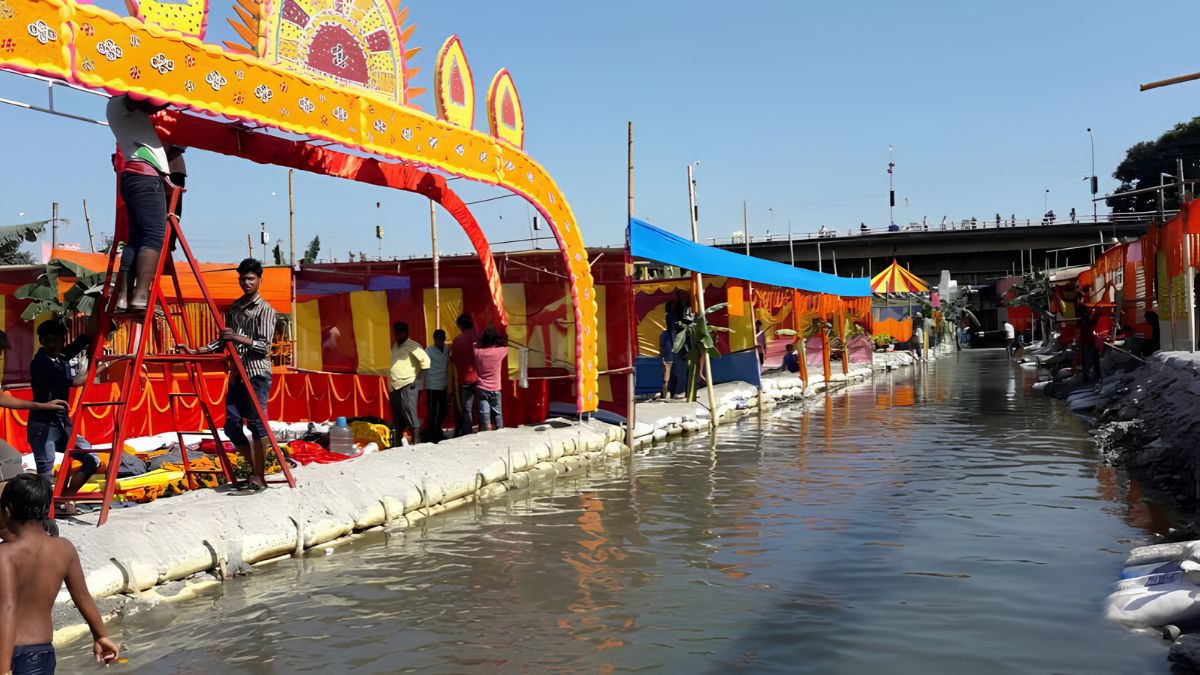
A better arrangement treats Chhath as a yearly reminder to protect water in every season. A neighbourhood can look after its own pond, stop dumping, watch its drains and hold regular cleanups. It can also work with municipal bodies on sewage and solid waste at the source. The cleaning before Chhath then becomes a promise to the river: that it will not be treated as a dumping ground once the crowds go home.
Who does the work
Government agencies can supply bins, sanitation staff, compost systems, lighting, safety barriers and awareness campaigns, and all of it helps. Still, the real strength of Chhath lies in the willingness of ordinary people. A family sweeps a bank together. Neighbours mend a path. Young people walk an elderly relative down to the water. When care for the environment arrives through tradition, it feels like a shared habit, and people follow it gladly, which a rule from outside seldom achieves.
What the festival asks of us
Cities are growing, water is running short, and many rivers carry pollution. Chhath speaks directly to these troubles. It asks people to stop, gather by the water and treat rivers and ponds as sources of life and common property, since they cannot be replaced once spoiled.
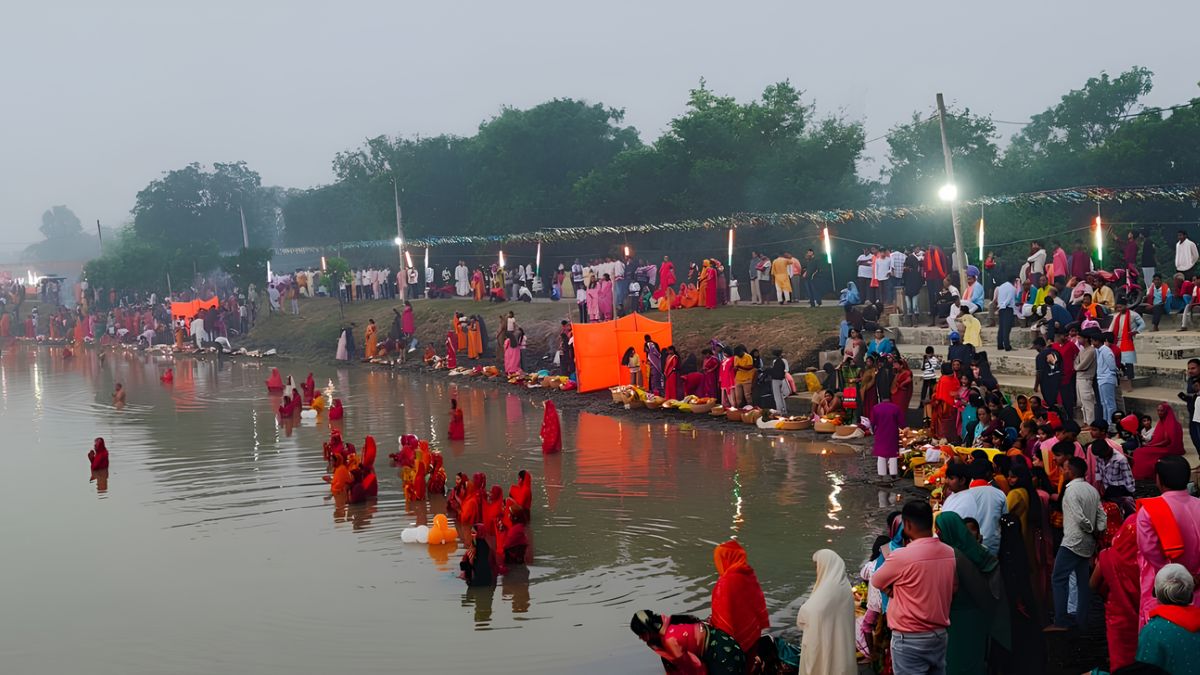
The sight of thousands standing together in the water and facing the Sun stays with you for a long time. It shows how humility before nature, thanks for plain necessities and care for shared resources can draw families and generations closer.
Chhath Puja also teaches that the divine is part of the world around us. It lives in the rising Sun, the flowing river, the quiet pond, the ripening crop and the human decision to protect them. When devotees give arghya at the water’s edge, they renew an old promise to honour whatever gives life and to hand it on cleaner than they found it. A swept ghat, an offering free of plastic, and a river looked after once the festival ends are all part of the prayer.
Also Read: Bihar Museum: A Global Landmark of India’s Living Heritage
You can connect with DNN24 on Facebook, Twitter, and Instagram and subscribe to our YouTube channel.