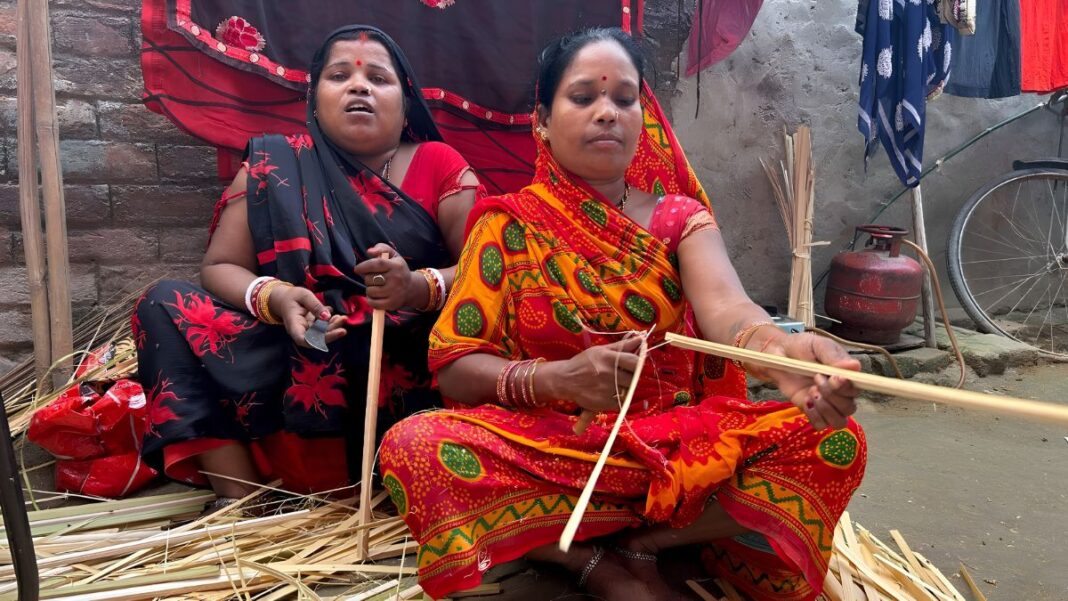

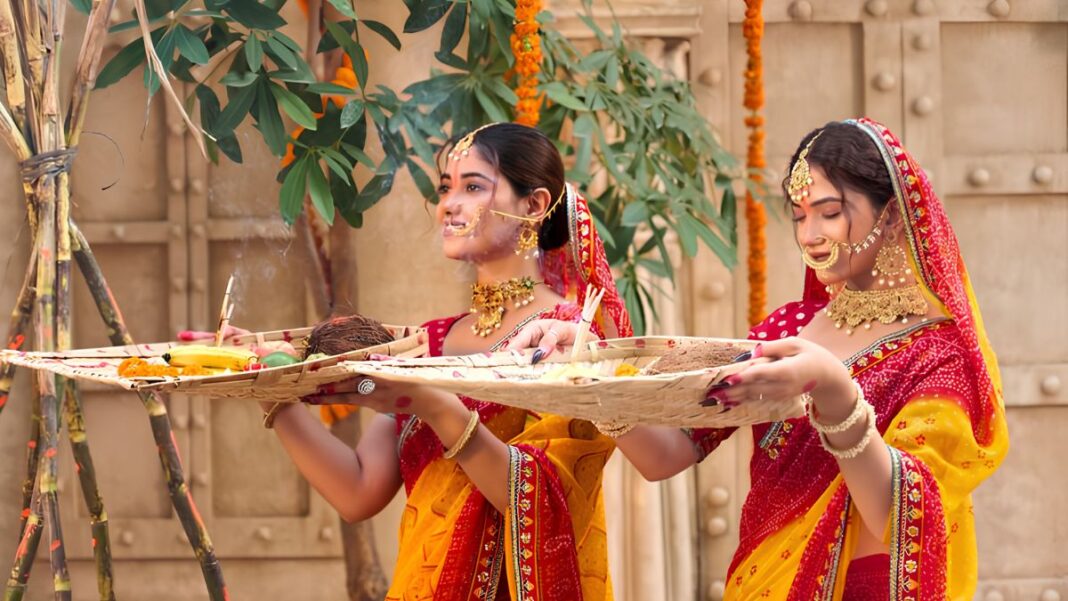

Stand at a riverbank in Bihar in the cold hour before dawn, and the answer begins to show itself in the clothes of the women around you. Gold and deep crimson move through the crowd and shine again in the water, and nobody there finds it strange. They know what the colours say. Those who do not know will want to.
The Festival Behind the Colours
Chhath Puja, also called Surya Shashti, is a Hindu solar festival that lasts four days. It is observed mainly in Bihar, Jharkhand and Uttar Pradesh, in parts of Nepal, and by Indian communities living abroad. It falls on the sixth day of the bright fortnight of Kartik, usually six days after Diwali.
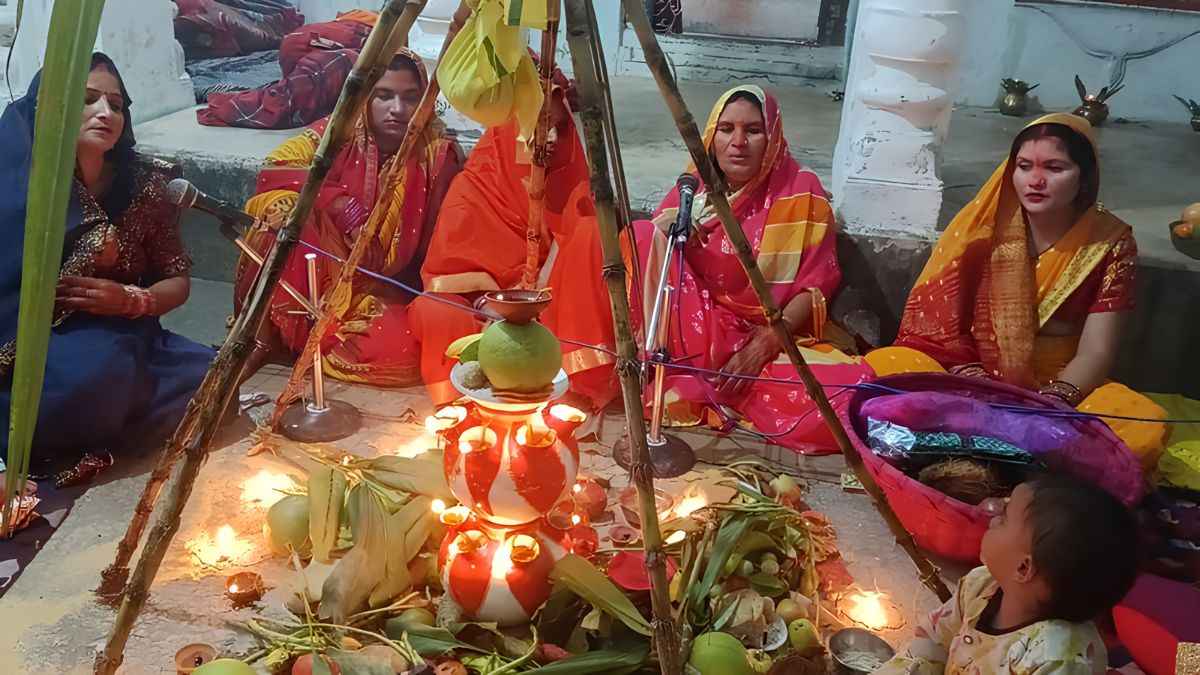
The rituals rest on one plain fact. The Sun is the visible source of warmth, energy and life. On the third evening, devotees stand in water and offer arghya, which is water given along with prayer, to the setting Sun. This is Sandhya Arghya. On the final morning, they return and make the same offering to the rising Sun, known as Usha Arghya. Between the two come long hours of preparation, singing and prayer.
Two figures are worshipped here. One is Surya, the Sun God. The other is Chhathi Maiya, a protective maternal goddess to whom families turn for the safety of their children. Clothing at Chhath is chosen with both of them in mind.
A word of caution belongs here at the start. No rule binds every devotee. Customs differ from one family to the next and from one region to another. What follows explains why yellow and red are so common at the ghats. It does not claim they are required.
Yellow, the Colour of the Sun
Yellow comes first because it looks like the thing being worshipped. Surya is honoured in Hindu tradition as the giver of life, health and energy, and Chhath devotees follow the Sun’s daily path from its setting to its rising. A yellow saree carries some of that brightness. It recalls sunlight, ripened grain, turmeric and the gold of early morning.
Turmeric, or haldi, deserves a closer look. It has a place throughout Hindu ritual life and is traditionally linked with purity, protection and fresh starts. Yellow therefore arrives at the riverbank already loaded with sacred meaning, long before the Sun has risen.
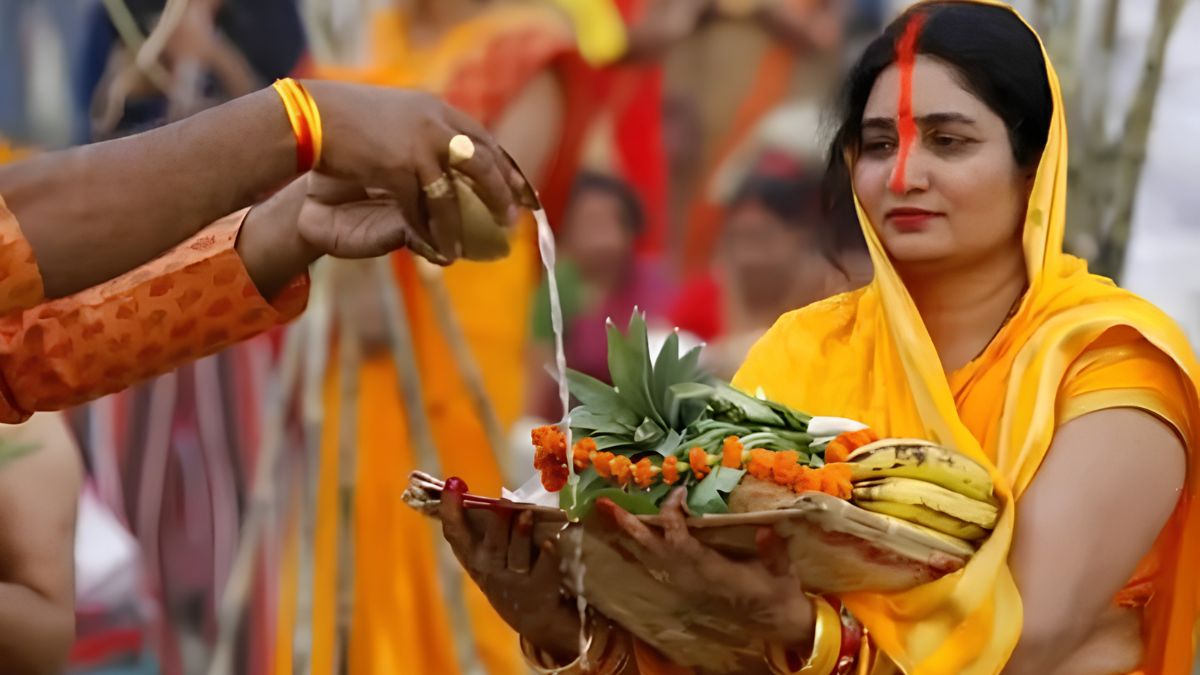
The pale gold of a yellow saree suits the morning rituals especially well. Devotees gather before sunrise for Usha Arghya, and as the first light spreads over the water, the cloth seems to answer it. The darkness has passed, the Sun has returned, and families give thanks for another day of life. For many worshippers, wearing yellow is a way of placing themselves in line with the power that keeps them going.
Red, the Colour of Strength and Blessing
Red speaks differently, though with equal force. In many Hindu traditions, it stands for shakti, which means divine energy and strength. It also stands for prosperity, fertility and the well-being of a marriage. It is closely tied to sindoor, the vermilion mark worn by many married women.
During the vrat, many married women choose red or deep maroon sarees. Their prayers often turn toward the health, protection and long lives of their children and other family members. Red becomes the colour of that responsibility and of the hope that goes with it.
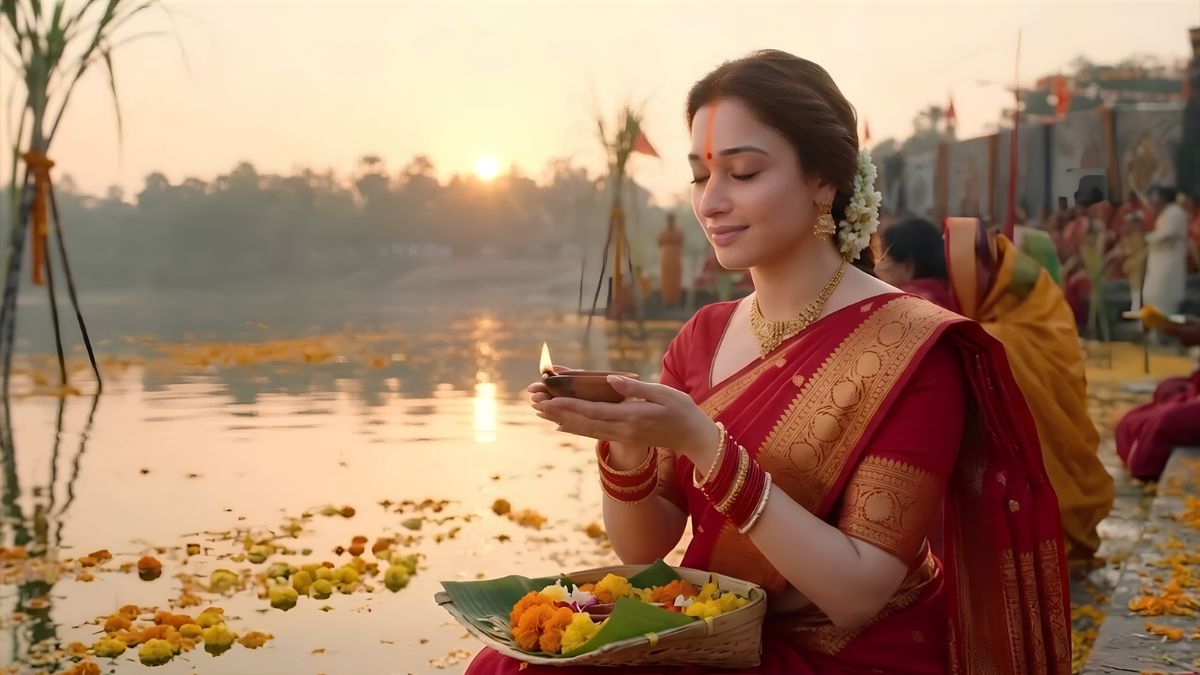
It also suits the feeling of the festival. Chhath is rarely a lonely act of worship. Families prepare the offerings together, sing traditional songs and stand side by side at the water. Red, with its warmth and intensity, speaks of the courage and love it takes to pray for people one holds dear.
Red shows up most at Sandhya Arghya, when families gather at the ghats in the evening. Against darkening water and the glow of earthen lamps, red sarees make a striking picture of faith, endurance and celebration.
The Saree Itself
The saree has its own place in the look of Chhath, especially in Bihar and the surrounding regions. Many women wear a new saree or a freshly washed one for the rituals. Some families prefer simple unstitched cloth as a sign of ritual purity.
Comfort counts as much as beauty. A woman observing Chhath may spend long hours preparing offerings, carrying baskets, standing in water and taking part in the arghya. Lightweight cotton sarees are often chosen because they let her move freely and stay at ease through demanding hours.
There is a plainness in the choice. A devotee in yellow or red joins a larger scene made up of the river, the bamboo baskets, the sugarcane, the lamps, the offerings and the Sun low on the horizon. Her clothing is one part of that picture, and she knows it.
No Single Dress Code
It should be said clearly that Chhath has no universal dress code. Some households favour white or cream, which stand for purity. Others choose yellow, orange, red or green. Family tradition, regional practice and personal taste settle the matter in each home.
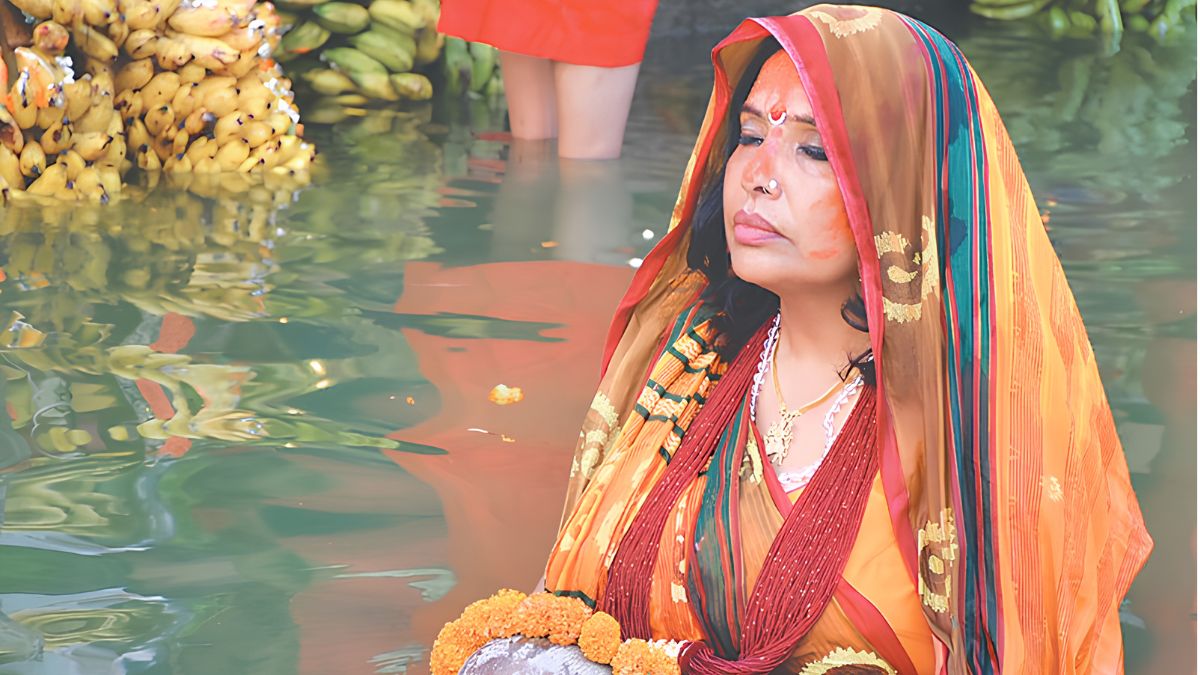
What holds these choices together is intention. Chhath is a festival of discipline, gratitude and direct contact with nature. Devotees pray without relying on priests or idols. They stand before the Sun and the water and give thanks humbly, and the clothes they wear are part of that humility.
Yellow and red are inherited symbols in this setting. Yellow stands for the Sun’s light and for new beginnings. Red stands for strength, prosperity and the blessing of family. When a woman wears them at the ghat, she carries forward generations of faith, memory and prayer. A grandmother may have worn the same colours at the same water, and a daughter may wear them in turn.
Reading the Ghat
Once the meanings are known, the riverbank can be read almost like a page. The yellow sarees gather the morning. They hold the memory of turmeric, grain and sunrise. The red sarees gather the family. They hold the prayers for children, for husbands, for the health of the household.
Between them lie the other things the festival depends on. There is the river that gives water, the earth that gives grain and the Sun that gives energy. Chhath asks people to thank each of these in person, standing in the cold, with their families close by. The colours of the saree make that thanks easy to see from the far bank.
What the Colours Say
The meaning of these sarees lies in how they make an unseen idea visible. Chhath teaches gratitude for the forces that keep human life going: sunlight, water, earth, and food. The Sun gives energy. Rivers give water. The earth gives grain. Families give love and support.
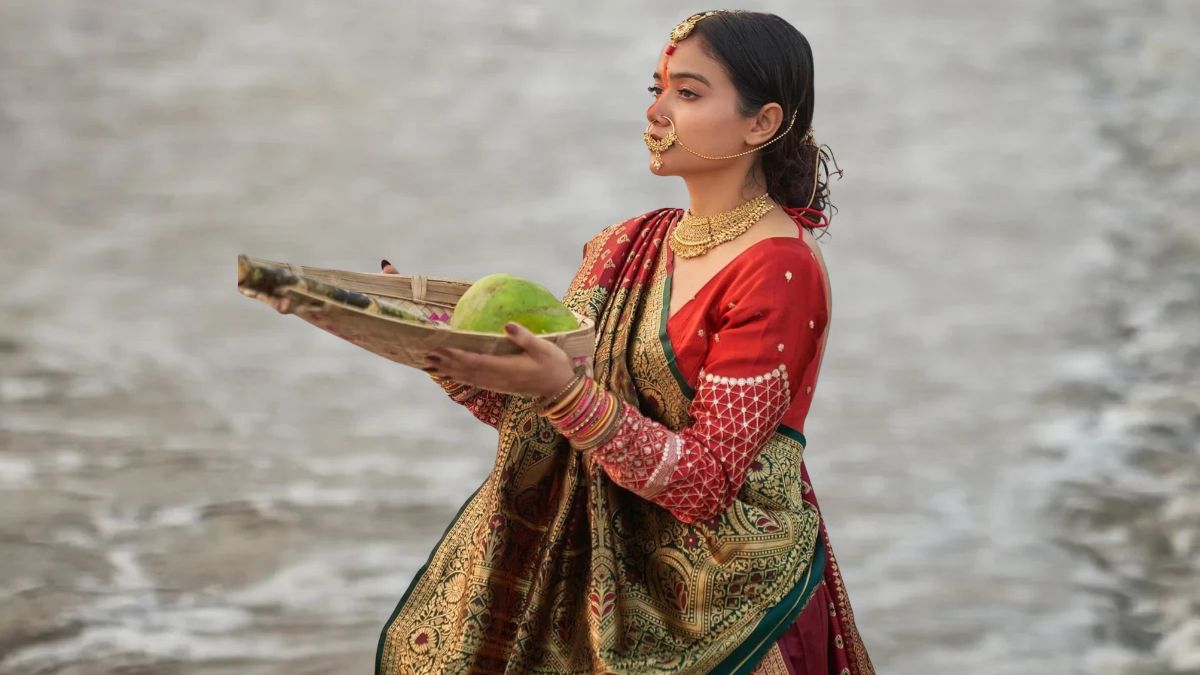
Yellow says, “I honour the light that gives life.” Red says, “I pray for strength, protection and prosperity for my family.” Worn together, they turn a plain garment into a statement of hope.
That is why the sight moves people so deeply when thousands of devotees stand in rivers and ponds at sunrise and sunset. Colour is part of it, and so is something older. It is faith made visible, warm as sunlight, strong as devotion and lasting as the bond between family, nature and the divine.
Also Read: How Local Artisans Prepare Festival Baskets and Ritual Objects for Chhath
You can connect with DNN24 on Facebook, Twitter, and Instagram and subscribe to our YouTube channel.