

Why does a small, crisp, golden sweet become the centre of one of India’s most demanding festivals? The answer lies in thekua, the traditional prasad of Chhath Puja. Made from wheat flour, jaggery, ghee, and a few fragrant spices, it carries devotion, family memory, gratitude, and the cultural identity of millions of devotees.
Thekua is more than food. It is an offering prepared with care, placed before the Sun, and shared among families and neighbours. In Bihar, Jharkhand, eastern Uttar Pradesh, and parts of Nepal, no Chhath celebration feels complete without it. Its plain ingredients and simple appearance conceal a deep connection to faith, nature, and the bonds that hold communities together.
A Sweet Born of Devotion
Chhath Puja, also called Surya Shashti, is a four-day Hindu festival dedicated to Surya, the Sun God, and Chhathi Maiya. It is observed chiefly in Bihar, Jharkhand, eastern Uttar Pradesh, and parts of Nepal. Over time, it has travelled with families and communities to many parts of India and abroad.
The festival’s central belief is direct and powerful. The Sun is not seen only as a celestial body. It is the visible source of light, warmth, health, energy, and life. Devotees offer arghya, or water and offerings, to the setting Sun on the third day and to the rising Sun on the fourth day. The purpose is to thank the Sun for sustaining life and to seek well-being, prosperity, and progress.
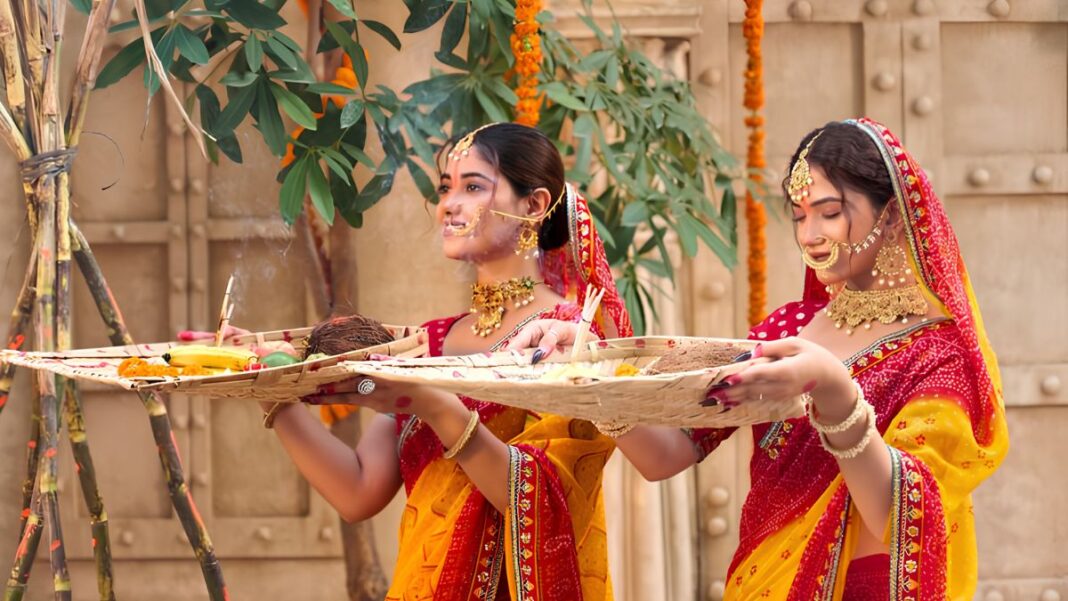
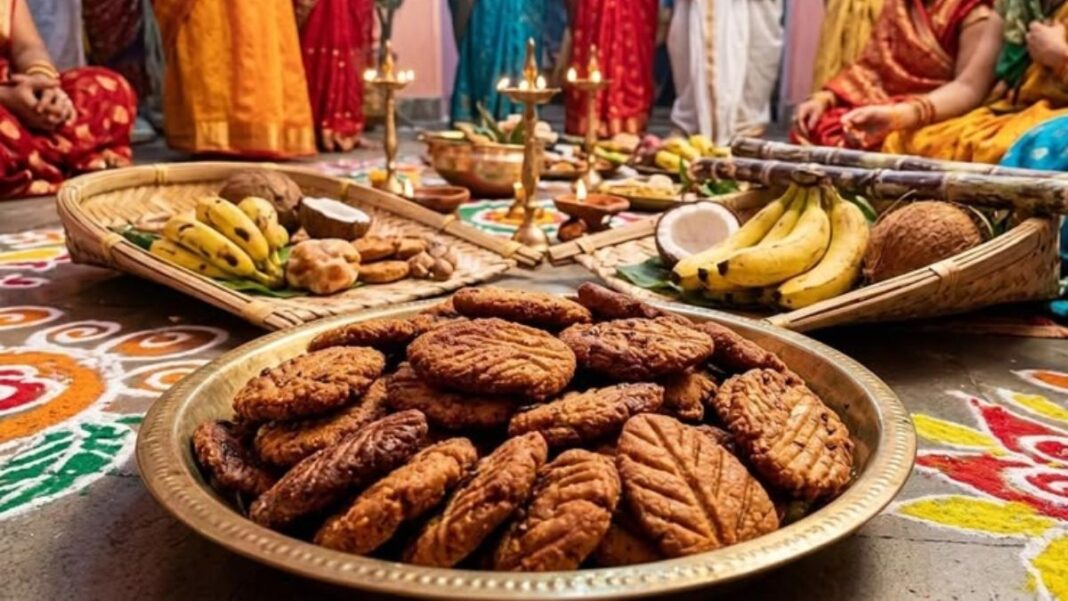
Thekua enters this sacred setting as an offering shaped by human hands and household faith. It is placed in bamboo baskets called soop or daura, along with seasonal fruits, sugarcane, coconut, and other traditional items. The sweet is not merely carried to the riverbank. It becomes part of the prayer itself.
What Makes Thekua Special
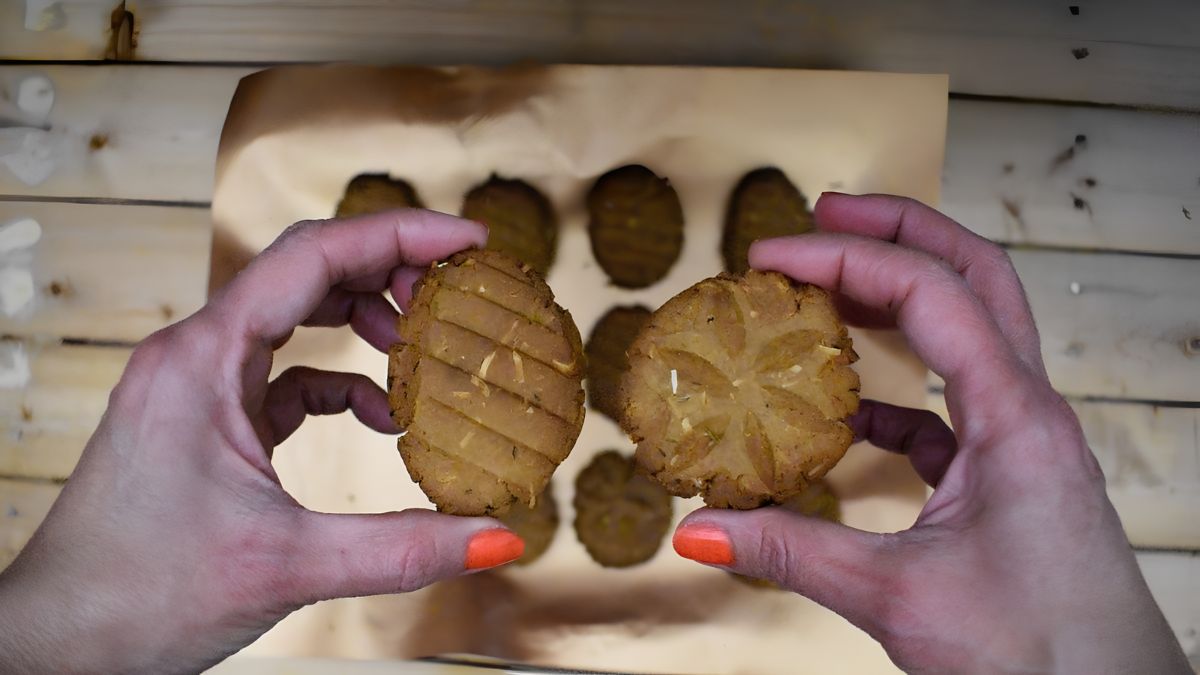
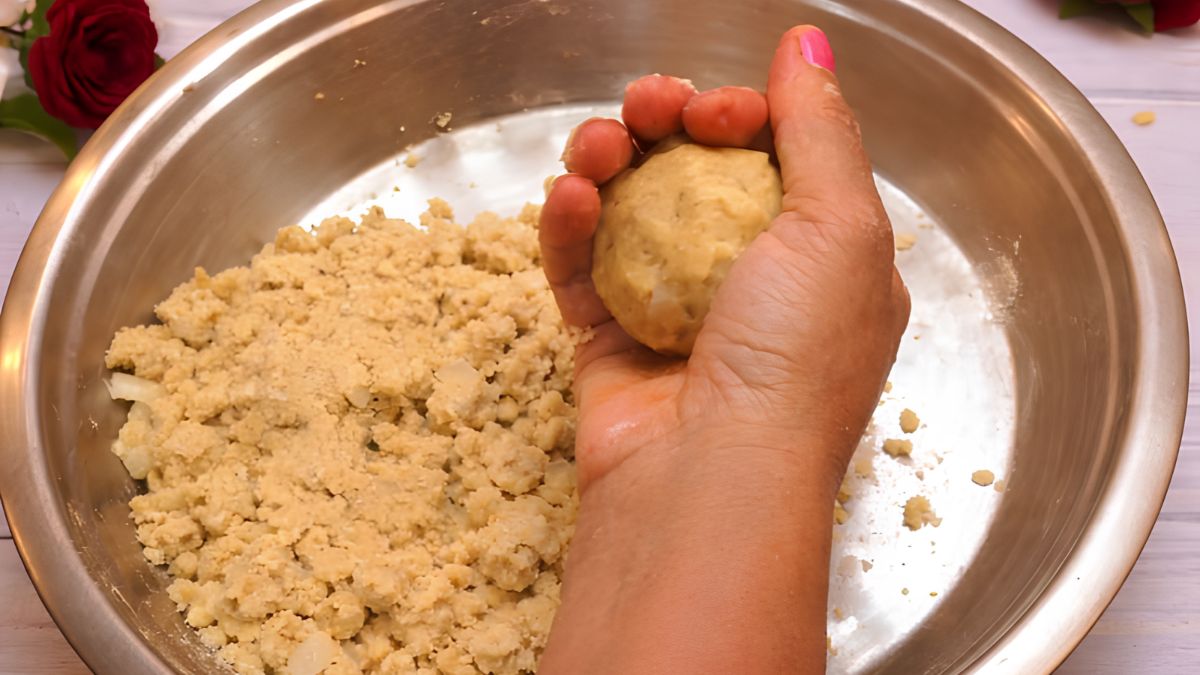
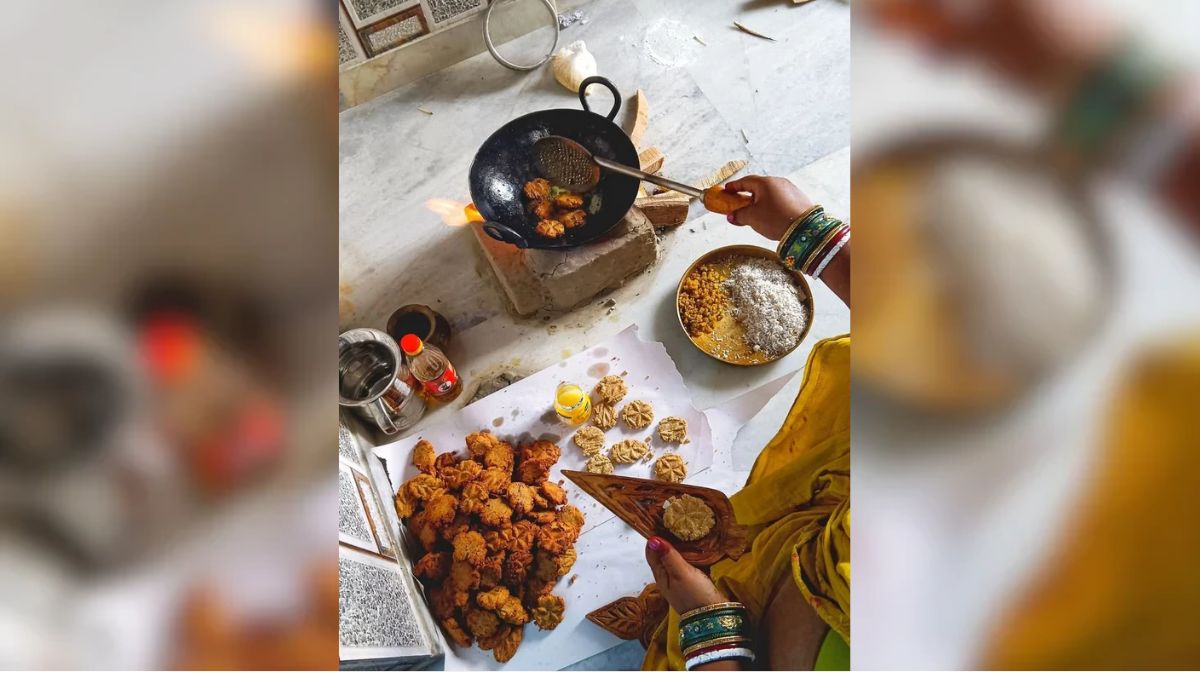
Thekua is usually prepared from whole wheat flour, jaggery or sugar, ghee, and flavourings such as fennel, cardamom, or coconut. The dough is kneaded firm, shaped into small rounds, and often pressed into a carved wooden mould. It is then fried slowly until crisp and golden.
Its simplicity is its strength. Wheat, jaggery, and ghee are ordinary ingredients, yet they become sacred when prepared with cleanliness, restraint, and intention. The process asks for patience. The dough must be firm enough to hold its shape. The ghee must be heated gently. Each piece must be fried until it develops the familiar crisp texture that devotees recognise at once.
Different regions know it by different names: Thekua. In some places it is called kajuria, while in others it is known as khajoor. These names reflect the diversity of local traditions, even though the purpose of the sweet remains the same.
| Element | Traditional role |
|---|---|
| Whole wheat flour | Provides the base and reflects locally available grain |
| Jaggery | Gives sweetness and is preferred in many households |
| Ghee | Used for richness and frying |
| Fennel, cardamom, coconut | Added in some homes for fragrance and regional variation |
| Wooden mould | Creates the familiar embossed pattern, though hand shaping is also common |
The firm texture and long shelf life of thekua have practical roots. It can be prepared before the rituals, carried to riverbanks, and shared after worship. This durability makes it especially suited to a festival whose main rites take place outdoors, at dawn and dusk, beside rivers, ponds, and lakes.
Purity, Discipline, and Family
Chhath is one of India’s most demanding festivals. Devotees observe ritual bathing, fasting, and, for many, a 36-hour nirjala vrat, a fast without food or water. The festival places great importance on purity, discipline, and direct worship of nature. It does not require a priest.
In this atmosphere, thekua is not made casually. Families clean their kitchens and utensils. They prepare ingredients with care. Many households reserve special vessels for the prasad. Some families avoid tasting the offering before it has been presented in worship. Customs differ from home to home and region to region, but the shared spirit is reverence.
The preparation itself becomes an act of togetherness. Elders guide younger family members. Recipes pass from one generation to the next. The fragrance of frying thekua fills the home and, in its own quiet way, announces that Chhath has arrived.
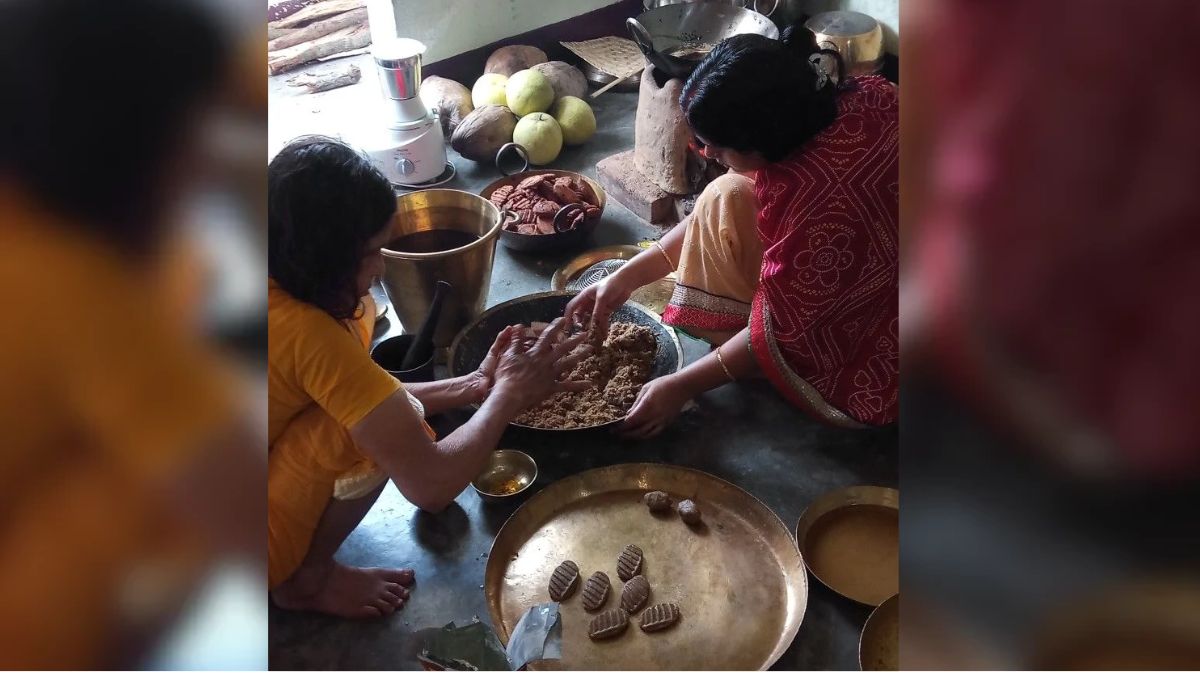
This is why the sweet is remembered for more than its taste. It is remembered for the hands that made it and the prayers that accompanied it. A mother may remember shaping thekua with her own mother. A child may remember watching the wooden mould press patterns into the dough. These small memories become part of a larger family story.
The Ritual Journey of Thekua
Thekua is closely associated with the final two days of Chhath. On the third day, devotees prepare offerings and gather at water bodies for Sandhya Arghya, the evening offering to the setting Sun. On the fourth day, they return before sunrise for Usha Arghya, the offering to the rising Sun.
The bamboo soop or daura carries thekua along with fruits, sugarcane, coconut, and other offerings. After the morning ritual, devotees break their fast and distribute prasad among relatives, neighbours, and community members.
This distribution is one of the most beautiful aspects of the tradition. Thekua begins as a family’s offering, but it does not remain private. It travels from the home to the ghat. It returns from the ghat to the home. Then it reaches the hands of neighbours, friends, and loved ones.
In this way, a simple sweet becomes a bridge between households, generations, and communities. It carries the same message in every home: gratitude, shared faith, and the hope that life will remain protected and prosperous.
A Living Cultural Heritage
Chhath is not only a religious observance. It is also a celebration of ecological awareness and social unity. The festival is rooted in ancient sun worship and is observed through offerings to the Sun, without idols or priests.
Thekua embodies this relationship with nature. Wheat represents the harvest. Jaggery comes from sugarcane. Ghee connects the offering to dairy traditions. For many devotees, preparing thekua is also an expression of gratitude for food, land, water, and sunlight, the elements that make life possible.
This interpretation is cultural rather than a universal rule, but it fits closely with the spirit of the festival. Chhath asks devotees to recognise their dependence on nature. The Sun gives light. Rivers give water. Fields give grain. Families give support. Thekua brings these ideas together in a form that can be held in the hand.
The festival’s reach has expanded far beyond its heartland. Chhath is now celebrated by communities across India and abroad, including Mauritius, Fiji, Trinidad and Tobago, the United Kingdom, the United States, and the United Arab Emirates. Wherever it is observed, thekua often remains the taste of home.
More Than a Sweet
What makes thekua extraordinary is not luxury or complexity. It is made from modest ingredients, yet it carries great emotional and spiritual weight. It represents a family’s discipline, a mother’s care, a community’s shared faith, and a devotee’s gratitude to the Sun.
When a devotee stands in water at sunrise with a basket of offerings, thekua is not simply food in a basket. It is a promise. It is a promise to remain grateful, to honour nature, to protect family well-being, and to pass on a tradition that has survived through centuries.
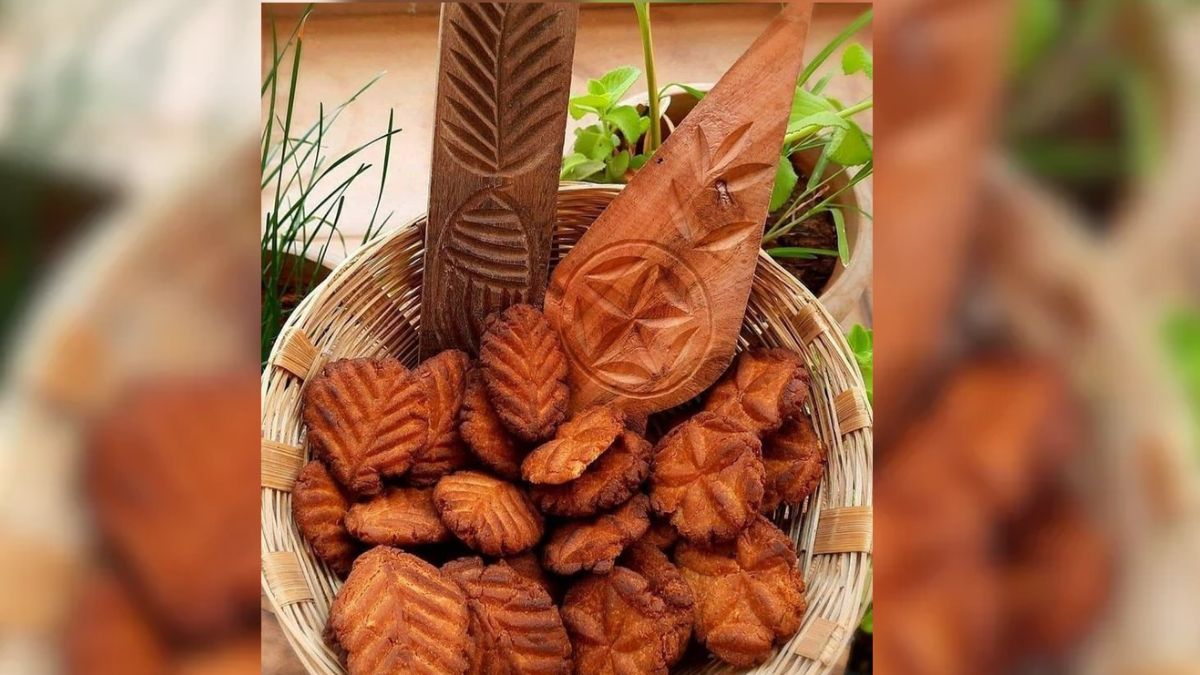
In every crisp bite of thekua lies a story of devotion. It reminds us that faith does not always require grandeur. Sometimes it is expressed through clean hands, a warm kitchen, a carved wooden mould, the fragrance of jaggery, and a family gathered together in prayer.
That is why thekua holds a special and irreplaceable place in Chhath Puja. It is not merely prasad. It is a living symbol of gratitude, endurance, and love.
Also Read: How Local Artisans Prepare Festival Baskets and Ritual Objects for Chhath
You can connect with DNN24 on Facebook, Twitter, and Instagram and subscribe to our YouTube channel.