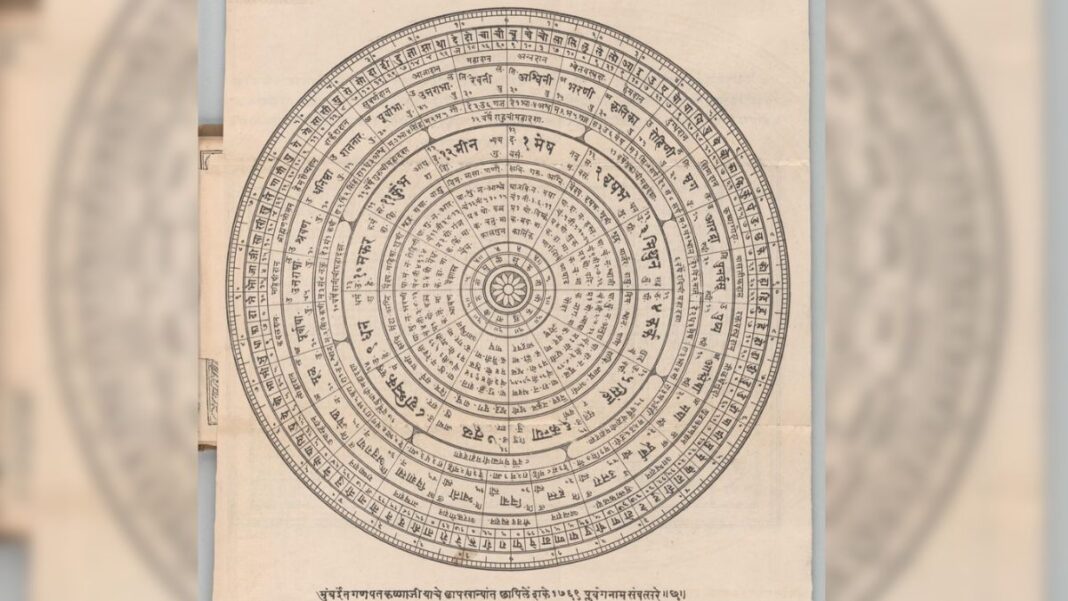

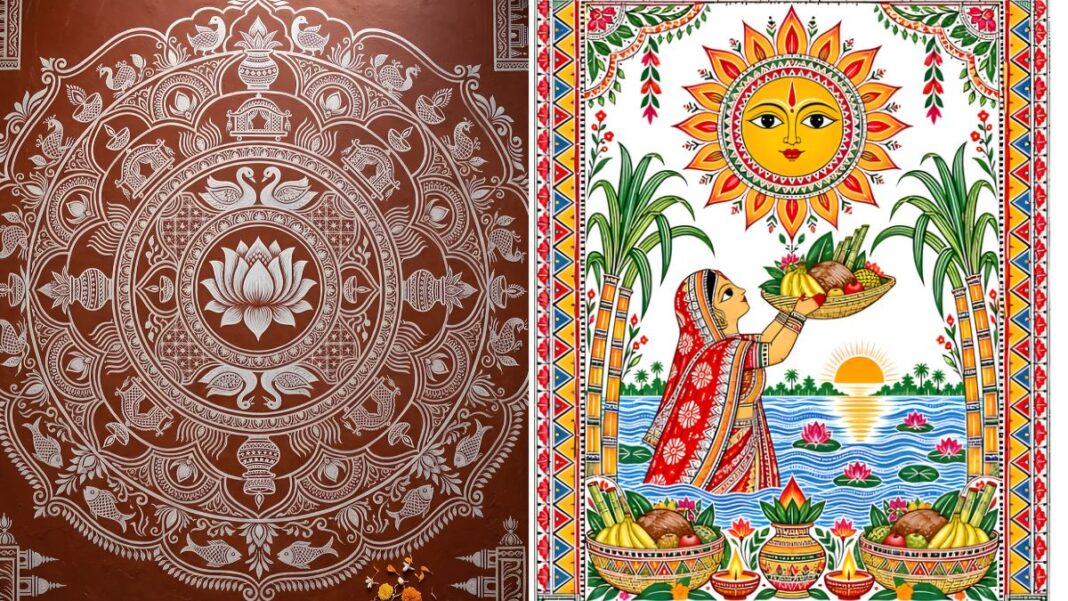

Every year, millions of Indian families spend hours drawing something they know will be gone within days. Before dawn, a woman kneels at her doorway, dips her fingers in rice paste, and draws a lotus on the floor. By the end of the festival, feet, rain or a broom will have taken it away. She will draw it again next year. Why would anyone keep making art that is built to vanish? The answer lies in Bihar, Bengal, Maharashtra and many other places, where festival art has always belonged to the household.
Art that starts at the doorstep
Most of India’s festival art never saw a museum wall. It began on freshly plastered mud walls, in courtyards, at thresholds and on prayer room floors. Women carried it from one generation to the next, usually without written instructions. A grandmother showed a daughter, who showed her own daughter, and the motifs travelled that way for centuries. Fertility, rain, protection, plenty and the gods appear again and again in the designs.
The short life of this art is a large part of its meaning. A rangoli may be washed away after Diwali. An alpana fades once the puja ends. Each year the family draws it fresh, and that yearly return ties together grandparents, children, the changing seasons and the faith they share. Celebration, like hope, has to be made again.
Madhubani and the horror of space
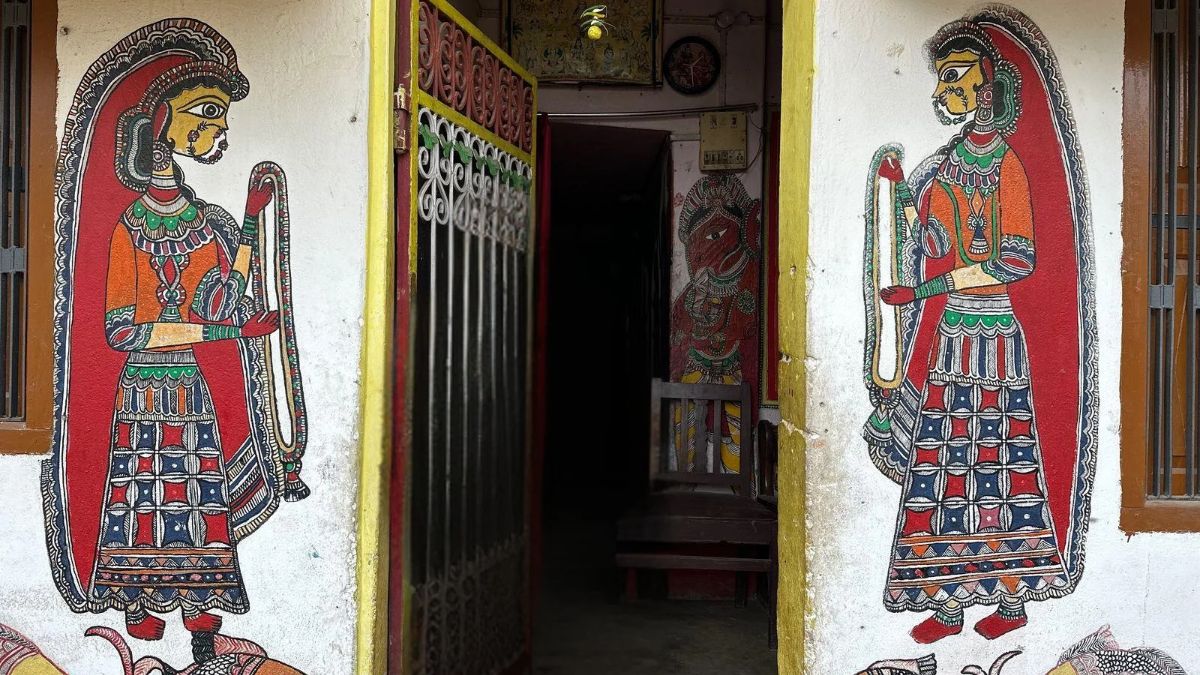
Madhubani, also called Mithila art, comes from the Mithila region of Bihar and parts of Nepal. It began as wall and floor paintings in village homes, created for festivals, weddings, births, and religious ceremonies. Bold outlines, dense compositions, and geometric patterns make it one of India’s easiest folk traditions to recognise.
Traditional artists used ochre, lampblack, and colours drawn from plants and other natural dyes. Their paintings show Hindu deities, mythological scenes, the sun and moon, lotuses, fish, birds, elephants, and bamboo. Look closely, and you will find almost no bare patch. Flowers, dots, small animals and patterns fill every gap, and the crowded surface gives a feeling of plenty.
The art is tied closely to happy occasions. The kohbar style is painted in the bridal chamber and asks for love, fertility and prosperity for a newly married couple. During Holi, Durga Puja, Kali Puja, and Surya Shasti, a household wall becomes a kind of prayer visible from across the room.
Alpana, Bengal’s white poetry
In West Bengal and Bangladesh, festival homes are decorated with alpana, also spelt alpona. People paint the designs freehand on floors and walls with a paste of rice flour. White lines stand out sharply against dark earthen floors and form lotuses, vines, fish, sheaves of rice, geometric symbols, and figures of deities.
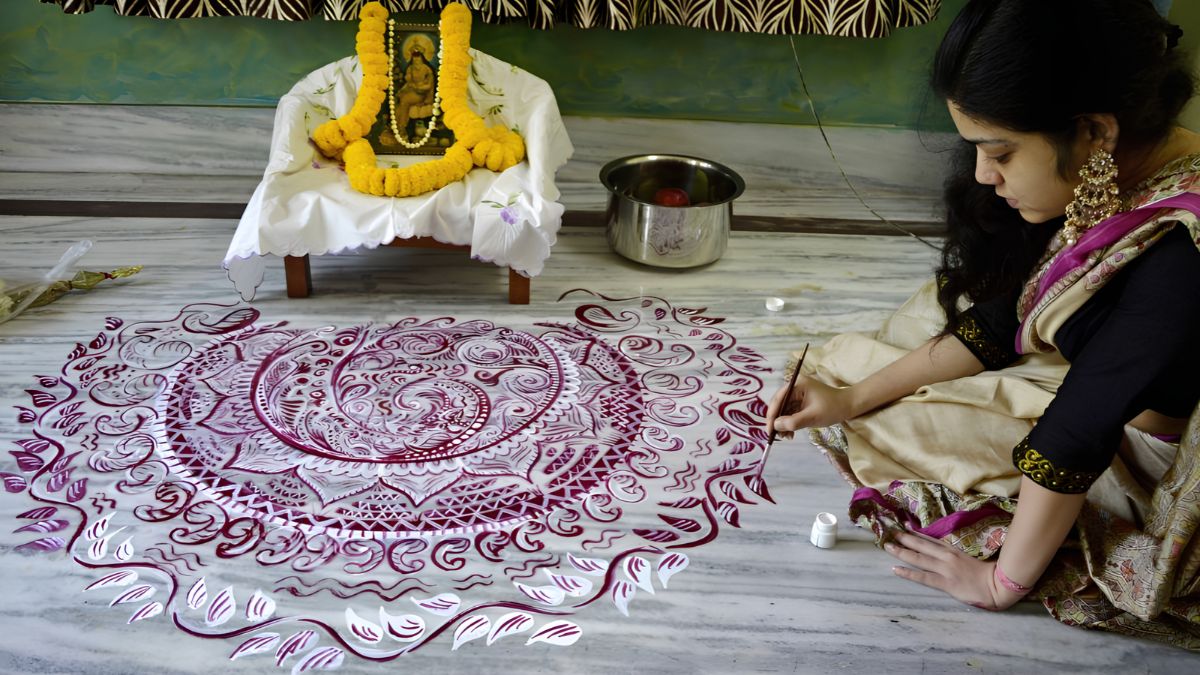
Alpana is used for Durga Puja, Kali Puja, Saraswati Puja, Lakshmi Puja, weddings, and Pohela Boishakh, the Bengali New Year. No stencils are used. The artist draws with fingertips, twigs, a scrap of cloth, or a thread dipped in paste; a steady hand matters more than any tool.
Alpana speaks of purity, welcome and good fortune. During the monsoon, a stylised sheaf of rice may appear in the pattern, a reminder of sowing and the hope that rides on it. The art links the home to the field, the family to the harvest and worship to everyday life.
Rangoli, a floor language shared across India
Alpana is one branch of a much larger family of floor art called rangoli. The word comes from the Sanskrit rangavali, which means a line of colour. People make rangoli at thresholds, in courtyards, and in worship spaces, using coloured powders, rice flour, chalk, sand, flowers, and petals.
Its names change from region to region, and so does its look. In Tamil Nadu, it is called kolam, with geometric designs made from rice flour or chalk. Andhra Pradesh and Telangana call it muggu, with symmetric patterns in the same materials. Rajasthan has mandana, bold floor and wall patterns with festive meaning. In Bihar, ritual floor designs made from rice paste are known as aripana. Maharashtra and several other regions use the plain name rangoli for designs made with bright powder, petals, and sand.
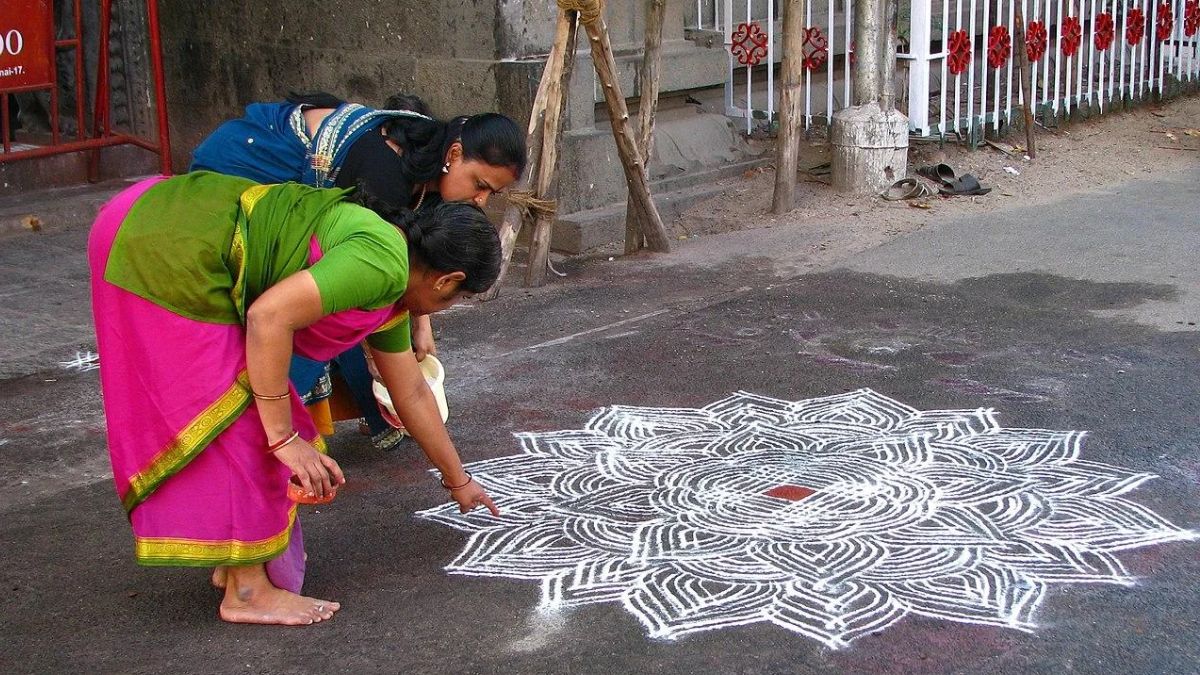
People make rangoli during Diwali, Onam, Pongal, Ugadi and other festivals. It greets guests and the gods alike, and many households also believe it keeps bad luck away from the door.
Warli and the rhythm of a village
In Maharashtra, the Warli community has developed a look quite unlike Madhubani’s. Warli painting uses simple white figures made of rice paste on reddish mud walls. Circles, triangles, and lines represent people, animals, trees, houses, farming scenes, and dances.
Where Madhubani is crowded and colourful, Warli is sparing and rhythmic. Its best-known picture is the tarpa dance, in which figures circle in a spiral around a musician. It speaks of togetherness, celebration and the turning of life. Warli paintings are made for weddings, harvests and festivals, and over time a family’s walls become a record of what the village remembers.
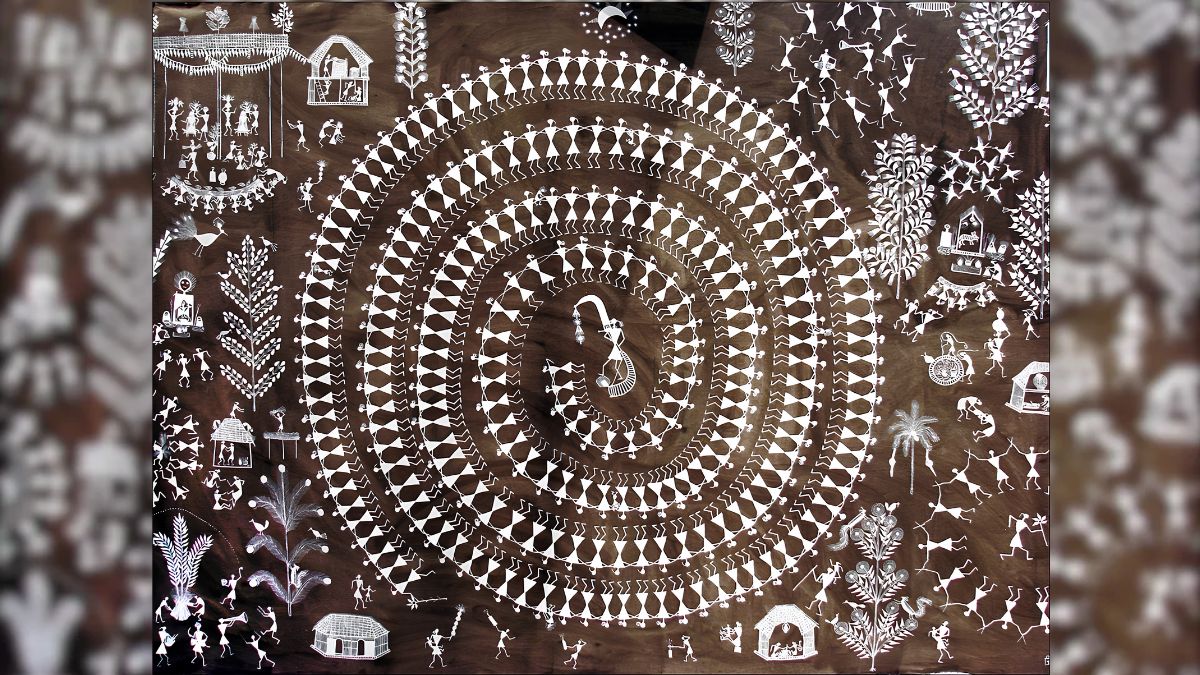
Warli shows that festival art can do without gold or a rich palette. A little rice paste, a bamboo stick and an earthen wall are enough to carry belonging, nature and shared joy.
Pichwai, Patachitra and the cloth traditions
Festival homes also draw on cloth-based art. Pichwai paintings from Nathdwara in Rajasthan are large devotional cloths hung behind the idol of Shrinathji, a form of Krishna. Lotuses, cows, peacocks and scenes of Krishna give the prayer space a sense of ceremony.
Odisha’s Patachitra uses strong outlines and vivid colours for mythological and religious subjects. Kerala’s murals bring epic stories and divine figures to life in bold, deeply devotional images. Gond art from central India builds animals, trees, and deities from dots and dashes, showing how closely artists link the natural world with imagination.
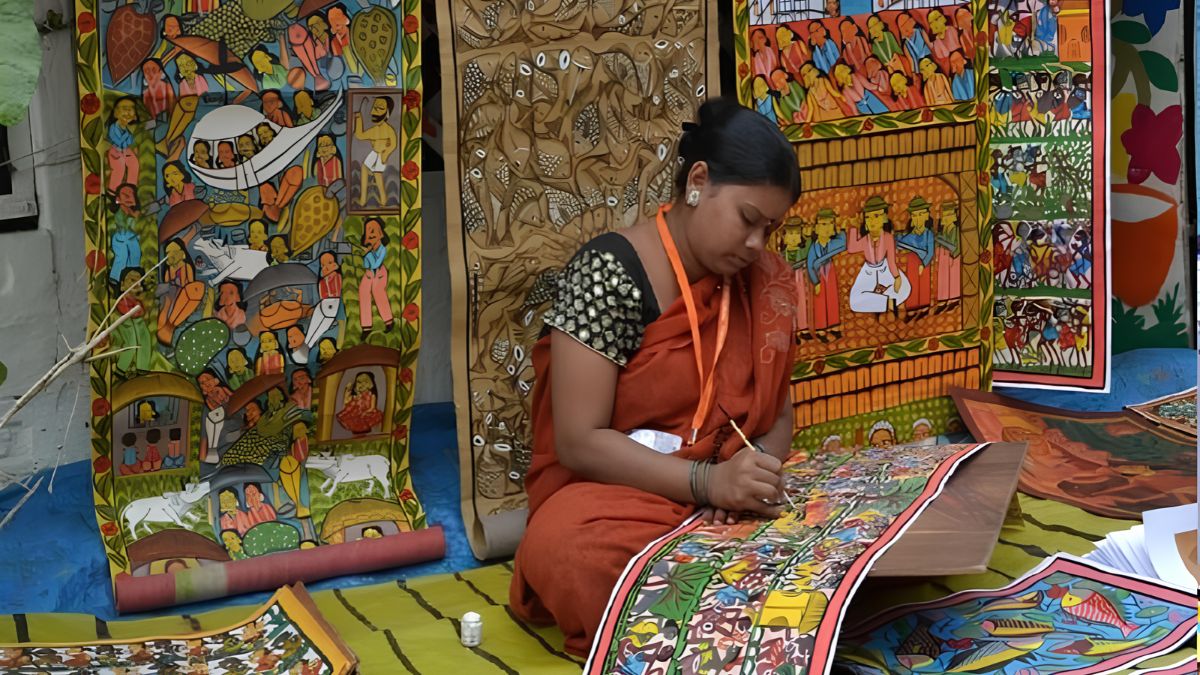
Taken together, these traditions suggest that Indian festival decoration has no single style. It is a set of regional languages, each with its own materials, symbols and sacred purpose.
Why they still matter
In modern apartments and city flats, these arts keep changing. Madhubani now appears on paper, canvas, fabric and home décor. Designs inspired by alpana appear on walls and in festive displays. Warli motifs decorate murals and contemporary interiors. Through it all, the purpose remains what it always was: to make a home feel blessed and welcoming.
The arts also honour the people who made them. For generations, women and community artists kept the motifs, methods and stories alive without formal schooling or manuals. Their work shows that heritage lives in more places than monuments. It sits in courtyards, kitchens, doorways and the early hours of a festival morning.
What a line of rice paste can say
From Madhubani’s crowded walls to alpana’s quiet white lines, India’s festival arts share one lesson. Beauty becomes meaningful when it carries an intention. A lotus can signify purity, a fish prosperity, a circle protection and a dance the joy of a community.
At festival time, Indian homes become more than shelter. They become expressions of gratitude, faith, memory, and hope. In every line of paste, every scattered petal and every painted wall, the message is the same. A culture survives when people keep practising it, share it with others and renew it with gladness each year.
Also Read: The Secret System That Kept India’s Festivals From Drifting Through the Seasons
You can connect with DNN24 on Facebook, Twitter, and Instagram and subscribe to our YouTube channel.