

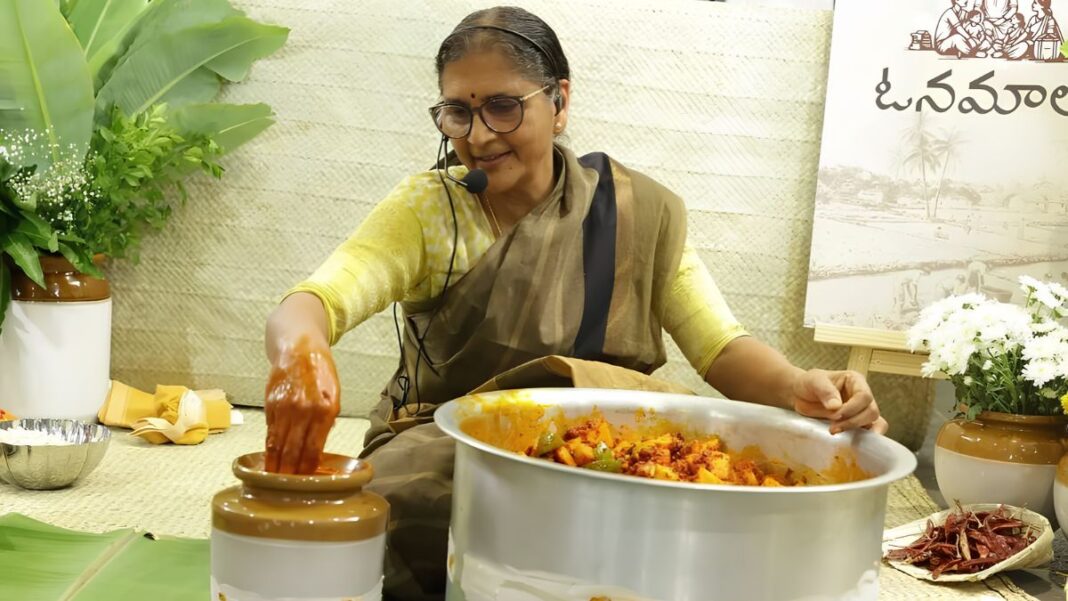

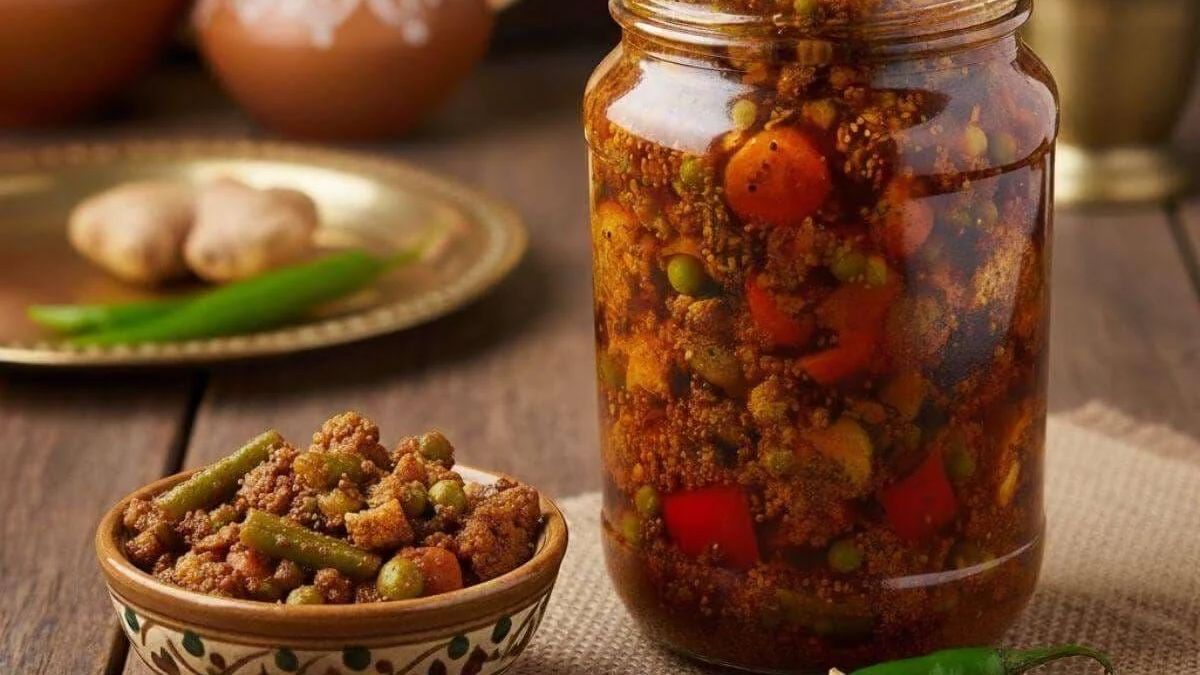
A jar sat on a rooftop in the heat of May, and by the time the monsoon arrived, it held something no electric appliance had been invented to protect. It held the taste of summer. Long before refrigerators hummed in Indian kitchens, households had solved one of the hardest problems of the seasons with a handful of plain materials. The answer was achaar, the Indian pickle. Mangoes, limes, chillies, amla, ginger, garlic, vegetables and even fish were turned into food that could last for months, and sometimes for years. Sunlight, salt, spices, oil and time did all the work.
A Climate of Plenty and Waste
India’s seasons deliver food in sudden waves. Mangoes pour in during summer, and many vegetables, citrus fruits and chillies are plentiful for only a few weeks. Before cold storage existed, heat and humidity could ruin a surplus within days. Families needed a way to catch the harvest before it slipped away.
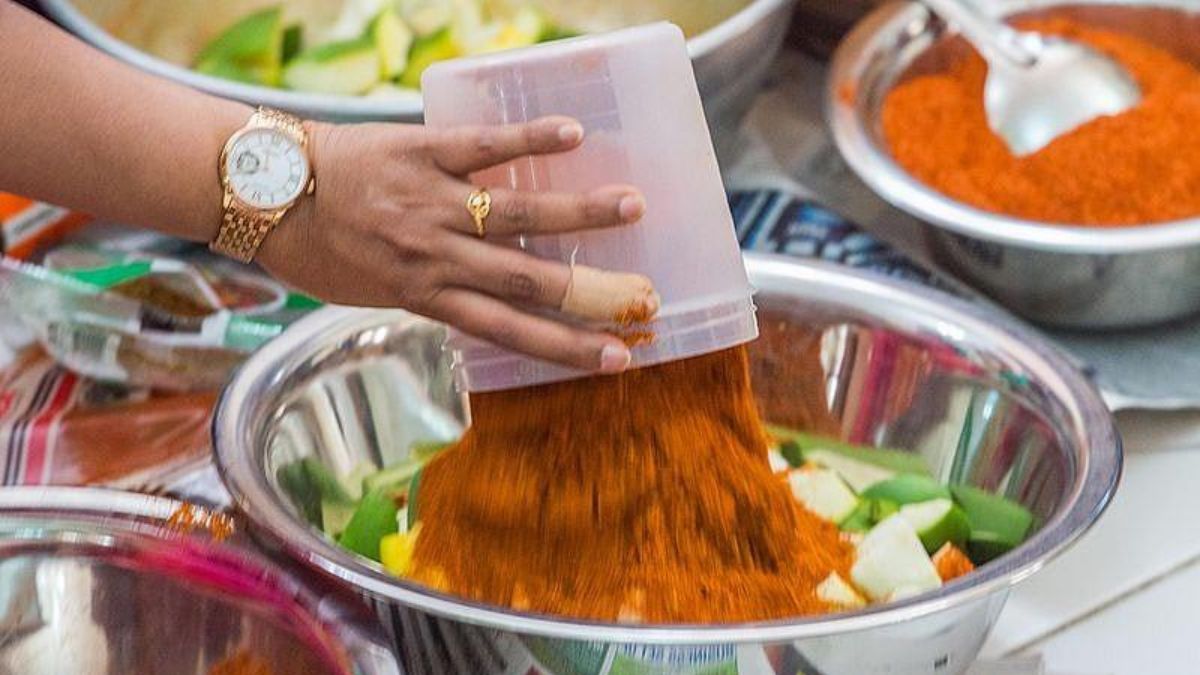
This is a very old human problem. Pickling is a preservation method more than 4,000 years old, and Indian kitchens developed it into a rich and varied craft. Nobody needed electricity or factory packaging. People relied on knowledge handed down through generations. Dry the produce, salt it, add spices, cover it with oil, and wait.
Why a Pickle Refuses to Spoil
Achaar works because it makes life hard for the microorganisms that cause food to rot. Salt pulls water out of fruit and vegetables through osmotic pressure, which leaves less moisture for microbes to use. Salt also dehydrates microbial cells and slows their growth.
Sun drying gives a second layer of defence. Removing water before pickling makes bacteria and fungi see the produce as a poor home. Salt, acids and spices keep up the pressure, and a layer of edible oil on top limits contact with air. That layer helps stop the growth of mould and bacteria that need oxygen.
Oil matters a great deal in Indian pickles. Mustard and sesame oils are common choices, valued for their flavour and for the protection they give. In an oil-based mango pickle, the surface layer cuts down oxidation and keeps microbes away. Drying, salt, acidity, spices and oil work together, and that combination lets a mango picked in June stay good long after the trees were bare.
An Old Tradition With Written Proof
Pickling has deep roots in the Indian subcontinent. Historical accounts say that cucumbers native to India travelled west to Mesopotamia and were kept in brine as early as 2030 BCE. That tells us how far preservation knowledge moved across ancient regions. In the fourteenth century, the traveller Ibn Battuta recorded that mango and ginger pickles were served with meals in India. By then, achaar was already part of everyday eating.
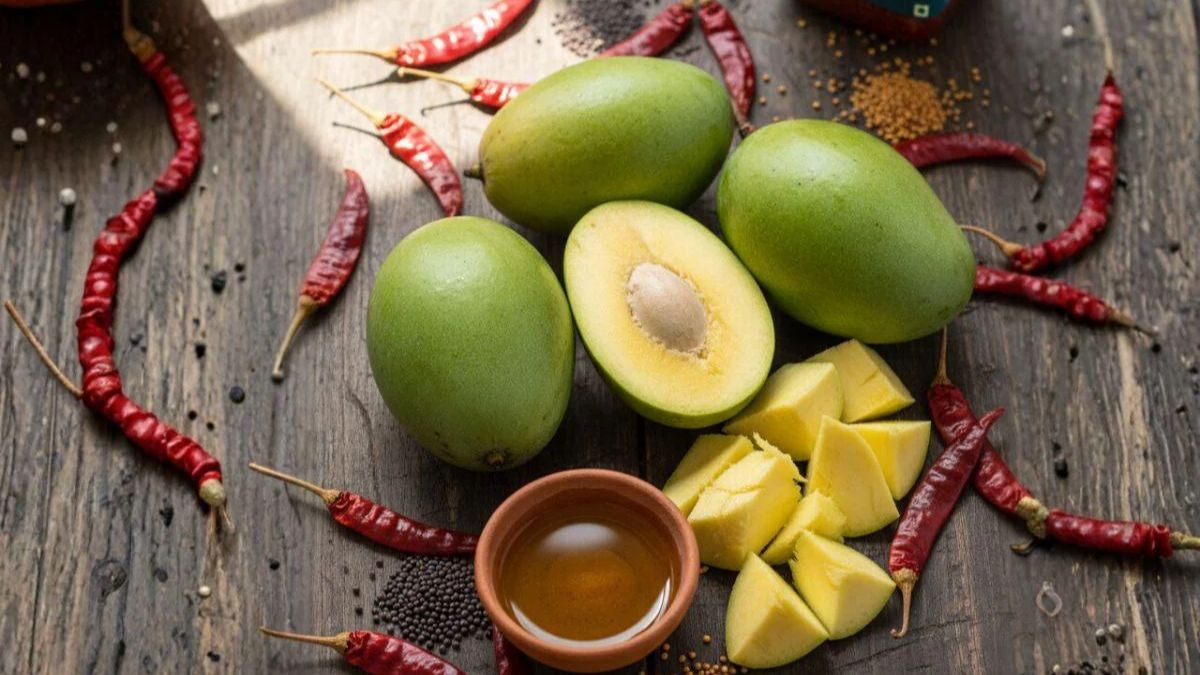
Indian pickle making also took its own road. Vinegar is the usual base for pickles in many parts of the world, but oil became the standard medium across India, Pakistan and Bangladesh. Mustard or sesame oil, along with salt and spices, became the way local produce was kept.
Far Beyond the Mango
Mango pickle may be the best-known example, but the range is wide. Each community pickles what grows near it, using methods shaped by land, weather and family taste.
In Andhra Pradesh, avakkai is made from raw mango, chilli, mustard powder, salt and sesame oil, and it matures for weeks during summer. In Tamil Nadu, maavadu uses tender baby mangoes kept in castor oil. Narthangai, also from Tamil Nadu, starts with unripe citron cut into spirals and stuffed with salt. Karnataka’s jeerige midi keeps tender whole mangoes through salt and drying. Mor molagai, another Tamil favourite, is a sun-dried chilli stuffed with salted yoghurt. Along the coast, fish is preserved with spices and oil.
All of this shows that pickling never followed a single recipe. People answered three questions in their own way. What grew nearby, what could a family afford, and what flavours did they love?
The Summer Kitchen and the Family Hands
Making pickle was often a shared task. Large ceramic jars were filled with fruit and vegetables, then set on terraces or open verandas to mature in the sun. The hot, dry months suited the work well, since sunlight drew out moisture and helped preservation along.
It took patience and a trained eye. A family had to judge the right amount of salt, choose produce that was firm enough, keep water out, and guard against contamination. One careless step could invite mould. When everything went right, the reward was a jar of concentrated flavour that could season meals for the whole year.
The work also carried feeling. Mothers, grandmothers and other relatives prepared the pickles, then shared them with kin, packed them for travellers or kept them as edible heirlooms. Some families have looked after lemon or citron pickles for decades, so a jar of food becomes a living link to earlier generations.
Food Security in a Jar
Before refrigeration, achaar worked as a kind of insurance. It stretched the life of seasonal produce, cut down waste and kept familiar flavours on the table in months when fresh ingredients were scarce or costly. Pickling grew up, in part, as an answer to scarcity and to the uneven rhythm of crops.
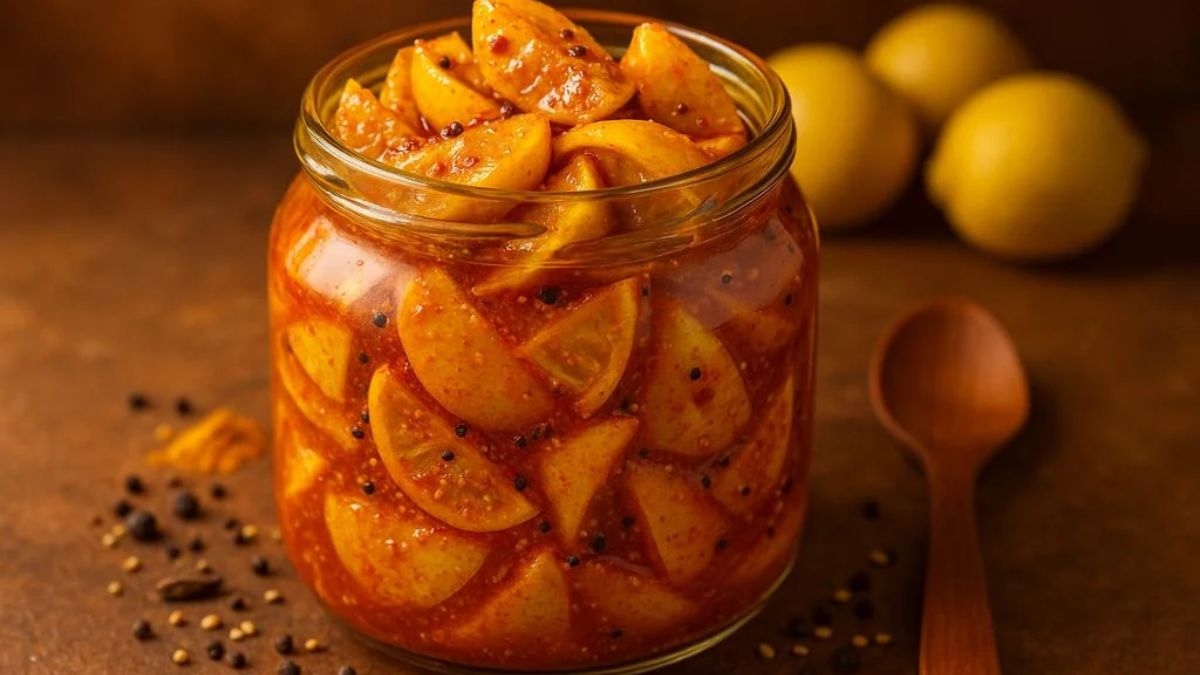
It suited travel as well. A properly made pickle could ride along on a long journey without any cooling, ready to sit beside rice, rotis or other staples. A small jar carried nourishment and a little of home at the same time.
Taste, Memory and Belonging
Preservation did not dull the food. It gave the food new flavours. Salt, spice, oil and time change the texture and taste of raw ingredients, and the results can be sour, hot, sharp, sweet or deeply savoury. This is why so many cultures around the world built their own pickled foods.
In India, achaar became part of who people are. Each region, each community and very often each household has its own version. A mango pickle from one state can taste unlike another because the mango variety, the oil, the chilli, the mustard, the salt, and the method all differ.
For many people, pickle is a memory you can eat. A spoonful beside dal and rice, curd rice, paratha or khichdi can bring back a grandmother’s kitchen, a childhood summer or a home left behind. Al Jazeera’s reporting on India’s pickle traditions describes them as treasured family heirlooms, tokens of love, comfort for the homesick and reminders of people who are gone.
What Today’s Kitchens Can Learn
Refrigeration has made keeping food easier, yet old knowledge has not lost its value. Pickles show that sustainable food habits can be simple, local and resourceful. They use produce in season, reduce waste and depend on natural principles of preservation instead of a steady draw of energy.
There is one thing to watch. Many pickles carry a lot of salt, and too much salt is linked with high blood pressure and heart disease. India’s Consumer Affairs guidance says tested pickle samples held roughly 9 to 19 grams of salt in every 100 grams. The World Health Organization suggests that people take in no more than 5 grams of salt a day. A small spoonful beside a meal is a sensible way to enjoy the tradition.
The Last Word on a Jar
India’s pickles hold mangoes, lemons and chillies, and they also hold ingenuity, family memory, regional variety and a close relationship with the seasons. Households learned to work with nature. The sun dried the produce, salt protected it, spices gave it character, and oil guarded the surface.
That is the lasting lesson of achaar. Preservation means keeping decay away, and it also means carrying forward what matters to us. Open a jar in the middle of winter, and the proof is there on the spoon: a summer that has refused to disappear.
Also Read: The Secret System That Kept India’s Festivals From Drifting Through the Seasons
You can connect with DNN24 on Facebook, Twitter, and Instagram and subscribe to our YouTube channel.