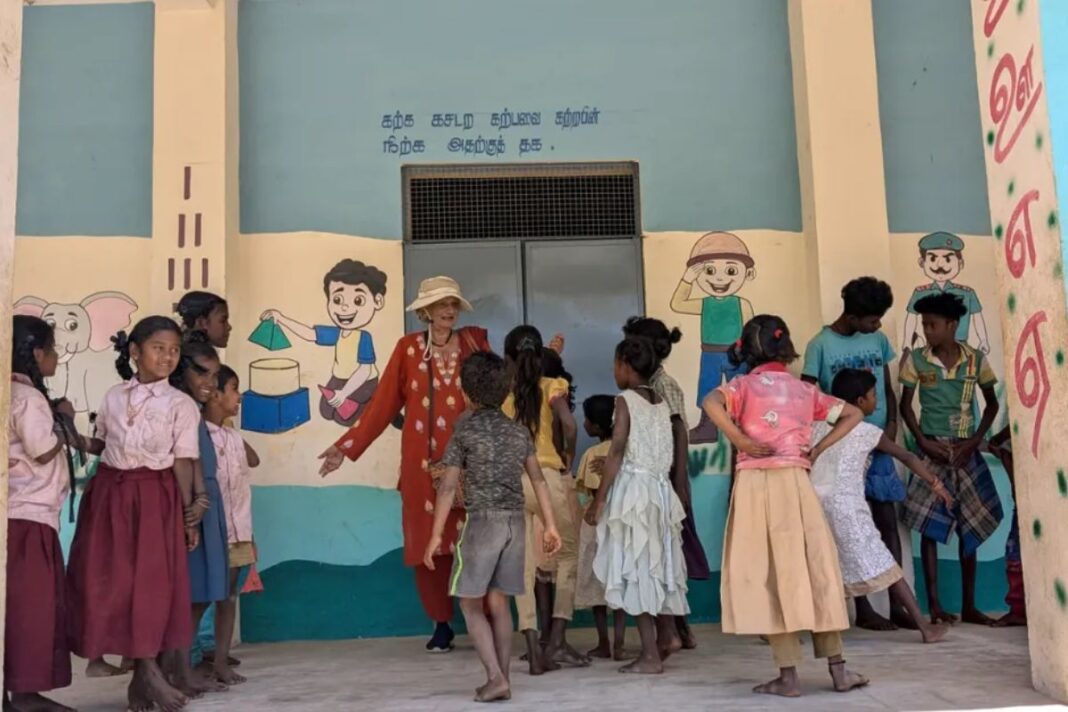

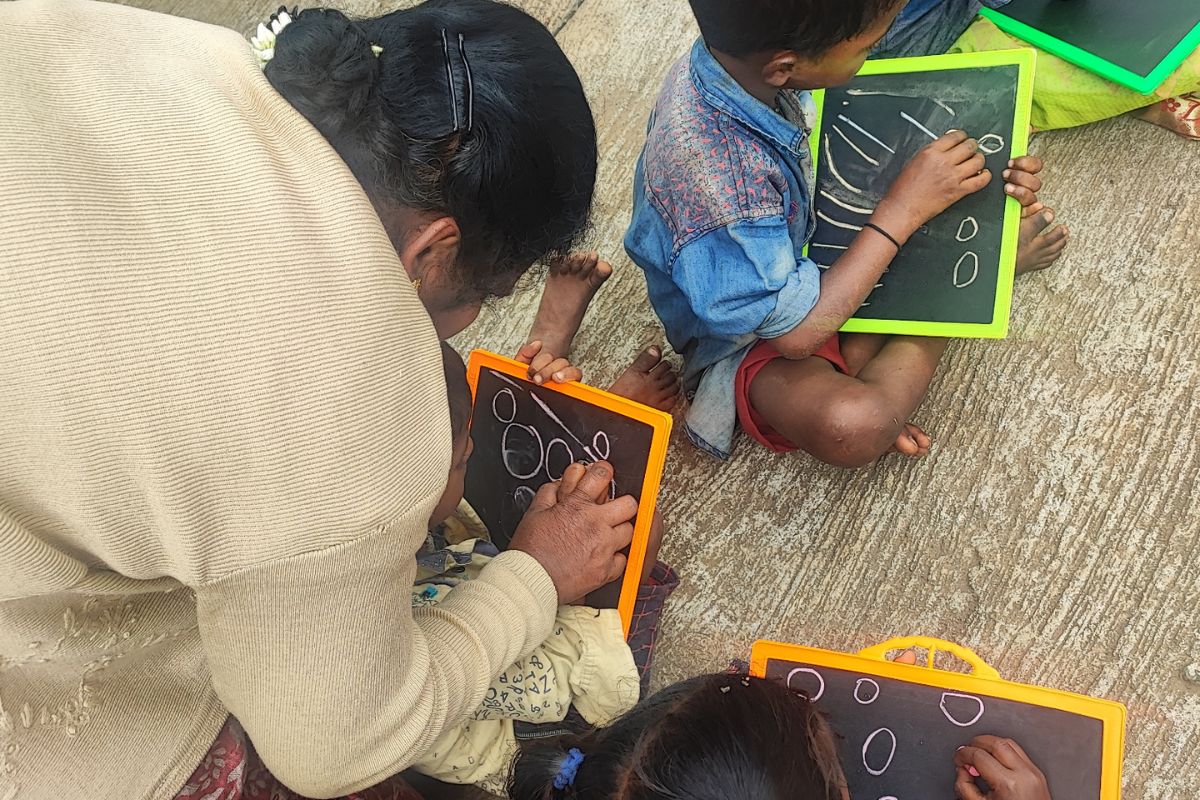
The setting is Kombai Perungadu, a small hamlet near Kodaikanal in Tamil Nadu, where families depend on farming, honey collection, and cotton picking to survive. Every Saturday afternoon, two teachers from a school called ‘My School Satya Surabhi’ travel there to run a programme known as ‘School on Wheels.’ What began as an experiment in 2024 has now reached more than 50 first-generation learners, and up to 25 of those children have gone on to enrol as full-time students.
Where School Was Never Expected
For most families in Kombai, sending a child to school was not a natural decision. This was a community where children were expected to help in the fields rather than sit in a classroom. Educator Padmini, who founded ‘My School Satya Surabhi’, explained that a child could earn between Rs 100-200 a day through farm labour, and for many households that income mattered more than an education whose benefits would arrive years later.
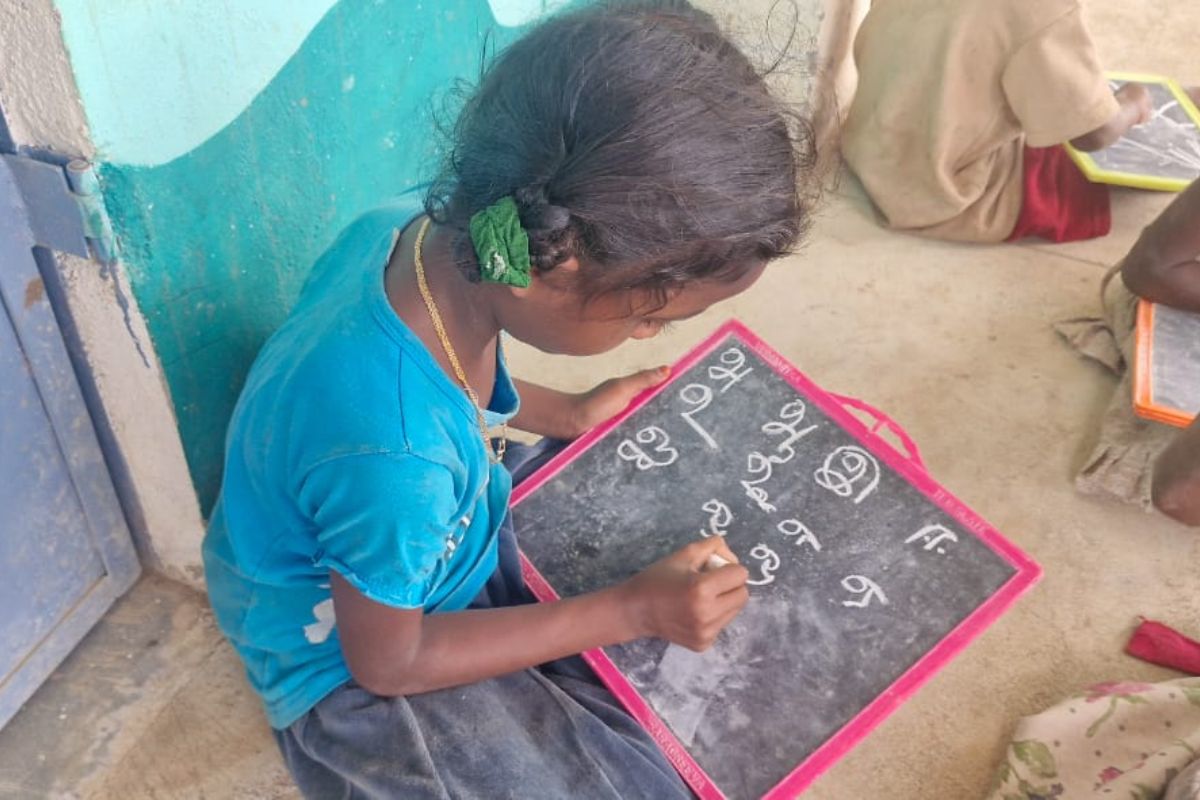
Even families that wanted their children to study, faced a practical obstacle. The school’s main campus in Attuvampatti lay about six kilometres from Kodaikanal town, and the monthly transport fee of Rs 3,000 was simply out of their reach. However, rather than wait for the children to come to the classroom, the school decided to bring the classroom to them through ‘School on Wheels.’
The Saturday sessions started small, with about 25 children in a hamlet of only 30 families. They have since grown into a weekly gathering of around 25-30 children between the ages of four and 13.
Trust Had To Come First
Teaching the alphabet was never the first task. Earning trust was. When teachers first visited the settlement, they went door to door, explaining the purpose of the programme and returning again and again until families grew familiar with them. Teacher Jegatheeshwari Markam said it took them about two to three months before the community felt comfortable with their presence.
Once the children began attending, teachers noticed that many lacked guidance in basic hygiene. Some arrived without having bathed. Others came wearing torn clothes or nails that had never been trimmed.
So, before teaching them the alphabet, teachers taught the children how to trim their nails. The teachers carried nail cutters and spent the early weeks trimming nails and talking about cleanliness, handwashing, and eating well.
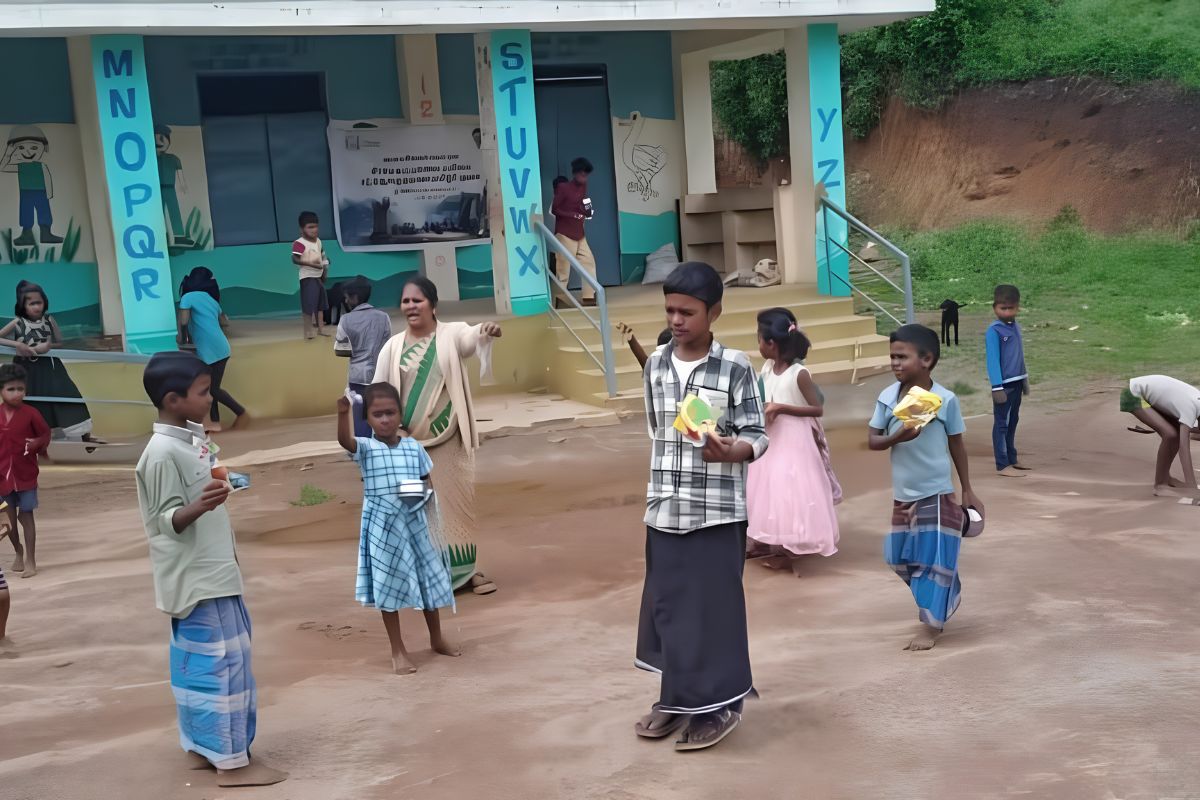
The idea was never to embarrass the children. It was to treat self-care as part of learning itself, and to connect cleanliness with dignity, nutrition with concentration and steady attendance with confidence. Each session now also includes a simple snack of a boiled egg, milk and cereal, alongside games, songs, stories, art and sport.
Lessons Drawn From Daily Life
Padmini calls her teaching method integrated learning. Rather than separating subjects into isolated boxes, she weaves language, science, mathematics, history and geography into a single conversation about the world the children already know.
In Kombai, that world is full of natural teaching material. A single wildflower seed, for example, can become the centre of an entire lesson. Science teacher Shanti described how children might measure the seed, work out how many they would need to plant a stretch of land, then move on to discuss the region’s rainfall and history.
For children raised on farms, this kind of lesson feels familiar rather than foreign. Headmistress Mary Johnson said the approach encourages pupils to ask questions and think critically, rather than memorise facts they do not fully understand.
A Career Spent Teaching Those Left Out
The programme in Kombai is the newest chapter of Padmini’s teaching life that has spanned continents and decades. She began teaching at the age of 19 in Calcutta. She then spent four years at a middle school in Benin City, Nigeria, starting in 1972, before returning to India to work for 14 years at Delhi’s British School as head of department and coordinator for French and other foreign languages.
While in Delhi, she accompanied her students to a nearby slum twice a week, and the experience left a lasting impression on her. She saw clearly how unequal opportunity could be for children born into different circumstances.
When Padmini eventually settled in Kodaikanal, she chose not to build a school for privileged families. Instead, with her husband Ram Mani, she founded ‘My School Satya Surabhi’ in 1999. This was a free school for children of farm labourers, small vendors and other underprivileged families, admitting pupils without regard to caste, religion or gender. It began modestly, with about 20 children taught in a temporary shed on the couple’s own property. Today, it teaches children from nursery through Class 8. At 82, Padmini still walks into the classroom every day.
From Saturday Visits To Full-Time Students
The clearest sign of the initiative’s success is the number of children who have moved from occasional Saturday lessons to full-time education. About 25 students now attend school regularly, some travelling 10-15 kilometres each way for a school day that runs from half past seven in the morning until five in the evening. The school covers half of their transport costs.
For eight-year-old Krishika, school has become a place of friendship and discovery, and she says she looks forward to learning something new each day. Five-year-old Karnika already dreams of becoming a police officer, and speaks eagerly about her teachers and friends. These are aspirations that would have seemed unlikely in a community where farm labour once appeared to be the only future on offer.
The Parents Start Learning Too
The programme’s influence has not stopped with the children. Some parents who once stood at the edge of the sessions, watching quietly, have begun joining in themselves. Mahalakshmi, a mother who works in the fields, now studies the Tamil alphabet and multiplication tables alongside her own children.
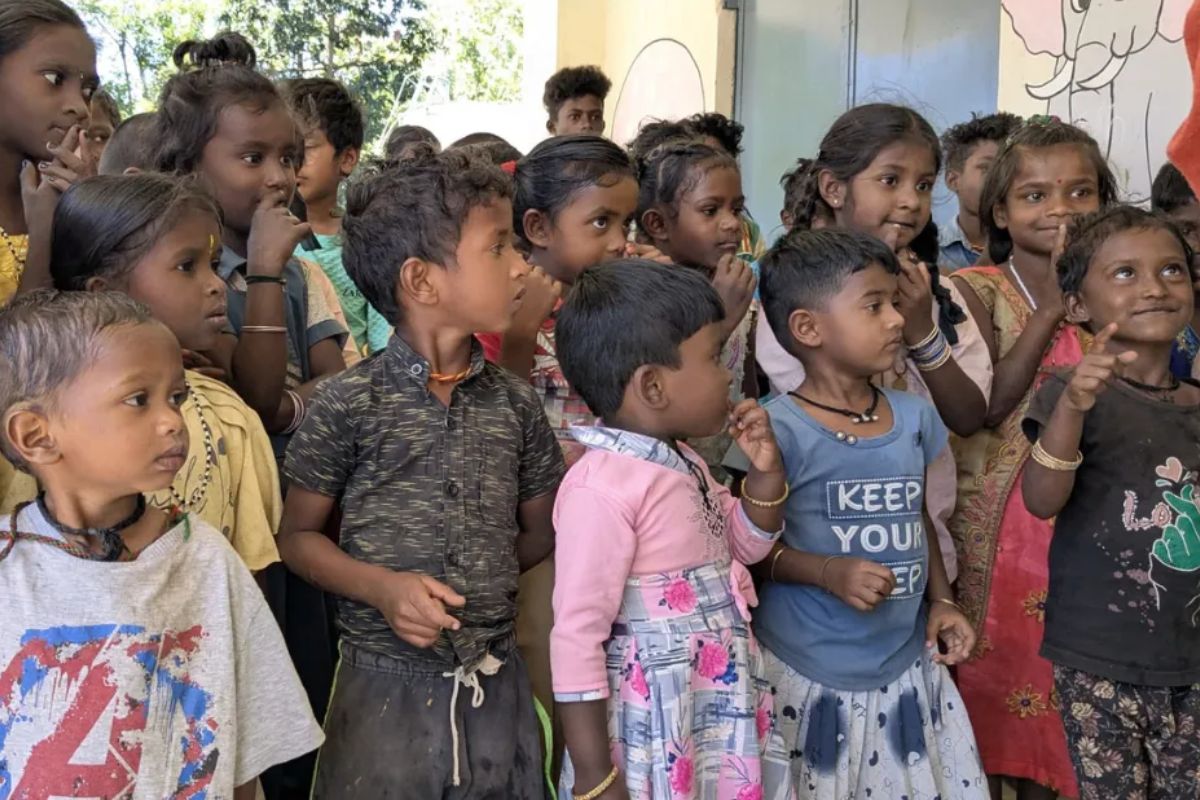
An older man, in his eighties, once approached the teachers with a simple request. He wanted to learn how to write his own name. Letter by letter, the teachers helped him spell out Pandy on a blackboard, a small moment that carried a large message. The right to learn does not belong only to the young.
Every Child Finds A Different Path
Padmini does not measure success by pushing every child towards the same ambition. Her goal is to help each one discover a genuine interest and pursue it with pride.
That philosophy carries particular weight in a community whose traditional work- farming and honey collection – often goes unrecognised. Satya Surabhi does not ask children to abandon that world. It simply gives them the choice to build something more within it, or beyond it.
The story of Kombai Perungadu shows that real change in education does not always require grand buildings or expensive equipment. Sometimes it begins with a teacher, a nail cutter and a family willing to open its door.
Also Read: Himachal’s Sair Festival: Where a Lemon Predicts Your Fortune
You can connect with DNN24 on Facebook, Twitter, and Instagram and subscribe to our YouTube channel.