
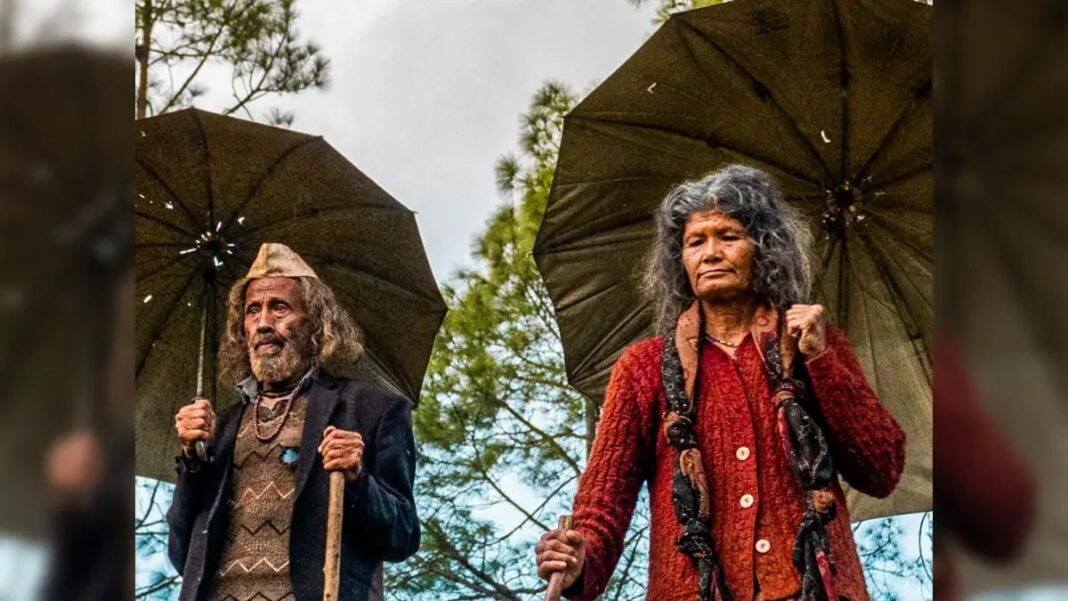

Heera Devi, a woman in her late sixties, is the leading actress in filmmaker Vinod Kapri’s film Pyre. A resident of Gadhteer, a small village about ten kilometres from the remote town of Berinag in Uttarakhand, Heera Devi had spent most of her life caring for her family and livestock, much like countless other women with limited resources in the mountains. Forget cinema and cameras; even large-screen mobile phones belonged to an unfamiliar world.
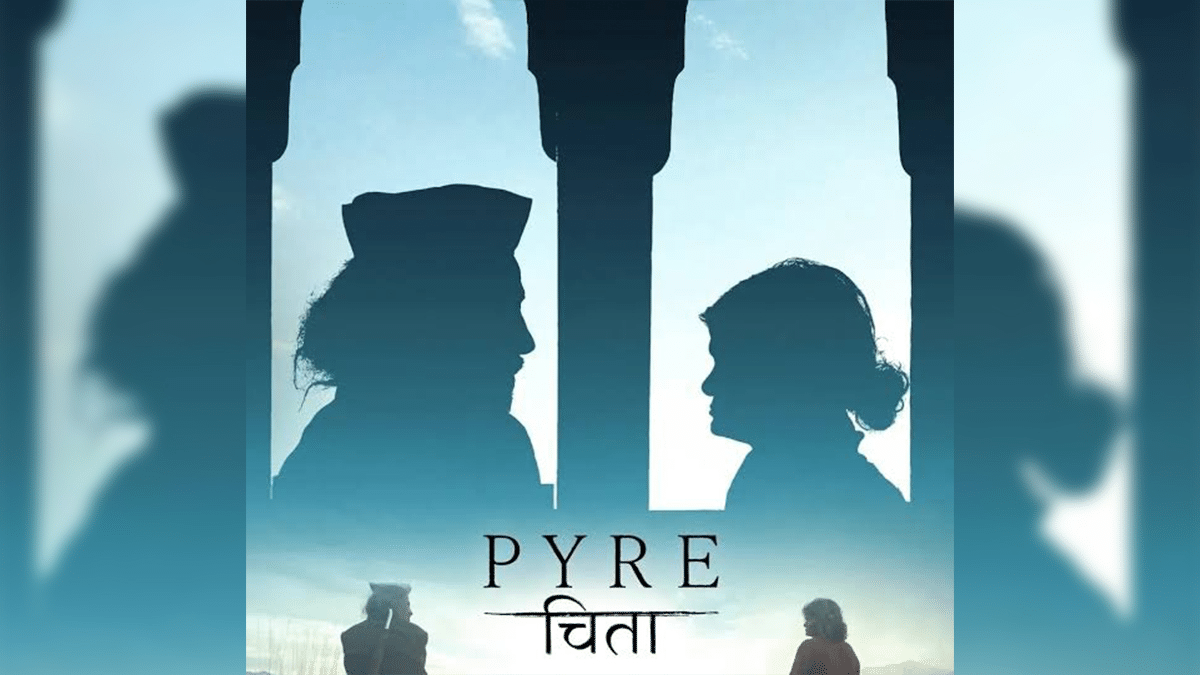
Having fulfilled her family responsibilities, including arranging her children’s marriages, Heera Devi had been living alone since her husband’s death a few years earlier. Her only companion at home was a buffalo, which had recently given birth. Consequently, her daily routine revolved around collecting fodder and caring for the buffalo and its newborn calf.
During this period, journalist and filmmaker Vinod Kapri entered her life, offering her a role in his film. Interestingly, Kapri himself comes from a similar background. His ancestral home is in Ukhad, a village not far from Heera Devi’s residence.
Kapri wanted to explore the lives of elderly mountain residents whose children had migrated to cities in search of better opportunities. Those left behind faced deserted villages, loneliness and the increasing difficulties of old age.
A screenplay was developed around this theme. Initially, veteran actors Naseeruddin Shah and his wife, Ratna Pathak Shah, agreed to portray the elderly couple. However, the coronavirus pandemic intervened; Naseeruddin Shah fell ill, and the entire project was put on hold.
When the search for suitable actors resumed, Kapri decided to cast individuals who genuinely belonged to the world he intended to portray rather than professional actors. Padam Singh Kapri, a retired soldier who had performed in local Ramleela productions, was selected for the male lead. Finding the right woman for the female protagonist, however, proved considerably more challenging.
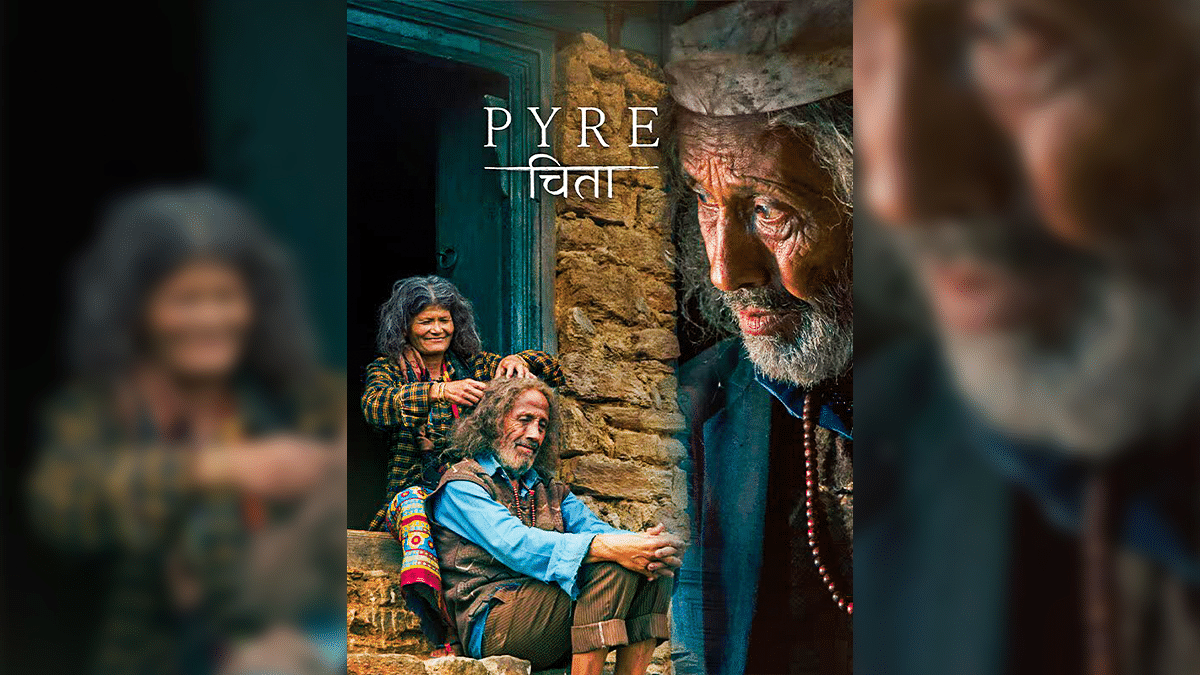
The story of discovering Heera Devi is equally fascinating. Vinod and his team were travelling through nearby villages when they spotted an older woman and approached her. She became frightened, assuming they were forest department officials who had come to catch her for collecting grass or firewood from the forest.
Later, during conversations with villagers, the team learned about Heera Devi. She was returning home carrying a bundle of grass. Upon hearing that they were looking for a woman to act in a film, she confidently stepped forward and offered herself for the role.
In an interview, Kapri recalled how deeply impressed he was by Heera Devi’s confidence. She was given a scene to perform, and despite having no previous acting experience, she enacted it with such natural ease that his search finally ended.
However, when discussions about working in the film began, Heera Devi’s primary concern was neither acting nor facing the camera. She was worried about her buffalo and its calf. Her second concern was what her neighbours might say. Some acquaintances even warned her that filmmakers could not be trusted, since no one knew what they might end up recording.
And the Shooting Began
Heera Devi’s home was approximately six kilometres from the main filming location. Shooting began at 6:30 in the morning and often continued until eight in the evening.
The production team treated Heera Devi with the same respect that an established actress would receive. Professional acting coaches trained her, and a vehicle was always available to pick her up and drop her home.
Heera Devi would wake up before dawn, head into the forest and collect enough fodder for her buffalo before the vehicle arrived. She would then reach the shooting location and, upon returning in the evening, step back into her familiar domestic world.
A Remarkable Incident During Filming
In one scene, Heera Devi was supposed to walk alongside the male protagonist while carrying a bundle of grass. The scene was set in the morning, and before her arrival, the production team arranged to bring a bundle of grass from somewhere nearby. As soon as she reached the set, her eyes fell upon the bundle, and her face lit up.
Filming began, but something seemed missing from Heera Devi’s performance that day. Her attention kept drifting toward the bundle of grass. Director Vinod Kapri began growing frustrated. Eventually, Heera Devi stopped the scene and asked him, “What will you do with this grass?”
“We will throw it away here. What else?” he replied. The answer troubled her deeply. She spoke to the director and ensured that, instead of being discarded after filming, the grass would be given to her to take home.
Deeply moved by her innocence and sincerity, Kapri instructed the production team to arrange another bundle of grass for her. Everything went smoothly thereafter. That evening, as Heera Devi travelled home, her jeep carried two bundles of grass.
Only those who have witnessed mountain women risking their lives every morning by entering forests inhabited by tigers in search of fodder and firewood can imagine the satisfaction on her face that day.
For most of us, a bundle of grass might seem insignificant. For an older woman living alone in the mountains, however, it represents considerable relief from several days of labour and anxiety.
This seemingly minor incident reveals a significant aspect of Heera Devi’s personality. For her, grass was not merely a prop used in a film scene. It was an essential part of her everyday existence.
Even while standing before the camera, she could not forget the world in which her buffalo might go hungry if she failed to arrange fodder.
From Mountain Villages to the International Red Carpet
Nearly two years ago, in November 2024, Pyre premiered at the Black Nights International Film Festival in Tallinn, the capital of Estonia. The film was selected for the official competition and received the PÖFF Audience Award. It subsequently earned appreciation at several film festivals worldwide and secured multiple international honours.
For Heera Devi, this journey was nothing short of a dream. From the narrow footpaths and forests of her village, she had arrived on the red carpet of a prestigious European film festival.
Interestingly, even there, her thoughts remained with her home and her buffalo. Kapri recalls that while walking the red carpet, Heera Devi was still wondering what her buffalo might be eating and how it was managing in her absence.
Ultimately, her daughter had to be called back to the village and entrusted with caring for the buffalo before Heera Devi agreed to travel abroad.
This reveals a profound truth about the lives of women in the mountains. In their world, international recognition, prestigious awards, and glamorous red carpets can matter less than an animal that has shared their lonely days. It is the same world they venture into forests for every morning.
A Love Story Rooted in Everyday Life
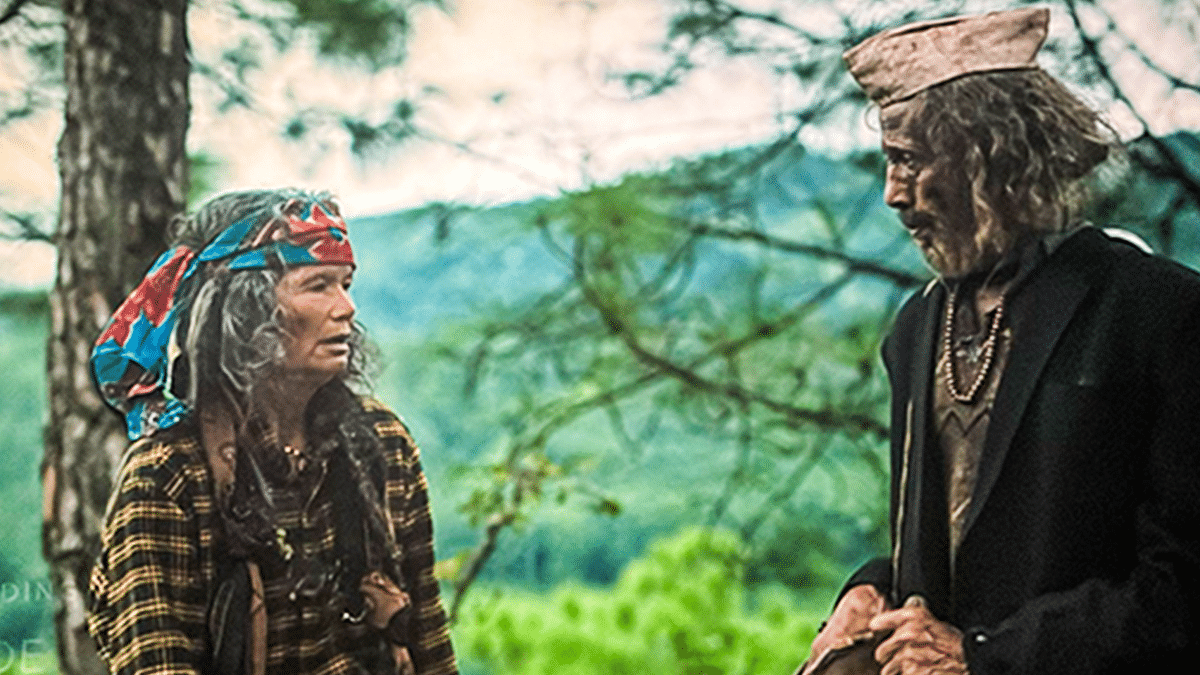
In Pyre, Heera Devi portrays Tulsi, while Padam Singh Kapri plays her husband, Padam. Together, they depict an elderly couple whose son left their village several years earlier.
Their relationship is filled with minor disagreements, complaints, and mutual dependence, and beneath it all, the warmth of a long life spent together.
The film’s greatest strength lies in its portrayal of love, not as a romantic fantasy but as a natural human relationship that gradually develops through years of companionship.
The authentic presence of Heera Devi and Padam Singh lends the story a credibility that would be difficult to achieve through professional acting training alone.
The film also faced a prolonged wait before reaching Indian cinemas. Despite receiving international recognition, it struggled to secure distribution and a place on OTT platforms.
Eventually, on October 30, 2026, Pyre was released in Indian theatres and is now attracting considerable attention across the country.
A Woman Who Never Left Her World Behind
It is easy to view Heera Devi’s story simply as that of an ordinary village woman who unexpectedly became a film actress and achieved international fame. However, the true beauty of her journey lies elsewhere.
She did not abandon anything from her previous life to enter a new world. Even as she travelled the path to national and international recognition, she remained the same woman who went into the forest every morning to collect fodder for her buffalo.
Even while performing before the camera, her attention remained fixed on a bundle of grass that someone else might have considered worthless and thrown away.
Perhaps this is precisely why Heera Devi never appears to be acting, even when she is performing on screen.
Within her resides an entire lifetime, the essence of mountain life that has endured, adapted, and sustained itself amid the remote, rugged heights of the Himalayas.
Also Read: The Secret System That Kept India’s Festivals From Drifting Through the Seasons
You can connect with DNN24 on Facebook, Twitter, and Instagram and subscribe to our YouTube channel.